Construction work often means long hours in direct sunlight. Whether you’re framing, roofing, pouring concrete, or running equipment, that daily exposure to UV radiation can add up over time and raise the risk of skin cancer. This article explains why construction workers face a higher risk, the warning signs to watch for, and practical steps you can take to protect yourself and your crew on the jobsite.
Why construction workers are at higher risk
Outdoor construction work exposes workers to ultraviolet radiation from the sun for extended periods. Unlike indoor occupations, outdoor occupations have little natural protection from direct sunlight, and reflective surfaces such as concrete, steel, and glass can increase total UV exposure.
Ultraviolet radiation damages the DNA inside skin cells. When that damage accumulates and the body cannot repair it properly, mutations develop. Over time, those mutations can turn into cancer. This process often takes years, which means risk increases with cumulative exposure across a career.
Research consistently shows that outdoor workers face significantly higher rates of non-melanoma skin cancers than indoor workers. The World Health Organization reckons that over a third of deaths from non-melanoma skin cancer globally are people who were working outdoors with high levels of exposure to UV radiation—that puts construction workers right at the top.
The Skin Cancer Foundation reports that outdoor workers have about a 60% higher risk of developing non-melanoma skin cancers than workers who are not regularly exposed to sunlight at work. In Canada, occupational exposure to solar UV radiation is estimated to contribute to thousands of cases of non-melanoma skin cancer every year.
Younger workers may underestimate this risk. Many people believe skin cancer is something that turns up later in life, but the problem is that the damage starts accumulating while you’re still young. A series of sunburns in your 20s or 30s significantly increases the risk of melanoma when you’re older. Construction careers often start when you’re in your late teens or early 20’s, and too much sun exposure at a young age can set you up for long-term health problems.
Cloud cover does not eliminate exposure. Up to 80% of UV rays can pass through light clouds. Even on cooler days, radiation still reaches the skin. This makes sun protection a daily concern, not just for peak summer heat.
Types of skin cancer and sun damage construction pros should know
Understanding the types of skin cancer helps workers recognize early warning signs.
Basal cell carcinoma
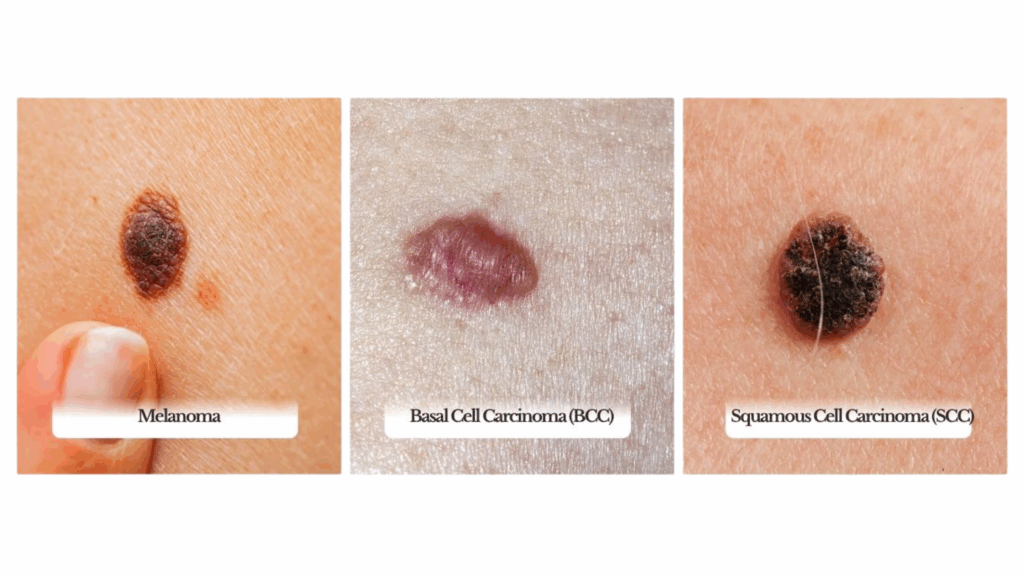
Basal cell carcinoma is the most common form of skin cancer. It develops in basal cells located in the lowest layer of the epidermis. It often appears on areas frequently exposed to the sun, including the face, ears, scalp, neck, and forearms.
Basal cell carcinoma may look like a pearly or waxy bump, a flat flesh-colored or brown scar-like lesion, or a sore that bleeds and does not heal. It tends to grow slowly and rarely spreads to distant organs. However, if untreated, it can invade surrounding tissue and cause significant local damage. Cumulative UV exposure over many years is strongly linked to basal cell carcinoma. Construction pros who spend decades outdoors are at particular risk.
Squamous cell carcinoma
Squamous cell carcinoma arises from squamous cells near the skin surface. It commonly develops on sun-exposed areas of the body, such as the face, ears, lips, and backs of the hands.
It often appears as a firm red nodule, a scaly patch, or a sore that heals and then reopens. Squamous cell carcinoma can grow deeper into the skin and has a higher risk of spreading than basal cell carcinoma if left untreated. Long-term sun exposure and repeated UV damage increase the risk. Outdoor workers with a history of chronic sun exposure are overrepresented in squamous cell carcinoma diagnoses.
Melanoma
Melanoma is less common but more aggressive. It arises from melanocytes, the cells responsible for skin pigment. Melanoma can develop anywhere on the body, even in areas not routinely exposed to sunlight. However, UV radiation remains a major risk factor.
Melanoma often shows up as a new mole or a mole that suddenly starts to look different—it might be an odd colour, or a squiggly edge that’s a bit troublesome. It’s worth noting that melanoma has the potential to be more aggressive than other skin cancers and can easily spread to your lymph nodes and internal organs. So, early detection really is key.
Signs and symptoms workers should watch for
UV radiation causes direct DNA damage in skin cells. That damage increases the likelihood of cancer formation. Construction pros should monitor their skin regularly and watch for:
- A new growth that appears different from the surrounding spots
- A sore that does not heal within several weeks
- A mole that changes in size, shape, or color
- A dark streak under a nail not linked to injury
- Rough or scaly patches that persist
The ABCDE rule is a helpful tool when checking moles for any potential issues:
- Asymmetry: one half looks different from the other
- Border: the edges of the mole are irregular or blurry
- Color: uneven shades of brown, black, red, or even white
- Diameter: if it’s bigger than 6 millimeters, you should probably take another look
- Evolving: if a mole starts changing size, shape, or color over time, you know it’s time to get it checked out
Any moles that look or feel abnormal should be checked by a healthcare provider immediately.
Effective sun safety practices on and off the job
Prevention reduces cumulative UV damage. Construction workers can implement practical measures without slowing down productivity.
Wear sun-protective clothing
Long-sleeved shirts and full-length pants act as a physical barrier, keeping your skin out of the sun’s UV rays. Tightly woven fabrics generally offer more protection than loosely woven fabrics. If you’re shopping for clothing to protect you from the sun, look for items with a UPF rating. There are lightweight, breathable fabrics designed specifically for people working outside in hot weather that help keep you as cool as possible while still blocking a lot of the sun’s rays.
Use broad-spectrum SPF 30 or higher sunscreen
Broad-spectrum sunscreen protects against both UVA and UVB rays. UVB rays cause sunburn, while UVA rays penetrate more deeply and contribute to skin aging and cancer risk. Apply sunscreen 15 to 20 minutes before sun exposure. Cover all exposed skin, including the ears, neck, and the backs of the hands. Reapply every two hours, or sooner if sweating heavily. Sunscreen does not replace protective clothing. It works best as part of a layered protection strategy.
Wear UV-protective sunglasses
Eyes are vulnerable to UV damage. Chronic exposure increases the risk of cataracts and other eye conditions. Sunglasses labeled to block 100% of UVA and UVB rays offer protection. Wraparound styles reduce side exposure. This also protects the delicate skin around the eyes, which is prone to cancer.
Choose wide-brimmed hats or hard hat sun shields
Standard hard hats leave the neck and ears exposed. Many manufacturers offer brim attachments or neck flaps designed for construction helmets. These accessories reduce direct exposure to sensitive areas that are often prone to skin cancer. Wide brims provide better coverage than baseball caps.
Adjust schedules when possible
UV radiation is strongest between 10 a.m. and 4 p.m. When feasible, schedule more sun-intensive tasks earlier in the morning. Even small adjustments can lower the daily UV dose. Planning shade breaks during peak hours further reduces exposure.
Seek shade during breaks
Portable shade structures, equipment shadows, or temporary canopies provide relief. Breaks in shaded areas allow workers to cool down and reapply sunscreen. Hydration also supports skin health. Dehydrated skin is more vulnerable to damage.
Building skin cancer prevention into jobsite safety culture
Individual habits matter, but employer support makes a larger impact. Sun protection needs to be firmly integrated into employers’ overall safety and health programs. This means providing sunscreen at work sites and actually encouraging people to use it as part of the normal routine.
Supervisors set a great example by modelling good sun safety practices themselves. They should wear protective gear and reapply sunscreen throughout the day. It’s also helpful when they lead by example, such as by wearing protective clothing.
You’ll often hear about ‘toolbox talks’ as a great way to keep the sun safety message alive—by providing a quick reminder of UV index levels and what you can do to protect yourself while working outside. Remember, these little chats help keep sun safety at the forefront of people’s minds.
Lastly, training programs need to cover the long-term effects of sun damage to help workers understand the risks. When they grasp the potential harm, they’re far more likely to take precautions to protect themselves.
Early detection and health monitoring
Regular self-exams improve early detection. Construction workers should check their skin monthly, including less visible areas like the scalp, back, and soles of the feet. Use mirrors to examine hard-to-see spots. Ask a partner or family member to help check areas you cannot see easily.
Annual skin exams with a healthcare provider provide another layer of protection. Medical professionals can identify subtle changes that may be missed. If you spot a new lump, a mole that’s changing, or a sore that won’t heal, book an appointment with your doctor right away. Getting treatment early on makes a huge difference in the long run. Skin cancer doesn’t spring up overnight; it develops over time. Paying attention to any changes can help you catch problems before they become too serious.
Final thoughts
Construction workers face a higher risk of skin cancer due to years of sun exposure on the jobsite, but that risk can be reduced with consistent prevention and awareness. Wearing protective clothing, applying sunscreen, taking shade breaks, and monitoring your skin for changes can make a significant difference over time. By making sun safety part of everyday jobsite practices, workers and employers can help protect long-term health while keeping crews productive in the field.
For more health and safety guidance tailored to construction pros, subscribe to the Under the Hard Hat newsletter and stay informed about the issues that impact life on the job.