
Mental health in construction is an issue many workers, supervisors, and industry leaders are feeling firsthand in 2025. This article looks at the latest data on mental health, suicide, and overdose risk, explains why construction work can make these challenges more common, and why the numbers are trending in the wrong direction. It also walks through how the industry is starting to respond, from jobsite conversations to broader programs aimed at supporting workers before things reach a crisis point.
Quick look
- New data show growing levels of distress, depression, and anxiety among construction workers, with suicide and overdose risks exceeding many job site hazards.
- Long hours, injury, financial uncertainty, isolation, and a culture of toughness make it harder for workers to seek help or recover.
- Construction ranks among the highest industries for suicide and overdose mortality, driven by ongoing pain, substance use, and untreated mental health issues.
- More companies are introducing mental health programs, toolbox talks, supervisor training, and early intervention strategies as part of broader safety planning.
The state of mental health in construction in 2025
Looking at the latest data, mental health in construction remained a serious concern in 2025. Compared with the general workforce, people working in construction continue to report higher levels of anxiety, depression, and psychological distress, and those differences haven’t narrowed over time.
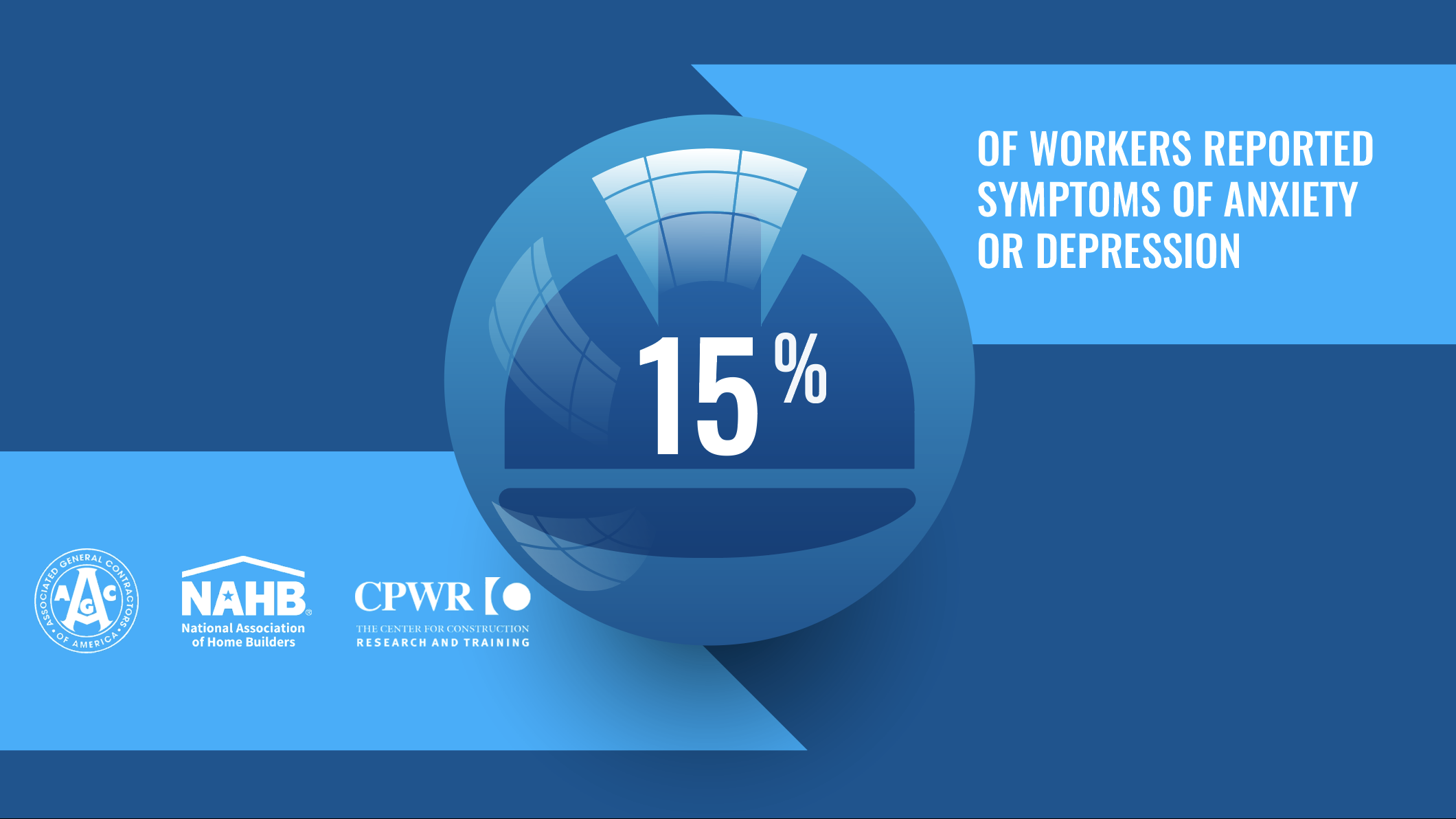
Recent research tracking mental health trends among construction workers shows how widespread the issue has become. In 2021, roughly 15% of workers reported symptoms of anxiety or depression or said they were taking medication for those conditions. More recent assessments suggest that number is now closer to one in five workers, pointing to a growing share of the workforce struggling with mental health challenges. Many of those workers also report not speaking with a mental health professional in the past year, which suggests that distress often goes unaddressed.
Newer data show that the situation is not stabilizing. Serious psychological distress, which declined slightly earlier in the decade, has been trending upward again since 2021. Moderate distress has also increased between 2021 and 2024, indicating that more workers are dealing with ongoing mental strain rather than short-term stress that fades between projects. These patterns show up consistently across national construction health and safety research.
Mental health trends also help explain some of construction’s most troubling outcomes. Construction and extraction workers continue to rank among the US occupations with the highest suicide rates, and suicide deaths among workers far exceed fatal injuries on job sites. This connection between mental health and safety is one reason the issue is increasingly being discussed alongside traditional job site hazards.
Taken together, the data paints a clear picture of where the industry stands in 2025. Mental health challenges are widespread, distress levels are rising again, and the impact reaches far beyond individual workers, affecting families, crews, and jobsite safety as a whole.
Why construction workers are at higher risk
Mental health challenges don’t happen in a vacuum, and construction comes with a unique mix of pressures that can make those challenges harder to manage. Day-to-day work is physically demanding, often dangerous, and rarely predictable. Over time, these realities create sustained stress that many workers simply learn to live with.
Physical demands, injury risk, and long hours
Construction work places constant strain on the body. Long days, physically intense tasks, and exposure to injury are part of the job for many trades. Tight deadlines and compressed schedules only add to the pressure, especially when crews are pushing to stay on track despite weather delays or staffing shortages. Over time, this combination of physical exhaustion and mental fatigue can take a serious toll.
Financial uncertainty and boom and bust cycles
Even in strong markets, construction work can feel unstable. Seasonal slowdowns, layoffs between projects, and sudden shifts in workload create financial stress that follows workers home. Worrying about the next paycheck or the next job adds another layer of anxiety, particularly for those supporting families or paying down debt.
A culture that discourages asking for help
Construction remains a male-dominated industry where toughness and self-reliance are often treated as job requirements. Many workers are expected to push through pain and keep personal struggles to themselves. This culture helps explain why men are more likely to ignore their mental health, even when stress or depression is affecting their work, relationships, and overall well-being.
Chronic pain, injury, and substance use risk
Years of physical labor leave many construction workers dealing with chronic pain. Injuries, repetitive motion, and wear on the body are common across trades. Prescription opioids may be part of recovery, but pain can also lead to self-medication or substance misuse when proper treatment and follow-up are lacking. Mental health struggles and substance use often overlap, increasing risk over time.
Long commutes, travel work, and isolation
The structure of construction work can make it hard to stay connected outside the job. Long commutes, remote projects, and travel-based work often mean time away from family and friends. Missed events, irregular schedules, and exhaustion can weaken support systems, leaving workers feeling isolated.
These realities are part of the construction industry’s ongoing battle with mental health and help explain why risk remains high across the workforce.
Suicide, overdose, and safety concerns
Mental health challenges in construction can show up in ways that go far beyond stress or burnout. Too often, those struggles are tied to the worst possible outcomes, including suicide and overdose. In 2025, these risks are still far more common among construction workers than many of the physical hazards that usually dominate jobsite safety talks.
Suicide deaths far exceed job site fatalities
Suicide continues to affect construction workers at much higher rates than most other occupations. In the United States, male construction workers have one of the highest suicide rates among all industries, with roughly 56 out of every 100,000 male workers dying by suicide compared with about 32 per 100,000 male workers overall. Construction workers also make up a disproportionate share of suicide deaths relative to their share of the workforce, which shows just how serious this issue has become.
Elevated overdose risk linked to pain and substance use
Overdose deaths are another major concern. Construction workers face some of the highest drug overdose death rates among all occupations in the US, with national mortality data showing overdose death rates around 130.9 to 162.6 per 100,000 workers for the construction and extraction group. These numbers are significantly higher than the overall workforce average and reflect how deeply the opioid and broader drug crisis has hit the industry.
Part of the risk comes from how common injuries and chronic pain are in construction. Workers with frequent musculoskeletal injuries, back pain, and other physical strain are often prescribed pain medications to stay on the job, and managing that pain without adequate follow-up or support can increase the chance of long-term opioid use or misuse.
Rising concern about fentanyl and job site impairment
The ongoing opioid epidemic in the US has also brought fentanyl into the conversation. Fentanyl and other powerful synthetic opioids are far more potent than traditional opioids, and their presence in the drug supply makes overdose outcomes more unpredictable and dangerous. While national data do not always break out fentanyl by occupation, multiple reports note that overdose death rates among construction workers remain among the very highest, and synthetic opioids are involved in a large share of these deaths.
Substance impairment on the job also raises everyday safety risks. Workers struggling with pain, addiction, or untreated mental health issues may have slower reaction times, reduced focus, or difficulty responding to hazards, putting themselves and their coworkers at risk.
Safety risks tied to untreated mental health
Mental health and traditional job site safety are deeply connected. Untreated anxiety, depression, or trauma affects concentration and decision-making, which can lead to slips, falls, or equipment mishaps. When substance use is part of the picture, the danger increases further. That is one reason mental health is gradually moving into conversations about overall safety culture on jobsites instead of being treated as a separate issue.
Gaps in supervisor training and confidence
Despite how common these risks are, many supervisors still feel underprepared to notice or respond to early warning signs. Most construction safety training focuses on physical hazards, while recognizing changes in behavior, starting difficult conversations, or connecting a worker with help are skills that are often missing from leadership development. Closing those gaps is a key part of reducing both mental health crises and the safety risks they can trigger.
How the industry is responding with advocacy and mental health programs
Mental health is no longer a side conversation in construction. It’s becoming a more visible and structured part of safety culture, with more companies and organizations treating mental well-being as something that belongs alongside fall protection, equipment training, and hazard awareness.
Suicide prevention moving onto the jobsite
One of the most noticeable shifts is how openly suicide prevention is being discussed across the industry. National Suicide Prevention Week has become a key moment for many construction companies, with toolbox talks, safety stand-downs, and jobsite conversations focused specifically on mental health. These discussions are increasingly practical, using clear language to help workers recognize warning signs and understand where to turn for support. Many crews now treat mental health toolbox talks as routine safety check-ins rather than one-off events.
Trade associations expanding training and resources
Trade organizations are also playing a larger role. Groups like AGC, NAHB, and CPWR have expanded their mental health offerings in recent years, rolling out training sessions, webinars, and easy-to-use toolkits designed for contractors, supervisors, and safety managers. These resources focus on awareness, prevention, and leadership responsibility, helping mental health programs become more consistent across companies of different sizes.
Mental health entering safety planning
Another important change is where mental health shows up in daily operations. More companies are including mental well-being alongside physical hazards in safety meetings, job hazard analyses, and project planning. Conversations about stress, fatigue, and burnout are starting to sit next to discussions about equipment risks or site conditions, reinforcing the idea that mental health is part of overall jobsite safety, not something separate.
Expanded access to support at larger firms
At larger construction firms, access to support has also grown. Many companies are expanding employee assistance programs to offer counseling services, peer support networks, and supervisor training focused on early intervention. Leadership teams are also being encouraged to use dedicated mental health programs and resources for executives to support crews better while managing their own stress and responsibilities.
A shift toward early intervention
Perhaps the most meaningful change is the growing focus on prevention rather than crisis response. Instead of waiting until a worker is in serious trouble, more companies are trying to spot issues earlier and respond with support. This includes regular check-ins, mental health-focused toolbox talk topics, and clearer pathways to care. While challenges remain, the industry is beginning to recognize that early intervention can protect workers, improve safety, and reduce long-term harm.
Final thoughts on mental health in construction
Mental health remained one of the construction industry’s most pressing safety and workforce challenges in 2025. The data show that awareness is improving and more programs are taking shape, but distress, suicide, and substance use risks are still rising for many workers. That gap between progress and reality is where the industry’s attention needs to stay focused.
What the research makes clear is that meaningful change requires more than good intentions. Culture change, better training, and reliable access to support all matter. Workers need to feel safe speaking up, supervisors need the confidence to step in early, and leadership needs tools that go beyond compliance. Resources such as practical mental health books and guidance on beating burnout in high-stress construction jobs can help support those conversations at every level of an organization.
Mental health also deserves the same seriousness as physical safety. Just as hazards like falls or equipment risks are planned for and addressed, psychological risks need to be part of everyday safety thinking. When mental health is treated as a core safety issue, the benefits extend beyond individuals to crews, families, and the long-term stability of the workforce.
If you want to stay informed on construction safety, workforce trends, and mental health resources, subscribe to our newsletter for practical insights delivered straight to your inbox.