
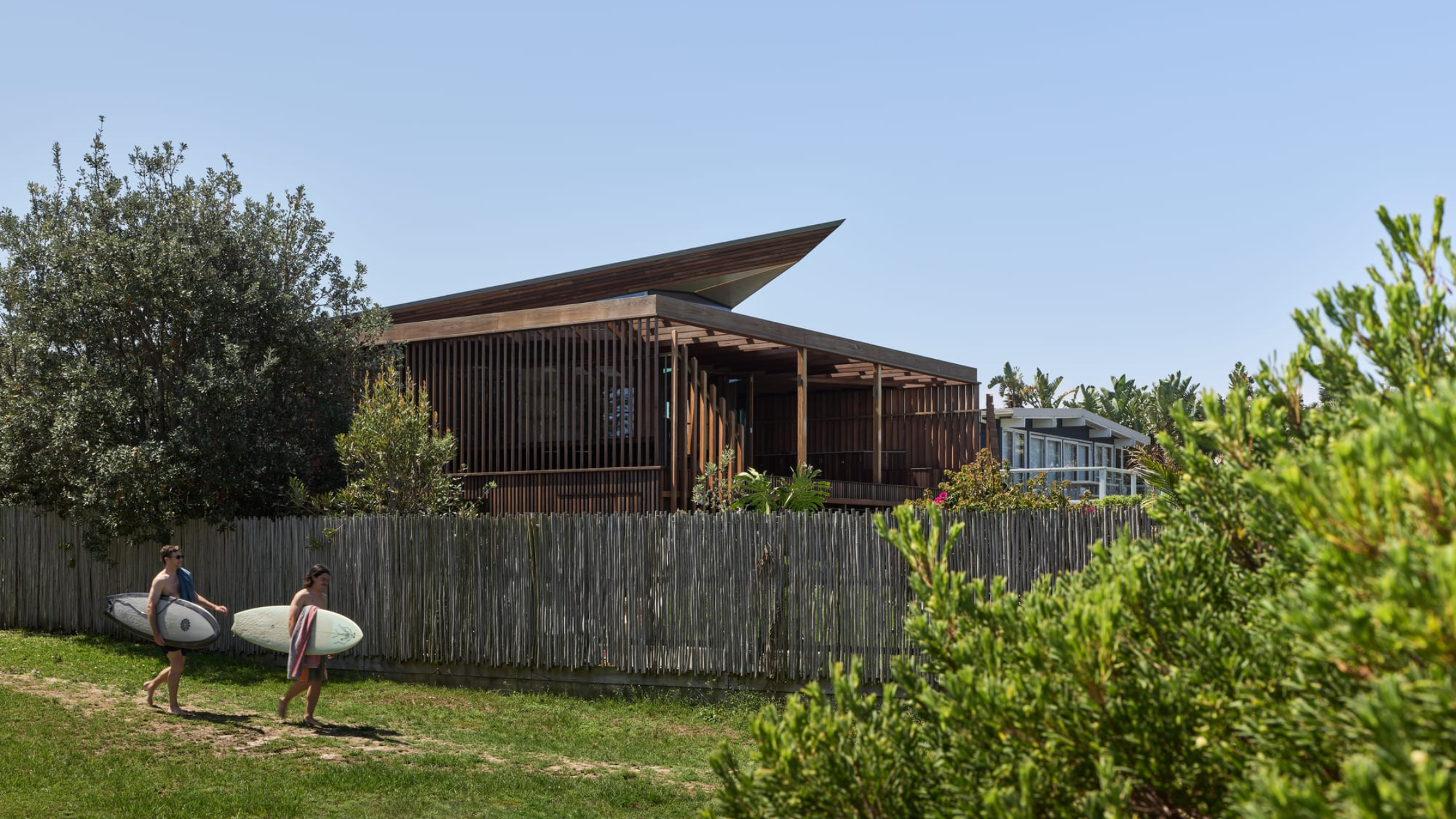
When architecture, engineering, and construction align toward higher performance, we get housing that not only looks striking but also delivers on energy efficiency, resilience, materials, and cost-effectiveness. Featured here are some of the most innovative homes of 2025, including Hunters Point, Florida, by PEARL Homes, Vienna House in Vancouver, and Australia’s retrofit project, Cake House by Alexander Symes Architect. These projects move past concept into execution—showing how you can combine beauty, durability, and climate-responsiveness in real homes. Let’s dig into the details of each project and the lessons they offer for those involved in construction, architecture, and engineering.
1. Green Haven – a net-positive riverside home built for climate resilience
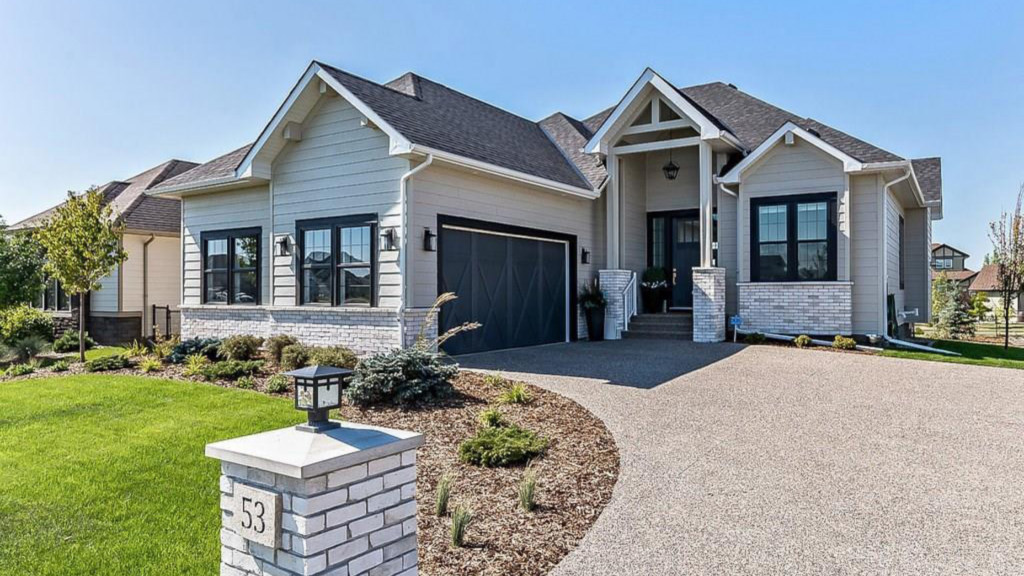
The home known as Green Haven was developed by TimberCreek Homes and their “Green Haven” line of residences. The focus was on “green vision” building practices, and the firm advertises its commitment to sustainable building. The home is situated in a riverside setting, and the design emphasises large glazing to capture daylight, elevated foundations for flood resilience, and a shell built with high-performance materials. The development features solar power generation, geothermal heating and cooling loops, and insulated wall systems to reduce seasonal temperature swings, making the homes appealing to buyers who want lower utility costs without sacrificing comfort.
Inside, the trades team installed geothermal heating and cooling loops, and the envelope includes thermally modified wood, triple-glazed windows, and high-insulation assemblies. The elevated structure helps mitigate future climate risks, such as flooding. In practice, this means that crews—framing, mechanical, and finishers—were all faced with tighter tolerances—building to the spec of performance rather than just “code”. For a custom builder working on one-off high-end homes in vulnerable sites, this project demonstrates how to combine luxury design with real risk mitigation and energy generation. This model works for clients who want riverside or flood-exposed homes that still offer a premium aesthetic and minimal operating costs.
2. Hunters Point PEARL Homes – a solar micro-grid coastal community
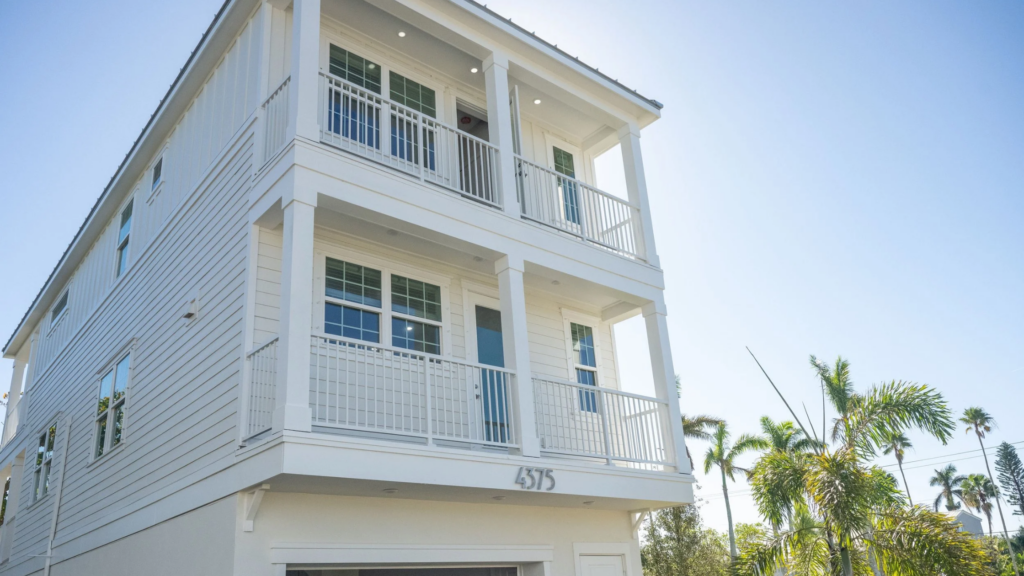
At the Hunters Point community, developed by PEARL Homes in Cortez, Florida, 86 homes on an 18-acre property were built to be net-positive—each producing more electricity than it consumes. Each home includes rooftop solar, a home battery system (from sonnen), and structural engineering to withstand hurricane-force conditions (150 mph wind loads and elevated living spaces) and to handle flood and storm exposure. The combination of elevated construction and grid-interactive solar design provides residents with year-round backup power, even when surrounding neighborhoods lose service.
From a construction standpoint, this means the MEP schedule had to integrate solar installation, battery storage, elevated foundations, and energy management systems all at scale—not just one house at a time. For contractors working in coastal regions, this community offers a benchmark for resiliency and energy independence in single-family production homes. It is especially suited when you have repeated site conditions where wind, flood, or grid stability are concerns. The build also shows how repeatable detailing—such as standardized panel layouts and coordinated conduit runs—can cut installation time across an entire subdivision.
3. Cake House – a climate-smart coastal retrofit built on reuse
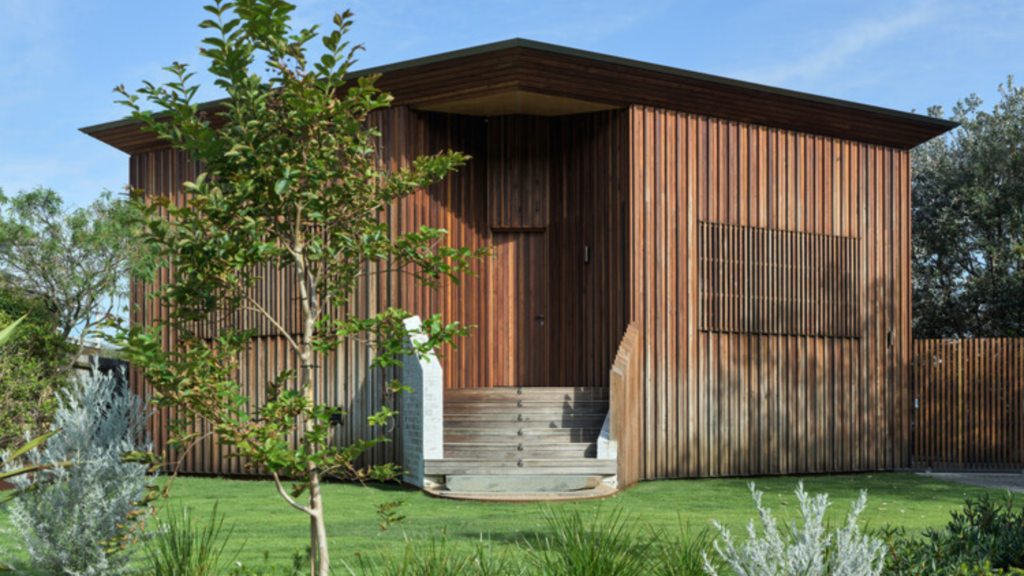
The Cake House, by Alexander Symes Architect in Mollymook, New South Wales, Australia, is a compelling case of retrofit and reuse. The original beach-shack structure was retained and upgraded to high-performance standards: passive-solar design, high insulation, reclaimed materials, and rooftop solar enabling net-zero or better energy use. One of the jury comments for the 2025 Houses Awards: “This renovated beach shack blends cultural reverence with high-performance, climate-resilient design.” The careful combination of new building science and existing fabric gives the home a level of comfort rarely achieved in older coastal structures.
For framing and renovation trades, the job involved working within an existing shell, integrating high-performance envelope upgrades (windows, insulation, shading), and managing moisture and coastal exposure in ways a new build does not always require. This model suits homeowners or contractors undertaking coastal renovations where structural reuse and performance upgrades deliver value. The lesson: a retrofit can match new-build performance if crafted well. Crews who take on similar work can use this project as a reference point for balancing ambition, budget, and the constraints of an aging structure near the ocean.
4. Unity Nano prefab tiny home – high performance in a small footprint
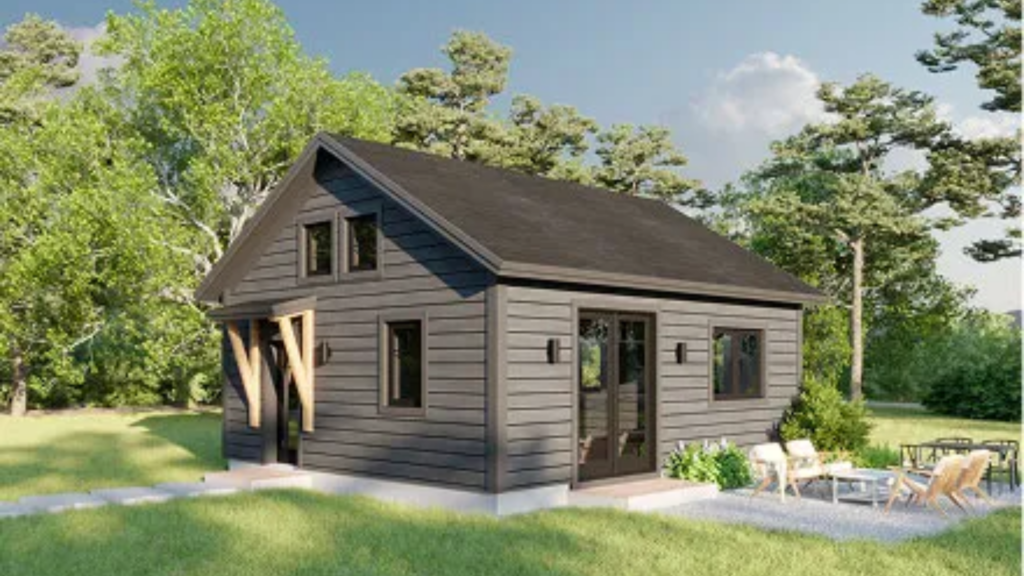
The Unity Homes Nano model is a compact, high-performance prefab home delivered by Benson Wood/Unity Homes (via panelised factory construction). The model is under 600 ft² (or around that scale) yet arrives with triple-glazed windows, factory-sealed panelised shells, and specifications for very low heating and cooling loads. It emphasises minimal footprint, high comfort, and fast on-site raise. Because most precision work happens in the factory, builders can meet tight timelines without the weather delays that usually slow small, detailed projects.
On-site, trades benefit from panelised shells, which reduce framing labour and improve quality control. Mechanical, insulation, and ventilation crews face tighter envelope tolerances and must install systems carefully, as there is little room for error in such small, high-performance homes. This home suits contractors or developers working with ADUs, small-lot infill, or clients wanting high performance at a lower scale. For those in the prefab or modular sector, this model offers a strong blueprint.
5. EVE Park – a net-zero-ready community rethinking suburban design
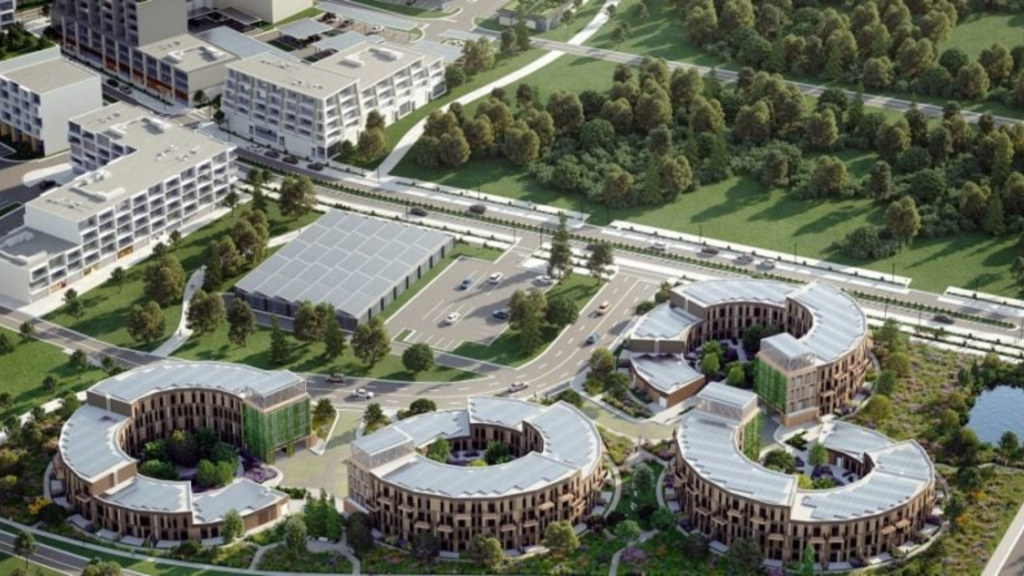
EVE Park, developed by s2e Technologies in London, Ontario (within the West 5 community), is a net-zero residential neighbourhood featuring all-electric homes, solar generation, EV charging infrastructure, and modular construction techniques. Each unit uses airtight construction, energy-recovery ventilation, triple-pane glazing, and a planned microgrid system, along with car-sharing and parking towers, to reduce land and vehicle footprints. The project’s stacked townhome layout also cuts material use and shared-wall heat loss, giving builders a repeatable template for higher-density suburban housing that still meets ambitious energy goals.
For trade teams involved in production homes or developer-scale builds, this community offers lessons in site logistics, mechanical and electrical coordination, and system integration at scale. The parking tower and EV car-share integrate mobility and built form—meaning site civils, electrical, and trades must align with a broader vision. This model works for developers and trades focusing on medium-density housing, suburban build-outs, or community-scale high-performance standards.
6. Vienna House – mass-timber Passive House rentals shaping future housing
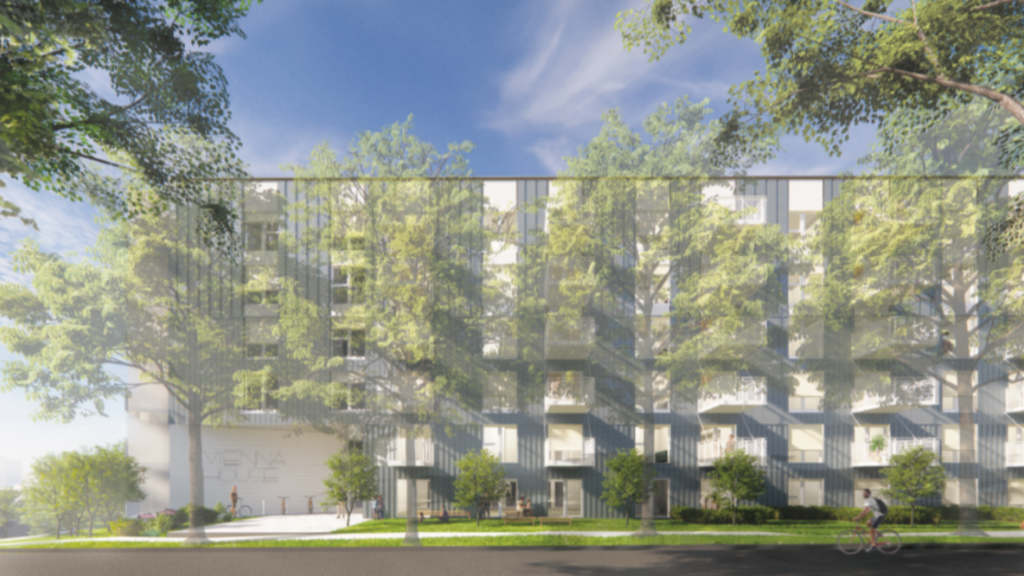
The Vienna House project in Vancouver, developed by BC Housing, More Than a Roof Housing Society, and the City of Vancouver, is a seven-storey, 123-unit rental building designed to meet very high energy performance standards. Instead of relying on standard construction, the team is using a mix of mass-timber components and light-wood framing, along with factory-built wall panels and engineered timber floor slabs. The aim is to create rentals that feel comfortable year-round while lowering the building’s carbon footprint from day one. The project also shows how large-scale housing can feel warm and inviting when natural materials are integrated into the structure rather than just as finishes.
For crews on the ground, the build relies heavily on off-site work, meaning many components arrive ready for quick installation, and the structure goes up faster than in a typical mid-rise project. The building still requires careful coordination—framing teams, mechanical trades, and finishing crews all need to stay aligned to keep the building airtight and perform as intended. This type of project offers a clear example for teams working in multi-family housing who want to deliver low-carbon, energy-efficient homes without adding months to the schedule. It’s a practical path for cities looking to scale up rental housing while keeping utility costs and long-term maintenance burdens lower for residents and operators.
7. Housestead – paragraph-80 farmhouse reimagined with renewables and low-carbon detailing
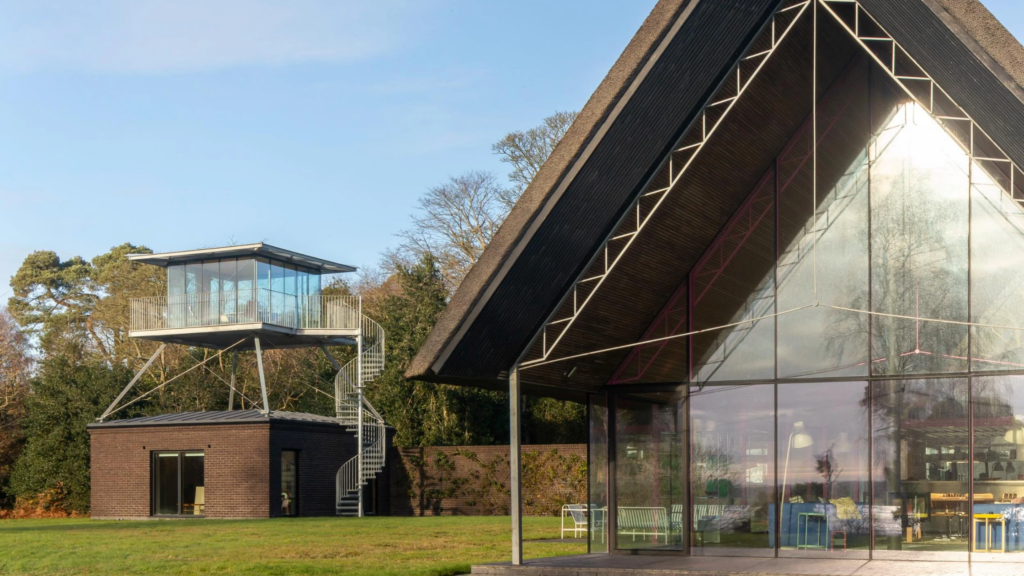
Designed by Sanei + Hopkins Architects, Housestead is a newly built “paragraph 80e” country home in Suffolk that reinterprets a working farmstead into three connected blocks: a glass-walled living pavilion with a deep thatched roof, a greenhouse-like sleeping wing, and a utility block with plant room and biomass store. The project is shortlisted for RIBA House of the Year 2025 and includes a mix of practical sustainability features, with solar panels that cover most of the home’s annual power needs, low day-to-day energy use, a borehole to supply non-drinking water, and a heating system that runs on timber sourced from the surrounding property.
For builders and consultants, Housestead is helpful because it shows how aesthetics and performance can be coordinated at the briefing stage: the cruciform plan maximizes daylight and cross-views; services are consolidated in the utility block; and envelope choices support airtightness while allowing expressive materials like thatch and brick. If you’re working on rural custom homes or replacement dwellings under strict planning tests, this is a current, source-backed model for pairing local craft, renewables, and low-energy targets without losing character.
8. Re-Generation House – coastal NSW retrofit rooted in reuse
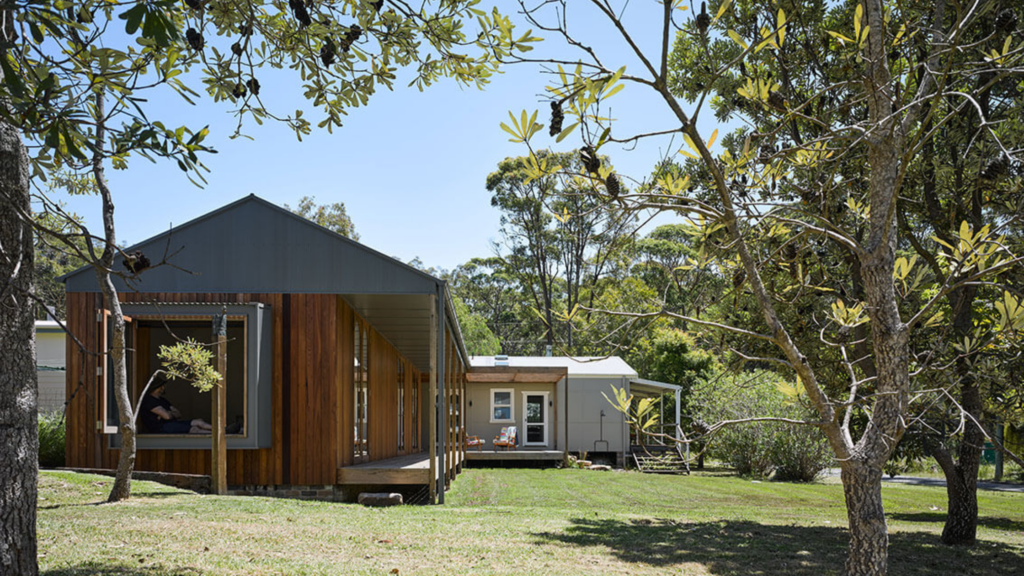
Re-Generation House sits on Yuin Country along the south coast of New South Wales and shows how far a coastal retrofit can go when reuse, restraint, and good detailing drive the brief. Designed by Alexander Symes Architect, with input from Second Edition and artist Jane Theau, the project preserves the original cottage and adds a compact gabled pavilion linked by a raised timber deck. Materials were sourced with a strict circular mindset: the team incorporated reclaimed brick, reused timber cladding, salvaged marble and sleepers, and a mix of recycled interior fixtures. The new windows follow the same logic, using recycled timber frames fitted with modern double glazing to help tighten the envelope.
The performance upgrades are deliberately thorough. Insulation levels exceed BASIX requirements, and a vapor-permeable membrane helps the building handle the region’s humid, salt-affected climate without trapping moisture in the old structure. Because the addition is modest and sited carefully, the landscape disturbance stays low—a priority for the clients, who wanted more comfort without losing the character of the original cottage. From a builder’s standpoint, the project required thoughtful sequencing: tying the old frame into the new pavilion, setting out joinery around reclaimed materials with irregular dimensions, and integrating upgraded mechanical and ventilation systems into a small footprint.
Final thoughts
These projects prove housing can be elegant, durable, efficient, and better prepared for the future. They show that trades professionals will increasingly encounter builds where energy generation, material reuse, high envelope performance, and system integration matter just as much as style. If you work in architecture, construction, or homebuilding, these examples of the most innovative homes of 2025 give you concrete reference points for the next wave of housing projects.
To stay on top of product trials, site case-studies, and building science updates, subscribe to our newsletter at Under the Hard Hat and be ready for what’s coming next.