

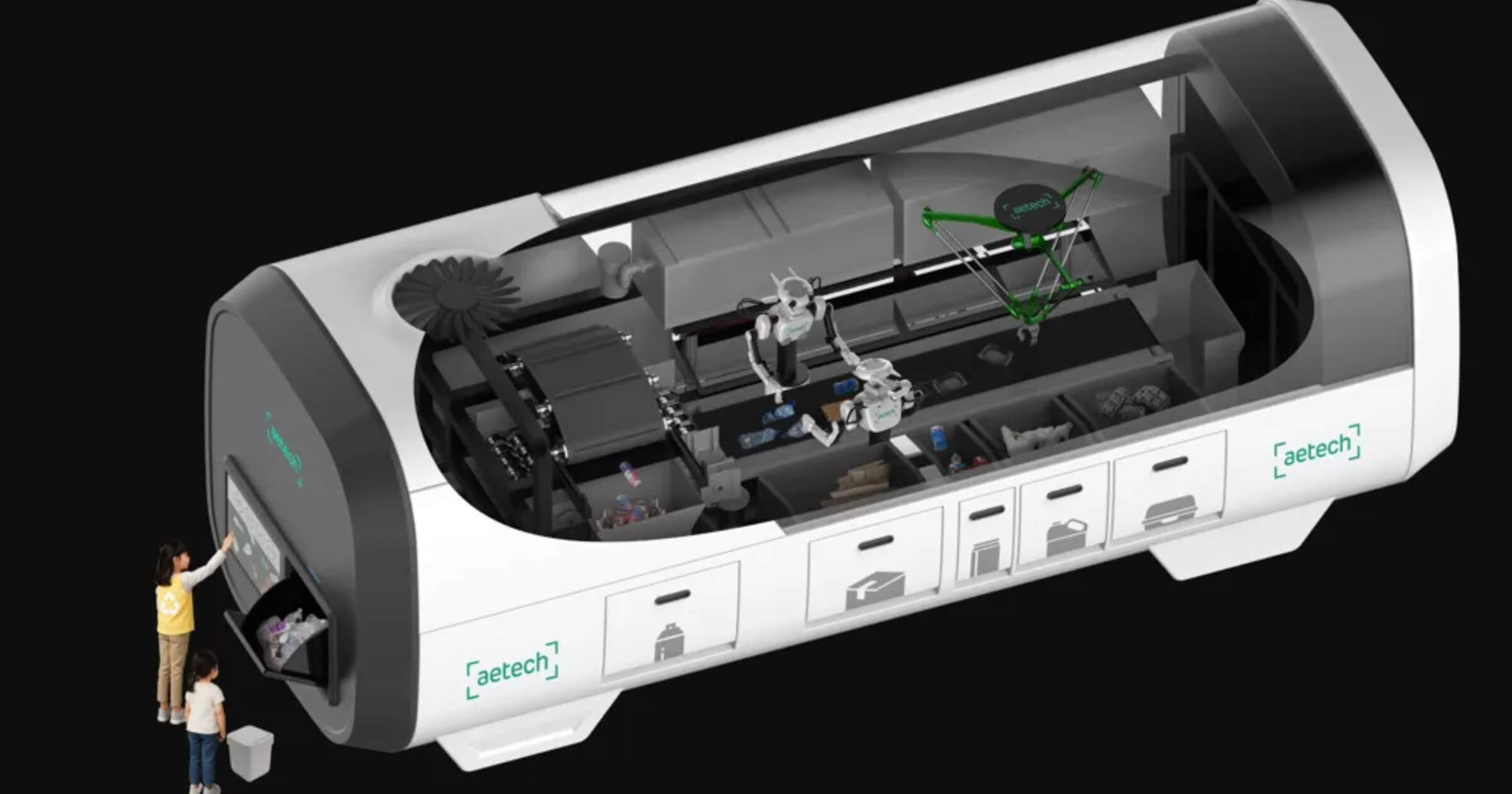
AI-powered waste systems are gaining ground quickly, and AETech’s new Multi-TRON Dump & Go platform is a standout recognized at CES 2026. The company builds automation tools that support smart-building operations, and this project brings computer vision and machine learning into an area most facilities still manage manually. AETech built the system to address contamination issues, overflowing bins, and inconsistent recycling habits among visitors. This article breaks down what the system does, why it earned a CES Innovation Award, and what it signals for the future of building and facility operations.
Multi-TRON Dump & Go platform: A simpler way to sort waste
The Multi-TRON Dump & Go platform by AETech is an automated waste sorting system that uses AI to identify trash, recyclables, organics, and other categories. Users drop material into a single input point; the system scans each item, sorts it, and diverts it to the correct collection bin. It’s designed to make disposal easy for the public.
This solution was built for multi-use properties where different tenants or visitor groups produce inconsistent waste streams. Airports, sports venues, convention centers, college campuses, and shopping centers typically struggle with contaminated recycling loads and high operational costs. By taking sorting work away from users and handing it to an automated system, the platform supports cleaner waste streams and smoother back-of-house operations.
AETech designed the unit to operate in high-traffic spaces with limited supervision. It integrates into existing waste-management workflows, reducing the volume of manual sorting required and helping buildings meet sustainability goals without extra labor.
The future of waste sorting is robotic
The award recognition at CES highlights how the system improves accuracy through item-level detection. Instead of relying on color-coded bins or signage—both of which are ignored or misunderstood in busy settings by most people—the Dump & Go scans materials using an internal camera and a recognition model trained on thousands of images of waste items. It then directs each item into the correct internal chute. This approach reduces contamination rates and yields cleaner recycling and compost loads for facilities.
The unit is also engineered for reliability: enclosed channels prevent jams, sensors monitor internal capacity, and automated alerts notify staff when bins need to be emptied. This matters for facilities that need to keep lobbies and concourses clean without dedicating staff to constant monitoring. By producing cleaner recycling streams, facilities can cut disposal fees and support municipal recycling programs more effectively.
Why this system may change public waste sorting forever
Most multi-use facilities deal with waste problems caused by mixed crowds—travelers tossing liquids into recycling bins, fans stuffing food containers into compost, or students ignoring signage entirely. The AI-powered system automatically corrects these issues, reducing staff workload and preventing contaminated loads from reaching landfills. Cleaner sorting leads to higher recovery rates and cost savings for facility owners.
It also supports the smart building movement. Facilities already use digital tools for HVAC, security, and energy tracking; automated waste systems add another area where data improves performance. As cities and institutions look to meet sustainability targets without adding operational burden, automated waste systems like this one are the way forward. Multi-TRON Dump & Go demonstrates how AI can handle repetitive tasks, allowing human workers to focus on maintenance, customer service, and technical work.
If you want updates on tools and tech shaping building operations, facility management, and the AEC world, join our newsletter at Under the Hard Hat.


1 comment