
National Sleep Awareness Week (March 8–14, 2026) shines a light on why sleep matters so much for people working in construction and other hands-on trades. When workers are tired, attention drops, reaction time slows, and decision-making suffers, which raises the risk of injuries on busy job sites. This article breaks down how fatigue affects safety and shares practical tools workers and supervisors can use right away to reduce risk and keep crews safe.
Quick look
- Sleep loss reduces alertness, delays reaction time, and raises the risk of injuries, especially during long shifts, night work, or after poor rest.
- This week is a key opportunity to recognize sleep as a safety tool and teach crews how rest supports decision-making, focus, and injury prevention.
- Clumsiness, zoning out, slower reactions, and irritability are signs that fatigue is already affecting safety; workers should know how to speak up, and supervisors should know how to respond.
- Practical steps like consistent sleep schedules, smart caffeine use, and fatigue checks in planning help crews stay safer and more focused every shift.
Why Sleep Awareness Week matters in construction
Construction is among the highest-fatigue-risk work environments. Early starts, long shifts, overtime, and rotating schedules are common, and the work itself is physically demanding. Add heat or cold, heavy PPE, constant noise and vibration, dehydration, and long commutes, and sleep loss can pile up quickly.
Fatigue doesn’t exist on its own; it builds on top of other job-site hazards. Tired workers are still expected to work around heavy equipment, breathe in dust and chemicals, lift and carry materials, and repeat the same movements for hours. Heat stress, cold exposure, and physically intense tasks all hit harder when the body hasn’t had enough rest.
Research shows just how serious this is. Workers who get fewer than seven hours of sleep are more likely to be injured on the job compared to those who are well rested. Fatigue slows reaction time, reduces alertness, and increases errors, all of which raise the risk of incidents in safety-sensitive construction work.
Fatigue can also impair performance in ways similar to alcohol. For example, being awake for about 18 hours can reduce performance to a level comparable to a blood alcohol concentration of 0.05 percent. Staying awake for 24 hours can impair performance similar to a BAC of 0.10 percent, which is often above the legal driving limit.
Shift work and long hours make this even worse. Construction workers who regularly work nights or rotating shifts face higher risks of poor sleep, chronic fatigue, and related health problems, all of which can affect safety on site.
All of this is why National Sleep Awareness Week matters on the job site. Sleep is a key safety control that helps workers stay alert, make better decisions, and avoid injuries in high-risk environments.
What fatigue looks like on a job site (and what it causes)
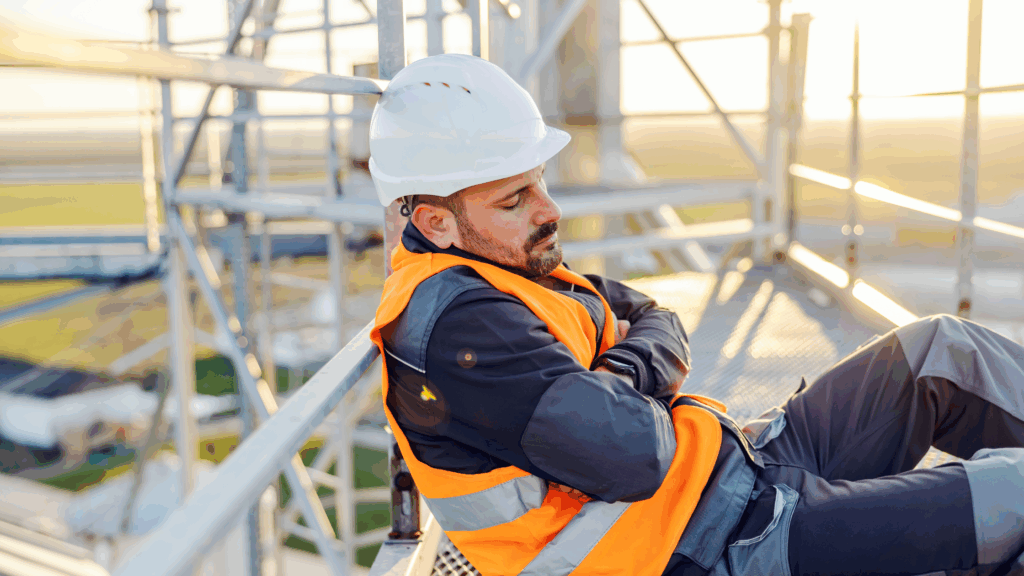
Feeling tired at work is common, especially in construction. Fatigue doesn’t mean someone is lazy, careless, or bad at their job. It often builds quietly over time, and many workers don’t realize how tired they are until it starts affecting their focus. The goal is to spot fatigue early and prevent it from turning into a safety issue.
Common signs of fatigue workers can spot
When these signs show up, fatigue is already affecting how the brain and body work together:
- Trouble focusing or zoning out during tasks or safety talks
- Heavy eyelids, frequent yawning, or feeling like your eyes won’t stay open
- Drifting attention or forgetting steps you usually do without thinking
- Clumsier movements or reduced coordination when handling tools or materials
- More mistakes, rework, or needing to redo tasks
- Irritability, a short temper, or feeling unmotivated
- Slower reaction time and delayed decision-making
What fatigue can cause on a jobsite
Even small lapses matter in high-risk environments. Fatigue increases the chance of near misses and minor errors that can quickly turn into serious incidents. A tired worker may make tool mistakes, such as taking the wrong cut, using the wrong measurement, or performing tasks out of sequence. Safety steps can also be skipped, including lockout procedures, harness checks, and using a spotter when needed.
Fatigue increases the risk throughout the shift. That is why recognizing these signs early is one of the most important steps in preventing injuries before they happen.
Where fatigue turns into incidents
Fatigue becomes most dangerous during tasks that leave little room for error. When attention slips or reaction time slows, routine work can quickly turn into an incident. These are some of the highest-risk moments where being overtired can have serious consequences.
- Operating equipment: Running forklifts, skid steers, or excavators requires constant awareness of surroundings, load movement, and nearby workers. Fatigue can delay reactions, reduce depth perception, and increase the chance of striking objects, tipping equipment, or missing warning signals.
- Working at heights: Tasks on ladders, scaffolds, or lifts demand balance and focus. When workers are tired, coordination suffers, and judgment can slip, increasing the risk of missteps, improper tie-offs, or failure to perform fall protection checks.
- Cutting, grinding, and sawing: Using table saws, chop saws, or angle grinders requires steady hands and full attention. Fatigue raises the risk of wrong cuts, tool kickback, and skipped safety steps like guards or proper positioning.
- Rigging and lifting: Tired workers are more likely to misjudge weight, misunderstand signals, or rush steps during lifts. Confusion between signalers and operators can lead to dropped loads or struck-by incidents.
- Spotting for machines: Spotters play a critical safety role, but fatigue can lead to missed hazards, delayed warnings, or hesitation when immediate action is needed. Even a brief delay can lead to serious injury.
- Driving home after the shift: Fatigue doesn’t stop when your shift ends. Long hours and poor sleep increase the risk of micro-sleeps, lane drifting, and slower braking while driving home, which puts workers and others on the road at risk.
If fatigue is present, these tasks should be delayed, reassigned, or adjusted whenever possible. Recognizing when to step back can help prevent serious incidents and keep everyone safe.
A worker’s “sleep-to-safety” playbook
Sleep is a safety tool. Getting enough rest helps workers stay focused, react faster, and avoid bad habits on the job site. This playbook breaks sleep down into simple, realistic steps workers can use right away.
Aim for a consistent sleep window
One of the most important sleep habits is keeping a steady schedule. Going to bed and waking up around the same time each day helps the body know when it is time to rest, even on days off when possible.
Most adults need 7 to 9 hours of sleep per night to function well and stay alert. For shift workers, this isn’t always easy. That is where “anchor sleep” helps. Try to protect the same 4 to 5-hour block of sleep every day, no matter which shift you are on. This gives your body a stable base to recover.
Simple ways to wind down after a shift
- Limit screens before bed, especially phones and tablets
- Take a shower and do a light stretch to help the body relax
- Keep lights low in the hour before sleep
- Follow the same bedtime routine each night so your body knows it is time to rest
Avoid having too much caffeine to prevent an energy crash
Caffeine can help you feel more alert in the short term, but too much can backfire. Large doses or late-day caffeine can disrupt sleep and lead to an energy crash later in the shift. When the crash hits, reaction time and coordination suffer, which increases the risk of mistakes and injuries.
Practical caffeine rules for workers
- Avoid caffeine in the last 6 to 8 hours before planned sleep
- Use smaller amounts instead of high-caffeine energy drinks
- Watch for hidden caffeine in pre-workout supplements, soda, and some pain relievers
Take smart naps for early starts and night shifts
Naps can be a useful tool when used the right way, especially for early mornings or night work. To avoid waking up groggy, build a quick wake-up routine. Drink water, get some light, and move your body for a few minutes before jumping into tasks.
Best nap lengths
- 10 to 20 minutes for a quick boost without grogginess
- 90 minutes when possible to complete a full sleep cycle
Good times to nap
- Before a night shift
- Before a long drive home
- Mid-day if breaks and site rules allow
Light, temperature, and bedroom setup
Your sleep space matters more than most people think. Small changes can make a big difference in sleep quality.
Use light the smart way
- Get bright light in the morning to help set your body clock
- Reduce light before bed, especially phone and screen glare
Create a cool, dark, quiet space
- Use blackout curtains or an eye mask
- Try a fan or white noise to block outside sounds
- Keep the room cooler (60-67°F), which helps the body sleep more deeply
For shift workers and day sleepers
- Block daylight completely during sleep hours
- Silence notifications and use do-not-disturb settings
- Let family or roommates know your sleep hours
If you’re too tired to work safely, here’s what to do
Just like a missing guardrail or a broken tool, fatigue is a safety hazard. It may not look dangerous at first, but it can lead to serious injuries if it is ignored. Speaking up about being too tired isn’t a weakness, but a form of hazard prevention that protects you and everyone around you.
What to do when fatigue becomes a safety risk
- Stop and assess the risk. If you are about to climb, cut, lift, drive, or operate equipment, pause and check how alert you really feel.
- Tell your lead or foreman clearly. Say, “I’m not alert enough to do this safely right now.”
- Ask for a task change. Request lower-risk work like ground-level tasks, staging, material prep, or cleanup.
- Take a short break. Drink water, eat something with protein, and get some fresh air if possible.
- Take a short nap if allowed. If site rules permit, a brief nap before high-risk work or a long drive home can help restore alertness.
- Avoid high-risk tasks until you feel better. Don’t return to heights, equipment, or precision work until your focus improves.
- Never tough it out. Working at heights or around equipment while exhausted puts you and others at serious risk.
What to say when you need to speak up
- “I’m too tired to do this safely. I need a lower-risk task right now.”
- “My focus is off, and I don’t want to risk an injury. Can I switch tasks?”
- “I’m not alert enough for equipment work. I need a break or reassignment.”
Treating fatigue like any other hazard helps prevent incidents before they happen and makes it more likely that everyone goes home safe at the end of the day.
Supervisor and foreman guide: How to reduce fatigue risk without hurting productivity
Fatigue management means planning. Crews don’t work safer just because they are told to “push through.” They work safer when fatigue is treated like a real hazard and managed the same way as any other job site risk.
Plan the schedule like a safety control
How work is scheduled has a direct impact on alertness and safety. Planning with fatigue in mind helps crews stay focused when the risk is highest, and small planning choices can reduce fatigue without slowing the job down:
- Reduce excessive overtime where possible, especially across multiple days
- Avoid quick turnarounds, such as a late finish followed by an early start
- Limit long stretches of night shifts when scheduling allows
- Schedule high-risk tasks earlier in the shift, before fatigue builds
- Rotate physically demanding tasks so the same workers aren’t overloaded
- Build in short breaks during extreme heat or cold to support recovery and hydration
Build a fatigue check into the pre-task plan
A quick fatigue check can be added to daily planning or toolbox talks for awareness, not interrogation.
Simple fatigue check for supervisors
- Rough hours of sleep in the last 24 hours
- Commute length and total time awake
- Any medications that may cause drowsiness
- High-risk tasks planned today, such as heights, equipment, lifts, or energized work
- Heat or cold exposure and hydration status
- Visible signs of fatigue, like zoning out, slowed responses, or clumsiness
If risks are flagged, adjust tasks or timing before work begins.
Normalize reporting fatigue
Reporting fatigue should be treated the same as reporting a hazard. It helps prevent incidents and protects the entire crew.
- Make it clear that speaking up about fatigue is expected and supported
- Encourage buddy checks and watch for signs like drifting attention or coordination issues
- Never punish or shame someone for saying they are too tired to work safely
- Use toolbox talks during National Sleep Awareness Week to reinforce the message
Supervisors should also be aware that sleep disorders can contribute to ongoing fatigue. Conditions like sleep apnea are common and often undiagnosed in the construction workforce. When fatigue is planned for, talked about, and managed early, productivity improves alongside safety.
Final thoughts
Better sleep is a safety control. Just like PPE, training, and safe planning, sleep helps protect workers from injuries by keeping attention sharp and decisions clear.
National Sleep Awareness Week is a good reminder that fatigue deserves the same attention as any other hazard. Use this playbook during National Sleep Awareness Week (March 8–14, 2026), run a toolbox talk, and treat fatigue like any other job site risk.
For more practical safety and wellness guidance for construction workers, subscribe to our newsletter.