
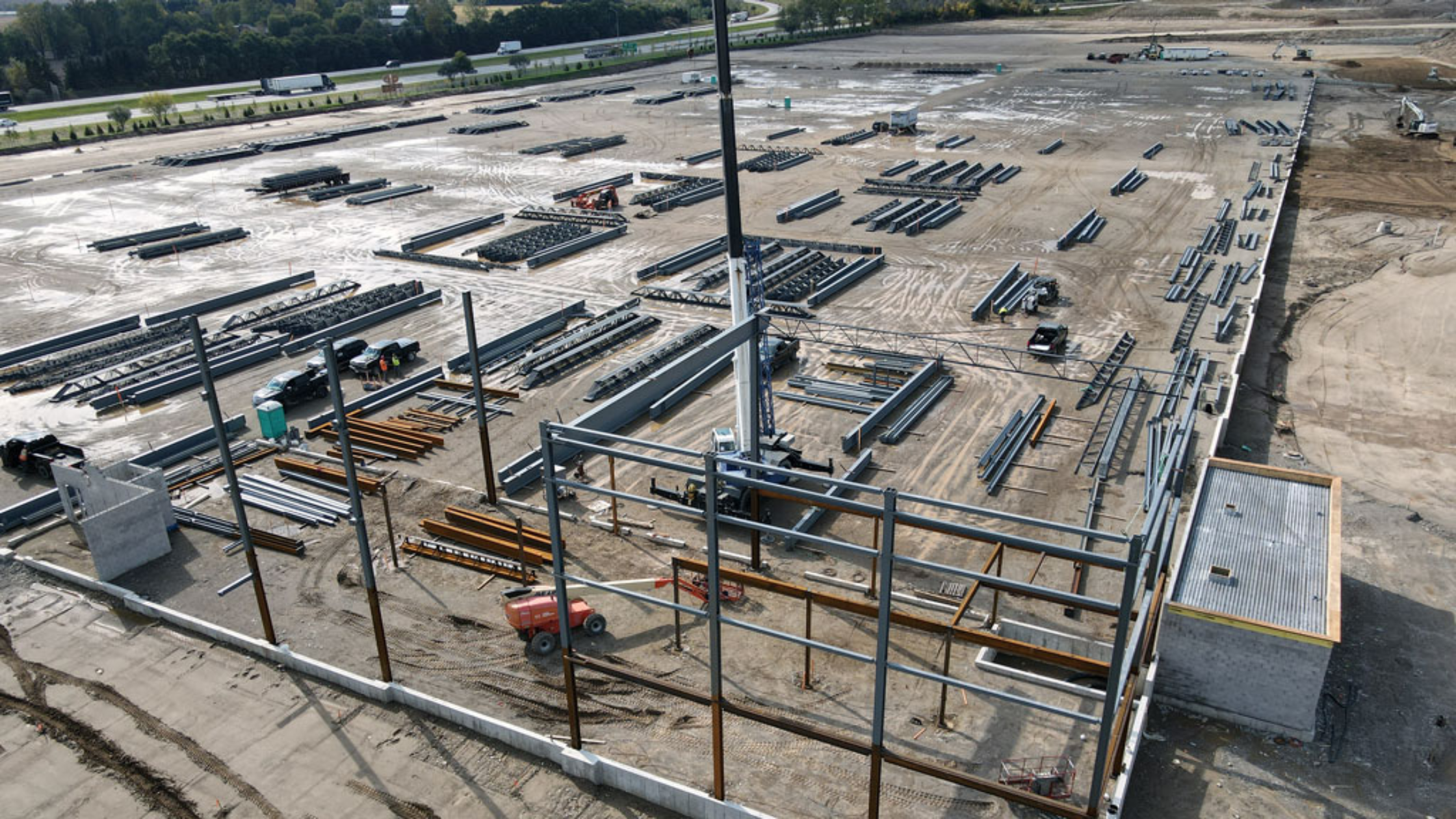
The industry is witnessing a shift from residential to large-scale industrial projects
Brant County’s construction landscape in Ontario, Canada, saw a record-breaking year in 2025, with construction value soaring to over $306.3 million, surpassing the area’s $300 million mark for the first time. Brant County’s numbers reflect a broader trend that’s gaining traction across the construction sector—a strong shift towards industrial projects that are driving growth.
“This represents an increase of 326[%] in CV (construction value) compared to the previous three-year average for industrial building permits,” read a report from Adam Rosebrugh, Brant County deputy chief building official. “The construction value for commercial, institutional, and farm projects is substantially higher than in previous years as well, totaling just over $44.5 million in construction value.”
While industrial, infrastructure, and commercial projects are on the rise in Brant County—and across many other parts of Canada—residential projects are moving in the opposite direction. A recent Stats Canada study points to lagging productivity in residential construction as one of the major factors contributing to ongoing housing affordability challenges.
“Ailing labour productivity in residential construction is not unique to Canada,” the study noted. “In fact, low or negative labour productivity growth is prevalent throughout the world, affecting the United States, Australia, and countries across Europe and the Asia-Pacific.”
At the same time, economic factors are making residential projects less appealing. High interest rates are decreasing buyer demand, while rising material costs and permit delays are slowing project timelines and increasing risk for contractors.
On the ground, this translates to fewer residential housing starts, longer project timelines, and more uncertainty for contractors trying to keep projects moving forward.
Industrial construction projects, on the other hand, are steadily increasing, driven by noticeable demand for manufacturing, infrastructure, and other large-scale projects. These projects often benefit from factors like having easy access to long-term funding through public or institutional investments and relative insensitivity to interest rates.
As larger industrial projects continue to boom, they’re drawing in more workers and often locking them into longer project timelines. This shift is putting pressure on residential firms, smaller contractors, and trades, who have to bear the brunt of labor shortages and inconsistent workloads.
As larger firms scale and demand for specialized skills and workers increases, smaller residential builders are experiencing a slowdown and may feel pressure to pivot toward commercial or industrial projects.
What’s happening in Brant County reflects a broader trend across the industry. Construction isn’t slowing down; it’s shifting. Activity is moving away from residential to large-scale industrial and infrastructure projects. For contractors, trades, and project managers, that means adapting and shifting to where the work actually is, and in some cases, shifting their focus to stay competitive.
Stay connected with the latest construction updates by subscribing to our weekly newsletter and following us on LinkedIn.