
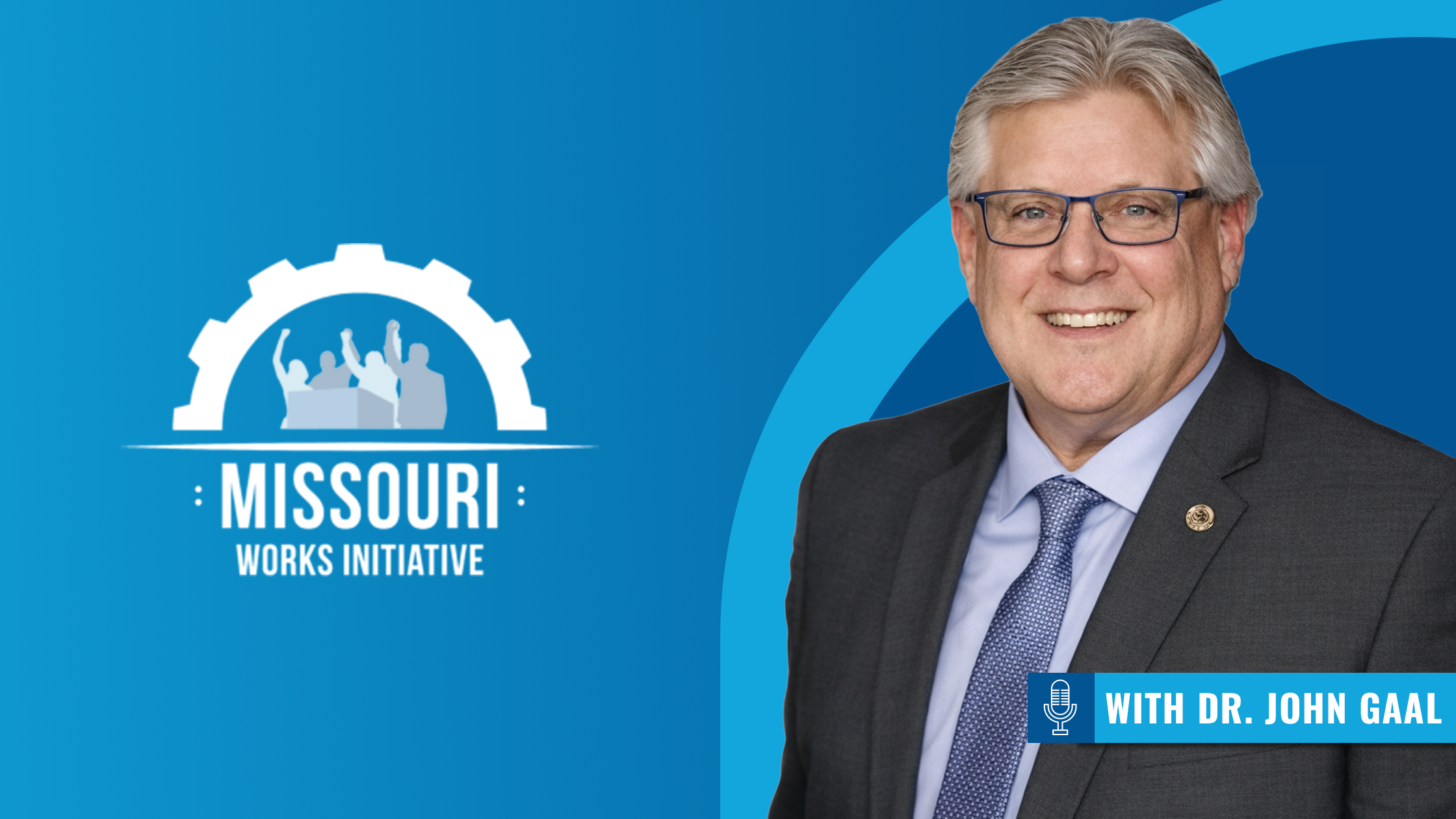
Whether you’re on or off the job site, your mental health matters. That’s the mission Dr. John Gaal, director of the Missouri AFL-CIO’s Missouri Works Initiative’s Worker Wellness Program, carries with him day in and day out. After his son, John Gaal Jr., died by suicide in 2017, John knew the lack of resources available to those in similar situations had to change.
John has decades of experience in the construction industry, having worked for almost 40 years as the director of training and workforce development for the St. Louis and Kansas City Carpenters Regional Council. From a budding apprentice to a highly regarded educator and mentor in the construction space, John has a deep understanding of how mental health in construction isn’t treated with the attention and care it deserves.
In the first of a two-part mini-series, John sat down with Under the Hard Hat’s Mariah Moore to talk about losing his son, John Jr., to suicide, and how it sparked his work in suicide postvention for the construction industry and beyond. They also discuss the stigma around mental health in construction, and where companies can start doing better today.
This interview has been edited for length and clarity. To see the full interview, check it out on our YouTube Channel: https://youtu.be/oBiKtAHrk9E
UTHH: Thanks for chatting with us, John! We’ll get into your career, of course. But first, we’d love to jump into John Jr.’s story, if you don’t mind.
Dr. John Gaal: Sure, I’d love to share. So John Jr. was a kind and funny, smart, strong, athletic kid his entire life; he really was. He was a creative, practical joker. He loved to cook for his family and friends.
What I liked about him is that he would fight for the underdog, whether it was on or off the field. He had a soft spot in his heart for unhoused populations. He tried to do a lot of work with them as much and often as he could. In the end, my wife, Mary, his mom, endearingly referred to him as a good “mother faker.” What she meant by that was that he never wanted others to see his pain.
He played multiple sports in high school, and sadly, in his junior season, he had two concussions. But more importantly, in his senior year, he had two more concussions. One from football, one from soccer.
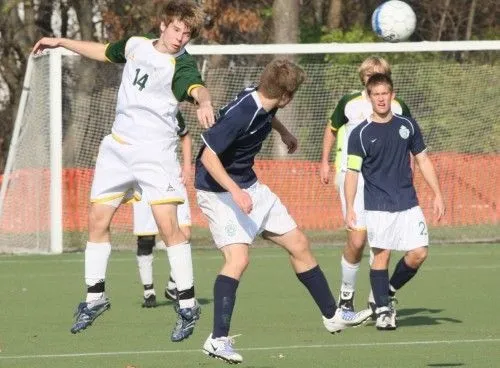
John Jr. playing soccer, one of the sports he loved. Years later, the long-term effects of repeated concussions would quietly shape his mental health journey.
Back then, all you needed was a doctor’s note to get back on the field. And my wife, Mary, and I thought that didn’t make much sense. So we went with the longer former protocol, and that was no activity for two weeks.
So two weeks later, it’s his last soccer game of the season, and of course, he goes up for a head ball, and he gets knocked out. And unfortunately, that’s a bruise on top of a bruise. That’s called second impact syndrome. So he dealt with concussion-related issues from that point forward.
UTHH: So, a doctor’s note, or a few weeks off the field, was the extent of the conversation and care around concussions at that time?
Dr. John Gaal: Yeah, that was pretty much it. So, you know, while concussions are common in high school sports, for teens, they tend to be more concussed from motor vehicle accidents, believe it or not.
So, at the end of 2016, John was back home and I came home after a meeting and I had picked up a pamphlet, it was for a graduate degree in social work and I brought it and I got home and he was shoveling the snow off the driveway and we stopped and chatted in the driveway and I said, “Hey, I found this pamphlet, it’s got your name written all over it.” Cause he just had that kind of heart and mind.
And I probably got about 10 feet away, and he said, “Hey, Pop, thanks for getting this, but I need to fix myself before I go do something like this.”
And I walked back over to him, you know, to say I’m there with you. And so that, I think, was when we started to see the wheels falling off the bus.

John Jr. celebrating graduation with friends outside Westminster College.
UTHH: And for those who don’t already know John Jr’s story, he died in 2017 by suicide. I would love to talk about the resources available to you and your family at that time.
Dr. John Gaal: Yeah, so I’d have to tell you, at that time, to put it bluntly, it was slim to none.
No parent expects such a tragedy to hit their family. And the depth of such a tragedy is not one I would wish even on my worst enemy. Fortunately, in a sense, my in-laws had a long history with an organization called NAMI, the National Alliance for Mental Illness, because their son, my brother-in-law, has schizophrenia. And so we knew there was somewhere to turn to, not necessarily for suicide in particular, but for mental health at least. And so we turned to them.
And then, as I dug deeper, I found other organizations like AFSP (the American Foundation for Suicide Prevention) that spoke more closely to what we were faced with. In 2018, the AGC of Missouri, that is the Associated General Contractors here, actually launched a work group to address the suicide epidemic in the construction industry. And that was my industry.
I was brought on to that work group as an advisor. And soon thereafter, Washington University School of Medicine, its researchers had secured a grant to help fund and study the matter of suicide and construction.
I also have to tip my hat to the caring family and friends and neighbors and coworkers who showed us all sorts of love during that timeframe.
I didn’t think about how much I had to dig to find those resources again until four years later. It was a Saturday night, when things just started to settle a little bit, my wife and my youngest daughter sat down to watch a movie. About 20 after seven, my phone starts blowing up. And I looked down, and I saw it was someone I know, but my goodness, he rarely calls me during the week and never calls me on the weekends. So I knew it had to be something important. I excused myself from the room, went to the next room, and lo and behold, he had shared with me that earlier that day, his son had died by suicide. And his words were, “John, I don’t know who else to call because you’re the only parent I know who has lost a child to suicide. Can you just sit and talk with me?”
And of course, you gotta say yes. I was in that spot. I don’t want anyone else ever to be in that spot.
And then, believe it or not, last year, from the end of July 2024 to the end of October, during those 12 weeks, I took eight more of those calls. Eight more suicide calls. And being an academic researcher, I said, this is prime time to do something about this and quit thinking about it and start taking action.
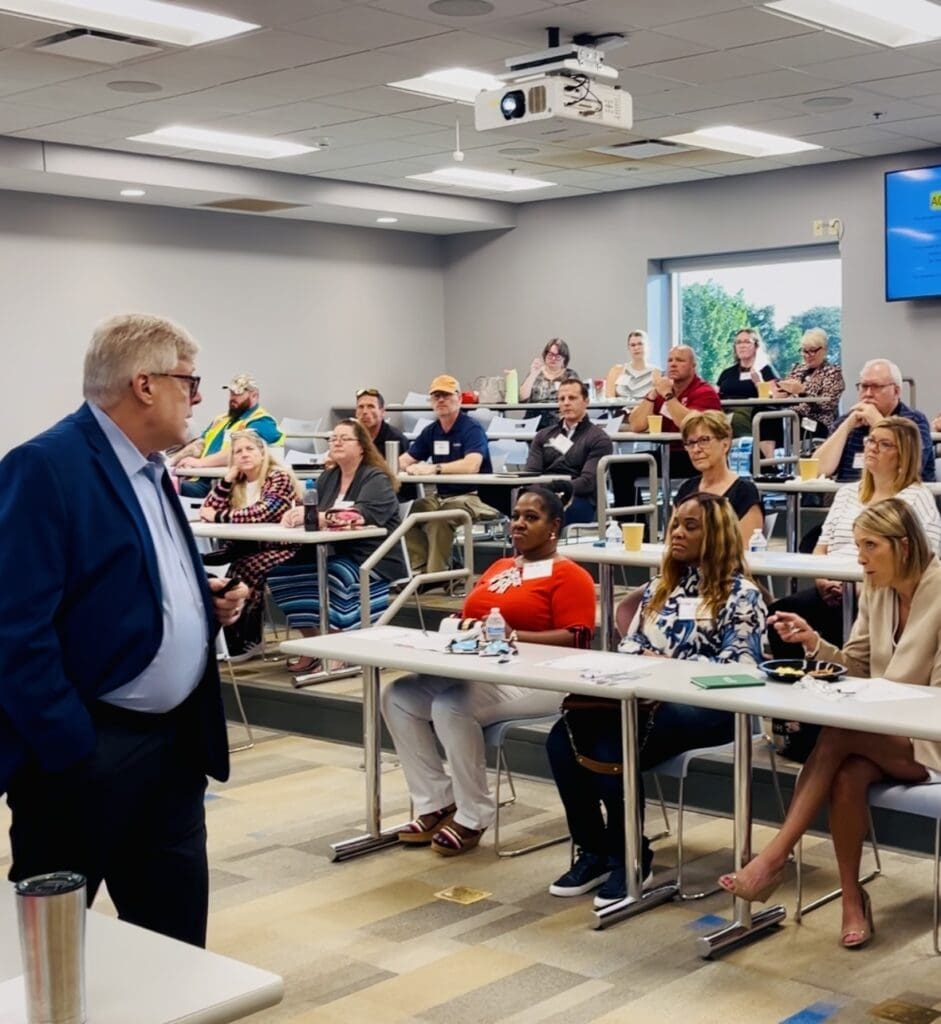
John Sr. educating parents on postvention, using his family’s story to raise awareness about brain injury, mental health, and support after loss.
And so I started down a pathway of study of how to address the acute phase of postvention in the construction industry. Because honestly, those people weren’t calling to ask what to do three weeks from now or what to do three months from now. They were asking, “What do I do right now?” And so that put the wheels in motion.
UTHH: I know that organ donation was also a big part of John Jr’s story. Can you tell us a bit about that?
Dr. John Gaal: Just to reiterate, in my eyes, John was a giver. He wasn’t a taker. So when we were in the ER that morning of March 24th in 2017, I had requested that they harvest John’s organs because I knew he would be upset if others couldn’t benefit from those gifts.
The ER doctor said none of his organs were viable due to the means. And I pushed back. I said, “I know of at least one organ that you can harvest.” And she stepped back and said, “Which one?” I said, “his brain.”
And she left the room and came back with papers for us to sign in order to donate not just his brain, but his eyes and his spinal cord. And so this began the journey to determine if John Jr. had CTE. CTE is chronic traumatic encephalopathy. This is a progressive degenerative brain disease that’s often caused by repeated head impacts and is found in many athletes and veterans. And to date, CTE can only be detected posthumously, so only after they die. The paperwork she brought back was for the Concussion Legacy Foundation that partners with Boston University.
Mary and I sat through no less than three phone interviews that lasted anywhere from an hour to three hours. Because they’re trying to connect the dots between all these people who’ve died by suicide and were eventually diagnosed with CTE. On December 8th of 2017, we got the call from the Concussion Legacy Foundation to inform us that John Junior had stage one CTE.
At the time, he was one of the youngest high school football players in the nation to be diagnosed with CTE.
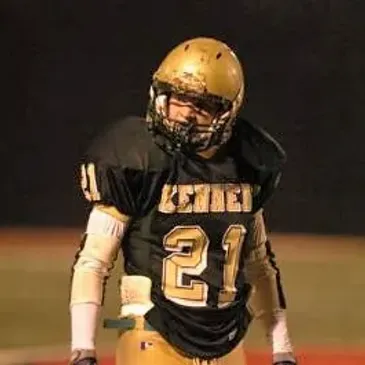
John Jr. on the football field, one of many young players to suffer from the hidden brain impacts the sport can carry.
UTHH: Powerful stuff. For those who don’t know, what was your career before John passed? And how has it changed since his passing?
Dr. John Gaal: So for the better part of 40 years, I served as the Director of Training and Workforce Development for the St. Louis, Kansas City Carpenters Regional Council. So I am a carpenter by trade. I went through an apprenticeship back in the late seventies, early eighties, believe it or not. Towards the end there, I retired technically in February of 2019. And towards the end, I was overseeing nine USDOL-approved post-secondary carpenter apprenticeship training schools across three states. There were six in Missouri, two in Kansas, and one in Southern Illinois.
My work, as far as how John’s story shaped my work, I would say that my efforts in mental health actually started back in the Great Recession. I had instructors on my shop floor telling me that they’re seeing different things about their apprentices.
We were finding people who were saying that they had just lost their jobs. And then we’d see them a couple of months later in school, and next thing you know, they lost their truck. And then a couple of months later, you pull them aside and have a private conversation, they lost their house or their family.
It was just a downward spiral. So I went back to those WashU researchers and said, “Hey, I think it’s time we start studying the mental aspects of safety, not just focus on the physical aspects of safety.” And they moved in that direction.
I was introduced to a gentleman by the name of Bill Wirkerson. Bill Wirkerson is a Canadian mental health expert who came to St. Louis to speak on the issue of mental health in the workplace. And so a colleague of mine had hosted the event. Unfortunately, not many attended.
However, I recall my colleague writing an article concerning the event. He summed it up perfectly by asking his readers, “What do you call it when you invite over 9,000 people to a mental health and construction presentation and only 12 show up?” And his answer? It was a start.
So when I retired in February 2019, I knew the work was only beginning.
And so we came up with a Recovery Friendly Program. And then in March of 21, the Missouri AFL-CIO created a nonprofit known as the Missouri Works Initiative. And they asked me if I would serve as a director of the Worker Wellness Program. And again, I just couldn’t turn it down. It was such a pioneering concept that I wanted to be a part of it.
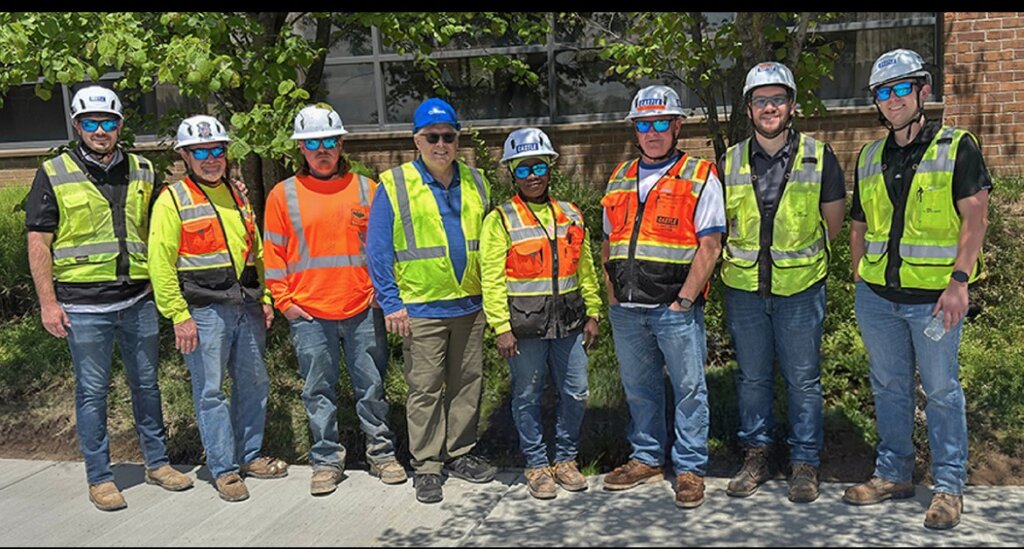
John Sr. with workers on site during a mental health standdown centered on prevention and support.
I also might add that I’ve served on the Mental Health Expert Panel for International Foundation Employee Benefit Plans. In late 2023, I earned my Labor Assistant Professional certification. So I try to stay up on my learning, education, and certifications so that I’m not on a stage or on a podcast purely speaking from an emotional standpoint. I’m speaking from a scientific standpoint, as well. I think it helps when you can back a talk with the science, but also with a personal story.
UTHH: I see what you mean about the work only getting started. For those who don’t know, tell us about The 21-14 Concussion Awareness Foundation and how that came to be.
Dr. John Gaal: Both Mary and I felt no parent should ever have to go through this kind of experience.
I am extremely grateful that when I earned my doctorate back in 2007, the St. Louis construction industry was kind enough to start a scholarship in my honor. So the structure was already there, Mariah, so we leveraged that program to begin the 21-14 Concussion Awareness Foundation.
So the 21 represents John’s football number back in high school, and the 14 represents his soccer number in high school. We support an array of projects and nonprofits that address mental health, substance use disorder, opioid use disorder, and suicide for various groups, from construction to schools to veterans.
UTHH: And so for people on the job sites or people in construction leadership, what does effective suicide prevention look like?
Dr. John Gaal: Well, I would say I think we need to take a step back. I think effective suicide prevention must connect all three legs of what I call the suicide triangle. So think of one leg being prevention, one leg being intervention, and one leg being postvention.
AFSP has what I call an awareness slash prevention program called Talk Saves Lives, and back in May, they created one specifically for construction. These are one-hour trainings. We’re not asking you to go through a semester-long course, just get educated on the topic of prevention.
When it comes to prevention, if that’s all we continue to focus on, then we’ve got an issue because if you look at the numbers, they’re not going down, they’re going up. So until we connect the three legs, I think we’re going to see the numbers continue to go up. We need to talk about these together and not in silos, for lack of better words.
UTHH: So, what can businesses in the AEC community or industry do tomorrow to start doing better?
Dr. John Gaal: There are a number of organizations that work in this space that businesses can partner with. They have expertise often in the general population, not so much specific to construction, but more of them are starting to see that, and they’re adapting their programs. Our industry is still pretty much male-dominated. This macho culture has been instilled in young boys from the time they were toddlers. It’s reinforced in high school and then again in the military. So I think we have a lot of work to do in that area of stigma and shame.
UTHH: Yeah, it’s just as simple as healthy representation. Sometimes it’s all it takes.
Dr. John Gaal: I would love for us to not wait for things to become a crisis. Because I don’t think a lot of people understand that whether you call or you text 988, the bottom line is you’ve got a mental health professional on the other end of that call or text.
So why are workers waiting until things are spilling over the bowl? Most of them work 40 to 50 minutes away from the site. So you got 40 to 50 minutes either on your drive to work or your drive home that you could be sitting with your own personal counselor by calling 9-8-8 and utilizing that service.
I mean, those are just a couple of tips that I would say we could start immediately. There are a number of great resources out there. And I think once you spill into one, you spill into five or six others, and it just keeps cascading.
Special thank you to Dr. John Gaal for sharing his and John Jr.’s story. Stay tuned for part two of Under the Hard Hat’s two-part mini-series, where we dive into suicide prevention, intervention, and postvention.
For companies or individuals looking for some of the resources John mentions in the full chat, check out:
- The 21-14 Concussion Awareness Foundation
- The Construction Industry Alliance for Suicide Prevention
- Labor’s Escaping Adversity Now
- The American Foundation for Suicide Prevention’s Talk Saves Lives
- The National Alliance for Mental Illness
If you or someone you know needs help, don’t wait. Call the National Suicide Prevention line at 988.
For more like this, subscribe to our newsletter and follow us on LinkedIn to stay in the loop.