
2025 has flown fast, but new construction tech advancements have flown by even faster. In construction project management, it’s hard to pinpoint exactly what 2026 holds, but we can identify which trends will sweep the industry sooner rather than later. In this article, we’ll detail the 2026 project management trends to watch in AEC, including AI-enhanced safety operations, hybrid project management, digital twins, and a soft-skill focus in leadership teams.
10 project management trends to watch in 2026
1. AI-powered project scheduling
Conventional scheduling is vulnerable to weather delays, supply chain disruptions, and material and resource shortages. AI tooling is proving to be the strongest way to overcome these challenges by synthesizing large datasets that include historical data, local weather and traffic forecasts, labor availability, and supplier coordination.
The result is less human error, faster operations, and an agile system that adapts in real time. Businesses that integrate AI-based scheduling report delays reduced by up to 60%, saving time and money while retaining clients.
2. AI-enhanced safety operations
Safety is a top priority on any job site. AI functionality is proving to be a powerful aid in safety operations, analyzing live video feeds to detect workers without PPE, unsafe use of heavy equipment, and potential fall or confined space hazards.
When risks and violations are surfaced, AI can instantly alert supervisors and leaders, enabling intervention before an incident occurs. Early AI adopters have already seen insurance premiums reduced by implementing AI systems, and they can expect lower spending on incident fines this fiscal year and beyond.
3. More accurate bidding and cost estimation
Estimating total project costs has long been a tricky task for project managers. With AI, estimators and bidders can quickly analyze thousands of factors and variables, like raw material costs, payroll data, site-specific risks, and regulatory requirements for a given jurisdiction.
These systems, after refinement, can now achieve almost 95% accuracy. This allows project managers to make more competitive bids while staying confident they’re protecting their profit margins. This puts businesses in the best position to win more contracts and attract top talent down the line.
4. Hybrid project management
The hybrid approach blends conventional and agile project management methods. It helps a company plan and execute complex tasks faster and with greater accuracy, while choosing the method that works best for each project. Examples of the hybrid approach include:
- Combining waterfall planning with Scrum sprints
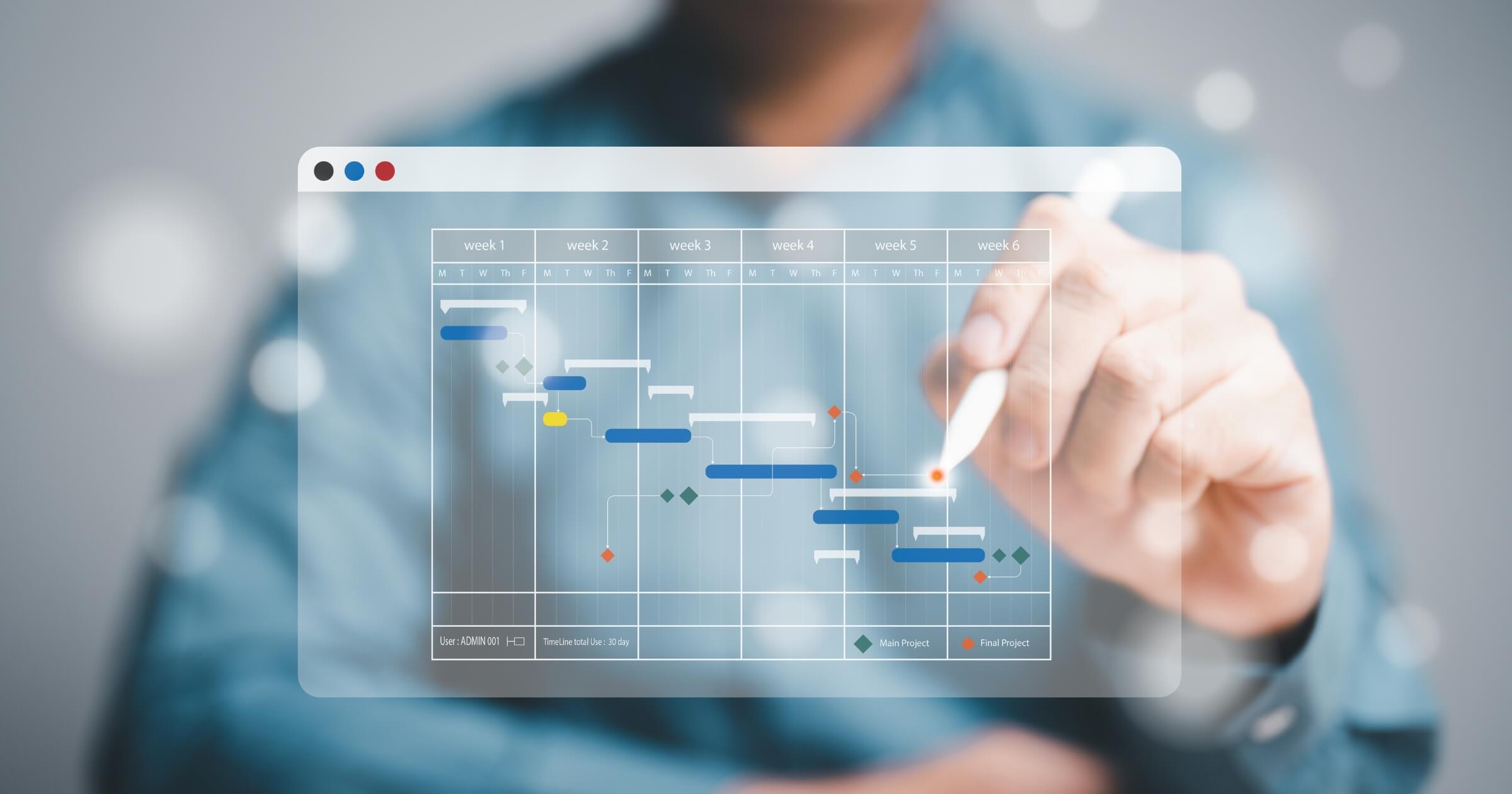
- Using Gantt charts in tandem with agile boards
- Managing hardwater (waterfall approach) with software (agile approach) together
It doesn’t mean completely abandoning conventional planning methods; instead, it introduces a more agile, modern approach gradually, where it can have the greatest impact.
5. Digital twins and AI-integrated BIM
Building information modeling (BIM) is quickly evolving thanks to advancements in AI. Before, AI simply streamlined coordination; now, it predicts performance. BIM tools, when paired with AI, can forecast maintenance requirements, optimize design decisions, and more accurately estimate completion times.
When paired with digital twin technology, AI enables project managers to monitor live building performance throughout construction and after completion.
6. Hybrid or remote collaboration
Digital roles are opening the door to more remote work, and with that, new collaboration tools are changing how the whole team works together. These construction project management tools support remote meetings, file sharing, and real-time status updates, making the work seamless even while miles apart. Standout features include:
- Collaborative digital task boards
- Live retrospective meeting hosting
- Real-time document co-edits
- Push notifications for task changes
With more people working in the place that suits them best, workplace culture improves, leading to greater productivity and improved morale.
7. Social responsibility and sustainability goals
Social responsibility and sustainability are becoming increasingly important for construction teams around the globe, as many commit to goals rooted in ethics and eco-consciousness. Teams are expected to evaluate their workflows and how their work impacts the planet, and this responsibility is a key component of modern project planning and delivery.
Project management teams need to consider greener resource use, collaborating with suppliers that uphold ethical standards, promoting more diverse and inclusive hiring teams, and tracking each project’s carbon footprint.
8. AI-powered supply chain and material optimization
Supply chain complications and delays have always been a sticking point for construction companies. AI products are smoothing operations by forecasting demand with precision like never before.
AI algorithms consider the project stage, past consumption trends, delivery lead times, and even weather to ensure materials and supplies arrive exactly when needed. This reduces waste, saves time, and lessens the project’s carbon footprint.
9. A soft-skill focus in leadership
Construction leaders today, of course, need an increasing amount of technical knowledge, but they also need to focus on communicating well, managing change and tech adoption, and inspiring their teams. With so many changes flooding the industry, soft skills such as adaptability, empathy, and the ability to motivate teamwork are more essential than ever. A great leader will establish:
- Routine feedback loops
- Greater collaboration and trust
- Ways to guide teams through technical changes
- Methods to resolve conflicts and frustration with respect and care
10. Stronger data-driven strategy building
Data-driven strategies mean using facts and historical evidence over guessing to guide your work. With AI and other automation and machine-learning tools, project managers can now rely on real-time and historical data to inform future strategies. This means better forecasting and fewer planning errors.
New AI tools inform strategies by using past data to assess project health, adjust tasks based on live status updates, justify plans based on data findings, and better plan using data-driven forecasts.
Final thoughts
Unsurprisingly, AI will have the greatest influence yet in the day-to-day of a construction project manager in 2026. The industry can expect better estimating, safer practices, and smoother supply chain options thanks to AI’s powerful data-rich capabilities.
While not every company needs to ensure its project management team is up to date on these latest trends, if it fails to do so, it could risk falling behind the competition.
Loved this article about project management trends? Check out these articles with other AEC trends to watch in 2026:
- 8 workforce trends shaping construction in 2025
- 10 global construction waste trends to watch in 2025
- 10 sustainable construction technology trends to watch (2025-2027)
- 10 sustainable infrastructure trends to watch out for (2025-2027)
- Construction safety trends to adopt for 2025
To stay in the loop about news, tech, and business in construction, subscribe to our newsletter and follow Under the Hard Hat on LinkedIn!