
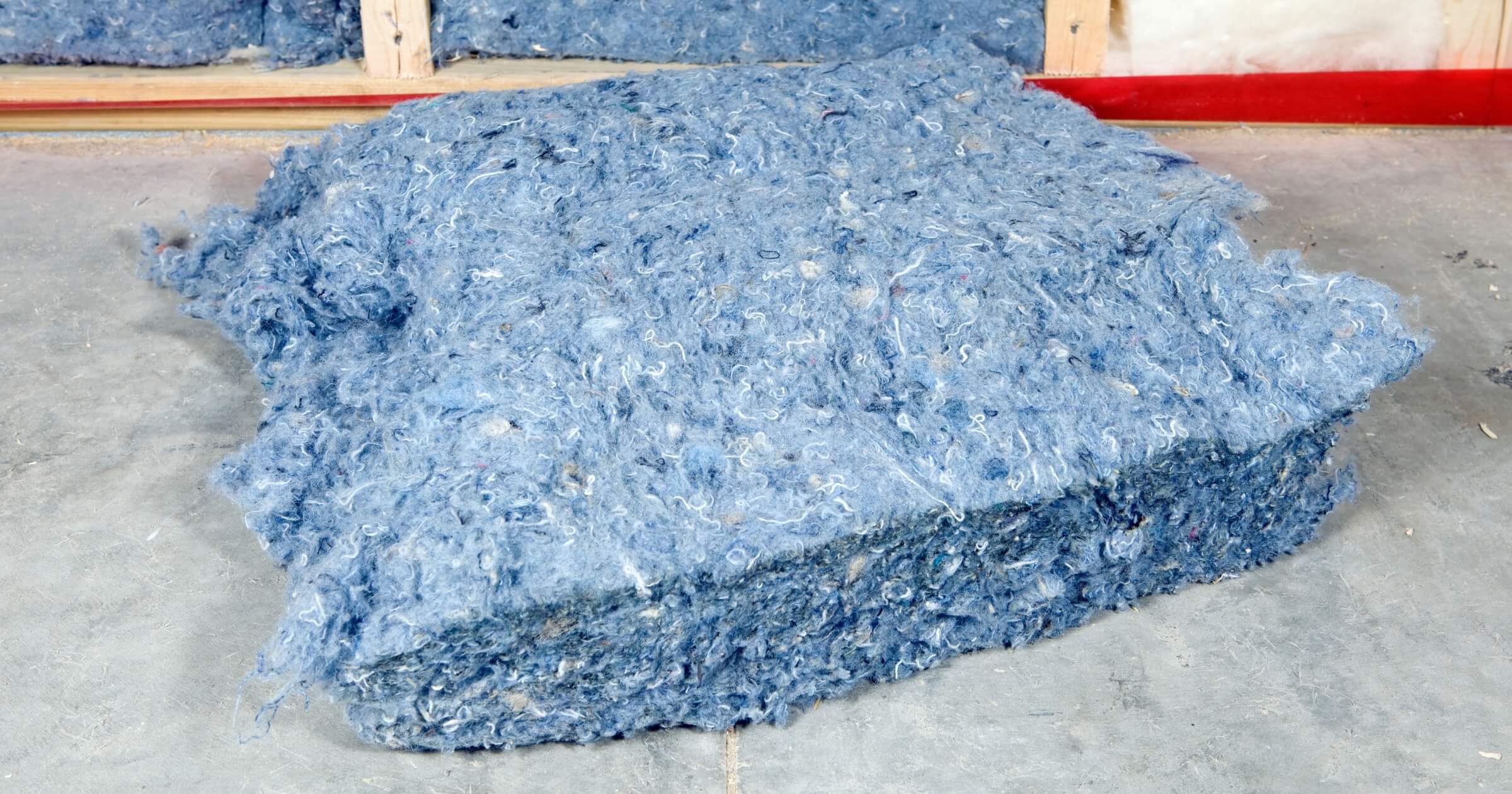
Some eco-friendly construction materials have been quicker to adopt than others, and recycled denim insulation has gained increasing popularity in recent years. It is used in the commercial and residential sectors as an alternative to fiberglass and cellulose. In this article, we’ll look at what recycled denim insulation is, its pros and cons, and when it’s most suitable for use.
What is recycled denim insulation?
Recycled denim insulation is precisely what it sounds like—it’s commercial or residential insulation made from recycled denim. Much like cellulose and fiberglass, this insulation can be used in crawl spaces, ceilings, floors, attics, and walls.
Denim insulation is used as a replacement for conventional insulation because it enhances dust safety and has an R-value rating comparable to that of conventional insulation. Thick R-19 and R-21 insulation can be used for two-by-eight or two-by-six wall assemblies, while thinner R-13 insulation is suitable for the more common two-by-four assemblies. Denim insulation fits the bill for all.
Many of the complaints homeowners have about traditional insulation, like itchiness and high-maintenance installation, can be addressed with recycled denim insulation. Here are more of the pros.
Pros of recycled denim insulation
Denim insulation plays a big part in supporting eco-friendly trends and helping cities and states meet their sustainability goals. Denim is toxin-free, made of natural elements, and does not require additional volatile organic compounds (VOCs) during production. There are four main reasons why more builders and homeowners are opting for denim.
Eco-friendly and low carbon footprint
Recycled denim insulation is an 85% post-consumer recyclable, meaning the majority of the composition has been previously well-used.
Not only is the insulation made from used denim, but it can also be further recycled after being used as insulation. Conventional insulation can’t say the same in terms of repeated use, unless it’s fiberglass in pristine condition. Otherwise, insulation goes right into the landfill.
Safe and comfortable to install (requires minimal protective gear)
Traditional homing insulation like fiberglass contains irritant fibers that release into the air. But with recycled denim, it’s not a concern. For installation, instead of gloves, long sleeves, eye protection, and a mask, installers can use a simple dust mask, and that’s it.
This makes kicking off and completing insulation projects faster and with improved respiratory safety.
Excellent thermal and acoustic performance
Homebuyers who use recycled denim insulation can enjoy a quieter home once installation is complete. Denim insulation, which utilizes cotton fiber, consistently meets high acoustic rating standards. It’s often more dense than fiberglass, meaning there’s more dependable heat retention and better acoustical performance through floors, walls, and ceilings.
Fire, mold, and pest resistance
Recycled denim insulation has been in circulation for many years and has undergone improvements more recently. Most denim insulations on the market today are resistant to fire, mold, and pests. Builders and homeowners who opt for denim can trust in its quality, knowing it will last for years to come.
Cons of recycled denim insulation
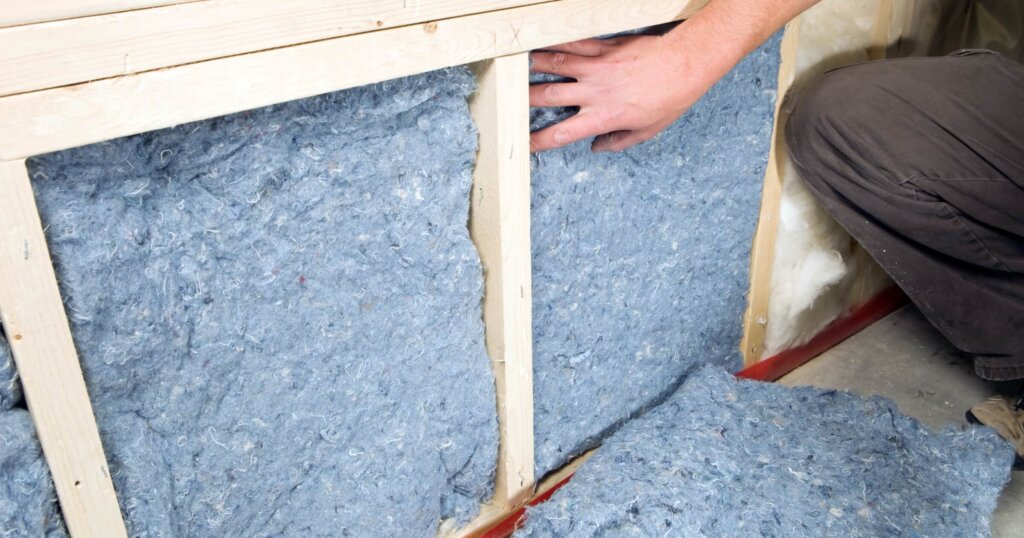
Installing recycled blue jean denim insulation in wall frame. Photo courtesy of Canva.
One of the most immediately noticeable differences with denim insulation is in its handling. Denim insulation often comes as a tight mat that’s difficult to stretch and doesn’t have the fluffy quality you’ll find in fiberglass. It can be hard to stretch and fit, but many suppliers are now packaging the insulation in rolls, making installation smoother.
Higher cost and limited availability
Cost is a significant drawback of opting for denim as insulation. Recycled denim is more costly than fiberglass by an average of 10 to 50 percent. If you were looking to order a pallet (16,740 square inches) of R-13 fiberglass insulation, you might expect to pay around $750. In contrast, the same quantity of recycled denim insulation might cost around $824.
You also can’t always count on finding enough of it. Denim insulation is often limited in quantity and is usually only available by special order. When builders can get their hands on it, they might be made to order it only in large quantities. Because it’s not as in demand as conventional insulation, ordering exactly what you need when you need it can be tricky.
Moisture sensitivity and vapor barrier need
Recycled denim is moisture-sensitive, meaning that excessive moisture causes it to become heavy and take a long time to dry properly. Recycled denim also requires a separate vapor barrier to prevent moisture buildup to meet building codes.
The fire-retardant nature of most recycled denim makes it an effective deterrent against mildew and mold. However, a semi-permeable vapor barrier is still widely recommended, especially in humid climates with building codes that require it for improved indoor air quality and energy efficiency.
When should contractors consider using denim insulation
Every building material you use in a home build has its pros and cons. Contractors should consider using recycled denim insulation when:
- They have sustainability goals to align with or meet
- They need to meet green certifications
- They want a simpler, safer installation process
- The project is being advertised as a quieter, healthier build
Yes, the price may add up quickly. But for the sake of the earth’s health, ease of installation, and longer-term performance benefits, recycled denim insulation might just be worth it.
For the latest on sustainability in the AEC industry, subscribe to the Under the Hard Hat newsletter and follow us on LinkedIn.