
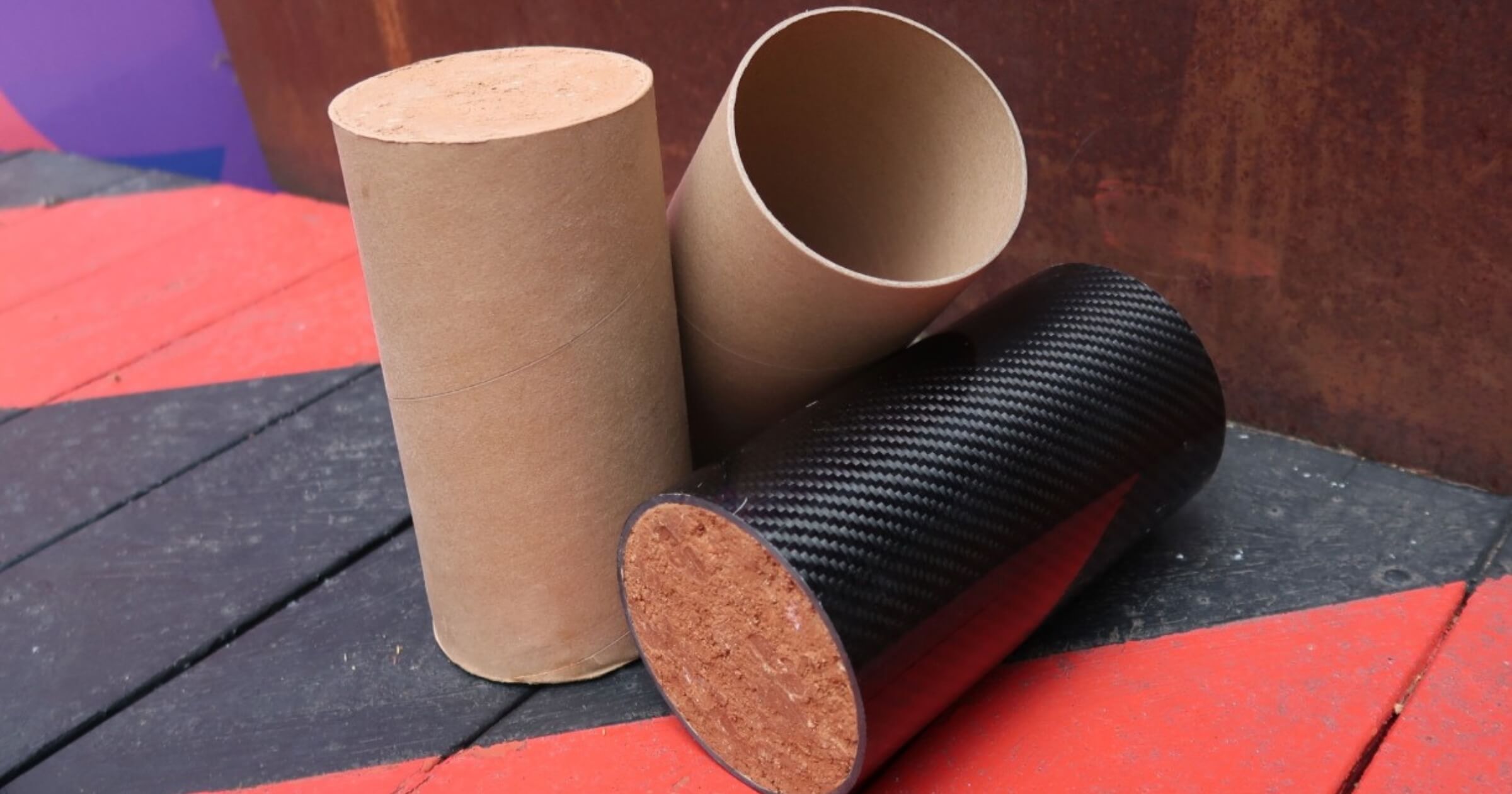
RMIT University researchers in Australia have created a new kind of wall made from cardboard, soil, and water, and it could change how buildings are constructed worldwide. Their innovation, known as cardboard-confined rammed earth, produces strong, low-cost walls with just a quarter of concrete’s carbon footprint and under one-third of the cost.
Lead author Dr. Jiaming Ma from RMIT said the breakthrough marks a significant advancement toward a more sustainable construction industry. “Modern rammed earth construction compacts soil with added cement for strength. Cement use is excessive given the natural thickness of rammed earth walls,” he said.
Instead of using cement to strengthen the walls, traditional rammed earth builders rely on additional binders that add both cost and emissions. The RMIT researchers took a different route. They use simple cardboard molds to shape and support the soil as it’s packed and left to dry. Once the mixture sets, the cardboard becomes part of the wall itself, giving it strength and stability without any added chemicals. “By simply using cardboard, soil, and water, we can make walls robust enough to support low-rise buildings,” Ma said.
This shift reduces emissions and reuses a massive waste stream. Across Australia, more than 2 million tonnes of cardboard and paper end up in landfill each year, even as cement and concrete production accounts for around 8% of global carbon emissions. Finding ways to reuse construction waste could help reduce both pollution and the industry’s reliance on high-carbon materials. “This innovation could revolutionise building design and construction, using locally sourced materials that are easier to recycle,” Ma added.
The process of making cardboard-confined rammed earth is also simple and accessible. Builders can make the cardboard molds on site, fill them with locally sourced soil and water, then compact the mixture either manually or with light machinery. The finished walls are naturally insulating and can help lower energy use for heating and cooling, which is important for off-grid or remote buildings.
Because the material is lightweight and cost-effective, it can be used for low-rise housing, community centers, and rural developments in regions where conventional materials are expensive or difficult to transport. “It also reflects the global revival of earth-based construction fuelled by net zero goals and interest in local sustainable materials,” Ma said.
As the global construction industry seeks ways to cut emissions, RMIT’s research highlights a simple truth: sometimes the most sustainable solutions come from the ground beneath our feet and the cardboard we throw away.
Stay updated on the latest sustainable building innovations by subscribing to our newsletter today.