
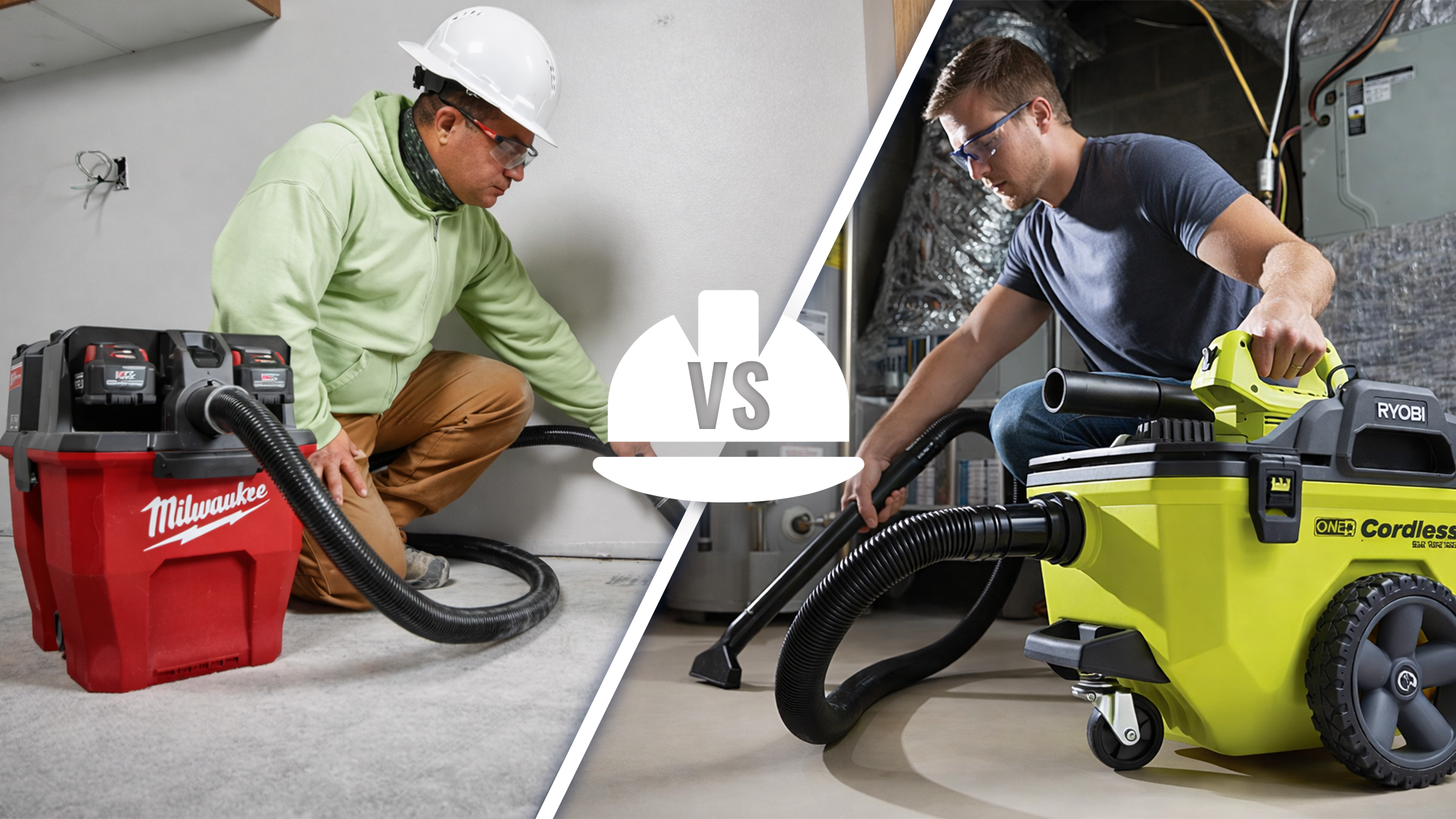
If you’re looking for a cordless shop vacuum and wondering which ones to choose, the Ryobi 18V ONE+ 6 Gallon Wet/Dry Vacuum and the Milwaukee M18 FUEL 6 Gal Cordless Wet/Dry Shop Vacuum are two top picks. This review is for contractors, engineers, architecture/engineering firms with in-house workshops, and serious DIYers who want a dependable shop-vac solution tied to a cordless platform. We’ll compare the Ryobi vs Milwaukee shop vac, discuss what each model offers, compare specs, evaluate performance in real work, assess ease of use, value for money, and extra features, and help you decide which is the better choice for your situation.
As an Amazon Associate, we earn from qualifying purchases. Some of the links below are affiliate links, meaning at no extra cost to you, if you click through and make a purchase we may earn a commission.
Overview of the Ryobi vs Milwaukee shop vac
Ryobi in a nutshell
The Ryobi 18V ONE+ 6-gallon wet/dry vacuum is part of Ryobi’s broad ONE+ 18-volt system. It’s a 6-gallon-capacity cordless wet/dry vac that claims “corded performance with cordless convenience,” with about 80 CFM airflow, according to Ryobi. The tool-only version weighs about 16 lbs. Its flagship features include the no-tip wheel design, 360° mobility across cords/thresholds, onboard accessory storage, and a removable top for emptying. The value proposition: if you already own ONE+ batteries, you can plug into your existing platform and save money.
Milwaukee in a nutshell
The Milwaukee M18 FUEL 6-gallon cordless wet/dry shop vacuum is part of Milwaukee’s M18 system and its FUEL line of brushless tools. It features a POWERSTATE™ brushless motor, claims up to 87 CFM and 60″ of suction on the 6-gallon version, and runtime as high as 47 minutes on an HD12.0 battery pack. It comes with accessories, including the high-efficiency filter, hose, and extension wand. Milwaukee emphasises jobsite durability (reinforced casters, crush- and twist-resistant hose) and modular upgrade options (motor heads, tanks, carts) for jobsite cleanup. If you already run M18 tools, this vac integrates easily into your battery ecosystem.
Specifications comparison: How do Ryobi and Milwaukee compare on paper?
Here’s a side-by-side table of key specs:
| Specification | Ryobi 18V ONE+ 6 Gal Wet/Dry Vacuum | Milwaukee M18 FUEL 6 Gal Cordless Wet/Dry Shop Vacuum |
| Capacity | 6 gallons | 6 gallons |
| Air flow/suction | Up to about 80 CFM | Up to 87 CFM (and 60″ of suction) on the 6-gal version |
| Power system | 18 V ONE+ battery system | M18 battery system (REDLITHIUM HD12.0 etc) |
| Runtime | Up to 41 min on high or up to 78 min on run-time mode | Up to 31 min on high or up to 47 min on run-time mode |
| Weight (tool only) | 19 lbs | 26 lbs |
| Onboard storage & mobility | Multi-size no-tip wheels, 360° mobility, hose/hose-dock | Reinforced casters (up to 8× wheel life), crush/twist resistant hose (2× hose life) |
This table gives a quick glance at how the two compare.
Performance and power: Which tool packs more punch?
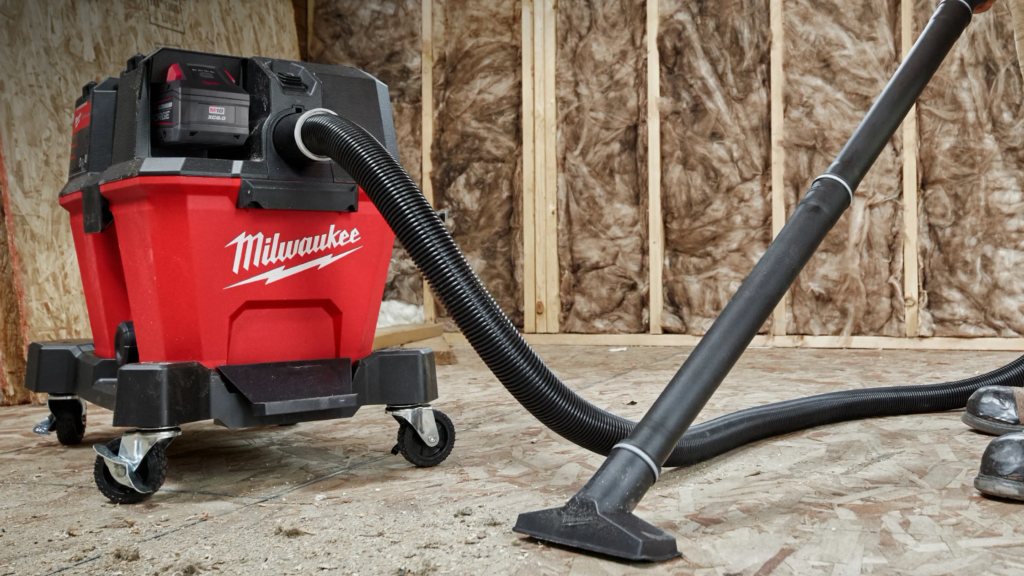
When assessing the the Ryobi vs Milwaukee shop vac performs better, look at suction power, runtime under load, durability, and how it handles real dirt and debris.
Suction and runtime
The Ryobi delivers up to about 80 CFM. For many workshop tasks—wood dust, metal shavings, general cleanup—that is suitable. At maximum power, the Ryobi provides up to 41 minutes of runtime, and in max runtime mode, it provides up to 78 minutes.
The Milwaukee model claims up to 87 CFM and 60″ of suction, plus up to 31 minutes in max power mode and up to 47 minutes in max runtime mode with an HD12.0 battery pack. So, while Milwaukee offers stronger suction, the Ryobi shop vac runs for a significantly longer time.
Real-world tasks
User feedback on Reddit aligns with its specs: the Ryobi performs well for vehicle detailing, woodworking dust, and light renovation cleanup, especially if you already own several ONE+ batteries. Several users mention it “does the job” for tasks like cleaning cars or small shop messes, but drains batteries quickly under heavy suction or wet cleanup. A few note that it’s louder and less powerful than corded shop vacs, making it better suited for short cleanup sessions rather than full-day jobsite use.
Reddit users praise Milwaukee’s sturdy build and faster cleanup of construction debris compared to smaller cordless units. Its reinforced hose and cart design earn good marks for jobsite durability. However, users also acknowledge that battery life drops fast in high-suction mode and that no cordless vacuum fully matches a corded model’s power. Most owners agree it’s worth it for those already using M18 tools, as it simplifies jobsite cleanup without running extension cords.
For a small shop or someone doing light to moderate cleanup (woodworking, drywall repair, general maintenance), the Ryobi will likely handle the job and tie into a broader 18 V ONE+ battery fleet. On a busy jobsite, demolition, renovation, or multi-crew cleanup scenarios, the Milwaukee stands out: you’ll spend less time re-charging, less chance of the vac stalling on heavy dust loads, and better durability for tougher cleanup cycles. If you already own M18 batteries, the marginal cost of the vac is lower (in terms of battery investment), and the runtime can match the demands of multiple workers.
Ease of use & ergonomics: Which is more beginner-friendly?
Handling and balance
The Ryobi model—at about 16 lbs for the tool only—is lighter than Milwaukee’s 26 lbs bare tool. That makes the Ryobi easier to move, especially in tight spaces or for smaller users. The wheel design (multi-size no-tip wheels with 360° mobility) helps it roll over thresholds and cords well.
The Milwaukee, while heavier, compensates with durable casters, reinforced wheels (up to 8× wheel life), and a robust cart design. That extra weight may reduce portability, but it improves stability and durability on a rough jobsite.
Grip and controls
Both models feature easy-to-use controls and onboard storage for accessories (hoses, tools). Reviews of the Milwaukee mention good built-in storage and cart integration. The Ryobi also includes onboard accessory storage and a hose dock. For a beginner or a smaller shop, the Ryobi’s lighter weight and simple control layout may be less intimidating.
Vibration and noise
The Ryobi model lists a sound level as low as 66.1 dB(A). Lower noise helps in indoor or multi-trade environments. The Milwaukee documentation emphasises quieter operation compared with corded competitors, but doesn’t provide a specific dB number for this exact model. Because the Milwaukee model is heavier and built for tougher loads, you might notice more operational tone in heavy use, but overall, it holds up well.
One-handed or overhead use
Neither of these vacuums is designed for “one-hand overhead” use—they’re 6-gallon canister-style vacuums with hoses, a cart, and accessories. The lighter Ryobi gives a slight edge if you’re moving it frequently or lifting it on and off trucks/trailers. The Milwaukee trades slight portability for jobsite ruggedness.
Verdict on ergonomics
If ease of movement, lighter weight, and tying into an existing ONE+ 18 V battery system matter most, the Ryobi wins the ergonomics category. If durability, heavy-duty site pickup, and longer runtime matter more, the Milwaukee is still very usable but with slightly more heft.
Price and value: Which one gives more bang for your buck?
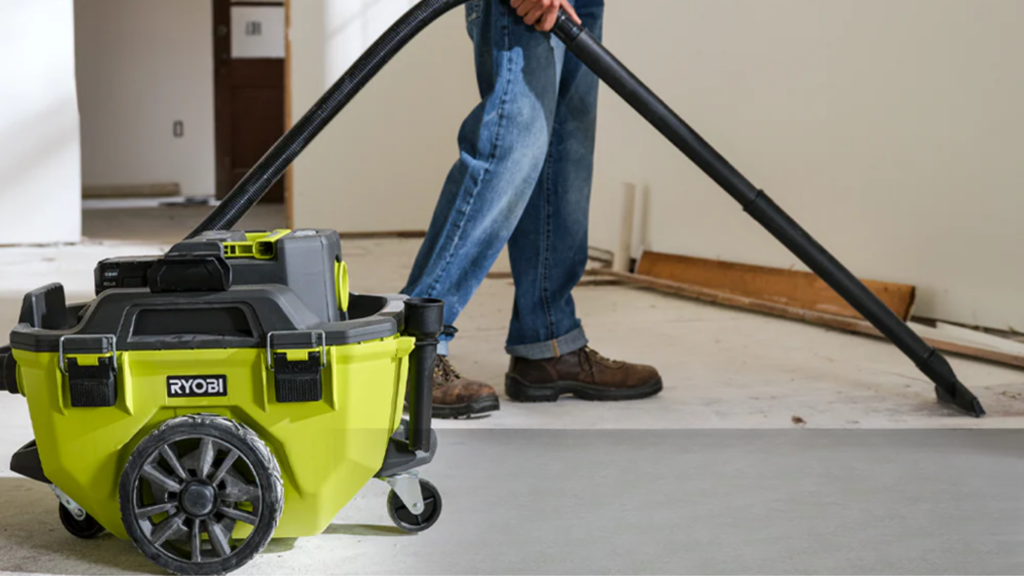
When evaluating value, consider not only the upfront cost but also how it fits into your battery ecosystem, its expected lifetime use, and whether the performance gain warrants the cost.
The Ryobi, being part of the 18V ONE+ platform, means that if you already have many ONE+ tools and batteries, adding this vacuum is a lower-marginal-cost proposition. The lighter weight improves portability. For many contractors or workshop owners, this may represent “good value, good enough”.
The Milwaukee vacuum has a higher initial cost (bare tool price, battery investment if you don’t already own M18 batteries), but in return, you get higher suction, longer runtime, jobsite-rated durability, and compatibility with a complete heavy-duty system. If you will use the vac heavily, across larger cleanup tasks, or in a multi-worker environment, the cost may pay off.
For tighter budgets and moderate usage, Ryobi offers strong value. If you expect high-frequency use, heavy debris, multi-crew cleanup, or already live in the Milwaukee battery system, the Milwaukee is worth the premium.
Features & accessories: What extra features do they offer?
The Ryobi model includes: 7 ft × 1-7/8″ hose, crevice tool, floor nozzle, extension wands, cartridge filter, and removable top for easy emptying. The no‐tip wheels and all-terrain mobility are extra conveniences.
The Milwaukee includes more “pro-grade” accessories: 1-7/8″ × 9’ flexible hose, crevice tool, utility nozzle, and two extension wands. It features a large, high-efficiency filter, compatibility with fleece dust bags, a foot pedal for tank release, and a modular system (motor heads and carts).
Pros and cons summary
Ryobi pros:
- Lightweight tool (16 lbs) makes it easier to move around
- Integrates with a broad 18V ONE+ battery ecosystem (300+ products) for those already invested
- Good suction (80 CFM) for moderate shop/jobsite cleanup
- No-tip wheel design and compact, storage-friendly
- Lower cost entry point compared to premium jobsite vacs
Ryobi cons:
- Fewer heavy-duty durability features (wheels/hose) than Milwaukee
- Part of the lighter-duty class; if you need major debris pickup, you may push it harder
- Smaller brand-premium perception for heavy pro use (though Ryobi is solid)
Milwaukee pros:
- Strong suction (87 CFM) and job-site-rated features (60″ suction, brushless motor) deliver high performance
- Documented runtime (up to 47 minutes) and debris area coverage—valuable in heavy cleanup scenarios
- Durable build: reinforced casters, crush- and twist-resistant hose, cart system for jobsite use
- Full M18 platform compatibility; if you already own M18 gear, the ecosystem is large
- Accessories and a modular upgrade path (motor heads, tanks, carts) provide flexibility
Milwaukee cons:
- The higher tool weight (26 lbs) requires more effort when moving
- Higher cost, especially if you don’t already own M18 batteries
- It might be overkill for a light shop or occasional cleanup use; you’ll pay for features you may not fully use
- Slightly steeper upfront investment and maintenance (filters, larger hose) in a heavy-duty environment
Ryobi vs Milwaukee shop vac: Which should you buy?
If you’re assessing the Ryobi vs Milwaukee shop vac, here’s how to pick based on your scenario:
- If you already run Ryobi 18V ONE+ tools and need a reliable 6-gallon wet/dry vac for moderate cleanup (woodworking, light renovation, shop cleanup), the Ryobi is a smart fit. It offers good suction, lower weight, lower cost, and ties into your existing batteries.
- If you are in a heavy-duty environment—commercial renovation, jobsite cleanup with drywall and concrete dust, multi-crew use—or you already have Milwaukee M18 gear, the Milwaukee M18 FUEL 6-gallon vac is the better long-term investment. The higher suction, durability, and runtime make it more capable under stress.
Put simply, choose Ryobi when cost, weight, and battery interoperability matter more, and when cleanup demands are moderate. Choose Milwaukee when performance, jobsite durability, and ecosystem compatibility matter most.
Whichever you go with, make sure you factor in battery investment (if needed), filter/hose replacement costs, and the amount of cleanup you perform per shift. For workshop owners and construction/engineering professionals, viewing the vacuum as part of your productivity toolkit (not just a cleaning tool) shifts the ROI: less downtime, fewer dust-related issues, safer and cleaner job areas.
For more articles like this aimed at construction, architecture, and engineering professionals, including tool reviews, workflow tips, and jobsite tech, subscribe to our newsletter.