

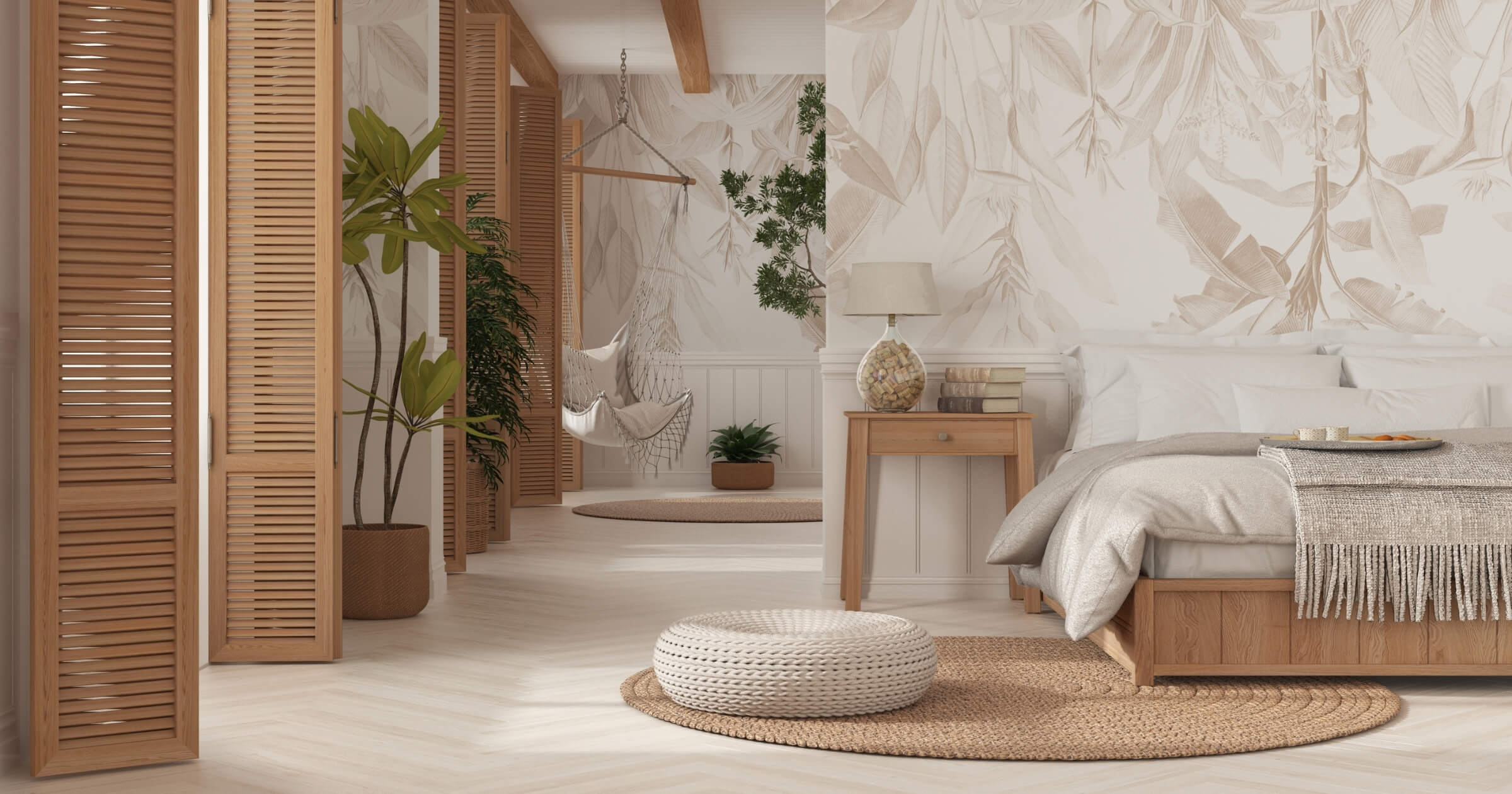
Creating a sustainable home doesn’t have to drain your budget. Small changes in lighting, heating, water usage, and finishes can make a big difference in monthly bills and indoor air quality. Switching to LED bulbs, installing a programmable thermostat, or choosing low-VOC paints are all simple and affordable ways to start. Upgrades like faucet aerators and thermal curtains can also stretch your dollar while lowering energy consumption. This guide highlights practical, budget-friendly, sustainable interior design tips homeowners can implement right away.
Sustainable interior design tips
Tip #1: Swap in LED bulbs and smart power strips
LED lighting is one of the most cost-effective ways to cut energy use at home. According to the U.S. Department of Energy (DOE), LEDs consume at least 75% less energy and last up to 25 times longer than incandescent bulbs. A standard LED bulb can cost between $2 and $8, depending on brightness and brand. Replacing all the bulbs in a home can result in noticeable savings on electricity bills within the first year.
Smart power strips are another affordable upgrade, typically priced between $20 and $40. Unlike standard strips, they prevent electronics from drawing “phantom” energy when not in use. The DOE reports that standby power can account for 5–10% of household electricity use. By cutting this waste, smart strips can save homeowners about $100 annually. Pairing LEDs with power strips provides an easy entry point into sustainable design, offering a quick return on investment.
Tip #2: Use a programmable or smart thermostat
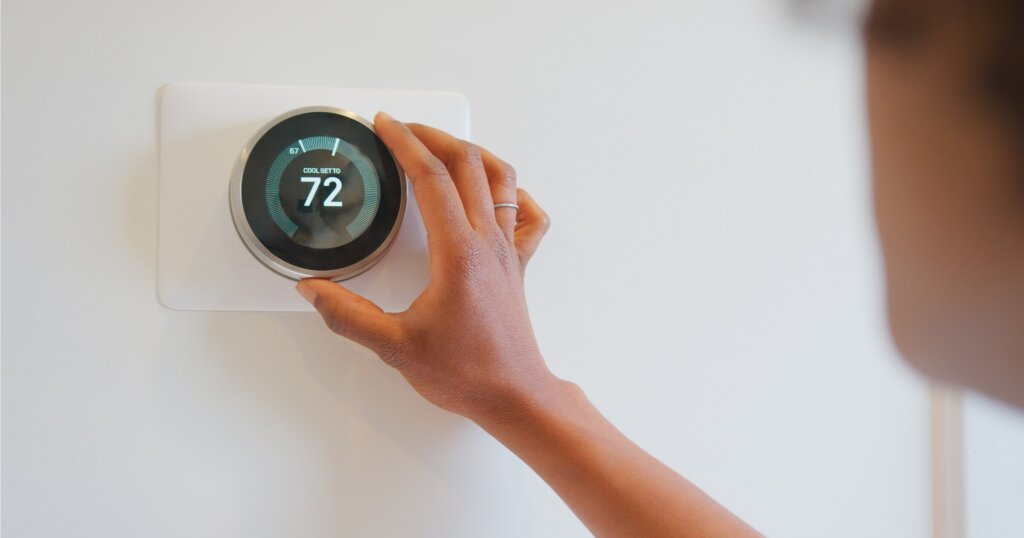
Photo courtesy of
Heating and cooling account for almost half of the energy most households spend, according to the Department of Energy. A programmable or smart thermostat can help to cut those costs by adjusting the temperature when the house is empty or everyone is asleep. Basic programmable versions range from $25 to $50, while Wi-Fi-connected smart models are typically priced between $100 and $250.
The DOE also estimates that households can save about 10% annually on heating and cooling by simply lowering thermostats 7–10°F for 8 hours a day. Smart thermostats do even more by learning your schedule and making adjustments automatically. Some models even provide energy-use reports that help track progress. This upgrade doesn’t just reduce energy waste—it also makes indoor comfort easier to manage.
Tip #3: Change your showerhead to an EPA WaterSense model
Water heating is the second-largest energy expense in most homes, according to the DOE. Standard showerheads can use over 2.5 gallons per minute, while WaterSense-certified models use no more than 2 gallons per minute without sacrificing pressure. The EPA estimates that households can save 2,700 gallons of water per year by making this switch.
A WaterSense showerhead typically costs between $15 and $50, and installation takes only a few minutes with basic tools. Beyond water savings, reduced hot water demand results in lower energy bills. The EPA also notes that the average family can save 330 kilowatt-hours of electricity annually by installing WaterSense models—enough to power a home’s washing machine for 9 months.
Tip #4: Add faucet aerators to kitchen and bath taps
Faucet aerators are small, inexpensive attachments—usually under $10—that screw onto the end of faucets. They reduce water flow while maintaining pressure, which cuts both water and heating costs. The EPA recommends using aerators that reduce flow rates to 1.5 gallons per minute or less in bathrooms and 2.2 gallons per minute in kitchens.
This change adds up over time. According to WaterSense, if every home in the U.S. installed efficient aerators, the nation could save 60 billion gallons of water annually. For homeowners, that translates to lower utility bills and a noticeable reduction in waste with very little upfront investment.
Tip #5: Hang thermal or blackout curtains on the sunniest or draftiest windows

Photo courtesy of
Windows can be a significant source of heat loss in winter and heat gain in summer. Thermal or blackout curtains help regulate indoor temperatures by adding insulation. Depending on fabric and lining, they can cut heat loss by up to 25%, according to the DOE.
Curtains range in price from about $30 to $100 per window, making them a relatively affordable upgrade compared to window replacement. Homeowners can save on heating and cooling costs while also enhancing comfort, particularly in older homes with single-pane glass. Choosing darker fabrics for sunny windows and heavier linings for drafty ones maximizes performance.
Tip #6: Pick low- or zero-VOC paints and finishes
Volatile organic compounds (VOCs) are chemicals that are released from paints, stains, and finishes while they’re applied and even afterward. Breathing them in can result in headaches, dizziness, or irritation of the eyes, nose, or throat, and prolonged exposure may lead to more serious health problems. It is essential to select low- or zero-VOC paints to minimize these emissions and improve the health of your home.
These options are widely available at most hardware and home improvement stores, usually costing $25–$50 per gallon, similar to standard paints. The payoff is cleaner indoor air and a more comfortable environment, which matters most for households with children, older adults, or anyone with respiratory conditions.
Tip #7: Switch laundry to cold-water cycles and air-dry at least one load per week
Washing clothes in cold water saves energy by eliminating the need to heat water. The DOE estimates that water heating accounts for about 90% of the energy used by washing machines. Switching to cold cycles can save an average household up to $200 annually.
Air-drying laundry also makes a measurable difference. Skipping the dryer for just one load per week can cut energy use by over 150 kilowatt-hours per year, according to ENERGY STAR. That’s about the same as running a refrigerator for two months. Combined, cold washing and partial air-drying keep utility bills down while extending the life of clothing.
Tip #8: Buy secondhand furniture first

Photo courtesy of
Furniture production requires a significant amount of energy and raw materials, from logging to manufacturing. Choosing secondhand pieces reduces demand for new resources and keeps usable items out of landfills. Thrift stores, estate sales, and resale platforms often offer solid wood furniture at a fraction of the retail price.
A quality secondhand dining table might cost $100, compared to $800 or more for a new one. Older furniture is often built with sturdier materials and better craftsmanship, making it more durable than many modern pieces made from particleboard. A fresh coat of low-VOC paint or stain can refresh used pieces, making them both stylish and sustainable.
How to read labels and avoid greenwashing
Not every product marketed as “eco-friendly” lives up to its claims. Greenwashing, which refers to using vague or misleading terms without proof, can make it hard for homeowners to know what they’re buying. Phrases like “all-natural,” “non-toxic,” or “earth-friendly” often lack regulation and should be viewed with caution.
Trusted eco-labels provide third-party verification:
- ENERGY STAR – Backed by the DOE and EPA, this label certifies that appliances, lighting, and electronics meet strict energy efficiency standards. Products with this label typically save 10–25% more energy than standard models.
- WaterSense – Managed by the EPA, this label is applied to plumbing fixtures that meet specific performance and water-saving criteria. It guarantees at least 20% less water use than standard models without sacrificing function.
- GreenGuard Gold – Certifies paints, adhesives, furniture, and other materials for low chemical emissions. Products with this label contribute to healthier indoor air.
- Forest Stewardship Council (FSC) – Indicates that wood and paper products come from responsibly managed forests with verified sustainable practices.
- Cradle to Cradle Certified – Evaluates products on material safety, recyclability, renewable energy use, water stewardship, and social fairness. The program covers building materials, textiles, and consumer goods.
- OEKO-TEX Standard 100 – Applies to textiles that have been tested for harmful substances, ensuring safer fabrics for upholstery, bedding, and curtains.
- Global Organic Textile Standard (GOTS) – Covers organic fiber textiles, verifying ecological and social criteria throughout production.
Reliable certifications provide clear benchmarks that enable homeowners to make informed, sustainable choices. When comparing products, using these sustainable interior design tips alongside trusted labels keeps purchases both affordable and effective.
Key takeaways
Affordable and sustainable interior design begins with small, manageable steps. From LED lighting and WaterSense fixtures to secondhand furniture and low-VOC paints, each upgrade contributes to a healthier, lower-cost home. Checking for third-party certifications helps cut through marketing claims and supports truly sustainable purchases. These sustainable interior design tips give homeowners practical ways to save money while creating a healthier space.
Interested in learning how design and construction are shaping a greener future? Explore more projects:
- Canada’s first zero-carbon aquatic centre
- The Ecology School
- Sustainable building design trends
- Sustainable infrastructure trends
To stay up to date on practical building and design strategies, join our newsletter. It’s a great way to continue learning about cost-saving and sustainable solutions for homes and construction.


1 comment