
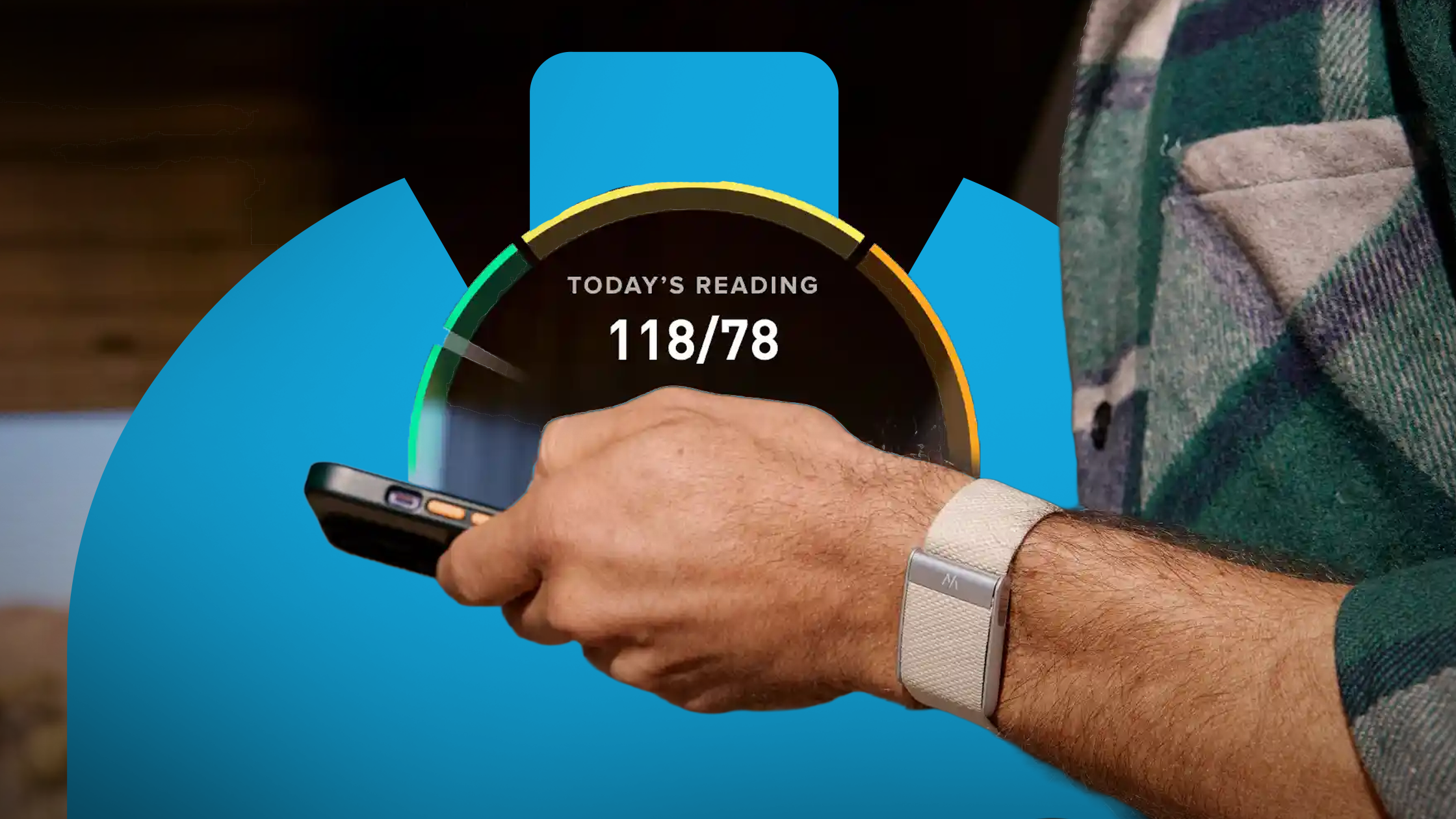
Wearable technology matters more than ever for professionals who care about performance, health, and safety. As we move into 2026, wearables are shifting from consumer gadgets into tools for personal health monitoring, occupational wellness, and workplace performance. This article will explore 12 wearable technology trends shaping that shift—covering everything from smart fabrics and continuous glucose monitoring to intelligent safety gear and AI-driven personalized medicine.
Wearable technology market size and growth
The global wearable technology market was estimated at around USD 84.2 billion in 2024 and is projected to reach around USD 98.5 billion in 2025, with a compound annual growth rate (CAGR) of about 13.6% from 2025 to 2030. Some other sources suggest even higher growth (for instance, one estimate projects the market at USD 219.3 billion in 2025 and reaching USD 493.3 billion by 2030) with a CAGR of 17.6%.
This growth is primarily driven by health monitoring, sensor innovation, consumer demand for wellness data, and enterprise/industrial use cases that extend wearables into workplace safety, monitoring, and productivity. As sensors become smaller, more power-efficient, and more integrated, wearable technologies are becoming less of a novelty and more integral to everyday workflows—especially in sectors such as construction, manufacturing, logistics, and field services.
12 wearable technology trends to watch in 2026
Trend #1: Continuous health monitoring beyond fitness
Wearables are moving far beyond basic functions like counting steps or tracking simple sleep cycles; the next wave of wearable technology will monitor core biometrics such as blood oxygen, hydration, body temperature, skin conductivity, and even subtle changes in cardiovascular or respiratory patterns. With improved sensors and increased processing power, devices can detect early signs of overexertion, heat stress, or recovery issues.
Consider a construction worker wearing a smartwatch or armband that tracks core temperature and hydration level while working under high-heat, high-humidity conditions. If hydration levels drop or body temperature rises beyond safe limits, the system can alert the worker or supervisor well in advance of a heat-stress incident occurring. The broader wearables market reinforces this trend, with health-monitoring applications among the fastest-growing segments.
This trend matters because it changes how we think about “wearables”—they are no longer just lifestyle gadgets but devices that support sustained performance, safety, and health. The ability to collect continuous health data opens the door to early intervention and fewer breakdowns or injuries on the job.
Trend #2: AI-powered health coaching
As wearable devices collect more health data, the question becomes how to make sense of it. That’s where artificial intelligence (AI) comes into play: wearable tech that utilizes AI can analyze patterns—such as changes in resting heart rate, deviations in sleep quality, and subtle gait shifts—and then provide actionable recommendations or alerts to the user.
A field engineer might wear a smart band that detects a decrease in heart rate variability after consecutive long shifts, indicating fatigue. The system then prompts a recovery plan: lighter tasks the next day, extra hydration, or a posture break. Companies like WHOOP and Fitbit are already integrating coaching features that go beyond simple metric reporting.
From a market perspective, the blending of sensors, wearable technology, and AI is fueling growth. TechInsights and other analysts attribute AI as a key driver of the wearable technology market’s next phase. For trades and construction work, targeting wellness and performance via AI enables employers and workers to utilize wearables for more than just tracking—they use them for insight and preventive action.
Trend #3: Smart fabrics and textile sensors
Usually, when we think of wearables, we think of watches or wristbands—but smart fabrics and textile-embedded sensors are gaining momentum. Clothing, shoes, or uniforms that incorporate conductive threads or flexible sensors can monitor posture, muscle fatigue, movement patterns, and environmental conditions.
In a practical scenario, a construction crew might wear vests with embedded textile sensors that monitor bending angles, lifting frequency, and torso temperature. If a worker bends too frequently or in an awkward position, the system may flag a potential musculoskeletal risk. The significance: textile sensors bring wearables into the uniform the worker already wears, reducing the barrier to adoption.
This trend will open up sub-segments in the global wearables market, as companies shift from wrist-only devices to apparel, footwear, headgear, and other “on-body” formats. As sensor technology gets cheaper and textiles more versatile, wearables become less visible but more integrated into workwear.
Trend #4: Mental-health and stress wearables
Until now, many wearables have focused on physical metrics, such as steps, heart rate, and sleep duration. The next wave focuses on physiological markers of stress, mental fatigue, and recovery: heart rate variability, galvanic skin response, microtremors, and changes in breathing cadence. These features address what manufacturers call “wearable health” rather than just fitness, opening the door to broader wellness applications.
For instance, a site foreman could wear an earbud or wrist device that monitors subtle signals of stress and cognitive fatigue. If alertness drops or stress hormones spike during a long shift, the system triggers a micro-break or suggests shift re-assignment. In safety-critical operations, detecting mental fatigue early is just as important as identifying physical risks.
The adoption of these capabilities is supported by demand from healthcare providers and wellness platforms, driving the wearable technology market to invest more in these sensors and interpretive software. Users benefit because wearables transition from recorders to advisors, helping manage wellness rather than just collecting data.
Trend #5: Continuous glucose monitoring for everyone
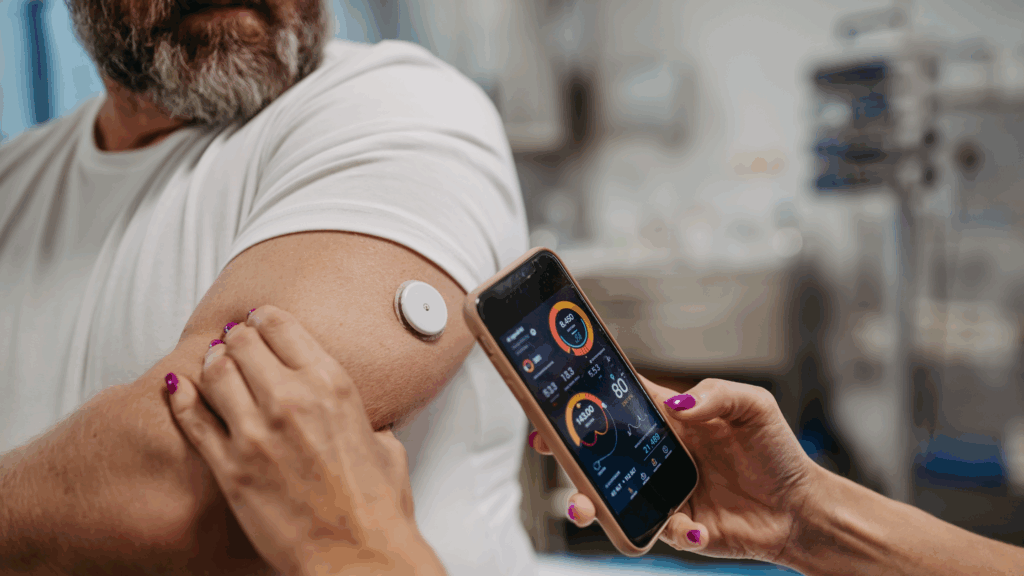
Historically, continuous glucose monitoring (CGM) has been primarily reserved for diabetes management. However, wearable tech companies are now working to bring CGM to a broader audience—for energy management, performance optimization, and preventive health. A wrist or patch-based sensor could monitor glucose trends and link them to fatigue, recovery, and productivity.
A trade professional might wear a patch that monitors glucose levels throughout the day while carrying out heavy labor. If glucose levels dip or fluctuate beyond safe thresholds, alerts trigger a small snack or hydration break, helping to maintain stable energy and reduce mistakes or fatigue-related injuries.
The wearable device and health monitoring markets are aligned with this push: as CGM sensors become more accessible, integrating them into wearables adds value beyond fitness tracking. That shift widens the wearable technology market into preventive healthcare rather than just wellness tracking.
Trend #6: Smart helmets and safety wearables
In industrial, construction, mining, and field engineering settings, wearables are becoming essential safety tools: smart helmets and gear that track location, impact, fatigue, and environmental exposure (such as heat, gas, and vibration), and alert supervisors when conditions become unsafe. These are wearable technologies tailored for the workplace rather than consumer lifestyles.
For example, a smart helmet might include sensors for head-impact detection, ambient temperature, heart rate monitoring, and location tracking. When a worker’s core body temperature rises too fast, or vibration exposure accumulates, the helmet sends an alert and triggers a rest break or evacuation.
As the wearable technology market expands into industrial and enterprise use cases, tools like these have strong growth potential. The wearable industry is shifting from consumer fitness trackers to mission-critical systems for worker safety—especially relevant to the engineering, architecture, and construction industries.
Trend #7: Bio-patches and skin-level sensors
Bio-patches are ultra-thin sensors that adhere to the skin and monitor biomarkers such as lactate, cortisol, hydration, sweat analytes, and even brain-wave proxies. These wearables are discreet, comfortable, and capable of continuous monitoring without bulk. This is the next frontier of wearable sensor tech.
Imagine a foreman or field technician wearing an adhesive patch under their collar that monitors both hydration and cortisol levels. If the patch detects rising cortisol and falling hydration after a long shift in hot weather, it can trigger a rest break or shift adjustment before performance begins to degrade. The usefulness is high in high-stress, high-physical-demand professions.
As sensor costs drop and flexibility improves, skin patches become a realistic part of the wearable technology market. The integration of these patches with mobile devices and backend analytics provides workers and managers with access to more comprehensive physiological data than wristwear alone.
Trend #8: Wearable ECG and blood pressure tracking
Wearables now routinely include ECG and heart-rate monitoring. However, the next generation introduces medical-grade accuracy for ECG, continuous blood pressure monitoring (cuff-free), and early detection of cardiovascular events. That shifts wearables into the realm of preventive health tools.
For example, a field engineer might wear a smartwatch that does an ECG and blood pressure throughout the day. If the system detects arrhythmia or high blood pressure, it will prompt a medical check. This is especially relevant in industries with high physical demands, long hours, and remote locations.
From a market perspective, wearables focused on health applications are among the fastest-growing segments. Sensor improvements and regulatory clearance pursuits make this trend a central focus in the development of wearable technologies over the next few years.
Trend #9: AR-powered smart glasses
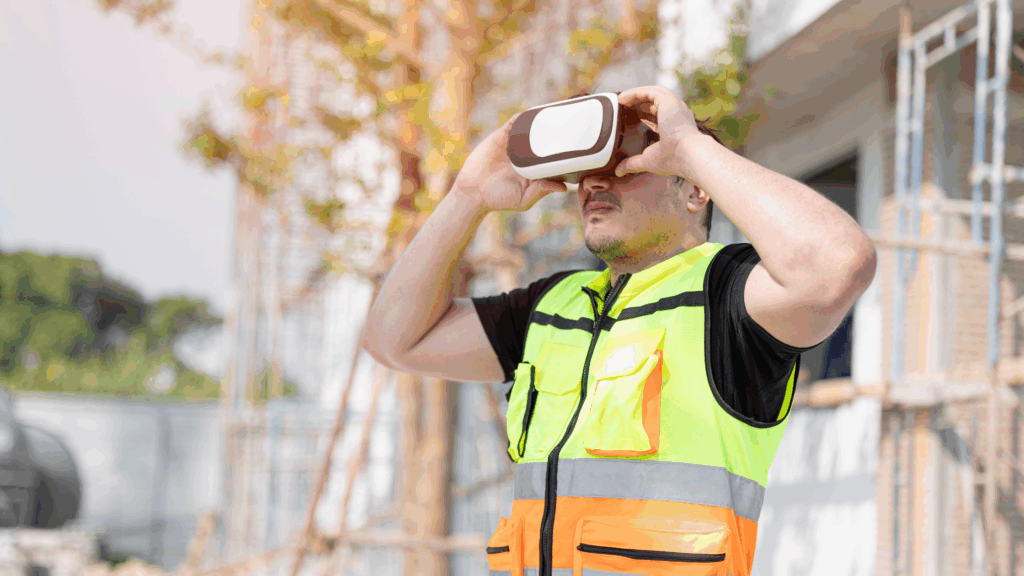
Augmented reality (AR) wearables—specifically, smart glasses—are gaining traction again, this time with improved hardware, lighter frames, and deeper integration into professional workflows (rather than just consumer VR/AR experiences). In 2026, these wearables will integrate display, camera, sensor, and connectivity features.
In a real-world construction/engineering scenario, an architect wearing AR glasses could view real-time 3D models overlaid on a construction site, see sensor data from the site on their heads-up display, or receive hands-free instructions while walking the jobsite. The wearable becomes a tool for productivity and safety.
Market analysts report that head-mounted displays and wearable AR devices are among the fastest-growing categories within the wearable technology market. This shift means wearables are no longer just wrist-bound—they are becoming full-body, context-aware tools.
Trend #10: Voice-controlled and hands-free wearables
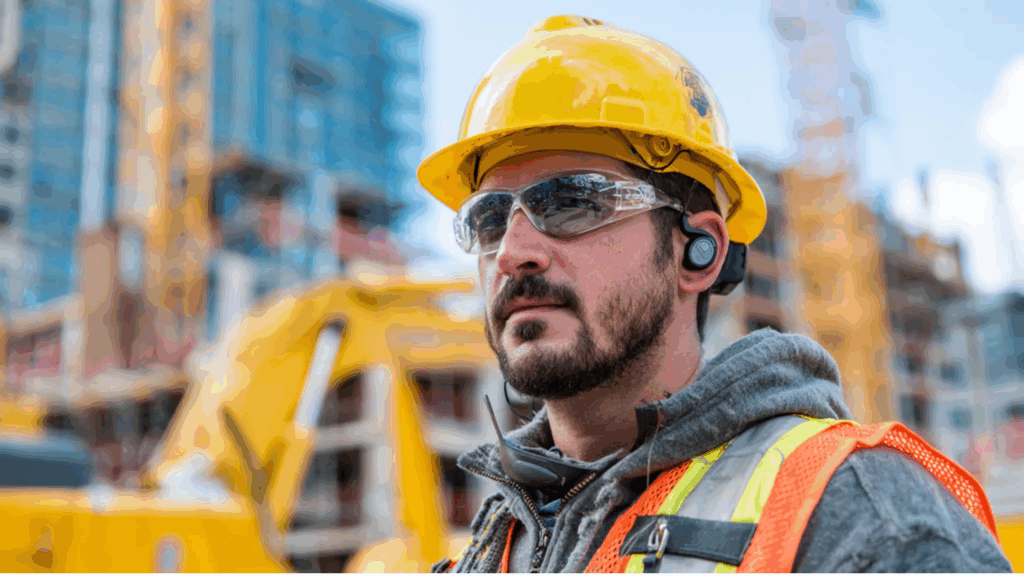
Wearables are becoming voice-interactive and hands-free. This is important in environments where manual tasks dominate and you can’t be looking at a screen, such as field construction, industrial maintenance, or engineering inspections. Wearables become communication hubs, information access points, and control interfaces.
For example, a technician wearing earbuds or a headset with a microphone and speaker can request equipment status, log an inspection, or control sensors without using a hand-held device. The wearable supports workflow by acting as a personal assistant on the job.
In the wearable technology market, this trend bridges wearables with voice AI and wireless connectivity, expanding their role from data collection to active assistance. For professionals working in hands-occupied environments, this trend increases the practical utility of wearable technologies.
Trend #11: Energy-harvesting wearables
One hurdle for wearables has been battery life and the need for frequent charging. Energy-harvesting wearables utilize body heat, motion, solar energy, or ambient light to generate power or extend battery life. This provides them with higher uptime, which is essential for workers who may not have frequent charging opportunities.
For example, a field engineer’s wearable patch might include a thermoelectric generator that uses body heat to trickle-charge the sensor. Or a smart safety vest might include solar fibers that extend battery life during outdoor shifts—the result is wearables that require less maintenance and fewer interruptions.
Because energy harvesting enhances usability and reduces reliance on charging infrastructure, this trend supports the wider adoption of wearable technologies in fieldwork and industrial settings. From a market perspective, this improvement in power management increases the product value and appeal of wearables.
Trend #12: Workplace wellness integrations
Wearables are being added to corporate wellness and safety programs. Instead of just individual tracking, companies are pairing wearables with dashboards, analytics, and scheduler tools to track group health trends, fatigue signals, and safety risk indicators. Wearables are moving from personal devices to organisational strategy.
For example, a construction company might equip crews with smart bands that track cumulative posture strain, vibration exposure, and heat stress. The company then uses aggregated data to adjust shift schedules, rotate tasks, or redesign job layouts, thereby reducing the risk of musculoskeletal injuries. The wearable becomes part of the wellness system.
Because this applies to the industrial/engineering/field contexts, the wearable technology market is expanding to include enterprise solutions, rather than just consumer gadgets. It drives adoption of wearables in sectors that care deeply about safety, productivity, and retention.
Final thoughts
Wearables heading into 2026 will cross the threshold from novelty to essential tools for health, work, and performance. With sensors, AI interpretation, workplace integration, and enterprise adoption, wearables are evolving beyond fitness to encompass safety, wellness, and predictive care. For professionals in construction, engineering, and architecture, staying aware of these wearable technology trends means embracing tools that not only record data but also actively support how you work and stay healthy.
If you’d like to dive deeper into wearable tech and how it supports work-wellness, check out these resources on our site:
- UTHH Top Picks: The 6 best smartwatches for tradespeople on the job
- The benefits of wearable tech for improving employee wellness
To get our latest articles on construction, architecture, engineering, and field safety delivered directly to your inbox, subscribe to our newsletter at Under the Hard Hat.