
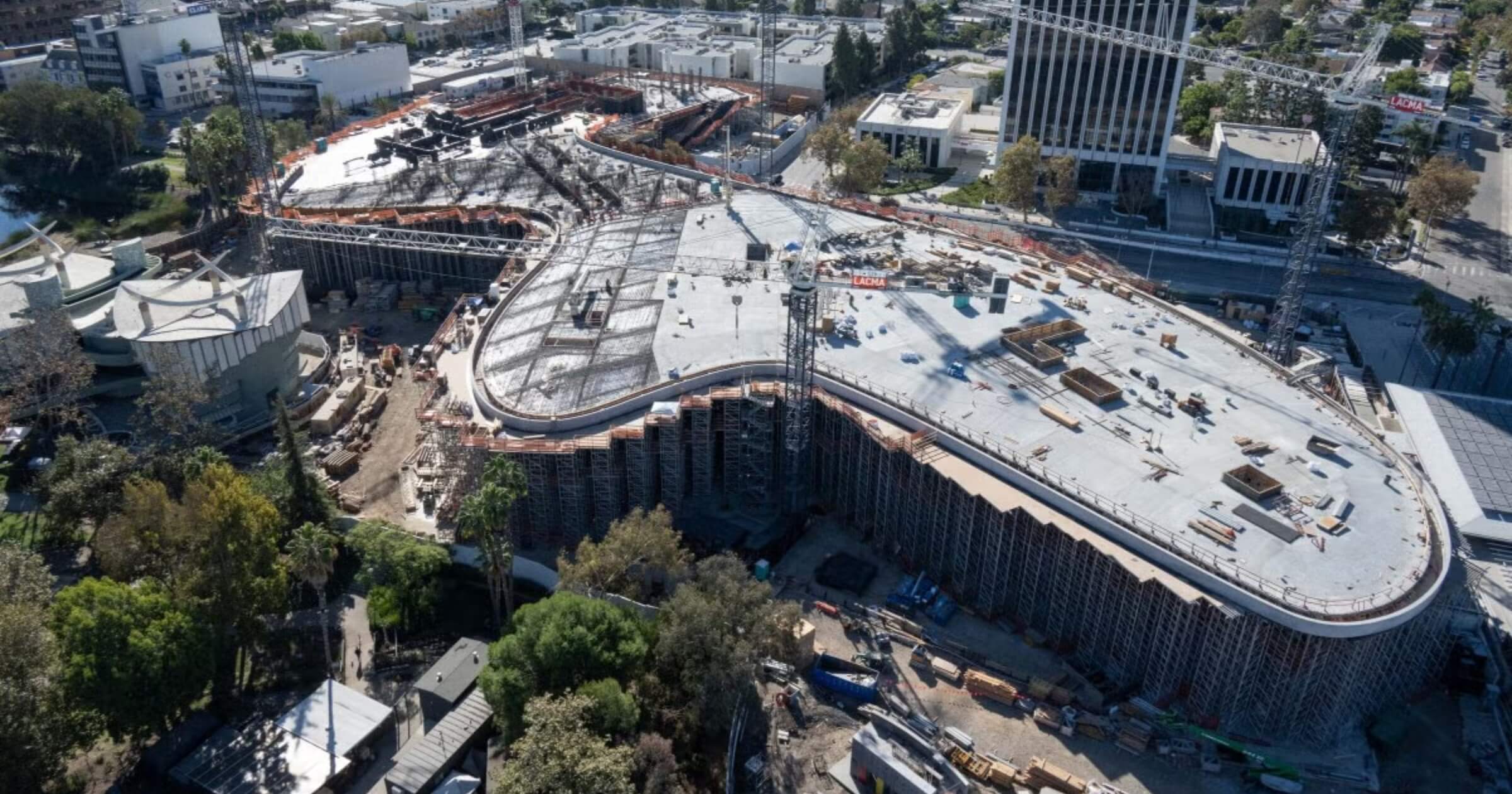
Los Angeles is about to see a bold addition to its skyline. The David Geffen Galleries, a $720 million project at the Los Angeles County Museum of Art (LACMA), is nearing completion. Designed by Swiss architect Peter Zumthor, the galleries span Wilshire Boulevard, replacing four older museum buildings with over 110,000 square feet of exhibition space. For engineers, architects, and builders, this project stands out as a study in structural innovation and material precision.
Engineering the elevated, amoeboid form
The galleries immediately draw attention with their elevated, flowing form. Concrete and glass define the building’s presence, with thick, textured concrete walls supporting wide spans of wraparound glass that fill the interior with daylight. Bringing Peter Zumthor’s amoeboid vision to life demanded careful structural planning. Steel frameworks were designed to carry the weight of the building as it stretches above Wilshire Boulevard, while pre-cast and cast-in-place concrete elements had to be shaped and aligned with precision to match the building’s sweeping curves. Every joint, every panel, and every connection had to perform exactly as intended, ensuring the unusual form could stand safely while maintaining the elegance of its design.
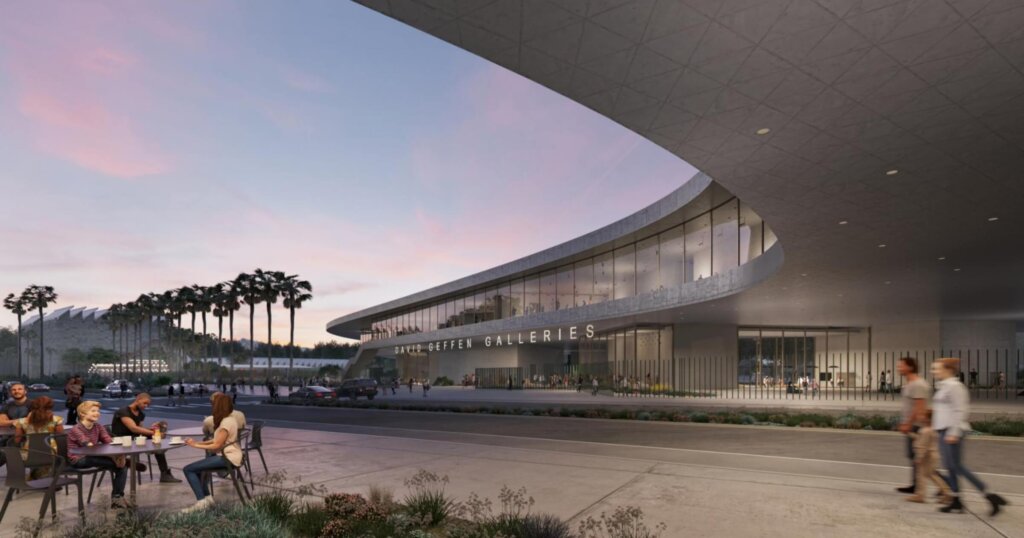
Image rendering of David Geffen Galleries striking curve courtesy of https://www.lacma.org/
Executing those curves on the construction site tested both skill and coordination. Each concrete section required custom formwork, and crews had to work in sequence to pour, set, and cure the material without errors. Workers had to cut and fit each glass panel to match the building’s sweeping curves, carefully inspecting every piece. A slight mistake could disrupt the structure or alter the building’s exterior form. The result is a gallery that seems to float above the boulevard, a sculptural presence that remains fully functional and safe, while allowing visitors to experience a unique interaction between space, light, and architecture.
Expanding exhibition space and construction impact
Inside, the galleries offer over 110,000 square feet for exhibitions, a substantial increase over the area they replace. The space is designed to accommodate large-scale installations, interactive exhibits, and temporary shows. High ceilings and expansive natural light make it possible to display works in ways that were previously impractical at LACMA. Engineers had to consider not only load-bearing requirements for the structure itself but also the needs of exhibitions, including heavy sculptures and multimedia installations.
The project also demonstrates how careful material selection can influence performance. The concrete used is designed for durability, longevity, and aesthetic impact, while the glass balances transparency with thermal efficiency. HVAC systems were integrated without disrupting the building’s clean lines, a challenge given the combination of elevated floors, open gallery spaces, and climate-sensitive artworks.
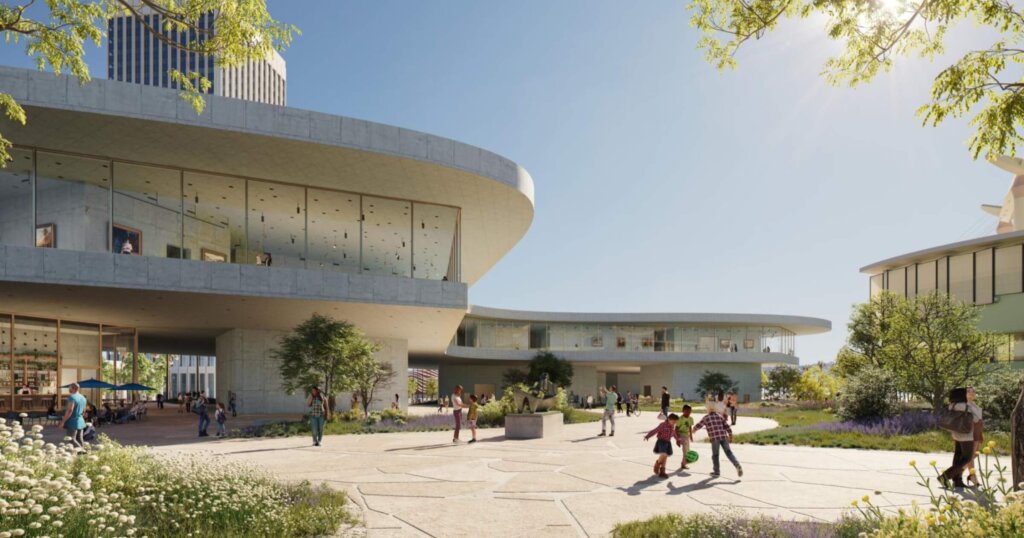
Image rendering of David Geffen Galleries courtyard courtesy of https://www.lacma.org/
Even as construction wraps up, the galleries have sparked debate. Some critics question whether the elevated, irregular form serves the art or draws attention away from it. Others see the project as an example of how bold architecture can redefine urban cultural spaces. For construction and architecture professionals, the building offers lessons in problem-solving under unusual design constraints, from complex formwork to structural reinforcements and precision glass installation.
When the David Geffen Galleries open in 2026, they will mark a milestone for LACMA and for Los Angeles architecture. Beyond its cultural role, the project demonstrates how careful engineering and creative problem-solving make bold architectural ideas possible. For architects, engineers, and builders, the galleries offer a clear example of how materials, structure, and design come together to create a space that’s both visually compelling and fully functional.
Like this and want more? Follow the progress of projects like the David Geffen Galleries and other major construction developments by subscribing to our newsletter.