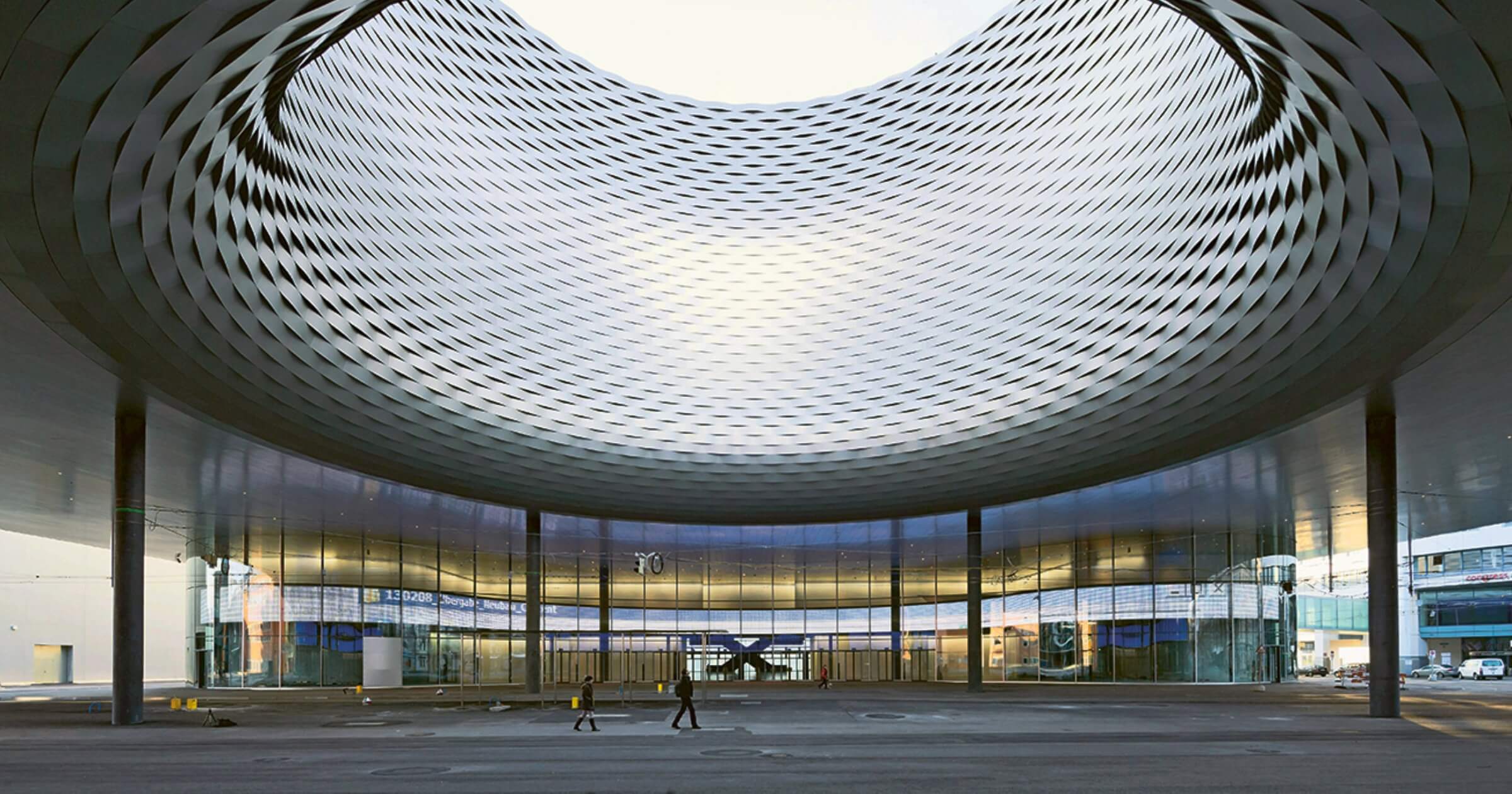
Herzog & de Meuron is a Swiss architecture firm renowned for its striking projects, which combine innovative materials, context-specific thinking, and meticulous restoration. Founded in 1978 in Basel by Jacques Herzog and Pierre de Meuron, the practice has expanded to include over 500 collaborators across its studios worldwide. Recent Herzog & de Meuron projects include the Lombard Odier headquarters in Geneva and Calder Gardens in Philadelphia, both of which demonstrate how the firm integrates user experience with environmental and social goals. This article highlights eight of their past, ongoing, and upcoming projects, showcasing how architecture, construction, and engineering intersect in their work.
Herzog & de Meuron: What they do
Herzog & de Meuron was founded in Basel, Switzerland, in 1978 by Jacques Herzog and Pierre de Meuron, both of whom studied at the Swiss Federal Institute of Technology (ETH) in Zurich. Over the years, the practice has evolved into one of the most recognized names in global architecture, with a staff of more than 500 and offices in Basel, London, New York, Hong Kong, and Berlin. Their work gained early recognition for projects such as the Ricola Storage Building and later the Tate Modern in London, which transformed a decommissioned power station into one of the world’s most visited museums.
The firm’s portfolio ranges from small, finely detailed projects to some of the largest and most complex buildings on the planet, including Beijing’s National Stadium (“the Bird’s Nest”) for the 2008 Olympics. They are known for experimenting with materials and façade treatments, such as perforated copper, patterned concrete, and textured glass, often creating surfaces that change with light and weather. From their sculptural façades to daring structural moves, their approach has some resonance with the risk-taking seen at Bjarke Ingels Group.
Herzog & de Meuron has received the Pritzker Architecture Prize, the RIBA Royal Gold Medal, and numerous other honors, reflecting how their work bridges architecture, construction, and engineering. The company continues to work on a range of projects, including cultural, corporate, medical, scientific, and residential, with an approach that combines technical rigor with architectural craft.
8 past, present, and future projects on the go from Herzog & de Meuron
1. Calder Gardens
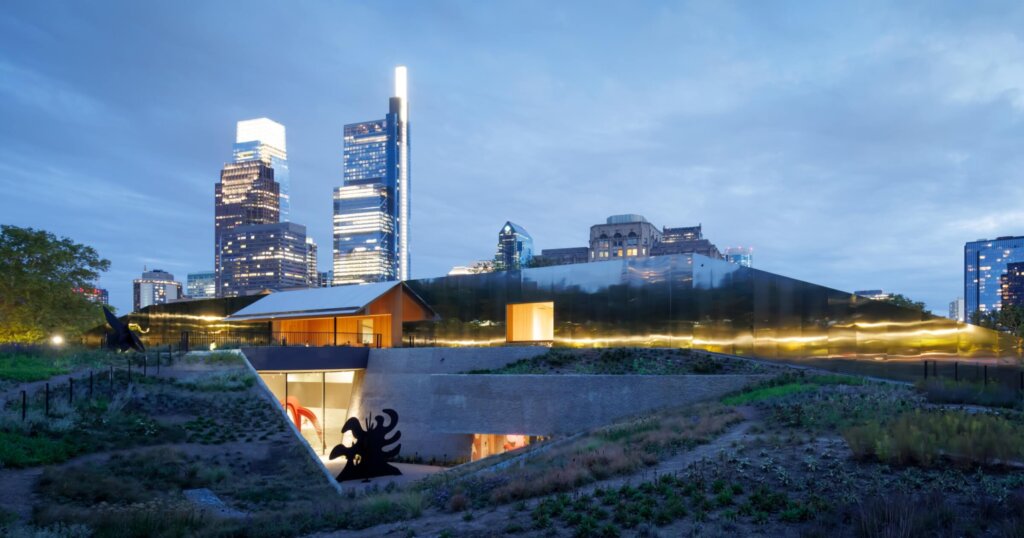
Photo courtesy of https://www.herzogdemeuron.com/
- Location: Philadelphia, Pennsylvania, USA
- Year built/expected: Opening in September 2025
- Typology: Cultural/art space with gardens and public programming
Calder Gardens is dedicated to the work and legacy of Alexander Calder and is designed to be more than just a museum. The approximately 18,000-square-foot building sits between Benjamin Franklin Parkway and Vine Street, on a site that didn’t initially have a particularly scenic view. Herzog & de Meuron carved into the ground rather than placing a heavy block on top, creating a sequence of spaces that guide visitors through art, gardens, and architecture. Piet Oudolf contributes a naturalistic planting scheme that changes through the seasons; wildflowers and flowering meadows soften the harder edges of the built form. The interior layout avoids imposing long, static galleries; instead, there’s a flow, with moments for contemplation, connection, nature, and art to meet. The programs include rotating exhibitions, public outreach, performances, and even wellness‐based activations.
2. Lombard Odier headquarters (“One Roof”)
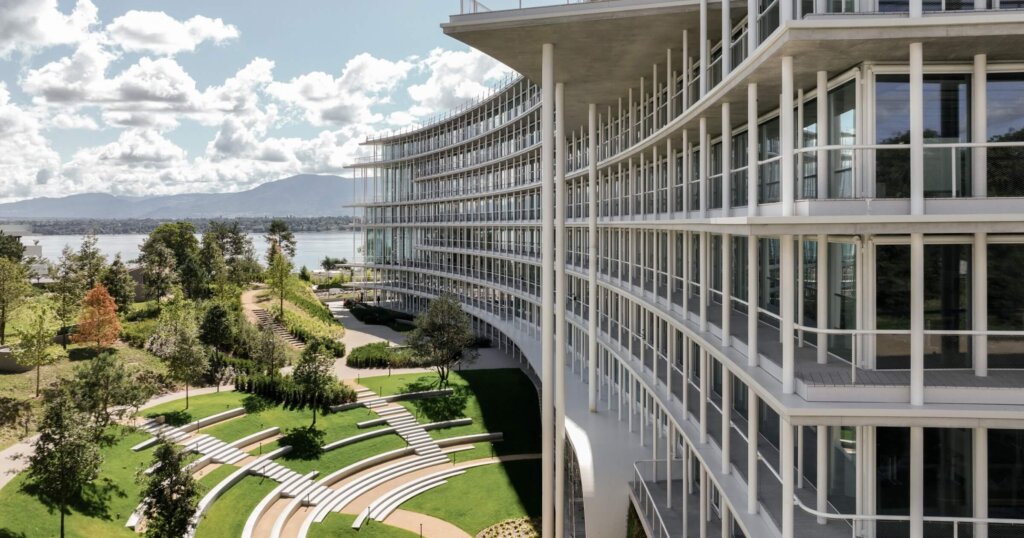
Photo courtesy of https://www.herzogdemeuron.com/
- Location: Bellevue, Geneva, Switzerland
- Year built: 2025
- Typology: Corporate headquarters/office building
This building brings together over 2,000 employees who previously occupied multiple sites in Geneva. Its design includes generously cantilevered, curved concrete floor slabs, supporting a sweeping roof form that respects views of Lake Geneva. Large glazed façades and slender white metal columns allow daylight to penetrate deep into the interior, while curved terraces create usable outdoor spaces. A dramatic, double-height auditorium opens out to a Greek-style amphitheater. Environmentally, the project incorporates systems such as GeniLac, utilizing lake water for heating and cooling, and strives for high sustainability certifications. It demonstrates how an office building can still feel connected to its place, showcase craftsmanship, and offer more than just cubic volume.
3. Universitäts-Kinderspital Zürich (Children’s Hospital & Research Facilities)
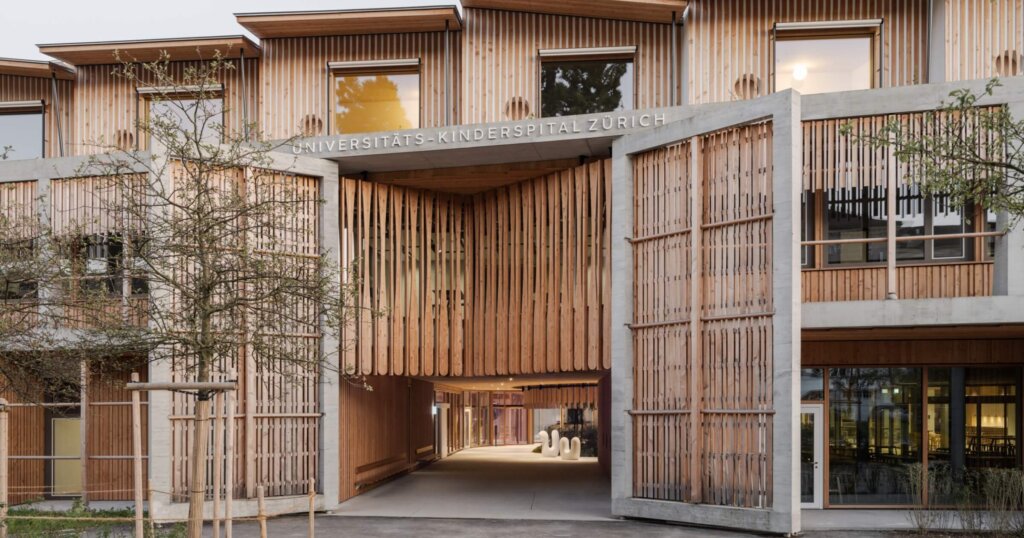
Photo courtesy of https://www.herzogdemeuron.com/
- Location: Zürich, Switzerland
- Year built: Completed Autumn 2024
- Typology: Healthcare/hospital + research & teaching facilities
Designed to evoke a more compassionate atmosphere than many large hospitals, the Universitäts-Kinderspital Zürich replaces older structures with a facility that treats young patients and their families with greater care and compassion. It features five floors dedicated to acute patient care and a nine-storey research and education building. The designers used “neighbourhoods” instead of long, bland corridors, with WC “cottages” (patient rooms shaped like small dwellings) placed along windowed facades to bring in daylight and allow views out. They included a skyspace by artist James Turrell for light therapy, as well as numerous small architectural gestures, such as wood and natural materials, window seats, and playful portholes at child height, that help reduce the institutional feel.
4. Memphis Brooks Museum of Art (“Brooks Downtown”)
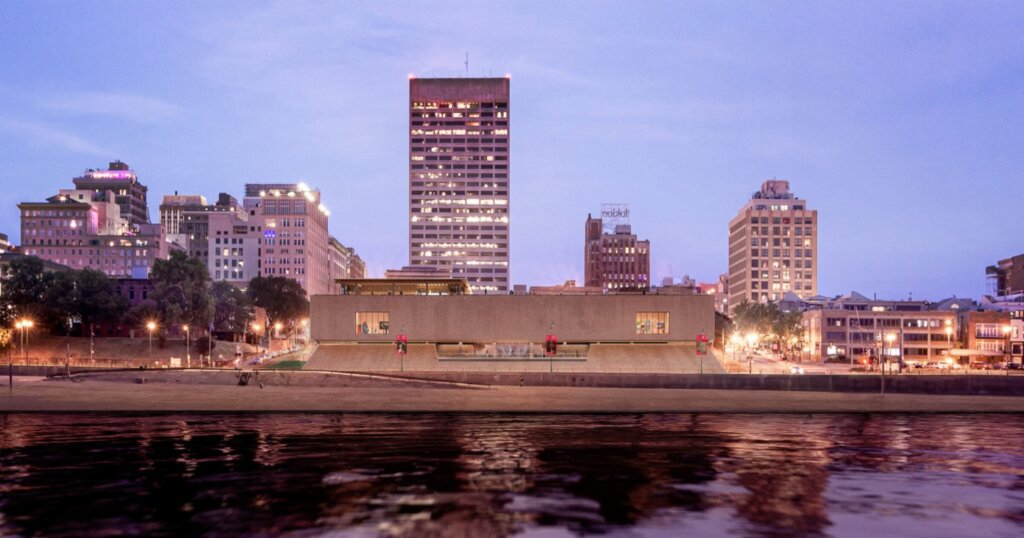
Photo courtesy of https://www.herzogdemeuron.com/
- Location: Memphis, Tennessee, USA
- Year built/expected: Opening approximately 2026
- Typology: Museum / public cultural building
The new Memphis Brooks Museum of Art is part of a riverfront redevelopment effort in Memphis. It sits on a bluff overlooking the Mississippi River, connecting downtown with the river through public pathways, courtyards, and views. Galleries are mostly on one level, a design choice that facilitates an easier wayfinding experience, improved accessibility, and greater flexibility in exhibit arrangement. The structure also features indoor and outdoor public spaces—a café, a museum store, and a sculpture garden—allowing people to interact even if they don’t plan to visit the entire museum. The design’s attention to view, public gathering, and landscape integration makes it a much more inviting art museum than a “white cube” in many respects.
5. Sotheby’s global headquarters (Breuer Building renovation)
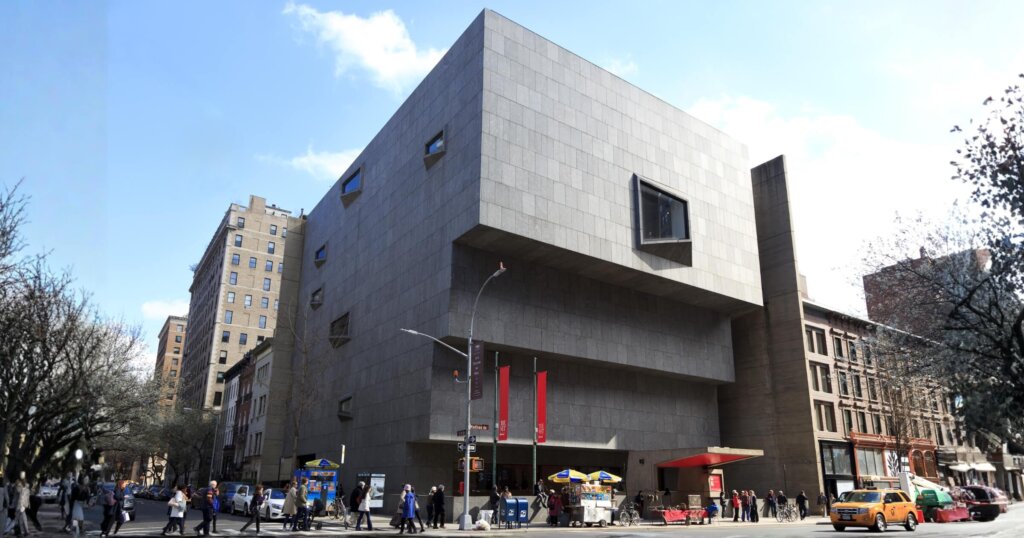
Photo courtesy of https://www.herzogdemeuron.com/
- Location: New York City, New York, USA
- Year built/expected: Renovation to complete by the end of 2025
- Typology: Auction house/gallery/mixed‐use cultural space
The building at 945 Madison Avenue is a brutalist icon originally designed by Marcel Breuer in 1966, with trapezoidal “eyelid” windows, bush-hammered concrete walls, and bold geometries. Herzog & de Meuron are restoring many of the original features, such as the bluestone floors, dome ceilings, and façade details, while adapting the interior to function as Sotheby’s auction rooms, galleries, and support spaces. Accessibility and visitor flow are being improved: freight elevators will be relocated, entry sequences will be refined, and lighting systems will be updated. They are preserving the public character while making technical upgrades so the building can handle frequent turnover of exhibits and auctions.
6. Les Trois Rois
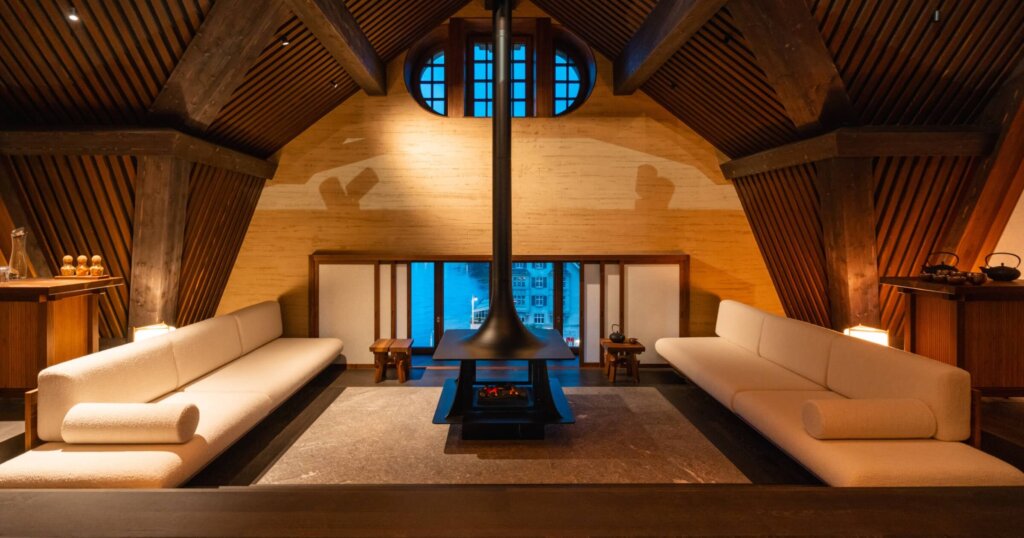
Photo courtesy of https://www.herzogdemeuron.com/
- Location: Basel, Switzerland
- Year built/expected: Completed recently (2025)
- Typology: Hospitality/hotel redevelopment
Les Trois Rois is a historic hotel in Basel, one of Switzerland’s grand old places. Herzog & de Meuron undertook the renovation and restoration of the building, breathing new life into it while preserving its historic character. Preservation of original elements (ornate façades, grand public spaces) was combined with new infrastructure, service improvements, and upgraded guest amenities. The marble, stonework, and decorative features were carefully repaired or replaced. Interiors and guest rooms have been upgraded, and mechanical systems have been modernized. In a heritage environment like Basel’s old city, this project highlights how high-end restoration can both respect history and meet present luxury and comfort expectations.
7. Hauptpost Basel
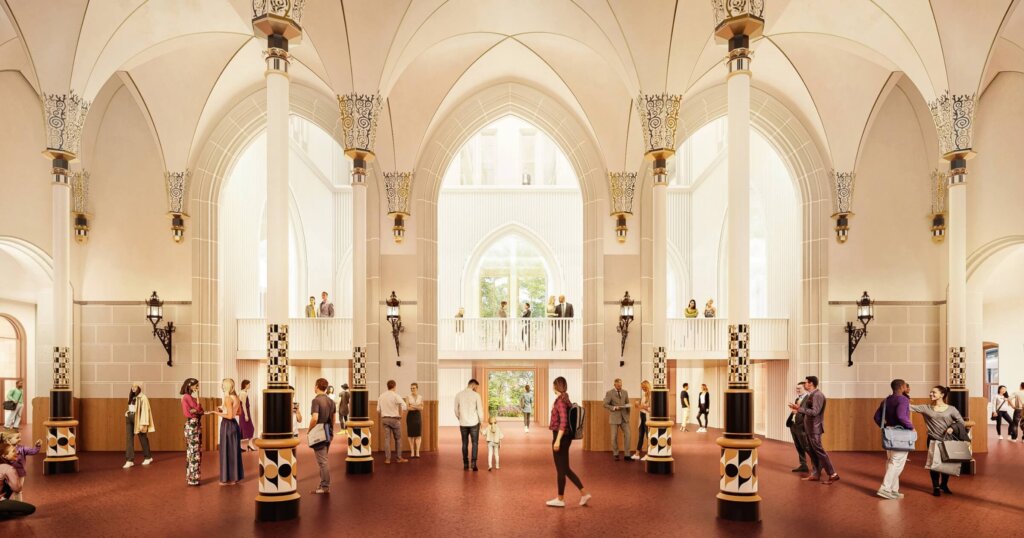
Photo courtesy of https://www.herzogdemeuron.com/
- Location: Basel, Switzerland
- Year built/in progress: Ongoing project
- Typology: Mixed-use/adaptive reuse
The former main post office in Basel has been redesigned for new uses, with adaptive reuse playing a significant role in the design. The existing structure remains a strong anchor; new interventions update the building to meet current needs, whether for retail, public space, or office components. Restorations of façades and the integration of modern services (HVAC, electrical, accessibility) have been handled with care to avoid overwhelming the original masonry and urban presence. The mixed-use design revitalizes the old postal hall, drawing people back into the building and making the site vibrant again.
8. The DISC (AstraZeneca’s Discovery Centre)
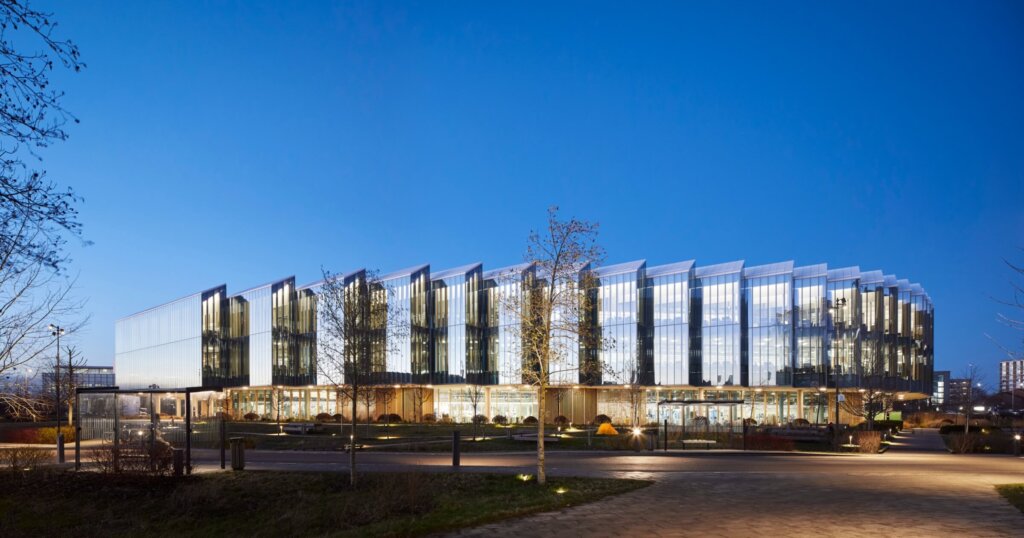
Photo courtesy of https://www.herzogdemeuron.com/
- Location: Cambridge, UK
- Year built/expected: Recently completed or in final phases (dates vary)
- Typology: R&D / science/offices/lab space
The Discovery Centre for AstraZeneca is a science & research facility with laboratories, offices, and collaborative spaces. Its design responds to strict scientific requirements—controlled environments, high ventilation, safety, and clean-room specifications—while still offering pleasant work settings: daylight, open views, and shared gathering zones. Because research work tends to evolve, plan layouts provide flexibility in both lab and office zones. Exterior façades are engineered to buffer noise and provide climate control while also allowing light to enter, utilizing shading and material layering. The project is significant because it demonstrates how even specialized technical buildings can benefit from good architectural design, rather than being purely utilitarian in nature.
Final thoughts
Herzog & de Meuron’s work demonstrates that good architecture and engineering can go hand in hand: preserving heritage while updating systems, shaping public life as well as private experiences, and prioritizing sustainability without making it just a checkbox. They take care to integrate technical systems and environmental performance, which is part of the broader interplay between architectural vision and engineering demands (see our guide, “Architect vs. Engineer: Career Path“). Their projects demonstrate how construction is never only about putting up walls—it’s about creating spaces that function technically, serve communities, and stand the test of time.
From adapting a brutalist landmark in New York to designing a children’s hospital in Zurich or carving new cultural venues into city centers, the firm consistently challenges what buildings can do for the people who use them. For professionals in construction, engineering, or architecture, their work offers valuable lessons in balancing structural demands with design ambition.
If you want to keep exploring how projects like these are reshaping the built environment, subscribe to our newsletter and follow us on LinkedIn.