
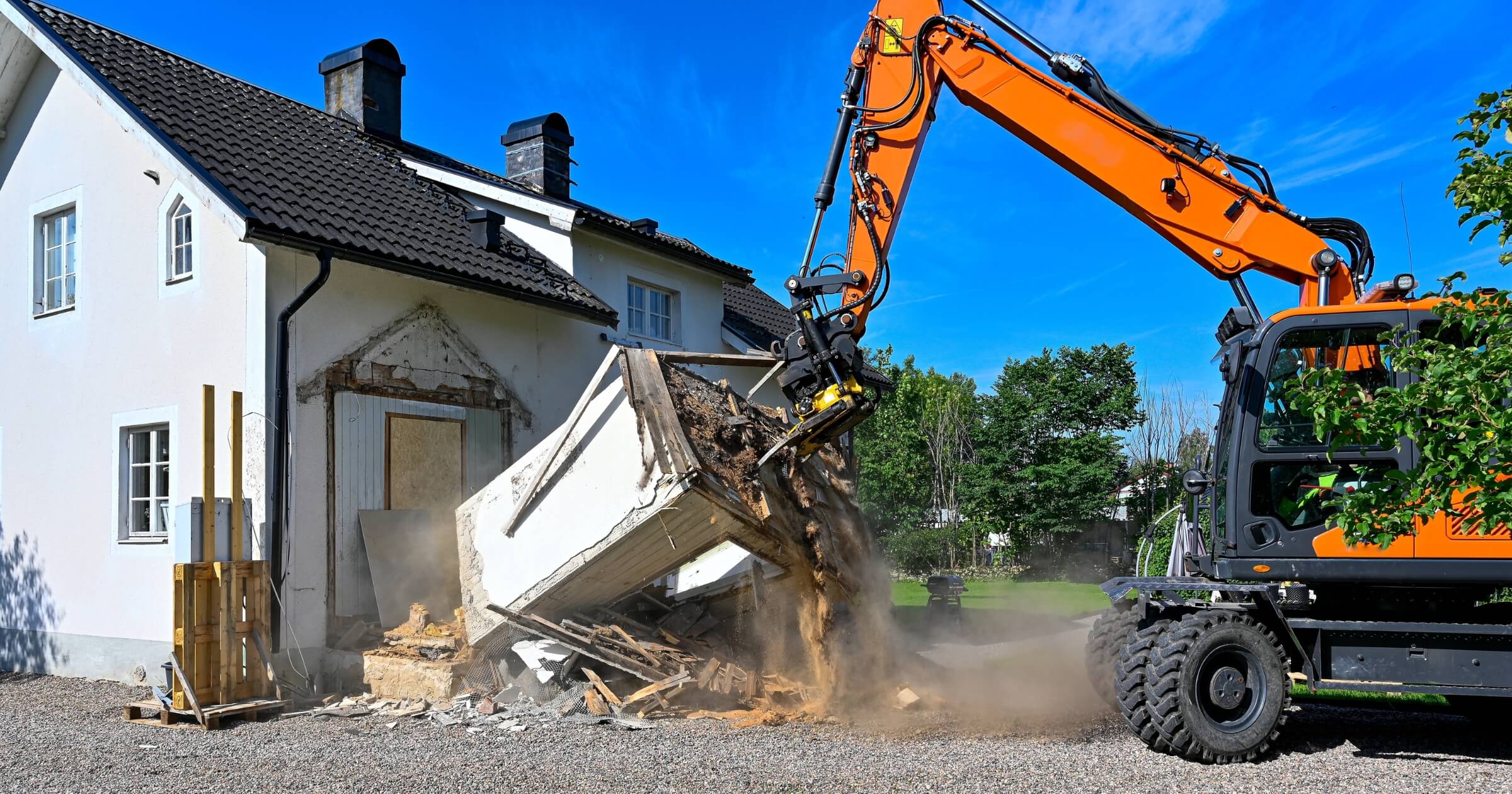
Demolishing a house depends on various factors and can cost anywhere from a few thousand dollars to tens of thousands, depending on the structure’s size, materials, and location. Some homeowners undertake partial DIY projects to save money, while others hire licensed demolition contractors for safety and compliance reasons. The cost to demolish a house isn’t one-size-fits-all—it depends on the size of the house, site conditions, local regulations, and whether hazardous materials are involved. Understanding these variables can help you plan your budget and avoid costly surprises. This guide breaks down the real numbers, key factors, and hiring tips to give you a clear idea of what it takes—and what it costs—to tear down a house.
How much does it cost to demolish a house?
In the United States, the average cost to demolish a house ranges from $5,000 to $20,000 USD, depending on the building size, materials, and region. In Canada, the cost typically ranges from $7,000 to $25,000 CAD. Smaller single-story homes typically cost around $4 to $10 per sq ft, while larger or more complex demolitions can range from $12 to $20 per square foot.
A 1,200-square-foot wood-frame home might cost around $8,000 to $12,000, while a 2,500-square-foot brick structure could push closer to $25,000 once disposal and permit fees are included. Labor rates also differ by region—demolition in major cities often costs more due to higher equipment rental and waste disposal charges.
Partial demolitions or interior tear-outs are cheaper, starting around $1,000 to $5,000, depending on how much of the structure you’re removing. Meanwhile, a full house demolition that includes basement or foundation removal can double the total price.
Key factors that influence the cost of demolishing a house
Every demolition project has its own challenges, and those challenges influence demolition costs. Here’s what drives prices up—or keeps them manageable.
House size and structure
Square footage is the biggest factor when determining how much it costs to demolish a house. Larger homes incur higher labor costs, machinery, and disposal volume. Wood-frame houses are usually less expensive to demolish than brick or concrete because they’re lighter and easier to tear apart. If the house includes a basement or attached garage, expect extra charges. Basement demolition often involves shoring up surrounding soil or breaking up concrete slabs, which adds both time and equipment costs. If it involves getting rid of a swimming pool, then it tends to be more expensive as well.
Type of demolition
There are two primary methods for demolishing a house: mechanical and deconstruction.
- Mechanical demolition uses heavy machinery such as excavators, bulldozers, or wrecking balls. It’s the fastest and most common method, usually costing $4 to $10 per sq ft.
- Deconstruction—a slower, more precise process—involves dismantling the home piece by piece to salvage usable materials, such as wood beams, brick, or metal. While it can reduce landfill waste and even generate a tax credit if materials are donated, it’s also more labor-intensive, typically costing $10 to $25 per square foot.
Some homeowners choose a hybrid approach: machine-tear the main structure, then hand-remove finishes or fixtures for reuse.
Hazardous materials
The presence of hazardous materials is one of the biggest price drivers in house demolition. Materials like asbestos, lead paint, or mold must be tested and removed by certified professionals before work begins. Asbestos abatement alone can cost $3,000 to $10,000, depending on the amount and where it’s located. Lead-based paint removal incurs additional expenses, particularly in homes constructed before 1978. These materials can’t simply be dumped—they require special containment and transport, which increases both time and cost.
Site conditions and accessibility
Where the house sits matters. A structure on a narrow urban lot may require smaller machinery and manual labor, both of which can slow down the job and increase costs. Conversely, a rural or open property allows for easier equipment access and faster debris removal. Other site issues, like nearby power lines, large trees, uneven terrain, or underground utilities, can also complicate demolition. Expect to pay more if your contractor needs to take extra safety measures or rent specialized equipment to access the site.
Permits, disposal, and recycling fees
Knocking down a house needs the proper demolition permits. Depending on your city, permits can range from $200 to $2,000, with some municipalities requiring separate paperwork for utility disconnection, hazardous material removal, or environmental review. Disposal costs also add up. Landfills charge by weight, and a full house teardown can produce 50 to 150 tons of debris. If your contractor recycles materials like concrete, steel, or brick, you might save a bit on tipping fees. In areas with strong recycling programs, some contractors even offer rebates for salvaged materials.
What to know before hiring a demolition contractor
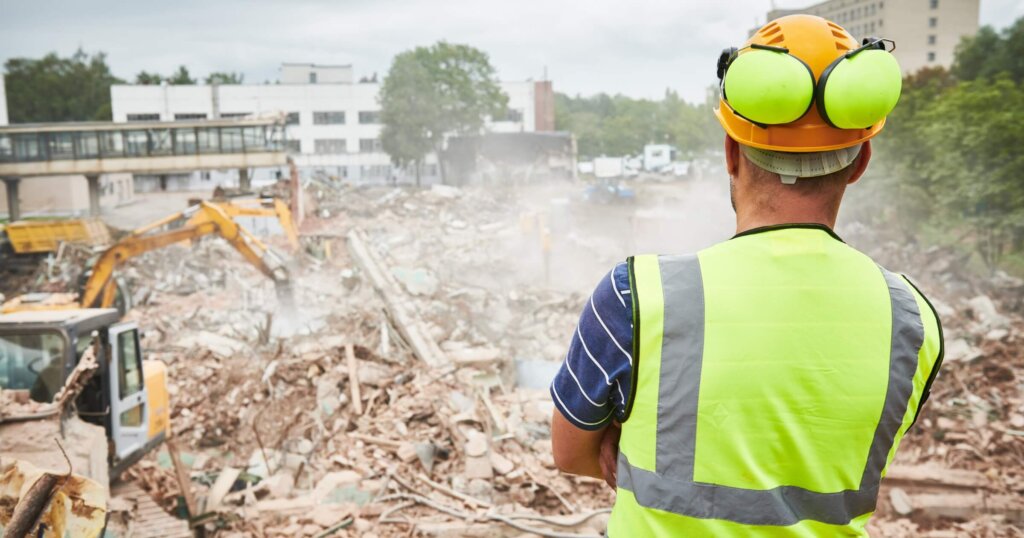
Demolition construction work on a site. Photo courtesy of Shutterstock.
The best way to keep your demolition project safe and predictable is to hire a qualified contractor. Prices vary by region and company, but the difference between a reliable team and a cheap bid can be thousands in hidden costs—or fines.
Licensing and insurance
Always confirm that your demolition contractor is properly licensed for residential work in your state and carries both liability and workers’ compensation insurance. Demolition involves heavy machinery, falling debris, and high noise levels—without insurance, you could be held responsible for accidents on-site.
Experience and specialization
Choose a contractor who’s handled similar projects before. Some specialize in full structural demolition, while others focus on selective or interior teardown. If your house contains hazardous materials, such as asbestos or lead, ensure that your contractor is certified in safe removal practices. Ask for photos or references from past clients to see how they manage cleanup and safety.
Permits and regulations
A good demolition contractor will handle permits and be familiar with local codes. They’ll know whether your city requires a demolition bond, noise restriction schedule, or soil erosion control plan. Permitting delays can stall your project for weeks, so having an experienced contractor who knows how to file properly saves time and money.
Waste disposal and recycling
Before signing a contract, ask how your contractor plans to manage debris. Responsible demolition involves separating recyclable materials—such as metal, concrete, and wood—from general waste. Some contractors partner with recycling facilities or architectural salvage yards to repurpose materials, rather than sending everything to a landfill. This can slightly reduce your overall house demolition cost and make the project more environmentally responsible.
Detailed estimate and timeline
Get everything in writing: a scope of work, cost breakdown, estimated project duration, safety measures, and cleanup plan. The written contract should list who is responsible for removing debris, filling the site, and disconnecting utilities. Demolition schedules typically run 3 to 10 days for a full teardown, depending on weather conditions, project size, and disposal logistics.
Partial demolitions and other special cases
Sometimes you don’t need to tear down an entire structure. Partial demolition—like removing an addition, garage, or interior wall—costs less but still requires precision.
- Interior demolition (gutting kitchens, bathrooms, or basements) costs approximately $3 to $7 per square foot, depending on the materials and accessibility.
- Garage demolition can range from $1,500 to $5,000.
- Basement demolition or foundation removal adds another $5,000 to $10,000, especially if concrete must be broken up and hauled away.
If you plan to rebuild on the same lot, talk to your contractor about site preparation costs, like grading, soil compaction, or foundation removal. In many cases, preparing for a new build adds $2,000 to $6,000 beyond the initial demolition costs.
Average price ranges by region
| Region | Average cost per square foot | Typical total cost (1,500 sq ft home) |
| Northeast | $8 – $15 | $12,000 – $22,500 |
| Midwest | $6 – $10 | $9,000 – $15,000 |
| South | $4 – $8 | $6,000 – $12,000 |
| West Coast | $8 – $20 | $12,000 – $30,000 |
| Canada | $6 – $18 CAD | $9,000 – $27,000 CAD |
Urban areas with strict disposal and noise laws, like San Francisco or Toronto, tend to fall at the high end of these ranges. Rural or small-town demolitions generally cost less due to cheaper labor and landfill rates.
How long does it take to demolish a house?
From permit approval to final site cleanup, a house demolition typically takes one to three weeks.
- Permits and utility disconnections: 5–10 business days
- Active demolition: 2–5 days
- Debris removal and grading: 2–4 days
Weather delays, asbestos removal, or large basements can extend timelines. If you’re rebuilding, it’s best to overlap demolition planning with your architect or builder’s schedule to avoid downtime between projects.
Bottom line
The cost to demolish a house depends on its size, structure, and what lies beneath the surface. Expect to spend $4–$20 per square foot, or $5,000–$20,000 for most standard homes, plus any fees for hazardous material removal, permits, or recycling. While it’s tempting to look for shortcuts, working with an experienced demolition contractor helps you stay safe, compliant, and ready for the next stage—whether that’s rebuilding or selling the lot.
If you want more guides on construction planning, site work, and rebuilding costs, subscribe to Under the Hard Hat’s newsletter to get practical tips and trade insights sent straight to your inbox.