

Every site has one constant: safety. One hazard overlooked and work stops—or someone ends up in the hospital. That’s why a safety inspection protects every person stepping onto the site. Safety officers are responsible for identifying risks before they cause harm, ensuring sites remain compliant, and fostering a culture of accountability. This guide will walk you through what to look for, how to prepare, and how to do a safety inspection using OSHA’s best practices.
Why safety inspections matter
Accidents and injuries
The purpose of a safety inspection is to find and fix hazards before they cause injuries. Falls, struck-by, and electrocution are the leading causes of workplace deaths in construction, according to OSHA. Regular inspections catch minor issues, such as loose guardrails or frayed extension cords, before they escalate into emergencies. Walking the site with a trained eye helps you identify risks that workers may overlook in the daily rush.
Compliance and liability
OSHA requires employers to provide a safe work environment under the General Duty Clause. Regular inspections help document compliance and show due diligence during audits or investigations. A documented inspection history can also reduce fines or liability after an incident. When your inspection logs show you’ve identified and fixed hazards, it shows proactive management, not negligence.
Building trust with the workforce & stakeholders
When crews see that inspections are consistent and fair, it builds respect. Workers will report hazards if they know their input is being taken seriously. On bigger projects, consistent safety inspections also reassure clients and insurers that risk is being managed professionally. It’s not just about ticking boxes—it’s about showing the company cares about everyone’s wellbeing.
Types and frequency of inspections
- Daily or walkaround inspections (spot checks): These are quick, on-the-ground observations done by safety officers, supervisors, or foremen. They help ensure conditions haven’t changed overnight—debris has been cleared, PPE is in use, and equipment is operating safely.
- Weekly or formal site inspections: These involve more detailed evaluations of the entire site. The safety officer documents findings, takes photos, and follows OSHA inspection forms or the company’s safety checklist.
- Specialized inspections (equipment, scaffolding, electrical): Performed by qualified personnel with technical expertise. For example, scaffold inspections before each shift, or electrical system checks by a licensed electrician.
- Audit or third-party inspections: Conducted less frequently, these provide an external review of compliance and can uncover blind spots internal teams might miss.
Pre-inspection preparation
Review past reports, incident logs, and near misses
Before stepping onto a site, review the most recent safety inspection reports and any incident or near-miss records. OSHA advises safety officers to focus on repeat hazards—they’re often signs of weak controls or poor follow-through. Understanding past issues also helps you track whether previous corrective actions were effective.
Gather tools, PPE, and inspection checklists
Always arrive equipped: flashlight, notepad or tablet, camera, PPE, and a site-specific safety checklist. Many inspectors use OSHA’s printable forms or digital checklists tailored to their trade. Having consistent documentation helps keep findings factual and easy to compare over time.
Communicate with site leads, notify crews
Inform supervisors of the inspection date and purpose. This avoids confusion and keeps the walkaround productive. Workers are more cooperative when they understand you’re there to improve conditions, not to penalize.
Tailor your checklist to site & trade risks
No two sites are the same. A residential framing site will focus on ladder safety, fall protection, and housekeeping, while an industrial job might emphasize electrical safety and confined spaces. Adjust your checklist to reflect the actual hazards present, rather than a generic form.
Core safety areas to inspect
- Housekeeping, access, and walkways: Clear walkways, keep floors dry, and keep work zones debris-free to prevent slips and trips.
- PPE usage and condition: Verify that workers wear required PPE—hard hats, eye protection, gloves—and that items aren’t worn or damaged.
- Machinery, tools, ladders, and scaffolding: Check for valid inspection tags, stability, and safe operation. Look for missing guardrails or damaged rungs.
- Electrical systems and wiring: Identify exposed wires and overloaded panels, and ensure lockout/tagout procedures are in place.
- Structural elements and fall protection: Inspect guardrails, anchors, harnesses, and excavation edges for stability.
- Fire safety and emergency exits: Ensure extinguishers are charged and accessible, exits are clear, and signage is visible.
- Material storage, lifting, and hoisting: Confirm materials are correctly stacked and loads are secured before lifting.
- Environmental factors: Assess ventilation, dust, lighting, and noise levels to determine whether they exceed safe thresholds.
- Ergonomics and human factors: Watch how workers lift, carry, and handle tools to prevent repetitive strain injuries.
Conducting the inspection
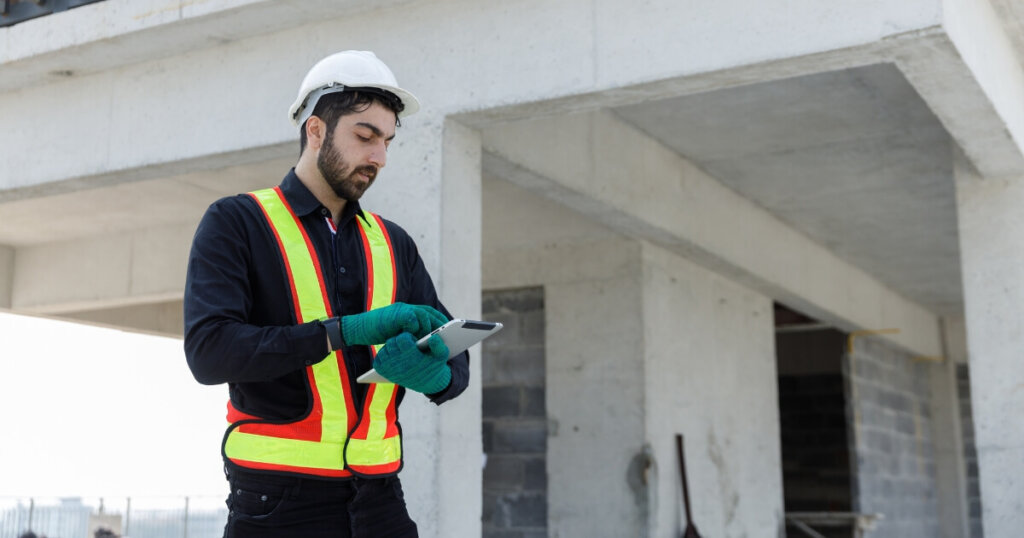
Use systematic routes (e.g., starting at site entry, perimeter)
OSHA recommends starting at the main entry and following a consistent route to ensure complete coverage. Move from general areas to specific work zones, observing active operations before quiet zones.
Observe actual work in progress & talk to workers
Watch how tasks are performed rather than relying on assumptions. Ask workers whether they’ve noticed any hazards or if the equipment feels unsafe. Direct feedback can reveal issues not visible from a distance.
Document findings, take photos
Accurate notes and photos help communicate issues clearly to management and contractors. Label images with the date, location, and hazard type for easy reference.
Prioritize hazards (likelihood × severity)
Not every issue carries equal weight—rank hazards based on their potential impact and how likely they are to cause harm. A missing guardrail near a roof edge is a higher priority than clutter in a storage area.
Use clear action items, deadlines, and responsible parties
Each finding should include a specific fix, a due date, and an assigned person. Vague notes like “improve housekeeping” are less effective than “remove debris from northwest stairwell by the end of the shift.”
Post-inspection follow-up & accountability
Once hazards are identified during a safety inspection, the work isn’t done. Each issue should have a clear corrective action assigned to a specific person or team, with a realistic deadline for completion. Tracking these actions is essential—a hazard logged without follow-up is a hazard left in place. Many safety officers use digital tools or spreadsheets to monitor completion and ensure nothing falls through the cracks.
After the deadline, a re-inspection verifies that the fix is implemented correctly. This step confirms that controls are adequate and that workers are actually following safe procedures. For example, if a scaffold guardrail is replaced, the follow-up should ensure it’s installed correctly, securely anchored, and meets load requirements.
Keeping a trend log of recurring issues is another critical step. If similar hazards appear repeatedly, it often signals deeper problems, such as ineffective training, insufficient supervision, or flaws in site procedures. Tracking these trends enables the safety officer to recommend systemic improvements rather than treating each instance in isolation.
Finally, reporting findings to management closes the loop. Present clear, prioritized data with photos, severity ratings, and completion status. Use these findings as training tools—real examples from your own site resonate far more than generic guidance. Toolbox talks, safety meetings, or short training modules built around documented hazards turn inspection results into actionable learning for the entire workforce. By combining corrective actions, verification, trend analysis, and reporting, safety officers ensure that inspections lead to meaningful improvements rather than just paperwork.
Tips for effective safety inspections
Stay consistent: Schedule inspections at regular intervals. Whether it’s daily walkarounds or weekly formal checks, consistency builds a safety habit among workers. Crews quickly learn that hazards won’t go unnoticed, which naturally encourages safer behavior. For example, a team that sees routine ladder checks knows they must store ladders correctly, reducing slip-and-fall risks.
Engage workers: Involve crew members during inspections. Ask operators, carpenters, and laborers to identify areas they consider risky. On one site, workers identified a poorly lit corner near the stockpile—something supervisors had overlooked. Their input not only uncovers hidden hazards but also fosters trust, making safety a shared responsibility rather than relying solely on top-down enforcement.
Use inspection data for training: Don’t let findings sit in a binder. Share photos of real hazards during toolbox talks or safety huddles. Highlight corrective actions and explain why certain risks are more dangerous than others. For instance, showing the difference between a properly anchored scaffold and a slightly unstable one helps workers understand the consequences of shortcuts.
Keep checklists lean, relevant, and evolving: Avoid overloading your inspection form with unnecessary fields. Focus on the hazards that actually appear on your site and tailor checklists for specific trades. For a roofing crew, fall protection and PPE usage might dominate, while a mechanical crew would focus on lockout/tagout and equipment maintenance. Periodically review and update the checklist to reflect changes in site conditions or new regulations.
Use visuals to enhance clarity: Photos, diagrams, and simple site maps make inspection reports more actionable. Label hazards clearly and, when possible, mark corrective action locations on maps. For example, on a large commercial site, visual notes enabled supervisors to quickly locate a loose guardrail, thereby reducing the time the area was exposed to risk.
Prioritize actionable follow-up: Not every hazard carries the same risk. Rank findings by likelihood and severity, and communicate priorities to site leads. Immediate dangers, like exposed live wiring or open excavations, should be addressed first, while lower-risk issues, such as minor housekeeping, can be scheduled. Clear prioritization ensures time and resources are used where they matter most.
Document successes too: Highlighting areas where safety procedures are consistently followed encourages positive behavior. Recognize crews that maintain organized material storage or consistently wear PPE properly. Positive reinforcement is often as powerful as corrective action in building a strong safety culture.
Final thoughts
Every safety inspection is a chance to prevent injury and improve site performance. By staying organized, engaging the workforce, and tracking outcomes, safety officers reduce the chances of injury and accidents from occuring.
To keep learning about construction safety practices and tools that make inspections easier, check out these related reads:
- Heavy machinery safety
- Construction health and safety courses
- Construction safety software
- Climbing smart: Essential ladder safety for construction professionals
If you want to stay ahead of safety standards and leadership trends across construction, architecture, and engineering, join our newsletter at Under the Hard Hat.