
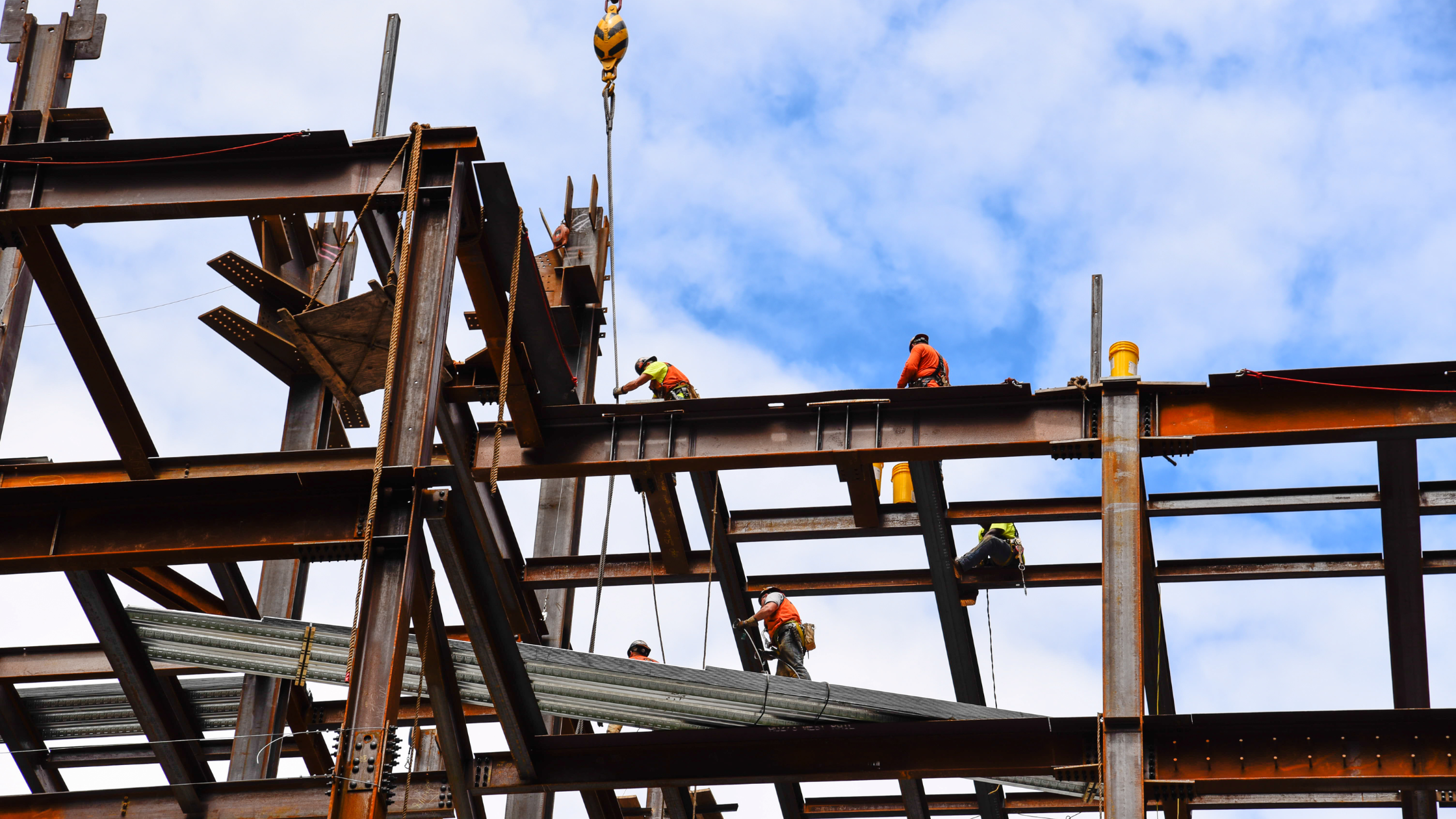
In the midst of a cost-of-living crisis, construction workers are seeing some of the highest wage increases nationwide. Increases in data center projects, infrastructure, and commercial megaprojects contribute to the boost, as many of these investments require inflated headcounts of top talent. Here’s the breakdown of what’s causing the increase in construction worker wages, and which roles can expect the biggest payouts.
Construction worker wages increase: Key findings
According to the U.S. Bureau of Labor Statistics, by the end of 2024, extraction and construction workers earned an annual wage of $63,920, a 21.6% increase from 2019 in nominal terms, but down 0.9% after adjusting for inflation. The West Coast was the most prominent area for both higher wages and higher wage growth. Some of the top-ranking states include Washington, Oregon, and California, each reporting cost-of-living-adjusted mean annual wages over $69,000. Nevada also saw a push over the $69,000 threshold, with a total 4.5% increase after accounting for inflation.
Illinois leads the pack in pay, with a cost-of-living adjustment at a mean annual wage of $80,734. Alaska ($78,435), Hawaii ($75,804), North Dakota ($74,685), and Minnesota ($74,286) followed closely behind, thanks to their strong union presence or stringent wage laws. In terms of the fastest growth, Maine saw the largest jump, with construction worker wages rising 9.2% between 2019 and the end of 2024, after adjusting for inflation. States like New York, Louisiana, and Connecticut, however, saw some of the sharpest drops.
Six figures for skilled trades
As the labor gap persists, contractors and companies continue to face significant hiring challenges, especially for skilled trades roles. The gap, driven by an aging workforce, limited investment in trade education, and recent declines in immigration, means that those who qualify for skilled positions are seeing annual wages exceed $100,000.
Some of the fastest-growing paychecks from the skilled trades sector include quarry rock splitters (+10.2% growth), construction helpers (+7.5% growth), and paving equipment operators (+7.1% growth). In many cases, automation and robotics are helping address growing labor shortages, but in specialized work, the market remains primarily people-first.
Hiring and worker retention mean higher pay
One of the most effective ways to attract and retain eager, qualified workers across the board is through higher wages. Compared with industries with similar educational and training requirements, construction already pays well, although it has historically failed to keep up with inflation. As more and more workers look for job stability in a cost-of-living crisis, they might be inclined to join the construction industry—especially if the wages are only up from here.
Don’t forget to subscribe to our newsletter and follow us on LinkedIn to stay in the loop about the construction market.