If you want to know where the money is going for global construction projects, this guide breaks it down. Governments, developers, and global investors are pushing forward massive infrastructure builds across energy, transportation, water, and technology to meet growing demand and long-term climate and economic goals. Below is a look at some of the largest construction projects in the world, including NEOM, ITER, and California High-Speed Rail, and why they matter right now.
Quick look: Largest construction projects in the world at a glance:
| Project | Location | Type | Why It Matters |
| Belt and Road Initiative (BRI) | Multiple continents | Global infrastructure | Largest construction project in the world connecting trade across Asia, Africa, and Europe. |
| Trans-European Transport Network (TEN-T) | European Union | Rail, roads, ports | Aims to unify Europe’s transport network and reduce emissions across borders. |
| NEOM | Saudi Arabia (Red Sea) | Smart city-region | Ultra-ambitious, car-free future city driven by renewable energy and innovation. |
| Stargate | U.S. (TX, NM, OH, Midwest) | AI data infrastructure | Hyperscale data centers powering the global AI boom with gigawatt-scale campuses. |
| Gulf Railway (GCC Railway) | Arabian Peninsula (GCC countries) | Regional rail | Cross-border freight and passenger rail transforming mobility in the Gulf. |
| Medog Hydropower Station | Tibet, China | Hydropower | Poised to become the world’s largest hydropower project amid major engineering challenges. |
| Dholera Solar Park | Gujarat, India | Renewable energy | 5 GW solar park supporting industrial growth and clean power in India’s smart city. |
| King Abdullah Economic City (KAEC) | Saudi Arabia | Economic development zone | Port-centered city blending logistics, housing, and industry under one megaproject. |
| Kashagan Field | Offshore Kazakhstan | Oil & gas | One of the most technically complex oil field developments in extreme conditions. |
| California High-Speed Rail | California, USA | High-speed rail | Ambitious U.S. rail megaproject connecting cities with climate-forward infrastructure. |
| South–North Water Transfer Project | China | Water infrastructure | Massive national water redirection network addressing regional supply imbalances. |
| Chūō Shinkansen (Maglev) | Japan | Maglev rail | Cutting-edge magnetic levitation rail with deep tunneling under dense cities. |
| ITER | France (international project) | Fusion energy | Largest scientific energy megaproject aiming to demonstrate nuclear fusion at scale. |
| Jubail II Industrial Complex | Saudi Arabia | Industrial infrastructure | Expansion of one of the world’s largest industrial cities, with integrated utilities. |
| Lyon–Turin Rail (Mont Cenis Tunnel) | France–Italy | Cross-border high-speed rail | Longest alpine tunnel under construction, key to Europe’s green transport future. |
Major megaprojects currently under construction
Project 1: Belt and Road Initiative (BRI)
Location: Multiple countries across Asia, Africa, Europe, the Middle East, and Latin America
Size and specs: A massive collection of infrastructure projects that includes railways, highways, ports, power plants, pipelines, and logistics hubs
Expected timeline: Launched in 2013 and continuing through the 2020s and beyond
The Belt and Road Initiative is often described as the world’s biggest construction effort because it’s not just one project. It brings together hundreds of builds spread across dozens of countries to improve how goods, energy, and people move between regions that were once difficult to reach or poorly connected.
Construction under the initiative covers many types of infrastructure. New rail lines help move freight faster between Asia and Europe. Port expansions make it easier for ships to load and unload goods along major trade routes. Roads and highways connect inland cities to coastal ports, while power plants and pipelines support growing industries. In many areas, new industrial parks and logistics centers are built near these transport links, creating jobs and supporting local economies.
What makes the Belt and Road Initiative stand out is its impact on access. Regions that once sat outside major trade routes can now connect to global markets. Shorter travel times and better transport links can lower shipping costs and attract new investment.
At the same time, the initiative’s size has sparked debate over financing, long-term upkeep, and environmental impact. From a construction perspective, it remains one of the clearest examples of how large-scale infrastructure can reshape trade, development, and daily life worldwide.
Project 2: Trans-European Transport Network (TEN-T)
Location: European Union, spanning multiple countries and cross-border corridors
Size and specs: A continent-wide system of railways, roads, ports, inland waterways, airports, and logistics hubs
Expected timeline: Ongoing construction and upgrades with major targets set for 2030 and 2040, depending on the corridor and funding
The Trans-European Transport Network has been described as the backbone of Europe’s transportation system. TEN-T links the entire continent through a connected web of rail lines, highways, ports, and waterways. The goal is to make it easier and faster to move people and goods across borders, while reducing bottlenecks that slow down trade and travel.
What makes TEN-T a true megaproject is its scale and coordination. Projects must line up across national borders, follow shared technical standards, and work within different political and funding systems. A rail tunnel in one country must connect seamlessly to tracks in another. Ports, rail hubs, and highways are planned together so freight can shift smoothly between ships, trains, and trucks. This level of coordination turns dozens of individual builds into one integrated network.
The network also reflects Europe’s push toward more sustainable transportation. High-speed rail corridors aim to reduce short-haul flights, while upgrades to inland waterways and freight rail help move goods with lower emissions. New logistics hubs and modernized ports support growing trade while easing congestion in cities. From a construction perspective, TEN-T combines long-term planning, cross-border cooperation, and multi-modal investment on a continental scale, making it one of the largest and most complex infrastructure efforts in the world today.
Project 3: NEOM
Location: Northwest Saudi Arabia, along the Red Sea
Size and specs: A planned region covering roughly 26,500 square kilometers, made up of multiple districts including THE LINE, Oxagon, Trojena, and Sindalah
Expected timeline: Phased development continuing through the 2030s and beyond
NEOM is not a single building or even a single city. It is a massive city-region project comprising several connected developments, each designed for a different purpose. Together, these districts aim to create a new model for how cities can function, combining living, working, industry, tourism, and transportation into a single coordinated plan.
THE LINE is the most talked-about part of NEOM. It’s planned as a long, narrow city with no private cars, no traditional streets, and daily needs within a short walk. Oxagon focuses on advanced manufacturing and logistics, built around a floating industrial port. Trojena is designed as a mountain destination for tourism and outdoor sports, while Sindalah adds a luxury island focused on marine tourism. Each area is built to support the others, rather than operate on its own.
What makes NEOM stand out as one of the largest construction projects in the world is its ambition. The plan centers on renewable energy, high-speed transit, and dense development that reduces sprawl. High-speed rail and autonomous transport are expected to move people quickly between districts. From a construction perspective, NEOM pushes the limits of scale, design, and coordination, blending urban planning, infrastructure, and architecture into one of the most closely watched megaprojects currently underway.
Project 4: Stargate
Location: United States, with announced sites in Texas, New Mexico, and Ohio, plus additional Midwest locations still to be confirmed
Size and specs: A multi-site rollout of hyperscale AI data centers designed to support advanced computing, with total power capacity measured in multiple gigawatts
Expected timeline: New sites announced in September 2025, with rapid construction and expansion planned over the next several years
Stargate highlights how data centers have become some of the largest construction projects underway today. What once looked like simple warehouse-style buildings are now massive industrial facilities built to support artificial intelligence, cloud computing, and advanced research. These sites require complex foundations, reinforced structures, specialized cooling systems, and around-the-clock reliability, placing them firmly in megaproject territory.
The scale of Stargate is driven largely by power and land. AI workloads demand enormous amounts of electricity, often comparable to small cities. Each campus needs dedicated substations, upgraded transmission lines, and backup systems to keep operations running without interruption. Land use also adds to the build size, since data centers are typically spread across large campuses with room for future expansion, security buffers, and energy infrastructure.
From a construction standpoint, Stargate represents a shift in what counts as critical infrastructure. These data centers are built with the same intensity and coordination as power plants or manufacturing complexes. Tight schedules, heavy civil work, and advanced mechanical and electrical systems are all part of the equation. As demand for AI continues to grow, projects like Stargate drive some of the world’s biggest and fastest-moving construction efforts.
Project 5: Gulf Railway (GCC Railway)
Location: Gulf Cooperation Council countries, linking Kuwait, Saudi Arabia, Bahrain, Qatar, the United Arab Emirates, and Oman
Size and specs: A planned regional rail network stretching roughly 2,177 kilometers, developed in phases by each member country
Expected timeline: Active construction and planning across the region, with new segments and connections expected to move forward starting in 2026
The Gulf Railway is designed to connect six countries through a shared rail system for both freight and passengers. Once complete, the network would link major ports, industrial zones, and cities across the Arabian Peninsula. For the region, this means faster trade routes, more efficient movement of goods, and a new option for long-distance travel that reduces reliance on trucks and short-haul flights.
What makes the Gulf Railway especially complex is the coordination. Funding models vary by country, timelines do not always move at the same pace, and political priorities can shift. Border crossings, customs procedures, and passenger rules must also be aligned for the system to work as intended. Even with these challenges, the project remains one of the most ambitious rail efforts in the world. If fully realized, it would reshape how people and goods move across the Gulf, making rail a key part of the region’s long-term infrastructure strategy.
From a construction perspective, the project stands out because it is not being built by a single authority or in a single location. Each country is responsible for its own sections, which must still connect smoothly at borders. Tracks, signaling systems, and safety standards need to align across countries to enable trains to move without delays. Large stretches of rail also cross desert terrain, adding challenges related to heat, sand, and long-distance logistics.
Project 6: Medog Hydropower Station
Location: Tibet Autonomous Region, China, along the Yarlung Tsangpo River system, which becomes the Brahmaputra downstream
Size and specs: A planned hydropower capacity of roughly 60 gigawatts, which would make it the largest hydroelectric project in the world
Expected timeline: Construction began in July 2025, with commissioning reported to be targeted around 2033
The Medog Hydropower Station stands out due to its sheer scale. At an estimated 60 gigawatts, the project would produce more electricity than any existing hydropower facility. The design relies on a series of tunnels and cascade-style power stations that capitalize on the river’s dramatic elevation drop as it cuts through deep mountain gorges. This approach allows engineers to generate large amounts of power while reducing the need for a single, towering dam.
Building in this region is especially challenging. The project sits in one of the most remote and rugged parts of the Tibetan Plateau, where steep terrain, seismic risk, and extreme weather are constant factors. Construction requires long tunnels drilled through hard rock at high altitude, along with roads, worker camps, and support infrastructure built almost from scratch. From an engineering perspective, the combination of output goals and geographic risk makes Medog one of the most complex hydropower projects ever attempted.
The project has also drawn international attention because of its location on a river shared by multiple countries. Downstream nations rely on the Brahmaputra for agriculture, drinking water, and energy, raising concerns about water security and long-term flow impacts. Medog represents both the technical limits of hydropower and the broader challenges that come with building mega infrastructure on shared natural systems.
Project 7: Dholera Solar Park
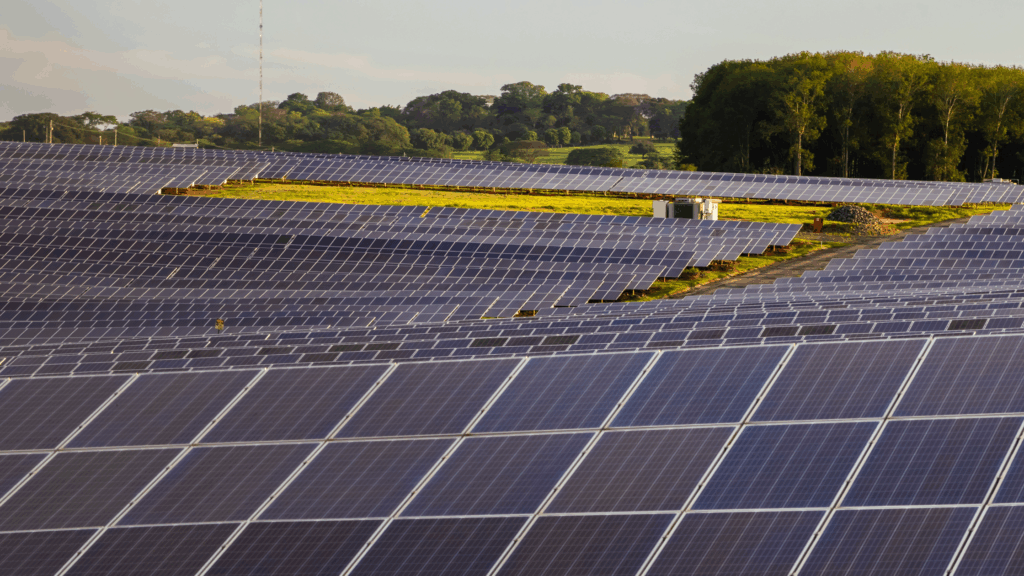
Location: Gujarat, India, within the Dholera Special Investment Region
Size and specs: A planned solar park with a target capacity of around 5 gigawatts, developed in multiple phases
Expected timeline: Phased commissioning through the mid to late 2020s, depending on individual project tranches
Dholera Solar Park shows how renewable energy projects have grown into full-scale construction megaprojects. Building at this size requires vast stretches of land, new access roads, substations, and high-capacity transmission lines to move power from the site to cities and industrial users. Grid integration is a major part of the work, with infrastructure designed to handle large volumes of power while maintaining reliability.
Energy storage and system planning also play a role as the park expands. Large solar facilities must balance supply with demand, especially during peak hours and seasonal shifts. That means coordinating generation with grid upgrades and, over time, adding storage solutions to smooth output. Through a construction lens, these supporting systems add complexity and scale beyond a typical renewable energy project.
The solar park is closely tied to the broader development of the Dholera Special Investment Region. The area is planned as a major industrial and manufacturing hub, and reliable, large-scale renewable power is a key part of that vision. Dholera aims to attract investment while reducing long-term emissions by pairing clean energy with industrial growth. In that sense, the solar park is both an energy project and a foundation for regional development.
Project 8: King Abdullah Economic City (KAEC)
Location: Saudi Arabia, on the Red Sea coast north of Jeddah
Size and specs: A large-scale planned economic city that combines port facilities, logistics zones, industrial areas, residential neighborhoods, and business districts
Expected timeline: Multi-decade phased buildout continuing through the coming decades
King Abdullah Economic City is designed as a complete industrial city rather than a single development. At its core is King Abdullah Port, one of the largest and fastest-growing ports in the Red Sea region. Around it, planners have laid out logistics hubs, manufacturing zones, office districts, and residential communities meant to support both workers and long-term economic growth.
The city follows a mixed-use model where industry, housing, and services are built side by side. Residential neighborhoods are planned near employment centers, while schools, healthcare, and retail are integrated into the broader layout. This approach reduces travel distances and supports a live-work environment that can scale as the city grows. From a construction standpoint, this means constant coordination between infrastructure, buildings, utilities, and transportation systems.
KAEC qualifies as a megaproject due to its scale and ambition. Entire districts are planned, built, and expanded over time, rather than delivered all at once. Roads, power networks, water systems, and communications infrastructure must be sized for future growth, not only current demand. As part of Saudi Arabia’s broader economic diversification efforts, King Abdullah Economic City demonstrates how large-scale city building can support trade, industry, and population growth within a single, long-term construction program.
Project 9: Kashagan field development
Location: Offshore Kazakhstan in the Caspian Sea, near the city of Atyrau
Size and specs: One of the world’s largest oil field developments, built in shallow offshore waters using artificial islands, pipelines, and onshore processing facilities
Expected timeline: A long-life field with ongoing development, upgrades, and expansion phases
The Kashagan field is considered one of the most technically challenging oil projects ever built. The reservoir contains high levels of sour gas, including hydrogen sulfide, which is extremely toxic and corrosive. Handling this safely requires specialized materials, complex processing systems, and strict safety controls across the entire site. These conditions add layers of engineering complexity that go well beyond those of a typical offshore oil project.
Construction at Kashagan also had to adapt to the unique environment of the Caspian Sea. Instead of traditional offshore platforms, much of the field was developed using artificial islands designed to withstand shallow water, ice formation, and extreme temperature swings. Pipelines carry oil and gas from the offshore facilities to onshore processing plants, where additional infrastructure is needed to manage pressure, corrosion, and gas separation. Each piece of the system must work together with little room for error.
Kashagan remains a megaproject because of its cost and complexity. Billions of dollars have been invested over decades to bring the field online and keep it operating safely. Ongoing upgrades and technical adjustments continue as operators respond to harsh conditions and evolving production needs. Kashagan is an example of an AEC project that shows some of the world’s largest projects are not just big in size but also in the level of expertise and coordination required to make them work.
Project 10: California High-Speed Rail
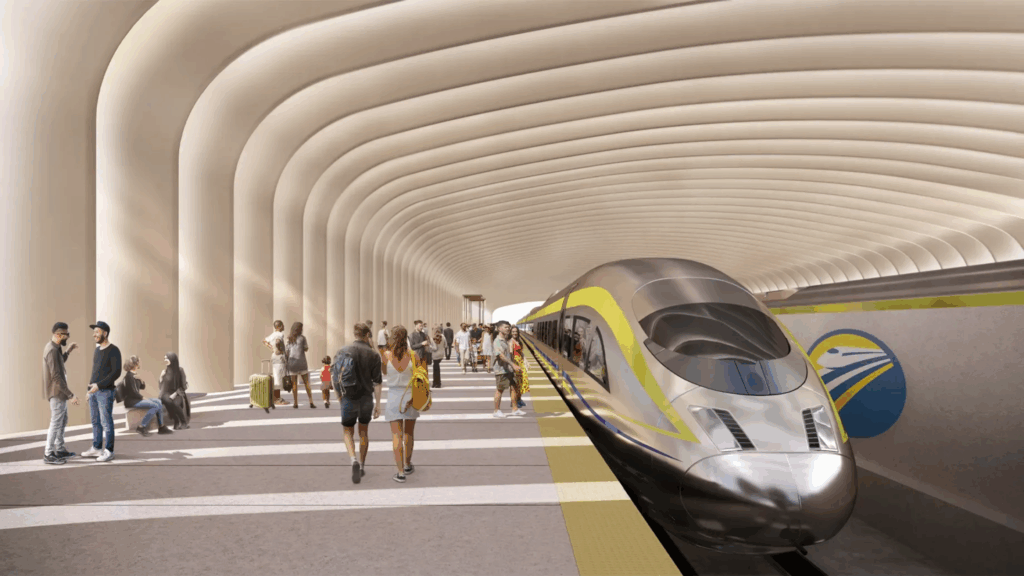
Location: California, United States
Size and specs: A 171-mile Initial Operating Segment under construction in the Central Valley, connecting Merced and Bakersfield
Expected timeline: Initial service is forecast for the early 2030s, with the full statewide system dependent on future funding and approvals
California High-Speed Rail remains one of the most visible rail megaprojects in the world because of the amount of heavy civil construction involved. The current phase focuses on building the system’s backbone through the Central Valley. That includes dozens of large viaducts, overpasses, and underpasses designed to separate trains from road traffic. Entire stretches of right-of-way have been acquired and cleared, creating a dedicated corridor built to handle trains traveling at very high speeds.
Station planning and utility relocation add another layer of complexity. New stations must fit within existing cities while meeting strict safety and performance standards. At the same time, crews are moving or protecting water lines, power infrastructure, and other buried utilities along the route. Each section must be built with long-term expansion in mind, even though only part of the system is delivered in this phase.
Despite years of debate and shifting timelines, the project continues to draw global attention. Its scale, cost, and ambition place it among the world’s largest rail builds, especially in a region where high-speed rail doesn’t exist yet.
For the construction industry, California High-Speed Rail is a case study in modern rail development, combining massive earthworks, complex structures, and long-term planning into a single transportation investment project in North America.
Project 11: South-North Water Transfer Project
Location: China, spanning three major route systems known as the Eastern, Central, and Western routes
Size and specs: Designed to move roughly 44.8 billion cubic meters of water each year using a vast network of canals, tunnels, pumping stations, and reservoirs
Expected timeline: A multi-decade effort with some routes already operating and others still under construction or long-term planning
The South-North Water Transfer Project is often described as water mega-infrastructure, and for good reason. It is not a single canal or dam, but a nationwide system built to move water from China’s wetter southern regions to its drier northern cities and industrial centers. The project includes hundreds of miles of open canals, deep tunnels, massive pumping stations, and carefully managed reservoirs, all working together to rebalance water supply on a national scale.
From a construction standpoint, the scope is unmatched. Crews have had to cut channels through farmland, tunnel beneath rivers and cities, and build pumping systems capable of lifting water across long distances. Each route presents different challenges. The Eastern Route relies heavily on existing waterways that require major upgrades, while the Central Route includes long canals and tunnels that cross varied terrain. The Western Route, still largely in the planning stages, would face some of the country’s most difficult terrain.
The project’s scale also brings significant social and environmental impacts. Communities have been relocated to make room for canals and reservoirs, and ecosystems along the routes have been altered. Supporters point to improved water security for major cities and industries, while critics raise concerns about long-term environmental balance and regional equity. Regardless of perspective, the South-North Water Transfer Project stands as one of the largest and most ambitious water infrastructure projects ever built, especially given that the resource being moved is water itself.
Project 12: Chūō Shinkansen (Maglev)
Location: Japan, along the Tokyo to Nagoya to Osaka corridor, delivered in phases
Size and specs: A next-generation SCMaglev high-speed rail line with extensive tunneling and new underground stations in major urban areas
Expected timeline: Construction is underway, though the schedule has shifted from original targets due to technical, environmental, and political challenges
The Chūō Shinkansen is considered a megaproject because of where and how it is being built. Much of the line runs underground, including long tunnel sections beneath mountains and dense metropolitan areas. Trains are designed to travel at extreme speeds using magnetic levitation, which requires highly precise guideways, power systems, and safety controls. Building this level of infrastructure beneath some of the busiest cities in the world pushes construction methods to their limits.
Tunneling remains the project’s defining challenge. Crews are boring deep below urban neighborhoods, rivers, and existing rail lines while minimizing surface disruption. New underground stations must be carved out in tight spaces, often hundreds of feet below ground, and integrated with existing transit systems. These stations include complex ventilation, emergency access, and vibration control systems designed specifically for Maglev technology.
Delays have highlighted how complex the project is beyond engineering alone. Environmental concerns, regional approvals, and political negotiations have all played a role in shifting timelines, particularly around water impacts and route approvals. Even so, construction continues, and the project remains central to Japan’s long-term transportation plans.
The Chūō Shinkansen stands out as a rare combination of cutting-edge rail technology and some of the most demanding underground work ever attempted, securing its place among the world’s largest and most ambitious infrastructure projects.
Project 13: ITER
Location: Cadarache, southern France
Size and specs: The world’s largest experimental fusion energy project, involving 35 countries and centered around a massive tokamak reactor
Expected timeline: Construction began in 2010, with the schedule revised over time,v and first plasma now expected later than originally planned
ITER is a good example of science becoming a megaproject in its own right. The site looks less like a research lab and more like a heavy industrial complex. Construction includes some of the largest and most precise components ever manufactured, many of which are built in different countries and shipped to France for final assembly. These parts must fit together within extremely tight tolerances, even though some weigh hundreds of tons.
At the heart of ITER is the tokamak, a donut-shaped reactor that uses powerful magnetic fields to contain plasma. Building it requires advanced cryogenic systems to cool superconducting magnets to near absolute zero, along with reinforced concrete structures, seismic protection, and complex internal supports. Much of the work happens before the reactor ever turns on, making construction a major part of the project’s overall scope.
ITER is globally significant even before it begins operations because of what it represents. It brings together nations that do not always align politically to work on a shared energy goal. From an AEC perspective, it pushes the limits of precision manufacturing, logistics, and coordination across borders. ITER’s long timeline and revised milestones highlight how challenging fusion research is, and why it remains one of the most important and construction-heavy projects underway, anywhere in the world.
Project 14: Jubail II Industrial Complex
Location: Jubail Industrial City, Saudi Arabia
Size and specs: A major expansion of one of the world’s largest industrial cities, combining petrochemical plants, utilities, housing, logistics facilities, and port infrastructure
Expected timeline: Ongoing phased expansion with development continuing over multiple years
Jubail II shows how industrial cities themselves can function as megaprojects. Rather than building a single plant or facility, the expansion focuses on growing an entire industrial ecosystem. That includes new petrochemical complexes, expanded utility networks, and the infrastructure needed to support thousands of workers and residents. Every addition must connect seamlessly to existing systems that are already operating at a massive scale.
Utilities are a major part of the construction effort. Desalination plants and power stations are built or expanded to meet rising demand, while extensive pipeline networks move water, gas, and industrial materials across the site. Roads, rail links, and port facilities are upgraded to handle increased freight volumes, ensuring products can move efficiently from factories to global markets. This level of coordination between energy, water, transport, and industry is what sets industrial city projects apart.
What makes Jubail II especially notable is the scope of its planned growth. The expansion is designed to attract clusters of related industries, enabling manufacturers, suppliers, and service providers to operate in close proximity. Housing, schools, healthcare, and commercial areas are developed alongside industrial zones to support a long-term workforce.
Jubail II represents city-scale planning focused on industry, showing how large infrastructure, utilities, and urban development come together in one of the world’s largest ongoing industrial builds.
Project 15: Lyon–Turin high-speed railway (Mont Cenis / Mont d’Ambin Base Tunnel)
Location: France and Italy, crossing the Alps
Size and specs: A major cross-border rail project centered on a roughly 57.5-kilometer twin-tube base tunnel, supported by new rail links and access works on both sides of the border
Expected timeline: Major tunnel construction has been underway since 2019, with opening targeted for the early 2030s
The Lyon–Turin high-speed railway is best known for its base tunnel beneath the Alps. Once complete, it will be one of the longest rail tunnels in the world. The tunnel is the headline because of the challenges of building it. Crews are working deep underground through complex alpine geology, including hard rock, fault zones, and water-bearing layers. Excavation, lining, and reinforcement must all meet strict safety standards while moving spoil material out of narrow mountain valleys.
Safety and logistics are central to the design. The twin-tube layout enables emergency access and evacuation, while advanced ventilation systems manage air quality and heat during construction and future operations. Worksites on both sides of the border must stay carefully coordinated, with materials, equipment, and crews moving through challenging terrain. From a construction perspective, the tunnel combines heavy civil engineering with long-term operational planning on a massive scale.
The project has also been one of the most debated rail builds in Europe. Environmental groups and local communities have raised concerns about ecosystem impacts, construction disruption, and cost. Supporters argue the line is key to shifting freight traffic from trucks to rail, reducing emissions and easing congestion through the Alps. As part of the broader Trans-European transport network, the Lyon–Turin railway aims to improve cross-border freight and passenger movement. Whether viewed through the lens of engineering or policy, it remains one of the most complex and closely watched rail megaprojects underway today.
Are more megaprojects expected as the world globalizes?
If the projects we just covered feel big, the next generation of megaprojects looks just as ambitious. As countries and companies think bigger about how people live, work, and move, new investment is breaking ground in data infrastructure, cross-border transport, water security, and energy. These builds reflect not just local need, but global trends in technology, climate resilience, and trade.
What’s breaking ground next?
AI and data infrastructure wave
The rise of artificial intelligence and cloud computing is driving demand for massive data centers and supporting infrastructure, such as industrial-grade campuses with gigawatts of power capacity and complex cooling and electrical systems. As AI usage grows worldwide, more hyperscale facilities, grid upgrades, and regional power solutions are expected to follow. This wave of digital infrastructure construction looks just as transformative as older efforts in rail or highways, and it indicates a growing intersection of technology and heavy industry in global development.
Rail revival and cross-border corridors
Rail remains front and center in long-distance transport planning. In Europe, the expansion of the Trans-European Transport Network continues to link cities and freight corridors across national borders, with sustainability and decarbonization in mind. Alpine base tunnels like the Lyon–Turin project show how challenging terrain can be tamed to cut travel times and reduce freight truck traffic. Meanwhile, countries around the world are investing in high-speed and freight rail to meet climate goals while improving connectivity between urban and rural regions and between nations.
Water security megabuilds
Climate change and population growth are pushing water infrastructure to new scales. The South-North Water Transfer Project in China highlights how entire river systems can be engineered to move massive volumes of water where it is needed most. Similar regional efforts are being considered in parts of Asia, the Middle East, and Africa to support agriculture, cities, and industry during droughts. Desalination plants, transfer tunnels, and flood control systems are all part of this next era of water megabuilds, where civil engineering meets climate resilience head-on.
Energy megaprojects scaling fast
Large energy projects that blend generation, storage, and transmission are also multiplying. Mega solar parks, expanded hydro installations, and new grid infrastructure are underway in places like India, China, and the Middle East. These builds aim to meet rising electricity demand while shifting to lower-carbon power sources. Solar parks tied to industrial regions, large hydropower builds in remote river systems, and high-voltage transmission lines crossing states and countries are all part of how energy infrastructure is being rethought at a massive scale.
As globalization continues to influence how countries prioritize growth, trade, and sustainability, more megaprojects are likely to be launched. Each new effort brings its own mix of engineering challenge, economic opportunity, and long-term impact.
To stay up to date on the biggest projects, emerging trends, and the people building them, subscribe to our newsletter.