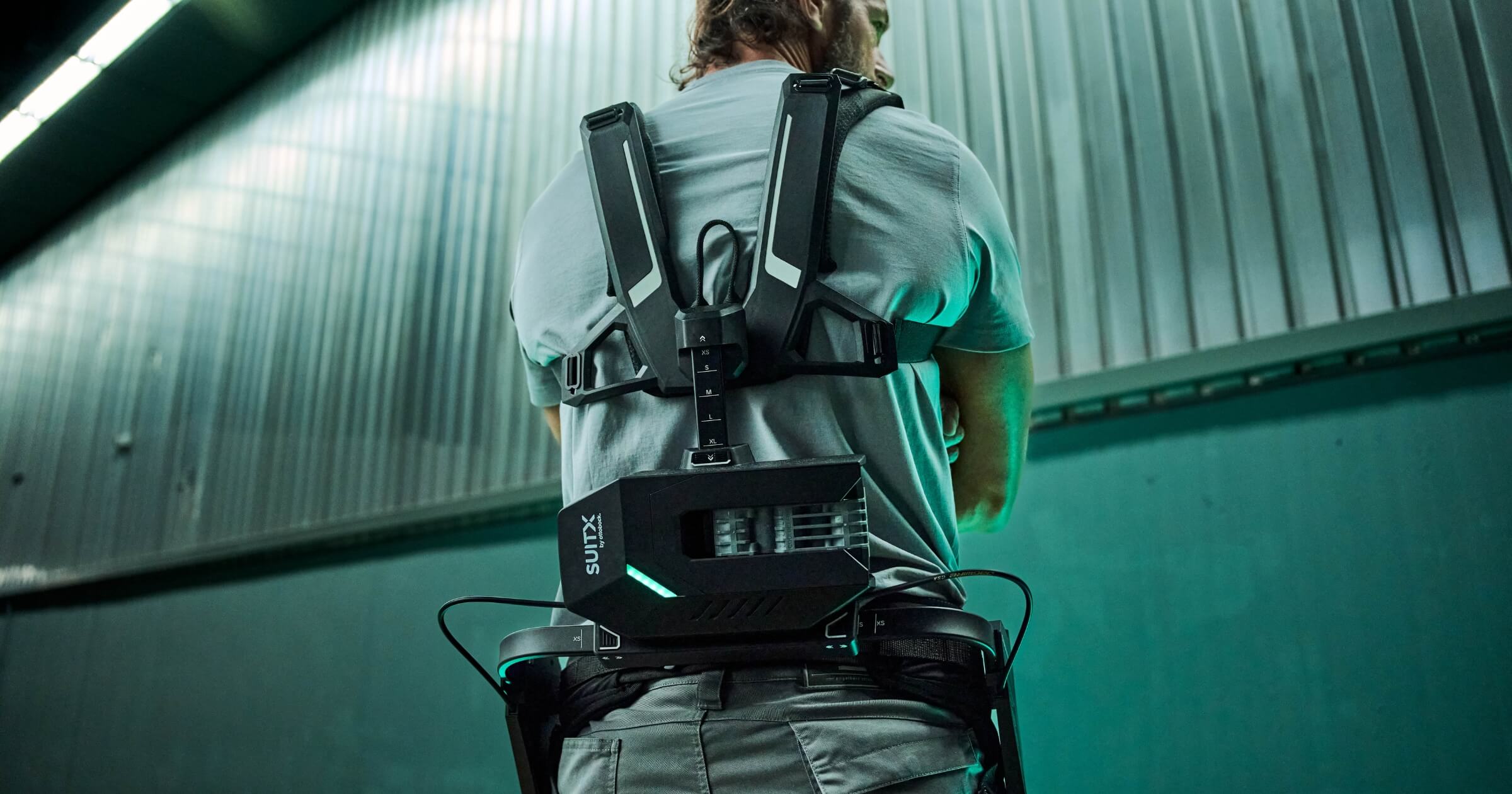
Ottobock, through its SuitX division, unveiled the IX BACK VOLTON exoskeleton at CES 2026 in Las Vegas, marking its latest move into powered wearable support for industrial work. The news, dropped at this year’s show, highlights the potential for adaptive exoskeletons to make a real difference in reducing lower back strain for people doing heavy lifting and repetitive tasks in industries like construction and manufacturing. Repetitive strain injuries are a big burden on workers and employers in jobs that require heavy lifting or overhead work. The IX BACK VOLTON exoskeleton is designed to reduce injury rates giving employers a legitimate solution for protecting their staff without slowing production.
The gear on display comes from Ottobock, the company associated with prosthetics and orthotics, which also has a division focused on occupational exoskeletons. Their SuitX exoskeleton has its roots in robotics research at UC Berkeley, and they acquired it in 2021 as part of a bigger push into workplace ergonomics. Since then, they’ve been working to turn all those experimental exoskeleton ideas into something that meets the demands of a real workplace. They used CES 2026 as a stage to show that this tech is beyond just being trialled and is actually making it into daily use.
Their main focus was the IX BACK VOLTON, a powered system designed to assist workers when they’re lifting and bending. According to Ottobock, the system uses sensors to track how you move and adjust the support in real time, so the wearer isn’t locked into a fixed motion like with some other exoskeletons. It works by tracking your movements and adjusting its support as you move throughout the day. That approach reflects a broader shift in how exoskeletons are viewed: from fancy novelty wearables to practical tools that fit into how you work.
IX BACK VOLTON
The IX Back Volton is a battery-powered industrial exoskeleton that supports your lower back during physically demanding work. IX BACK VOLTON delivers up to 37 lbs of powered back support (17 kg) while weighing just 12.5 lbs (5.7 kg) including battery. At the heart of IX BACK VOLTON is Adaptive Intelligence, a proprietary motion system that tracks how your body moves up to 1,000 times per second and adjusts support on the fly. Assistance kicks in right when it’s needed and fades out when it’s not, helping cut down fatigue without interfering with natural movement or muscle use. A patented single-motor design keeps the system light and low-profile, while still delivering steady, reliable support throughout the workday.
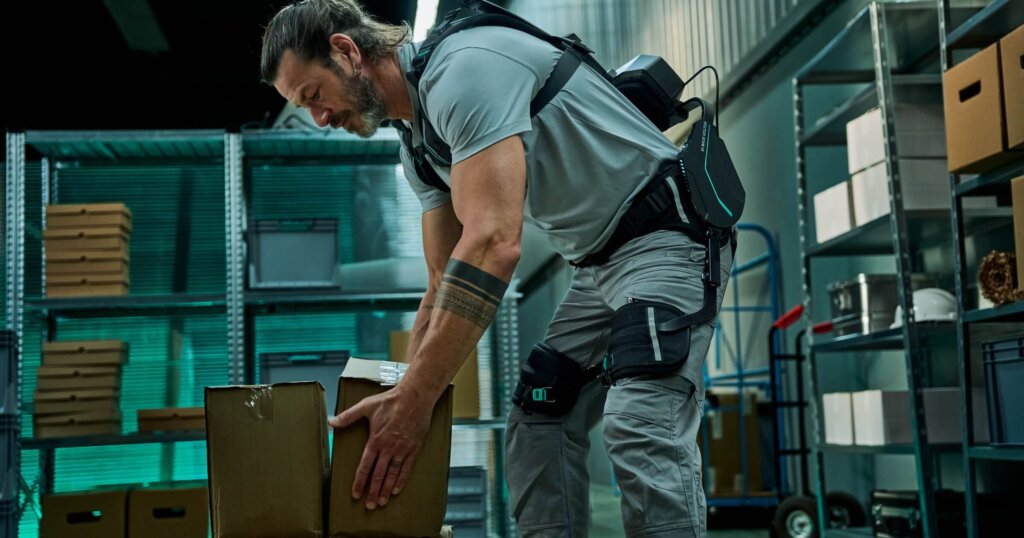
This kind of ergonomic support matters for workers in labor intensive jobs that require lifting frequently. Most of the time, it’s not a big, heavy lift that gets you. It’s those hundreds of little movements added together across a shift that cause long-term wear and tear on your body. The IX BACK VOLTON is designed for a specific type of job, like picking orders, packing materials, loading and unloading, and all those other tasks where your back starts to buckle under the strain of constant bending. Powering the system is Bosch’s AMPShare 18V battery platform, delivering up to 10 hours of runtime with fast charging and quick-swap batteries that help keep downtime to a minimum.
What’s really nice is that it doesn’t try to take over from your own strength; it just gives you a helping hand. The point is to keep you from getting physically exhausted, prevent accidents, and keep you going at a decent pace throughout your shift. In industries where back injuries are a real problem, this kind of support could make a real difference. If you want to see how it works in detail, check out their latest video below:
IX BACK AIR and IX SHOULDER AIR
Alongside the IX BACK VOLTON, Ottobock is also introducing its IX BACK AIR and IX SHOULDER AIR systems, which take a radically different approach to getting the job done. These exoskeletons take a stealthy approach—no batteries, no motors. Instead, they’re using physics to make it easier for the body to do what it does best: move with ease.
The IX BACK AIR is designed for workers who are on the move all day—lifting, walking, climbing, or moving equipment. It’s designed to lend a supporting hand to lower backs without weighing people down. The IX SHOULDER AIR is there to help people who spend their days reaching overhead—electricians, mechanics, and assemblers who repeatedly hoist heavy things above their heads.
Ottobock is all about giving people options, not spouting off a one-size-fits-all solution. Powered support is just one way to do things. But in many cases, all you really need is a bit of extra support that won’t slow you down.
The future of exoskeletons at work
The real message from Ottobock’s CES 2026 display is that industrial exoskeletons are on the cusp of widespread acceptance. These aren’t experimental devices meant for controlled environments. Instead, they’re being pitched as the kind of gear that can just be dropped into a jobsite or production line with barely a hitch. Ottobock has already partnered with major companies like IKEA and seen a positive response. Their plan is to continue to expand in the warehouse sector and work with other potential partners.
For construction and industrial contractors, the upshot of this is significant. Helping prevent musculoskeletal injuries on the job can save a lot of money on workers’ compensation claims, help keep people on the payroll (and not at home with a bad back), and help people stick with these tough jobs for longer.
Back and shoulder injuries are still among the main reasons people miss work or leave the industry altogether. Any technology that helps people keep going without getting in the way is worth a close look, especially given that labor shortages are still putting pressure on crews and contractors.
If you’re following how CES is shaping the tools, gear, and technology behind the built environment, check out our other CES spotlights for more coverage from the show floor:
- Oshkosh brings autonomous and AI-powered jobsite tech to CES 2026
- CES award spotlight: The AI Transformer Home Trailer (AI-THT)
- Siemens unveils lineup for CES 2026 keynote
And if you want those updates delivered straight to you, join the Under the Hard Hat newsletter to stay up to date on the innovations changing how work gets done.