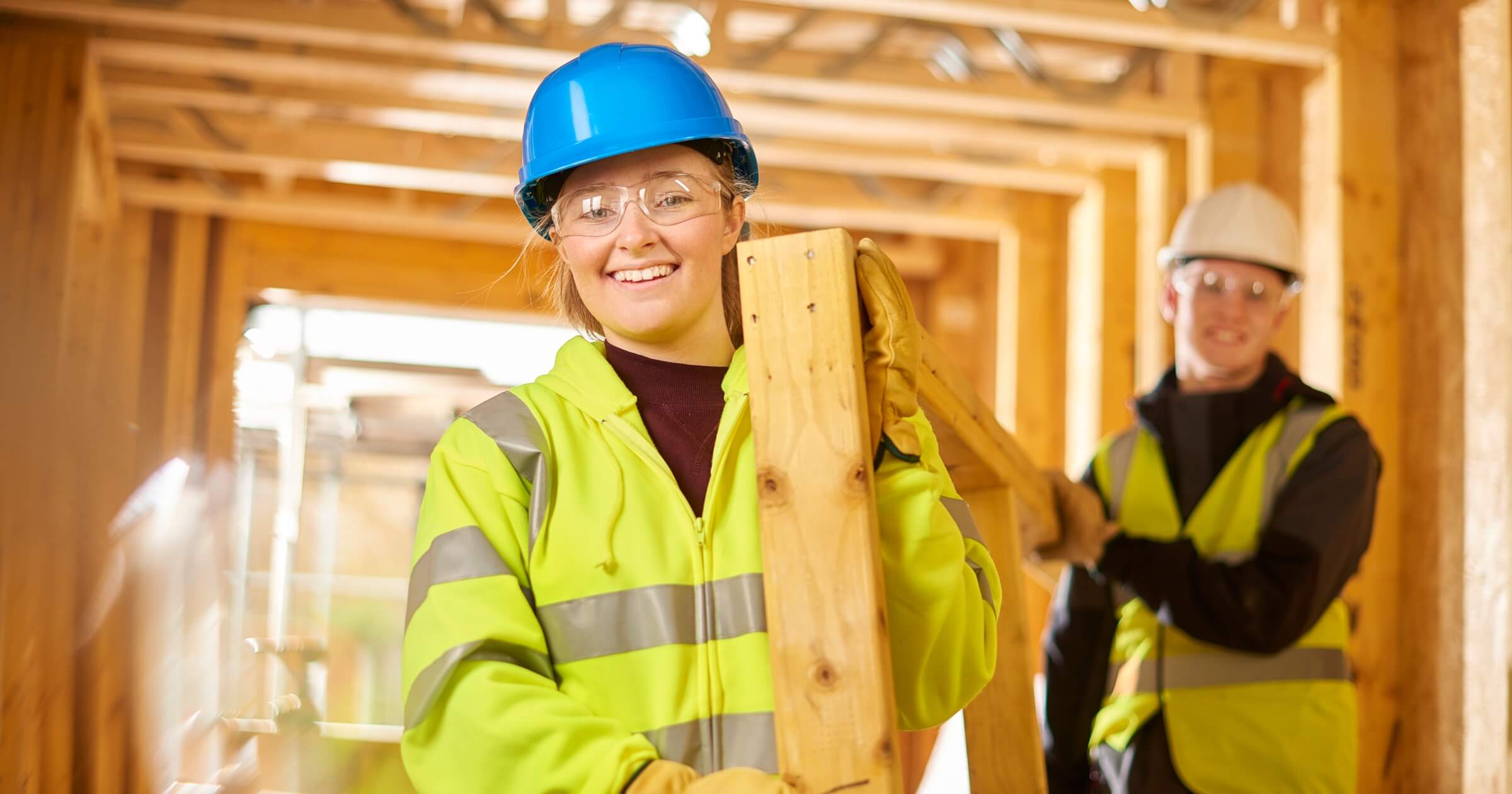
If you are looking for a career with high pay, great benefits, and zero student debt, the construction industry is looking for you right now. Whether it’s in professional roles like project management or skilled trades like electrical and welding, there is a plethora of high-paying career choices available. In this article, we’ll explore why construction is one of the biggest career opportunities for women, break down why women are growing in numbers in this field, and the best ways to get started.
Why construction presents a major career opportunity for women right now
There has never been a better time for women to pull on a pair of work boots. For decades, construction was seen as a “man’s world.” But in 2026, those old barriers are crumbling. The industry is actively rolling out the red carpet. Here’s why:
A massive need for new talent in construction
The biggest reason for this opportunity is simple math; there is a massive labor shortage across the United States and Canada. According to recent data from early 2026, there are hundreds of thousands of open positions that need to be filled. Because there aren’t enough workers to keep up with demand, companies are looking for talent in places they previously ignored. To keep up, many firms are rethinking way to attract more women to the construction industry by offering better benefits and more flexible schedules.
The “Silver Tsunami” of retirements
Many of the most experienced people in construction, the foremen, project managers, and master tradespeople, are reaching retirement age at the same time. This “Silver Tsunami” is leaving a huge gap in leadership. For a woman entering the industry today, this means there is a fast track to management. You aren’t just joining the workforce; you are entering a field where you can move into a high-level leadership role much faster than in a traditional office job.
Big investments in the future of infrastructure
The government is currently pouring trillions of dollars into infrastructure, housing, and clean energy. From building high-speed rail to installing massive solar farms, there is enough work to keep the industry busy for the next 30 years. When you choose a career in construction right now, you are getting long-term job security in an industry that literally builds the world we live in.
Where the biggest career opportunities exist for women in construction
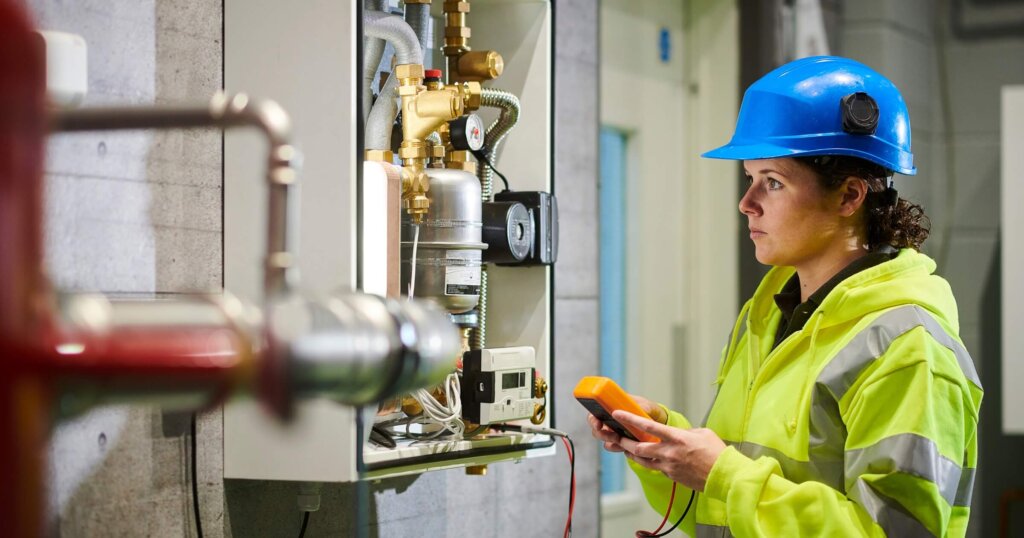
“Construction” covers everything from the person holding the welding torch to the person managing a million-dollar budget on a laptop. If you are looking to enter the field, it helps to know which roles are growing the fastest. Programs like Build Like a Girl Canada are essential because they introduce women to these roles through mentorship and real-world exposure.
Skilled trades
These are the “hands-on” jobs where you build, fix, and install. Because these skills are in such high demand, these roles often come with the highest starting pay and the best job security.
- Electrical: With the world moving toward electric cars and solar power, electricians are more in demand than ever. It’s a “clean” trade that requires a lot of problem-solving and detail work, skills that many women excel at. Now, electricians are also maintaining complex smart-grid systems and programming building automation.
- Plumbing and pipefitting: These trades are the backbone of our cities. Whether it’s high-rise residential buildings or massive industrial plants, specialized pipefitters are needed to keep water and energy moving. The pay for a journeywoman pipefitter is among the highest in the industry.
- Welding: Welding is as much an art as it is a science. It’s a great fit for people who enjoy precision and seeing a finished product at the end of the day. Plus, it’s one of the most portable skills; you can weld on a construction site, in a shipyard, or even underwater.
- Heavy equipment operation: If you like the idea of moving mountains, this is for you. Operating excavators, cranes, and bulldozers is now less about “brute strength” and more about finesse and understanding complex GPS and hydraulic systems.
Professional and technical roles
Not all construction jobs require a tool belt. If you are great at organizing, communicating, or managing people, these office-and-field hybrid roles are booming.
- Project management: A project manager (PM) is like the conductor of an orchestra. You make sure the materials arrive on time, the budget stays on track, and everyone is doing their job safely.
- Estimating and scheduling: These pros use data and software to figure out exactly how much a building will cost and how long it will take to finish. It’s perfect for someone who loves math and organization.
- Safety and compliance: Construction sites are safer than they’ve ever been, and that’s thanks to Safety Officers. This role involves inspecting sites, training crews, and ensuring everyone follows the rules.
Technology and innovation roles
Construction is becoming a tech industry. We are now seeing roles that didn’t even exist ten years ago, and many of these are being filled by tech-savvy women.
- BIM (Building Information Modeling): This involves creating a digital 3D model of a building before construction begins. You get to “build” the project on a computer to find mistakes before they happen in the real world.
- Equipment tech and diagnostics: Modern construction tools are full of computers. We need specialists who can plug a laptop into a crane or a tractor to figure out why it isn’t running correctly.
- Automation and AI: From site-scanning drones to robotic bricklayers, technology is changing the job site. Roles in managing these AI-supported systems are growing fast and offer a unique way to be “in construction” without traditional physical labor.
Women in construction by the numbers
If you want to know where the momentum is, look at the data. As of early 2026, the presence of women on the job site is a record-breaking shift.
Breaking the 11% ceiling
According to the U.S. Bureau of Labor Statistics (BLS) and NAHB, women now make up 11.2% of the total construction workforce. While that might sound small, it represents a 20-year high. Even more impressive is the growth rate: since 2012, the number of women in the industry has increased every single year, now totaling over 1.34 million workers.
Office vs. field: The gap is the opportunity
Right now, there is a big difference between where women work in construction and where they are needed most:
- Management and professional roles: Roughly 18% of construction managers are women. This area has seen 55% growth over the last few years.
- The skilled trades: Currently, only about 4% to 4.3% of “on-the-tools” roles, like electricians, plumbers, and carpenters, are held by women.
This 4% is actually the biggest opportunity. Companies are desperate for skilled laborers, and they’re offering massive incentives, better training, and high starting wages to bring that number up.
The pay gap: Construction’s secret weapon
One of the most compelling reasons for women to choose construction is the paycheck. In the overall U.S. economy, women earn about $0.82 for every dollar a man earns. However, in the construction trades, that gap almost disappears. Women in construction earn about 95% to 99% of what their male counterparts make. According to the Institute for Women’s Policy Research (IWPR), women in the trades earn roughly 30% more than women working in female-dominated fields like service or retail.
Momentum in training
We are also seeing a surge in the “pipeline.” Apprenticeship participation for women has risen significantly, with a 55.5% increase in female apprentices since 2018. This proves that the next generation is actively getting the licenses and certifications to lead the industry.
How women are entering construction careers
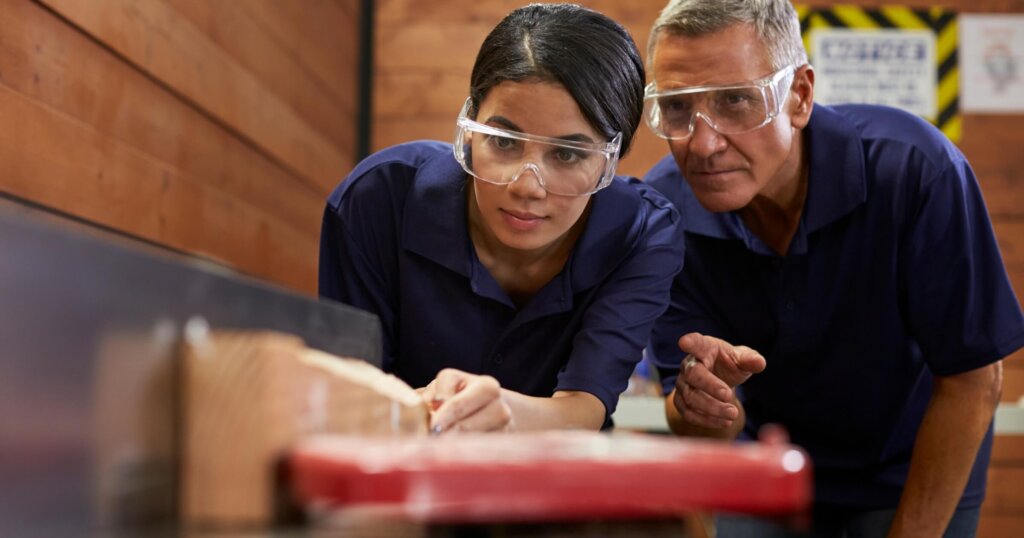
Starting a career in construction doesn’t require a four-year degree or a mountain of student debt. In fact, it’s one of the few places where people will pay you to learn.
Registered apprenticeships: The “earn while you learn” model
The most common way to start is through a registered apprenticeship. Think of this as a long-term job interview where you get a paycheck from day one.
- Paid training: You spend about 80% of your time on the clock, learning from a “journeyperson” (an expert in the trade). The other 20% is spent in a classroom.
- No debt: Instead of paying tuition, your employer or union covers the cost of your schooling. As you learn more skills, your hourly pay automatically goes up.
- Nationwide standards: When you finish, you receive a credential (like the Red Seal in Canada) that proves you are a pro. It’s a “passport” that lets you work anywhere.
Pre-apprenticeship programs: Testing the waters
If you’ve never held a power tool before, a pre-apprenticeship is the perfect “bootcamp.” Many are specifically designed for women. They teach you how to read a tape measure, identify tools, and stay safe. These programs often have direct pipelines into unions or big firms.
Trade schools and community colleges
For those who prefer a more structured environment, many trade schools for women offer fast-track certificates. You can often complete a program in 6 to 12 months and gain specialized skills in fields such as HVAC or green energy.
Resources for women getting into construction
Ready to take the first step? Here is a “tool kit” of resources to help you find your way:
Apprenticeship & union finders:
- Apprenticeship.gov: The primary search tool for registered apprenticeships in the U.S.
- NABTU (North America’s Building Trades Unions): A great resource for finding local union training centers.
- Canada.ca (Apprenticeship Strategy): Information on Red Seal trades and federal grants.
Women-focused organizations:
- NAWIC (National Association of Women in Construction): A massive networking group with chapters all over North America.
- Build a Dream: Focuses on encouraging young women to explore careers in the trades.
- CAWIC (Canadian Association of Women in Construction): Offers mentorship and networking across Canada.
Scholarships and Grants:
- ERiCA Grant: Federal funding designed to help women with childcare and tool costs while training.
- BOLT Women in Construction Grant: Provides financial aid specifically for female apprentices.
Final thoughts
The construction industry has shifted its focus from hammers and hard hats to technology, leadership, and building a sustainable future. For women, it offers a rare combination of equal pay, job security, and the pride of seeing your work standing tall in your community. Organizations like Colorado’s Transportation & Construction GIRL are proving that when girls see themselves in these roles early on, they are empowered to build massive careers. If you’re tired of the “9-to-5” office grind and want a career that builds your bank account while building the world, there has never been a better time to start.
Join the community! Subscribe to our newsletter to get more career tips, trade news, and interviews with the most influential women in construction delivered straight to your inbox.