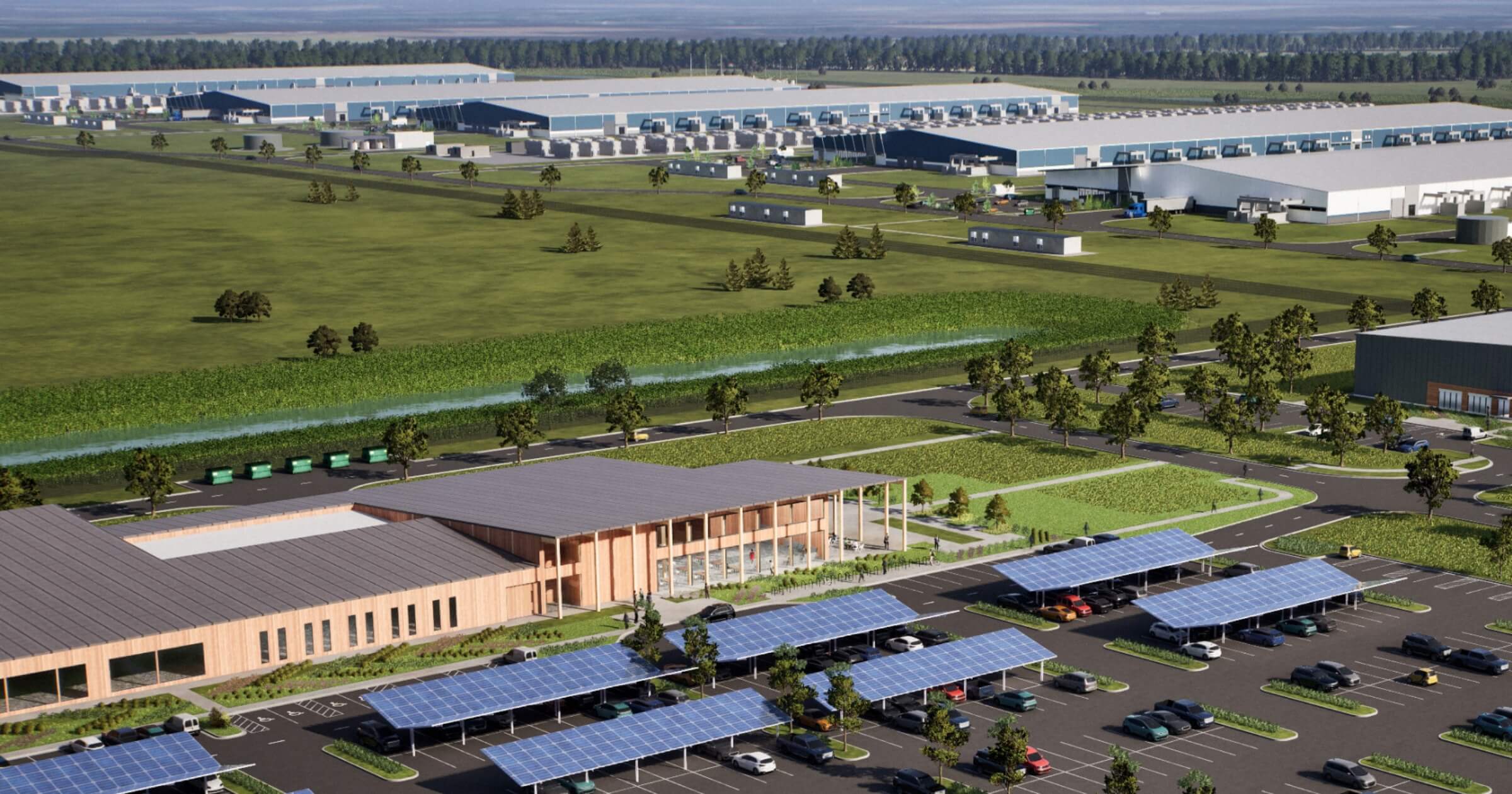
Meta has broken ground on a $10 billion data center campus in Lebanon, Indiana, launching one of the largest private construction projects in the state’s history. The sheer scale of the development is hard to put into perspective: a massive 1-gigawatt facility built to power the company’s rapidly growing artificial intelligence and online platforms. When finished, this will be one of the country’s largest data centre developments, giving Boone County’s industrial scene a whole new look. For Indiana, this is a giant leap towards building a strong foundation of high-demand digital infrastructure, backed by long-term investment.
The site, located in Boone County’s LEAP district, will be developed in phases and is expected to include multiple large data halls along with supporting buildings and electrical infrastructure. Once complete, the campus will reach a capacity of up to 1,000 megawatts.
That level of power draw reshapes how utilities plan. Substations, transmission upgrades, and backup generation all become part of the build. Data centers at this scale are designed to support dense server environments that operate around the clock. AI workloads demand stable uptime and high-performance cooling systems. This campus is being constructed specifically to meet that demand.
What the construction scope means on the ground
This isn’t a short-term project. The campus will unfold over several years, creating sustained work for contractors and trades across central Indiana.
Large data center campuses require deep foundations, heavy steel erection, and extensive mechanical and electrical installation. High-voltage systems, backup power equipment, and complex cooling assemblies form the backbone of the build. Commissioning happens in stages as each phase comes online.
Local officials expect thousands of construction jobs tied to the project. Electricians, operators, ironworkers, and HVAC crews are likely to see steady demand as each building phase ramps up. Once operational, the campus will support permanent technical and facility roles, adding long-term employment to the region.
For contractors, projects like this tend to create a steady pipeline of work that can last for years, rather than a string of one-off contracts. This kind of project also intensifies competition for skilled workers, especially in areas that don’t normally see hyperscale developments spring up.
Energy, infrastructure, and long-term impact of Indiana Data Center
A 1-gigawatt data center requires significant coordination with regional utilities. Meta has stated it plans to support renewable energy development aligned with the facility’s electricity consumption. Large operators often contract new wind or solar generation within the same grid to offset usage.
Cooling design and water use are also central considerations. Modern hyperscale facilities focus on reducing resource intensity while maintaining high computing output. Mechanical system design decisions are locked in early, ensuring sustainability targets are part of the construction scope from the start.
The Lebanon campus also reflects a broader shift in where large data centers are being built. Northern Virginia has long dominated hyperscale development, but Midwest states are gaining ground due to land availability, utility partnerships, and logistics access. Indiana’s LEAP district was designed to attract projects exactly like this one.
A $10 billion investment anchors economic growth for decades. Data centers rarely relocate once built. They become fixed infrastructure, shaping local tax bases and workforce pipelines.
For the construction industry, this groundbreaking signals continued expansion in digital infrastructure tied to AI growth. These facilities require real jobsites, real trades, and long construction timelines.
If you want more coverage on major construction projects reshaping the U.S. economy, subscribe to the Under the Hard Hat newsletter—we track the builds that are driving the next wave of construction demand.