
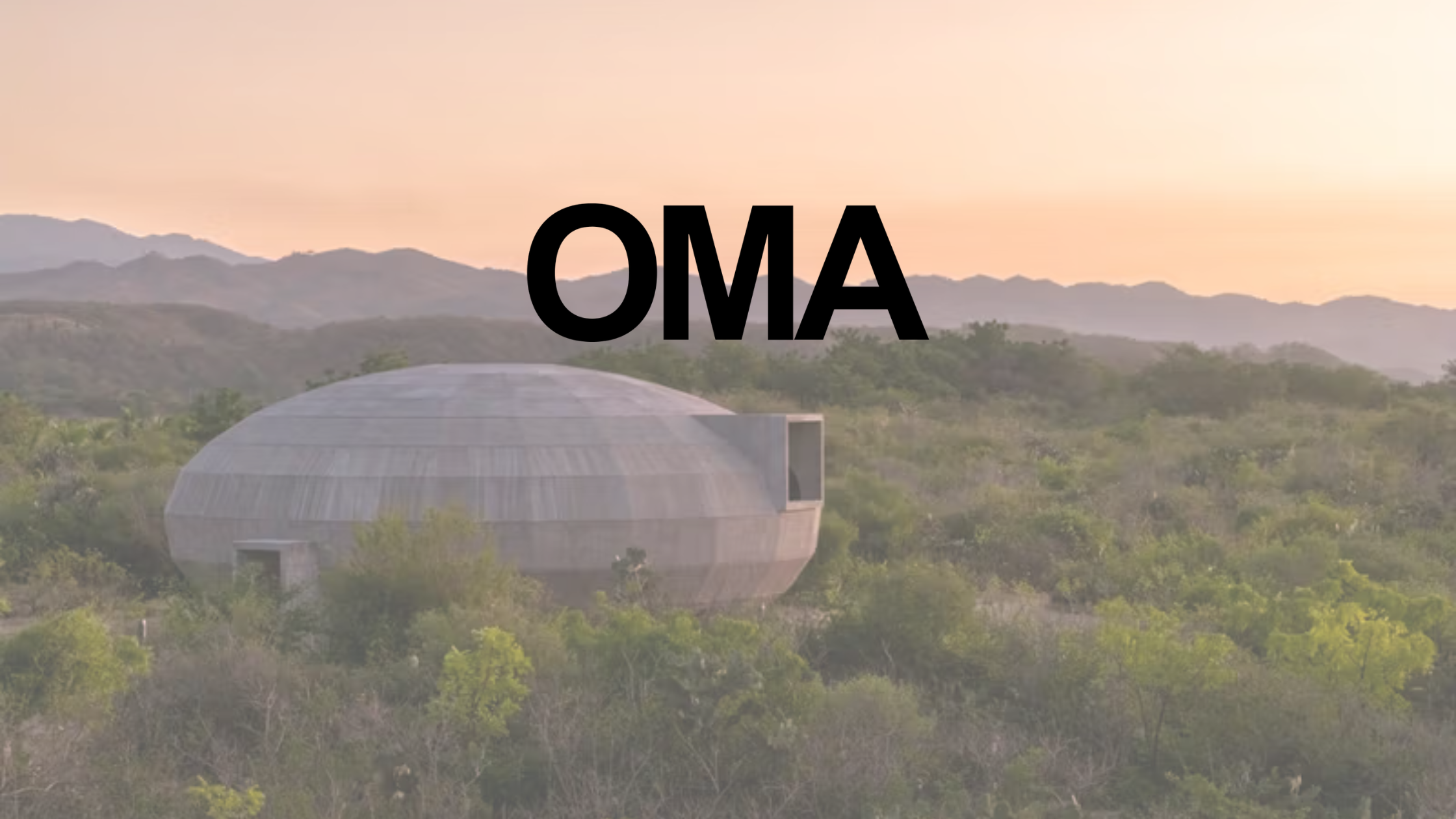
The Office for Metropolitan Architecture, known as OMA, is a global design firm that builds bold and unusual structures to solve modern city challenges. This article explores how their team uses unique shapes and smart planning to create world-famous libraries, museums, and skyscrapers. Discover how OMA turns every building into a lively public space that breaks the traditional rules of design.
About OMA (Office for Metropolitan Architecture)
OMA was started in 1975 by Dutch architect Rem Koolhaas and a group of thinkers who wanted to change how we look at cities. Today, they are a world-leading practice with offices in Rotterdam, New York, Hong Kong, Doha, and Australia.
The firm focuses on urbanism—the study of how buildings and people interact in everyday life—often choosing bold, non-traditional forms that respond to the specific needs of a site. Instead of making every building look the same, OMA creates structures that fit the gritty character of the modern world.
“In the planning of huge buildings…the work becomes much more collaborative; it’s more about engineering, not a purely artistic endeavor,” said Koolhaas in a previous interview. “You need a completely different mentality. I appreciate being part of a greater effort, together with other people.”
8 inspiring projects from OMA
1. CCTV Headquarters
- Location: Beijing, China
- Year built: 2012
- Typology: Office/skyscraper
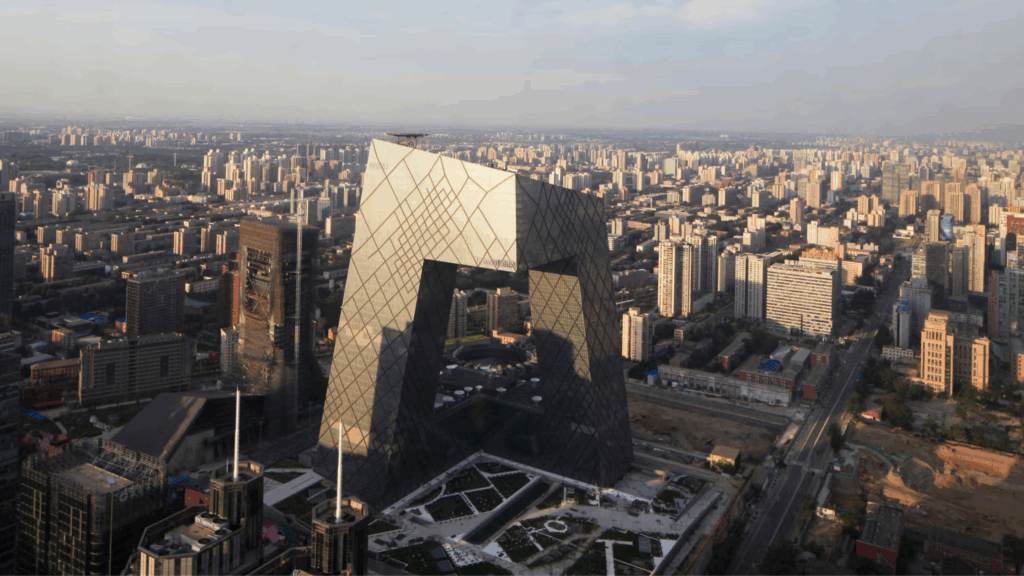
The CCTV Headquarters is one of the most unconventional skyscrapers ever built—it is a massive three-dimensional cranked loop that appears to defy gravity. Instead of being a traditional tall tower that points straight up, it is formed by two leaning towers, joined at the top and the bottom to create a continuous tube. It’s not just a bold design choice; it changes how the building works. Rather than splitting teams across separate floors, the design brings the entire operation into a single, connected flow.
2. Seattle Central Library
- Location: Seattle, Washington
- Year built: 2004
- Typology: Public library
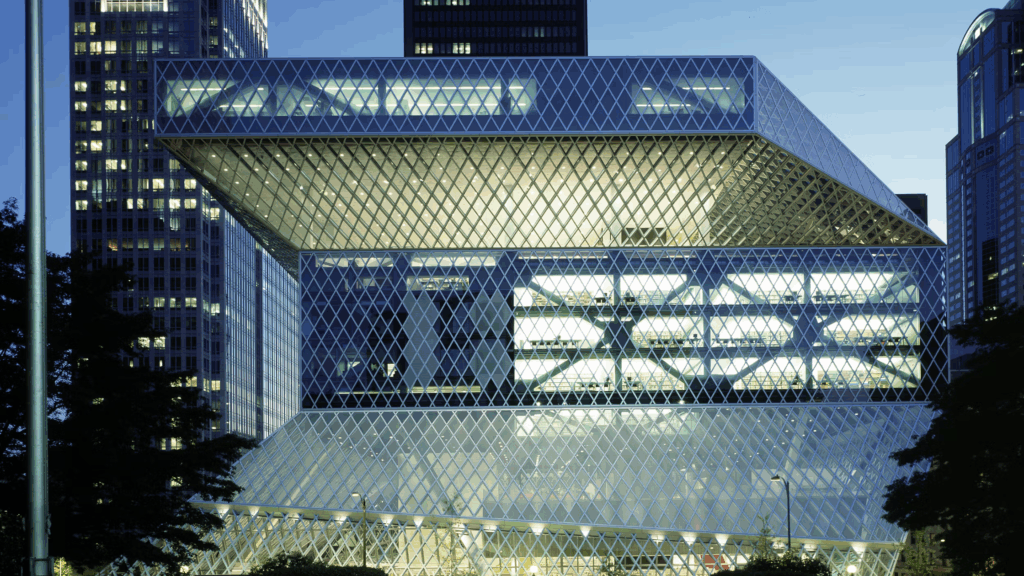
The Seattle Central Library rethinks how people experience a library. Its trademark ‘Books Spiral’ is a continuous ramp that lets visitors browse the entire nonfiction collection without changing floors, keeping it in a single logical sequence. On the outside, the library is wrapped in a glass-and-steel diamond-shaped skin that pulls natural light into every corner of the building, making what could be a closed-off space into a bright and inviting civic hub.
3. Taipei Performing Arts Center
- Location: Taipei, Taiwan
- Year built: 2022
- Typology: Cultural/theater
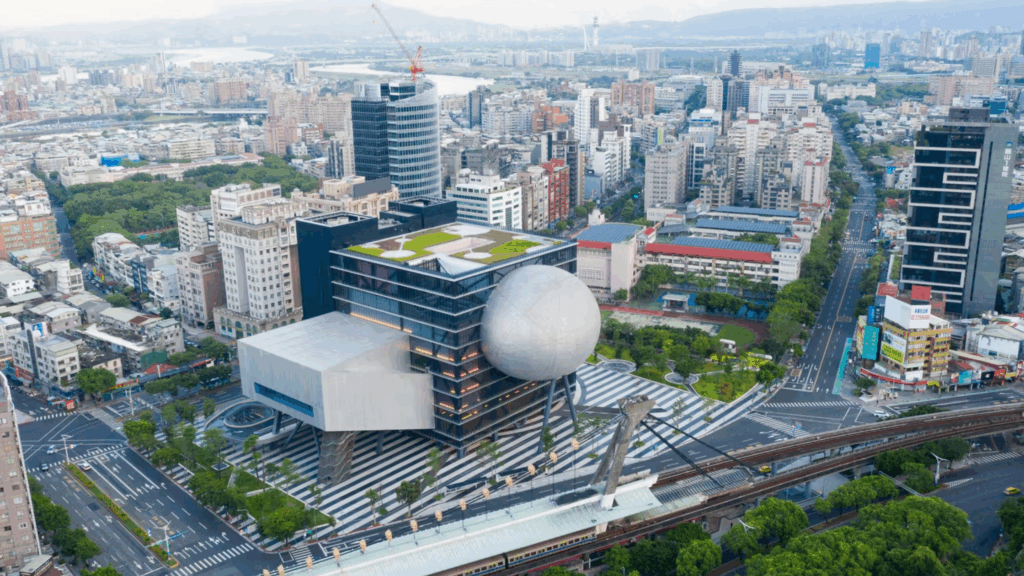
The Taipei Performing Arts Center is built around flexibility. Instead of fixed, isolated theaters, the building’s three performance spaces plug into a central glass cube, sharing backstage space and technical equipment. Two of the theaters can be combined into a single massive ‘Super Theater’ with a 100-meter-long stage, giving performers the opportunity for shows that go far beyond what conventional theaters allow.
4. Buffalo AKG Art Museum
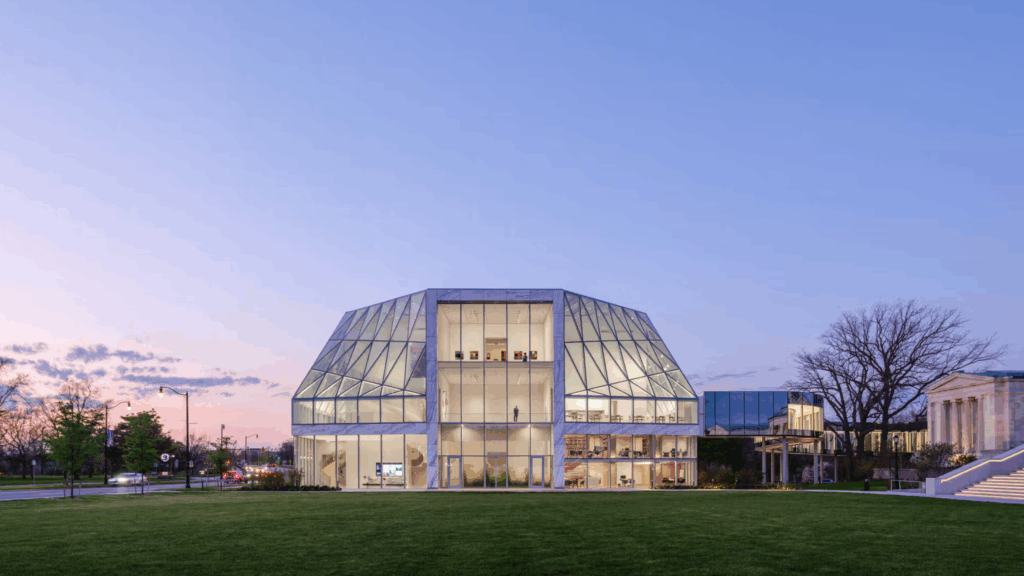
- Location: Buffalo, New York
- Year built: 2023
- Typology: Museum
This expansion adds a brand new glass building to a historic museum campus. It is designed to blur the lines between indoor and outdoor, creating a museum in the park—transparent glass windows connect visitors to nature and the surrounding city. The result is a more open, approachable space that invites community members to step inside and explore the art collection, shifting the museum from a closed institution to an active part of the public sphere.
5. Simone Veil Bridge
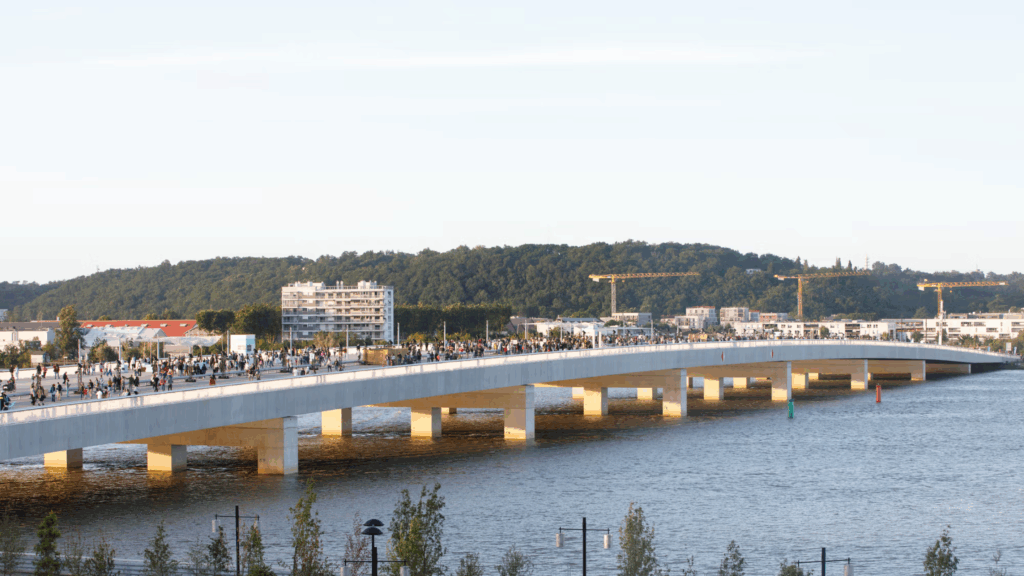
- Location: Bordeaux, France
- Year built: 2024
- Typology: Infrastructure / Bridge
At 44 meters wide, the Simone Veil Bridge features the widest concrete deck in Europe—but its impact extends beyond scale. OMA designed this bridge not just for movement, but also for gathering. The bridge functions as a linear city square, offering space for local markets, festivals, and community events. Rather than simply moving people across the water, OMA created a destination of its own—redefining what traffic infrastructure can be in a public landscape.
6. Fondazione Prada
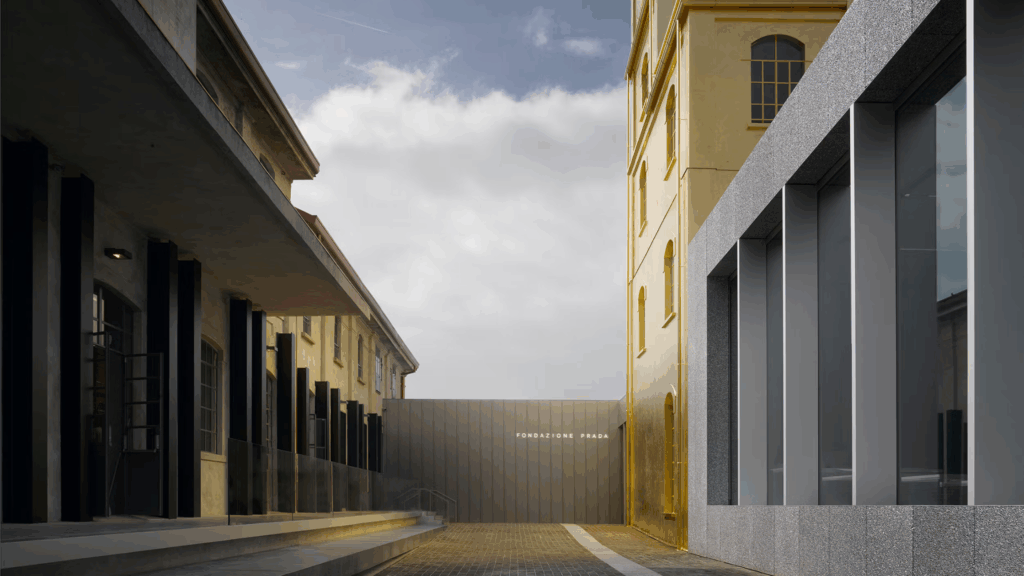
- Location: Milan, Italy
- Year built: 2018
- Typology: Art Foundation / Mixed-use
OMA transformed an old 1910 distillery into a permanent home for art and culture, showing that adaptive reuse can go beyond just preservation. OMA retained the site’s original historic elements and added bold new structures, notably the Torre, a 60-meter-tall white concrete tower. Inside, the floors change shape as they rise, shifting from rectangles to wedges, creating different types of gallery spaces that alter how visitors experience art while also offering a unique view of the Milan skyline.
7. Harajuku Quest
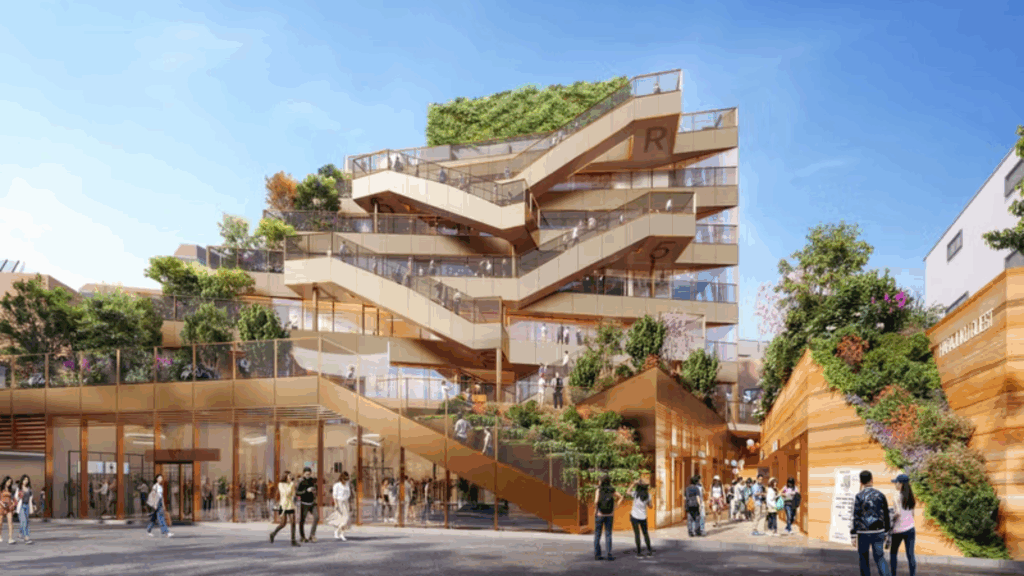
- Location: Tokyo, Japan
- Year built: 2025
- Typology: Commercial Complex
Located between two uniquely distinct neighborhoods, the Harajuku Quest uses duality in its design to fit into both worlds. One side features a tall, vertical glass facade that matches the busy energy of the main shopping street. The other side uses smaller, human-scale shops and open plazas that align with the quieter residential streets. This design allows the building to function as a bridge—it connects two different parts of the city without disrupting either.
8. New Museum expansion
- Location: New York, New York
- Year built: 2026
- Typology: Museum
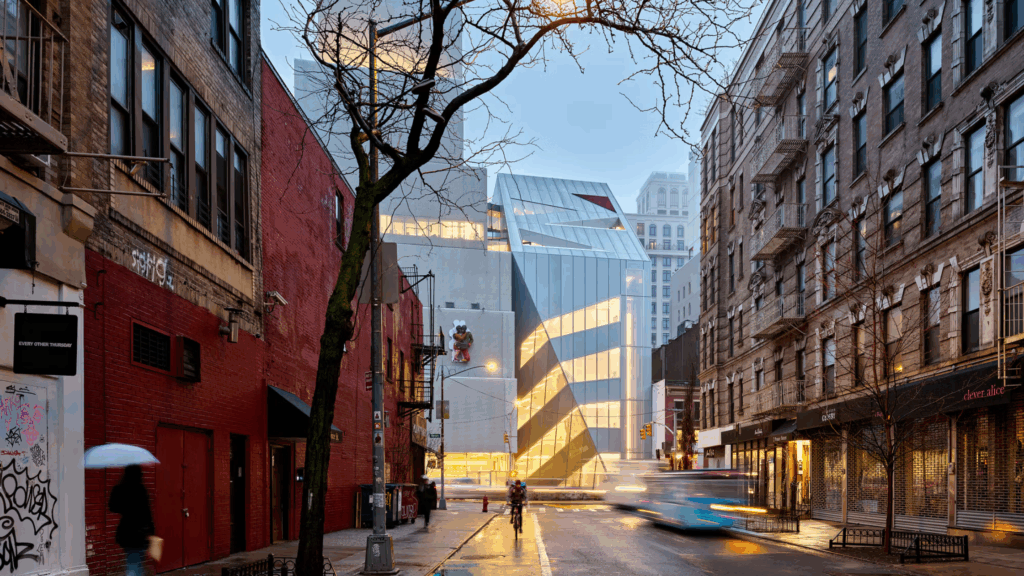
The 60,000 square foot expansion of the New Museum will double the museum’s gallery space and mark OMA’s first public building in New York City. Designed with a highly transparent atrium and outdoor plazas, this project is meant to engage the community and expand the museum into the street, making art visible and accessible from the outside. OMA shifts the museum from a closed destination to an integrated part of New York City’s urban fabric.
Further reading
- Largest construction projects currently underway worldwide (2026)
- Inside B+H Architects: Projects that blend culture, place, and innovation
- Landmark Stantec projects shaping cities in Canada and beyond
Want to see more project spotlights on the world’s most innovative architects? Subscribe to our newsletter to get the latest AEC news and design trends delivered straight to your inbox!