
HOK is a global design firm that builds spaces to help people thrive while protecting the planet. In this article, we’ll explore how their team uses technical excellence to create some of the world’s most famous airports, stadiums, and labs. These 10 impressive projects define how HOK is rethinking the built world and working toward a goal of total sustainability by 2030.
About HOK
One of the largest design firms in the world, HOK is a global architecture, engineering, and planning firm with 1,600 people working across 26 offices.
Their mission is to deliver exceptional design solutions by blending human need with environmental stewardship. HOK is a leader in sustainable design and was one of the first major firms to sign the AIA 2030 Commitment. This means they are working to make all their new buildings and renovations carbon neutral by 2030. As of 2024, HOK has outpaced the AIA’s average 50% reduction in energy use intensity (EUI) by 15%.
In a press release, Anica Landreneau, HOK’s director of sustainable design, said, “Our progress demonstrates that high-performance design and environmental impact reduction are not mutually exclusive. We’re proving this is achievable even for complex projects, without heavily relying on grid decarbonization, building electrification, or renewable energy resources.”
10 past, present, and future projects from HOK
1. LaGuardia Airport Terminal B
- Location: New York, New York
- Year built: 2022
- Typology: Aviation/transportation
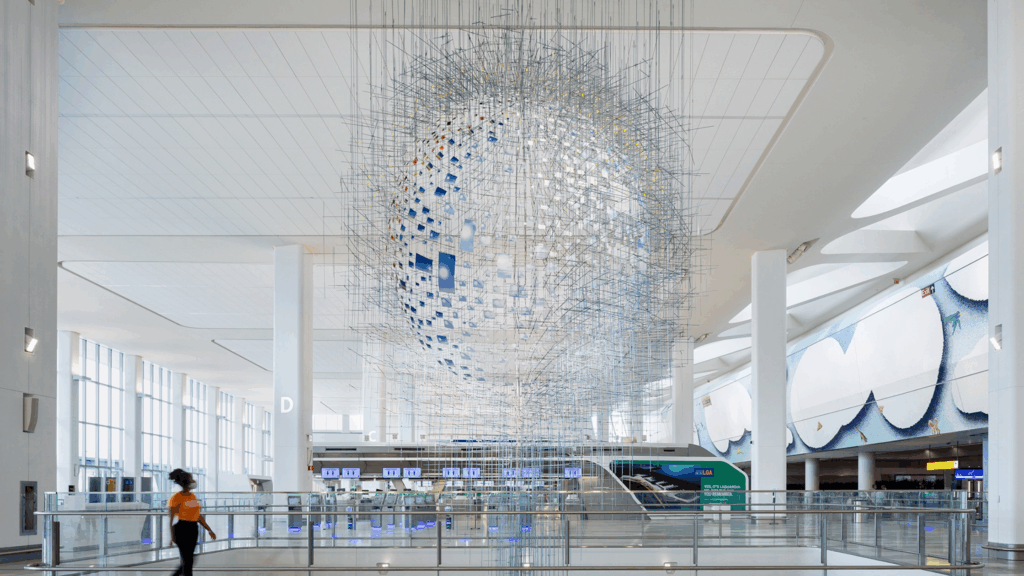
The LaGuardia Airport Terminal B project isn’t just an airport renovation project—it rethinks how airport infrastructure can enhance both performance and the passenger experience. It represents the largest public-private partnership in U.S. aviation history, and reflects a growing trend toward shared risk and large-scale collaboration in complex builds.
The terminal features 35 gates and a first-of-its-kind island-and-bridges design. This unique layout allows planes to taxi directly under pedestrian skybridges, increasing the airport’s capacity by 50% and saving a massive amount of aircraft fuel. As one of the first terminals in North America to earn a 5-star Skytrax rating, it also shows how high-performance design doesn’t have to compromise user experience—it can elevate both.
2. Mercedes-Benz Stadium
- Location: Atlanta, Georgia
- Year built: 2017
- Typology: Sports/entertainment
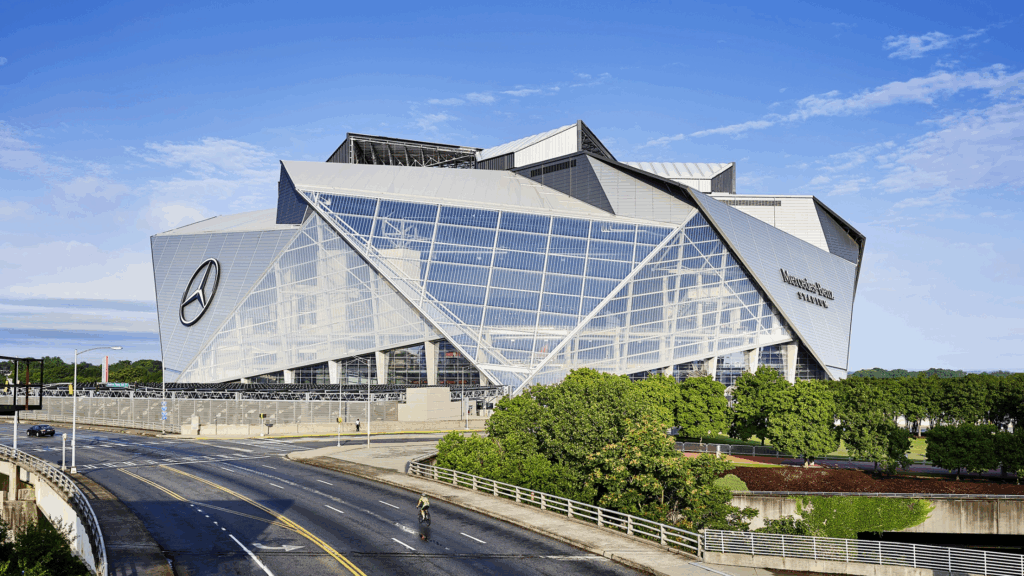
Home to the NFL’s Atlanta Falcons, Mercedes-Benz Stadium is an architectural icon that goes beyond conventional stadium design, blending engineering, fan experience, and sustainability into a single, high-performance structure. Its signature retractable roof, comprised of eight triangular petals that move in unison to open and close just like a camera aperture, allows the stadium to adapt to different events and conditions, turning a fixed venue into a flexible, multi-use arena.
Inside, a 360-degree HD video halo board changes how fans can engage with the game, offering an immersive experience from every seat. What really sets this stadium apart is the combination of fan experience paired with sustainability. As the first professional sports stadium in the U.S. to achieve LEED Platinum certification, it shows that massive entertainment venues can decrease their environmental impact without compromising performance or design.
3. NOAA Daniel K. Inouye Regional Center
- Location: Honolulu, HI
- Year built: 2014
- Typology: Government/science + technology
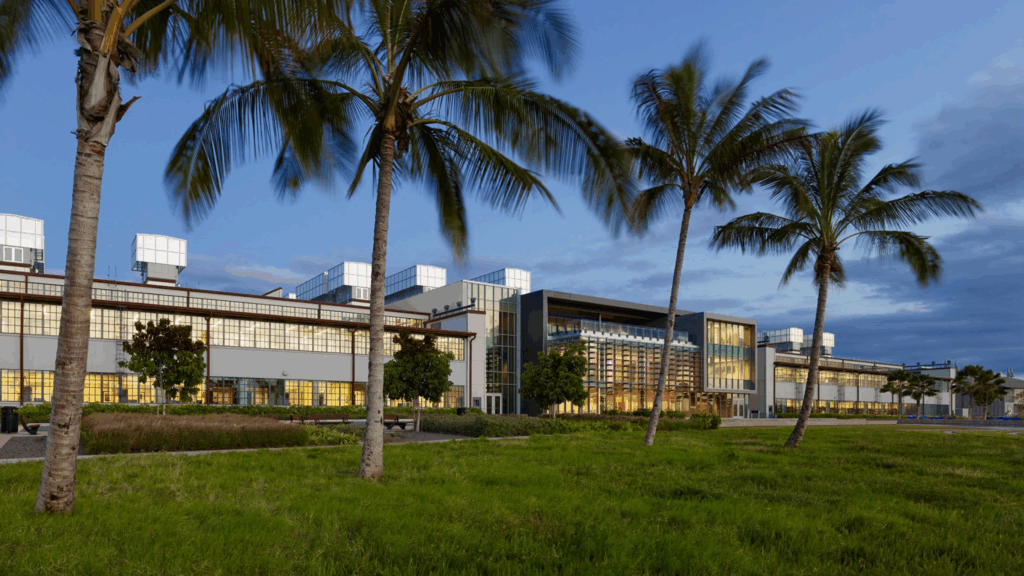
Building a large-scale research facility in a sensitive coastal environment comes with a unique set of environmental, logistical, and cultural challenges. HOK took a different approach to solving this challenge at the NOAA Daniel K. Inouye Regional Center by repurposing two historic 1940s airplane hangars. Instead of building a traditional office block, HOK linked the hangars with a new central building, creating a massive, integrated campus that preserves the site’s military history while providing state-of-the-art laboratories.
What sets this building apart is how it responds to the surrounding environment—the building’s “engine” is its passive cooling system inspired by traditional Polynesian architecture. HOK used gravity-driven ventilation that draws cool ocean air through the building’s interior, drastically reducing the need for traditional air conditioning in the tropical climate. The design also features a large-scale rooftop water-collection system that filters and reuses rainwater for cooling and irrigation, allowing the facility to operate with a much smaller environmental footprint than a standard government building.
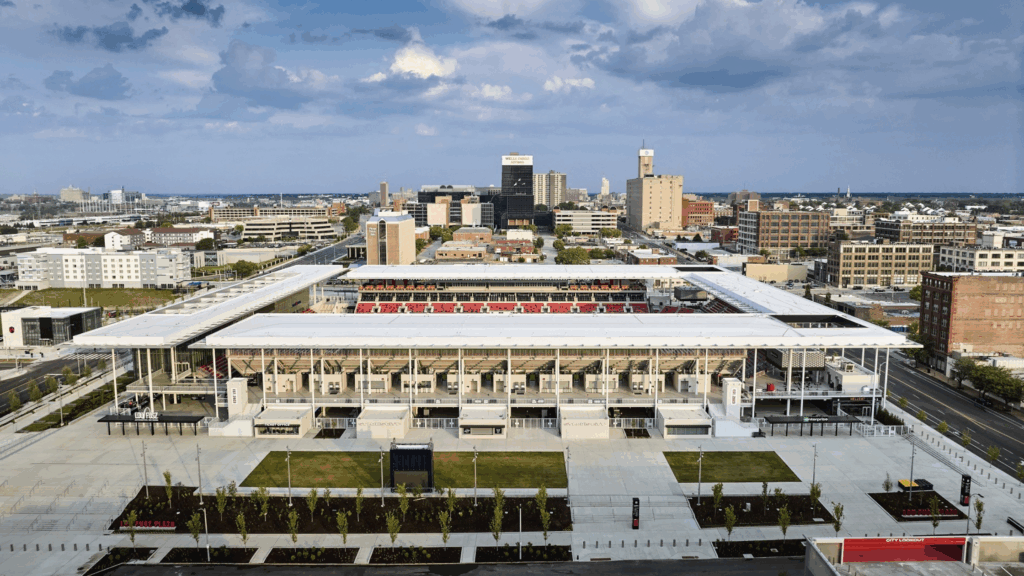
4. St. Louis CITY SC Energizer Park
- Location: St. Louis, Missouri
- Year built: 2022
- Typology: Sports/recreation
This 22,500-seat soccer stadium is a major urban infill project that transformed a once-vacant site into a lively downtown destination, reflecting a shift towards public spaces that contribute to the surrounding city. Unlike traditional stadiums that feel like ‘closed-off fortresses’, Energizer Park has a transparent design with open corners, allowing people on the street to become immersed in the action inside and integrating the stadium into the city’s fabric.
Every seat in the stadium is within 120 feet of the pitch, creating an intimate, up-close experience for fans. The project is also the largest urban professional sports campus in the U.S. to function as a fully integrated campus, housing the team’s headquarters, training facility, and practice fields all in one central location.
5. BBC Studios Headquarters
- Location: London, United Kingdom
- Year built: 2016
- Typology: Workplace/office
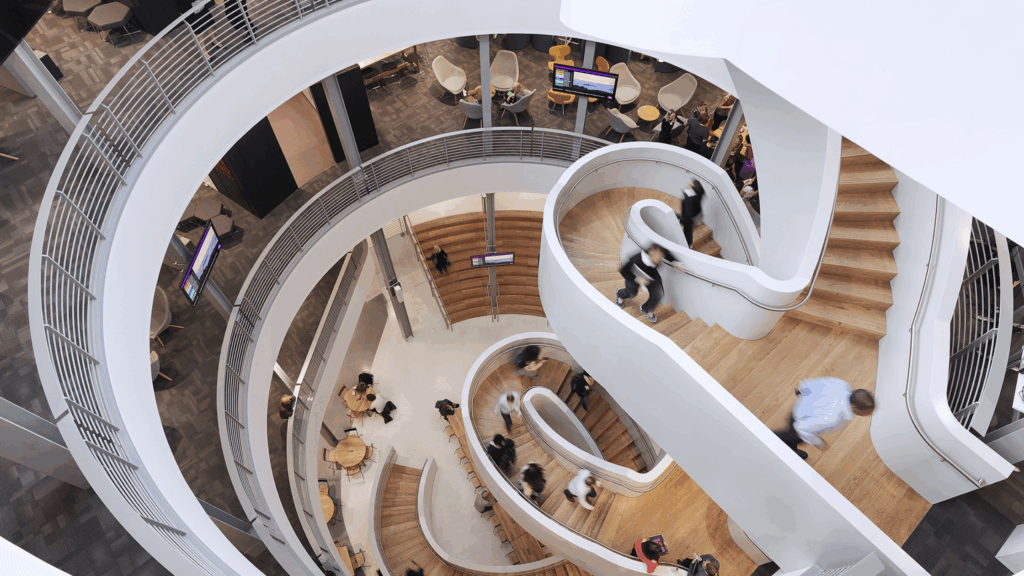
HOK transformed a historic 1960s “television factory” into a creative hub for over 1,200 employees, showing how existing buildings can be reimagined to support more modern ways of working. The design preserves the building’s industrial feel, with exposed structures that honor its history as the former home of BBC News, while reconfiguring it for greater flexibility and collaboration.
The heart of the office is a striking spiral staircase that links all six floors. By removing the old central elevator cores, HOK created a bright, open atrium that encourages people to meet and share ideas as they move through the building. It is a space designed for modern media production, where employees can create, connect, and broadcast from almost anywhere in the office, reflecting a broader shift toward more open, flexible, and connected work environments.
6. NewYork-Presbyterian David H. Koch Center
- Location: New York, New York
- Year built: 2018
- Typology: Healthcare
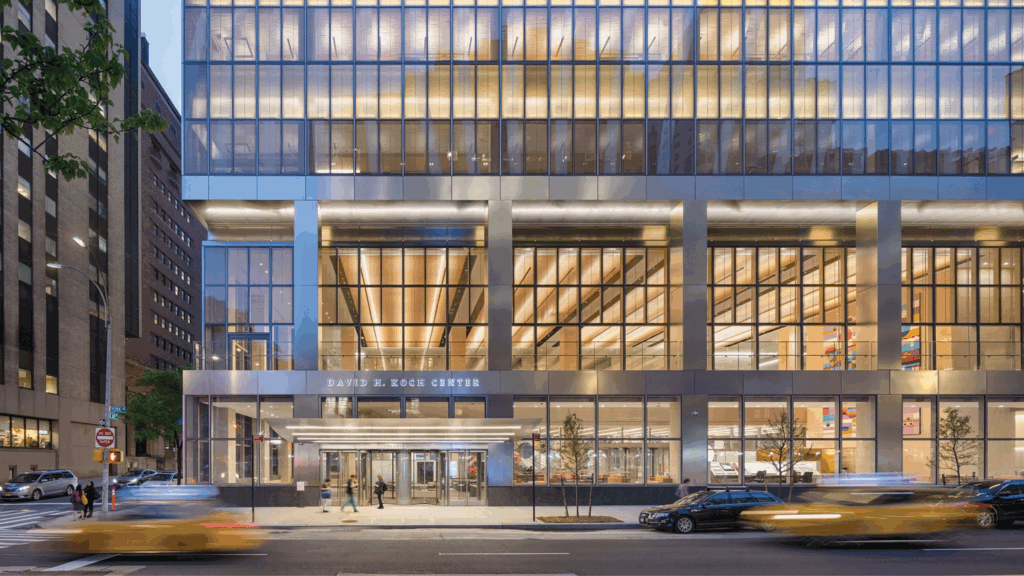
This NewYork-Presbyterian David H. Koch Center rethinks hospital design, prioritizing patient experience and building design. Designed to reduce stress and provide a seamless hospital experience, the space uses natural light and warm materials to enhance healing.
One of its most advanced features is the triple-paned glass facade, with wood screens between the glass layers to help block solar heat and glare, allowing soft, natural light to fill the buildings’ interiors. This creates a building that balances energy efficiency with a more calming, human-centered environment.
6. University of Glasgow Advanced Research Centre (ARC)
- Location: Glasgow, Scotland
- Year built: 2022
- Typology: Higher education/science
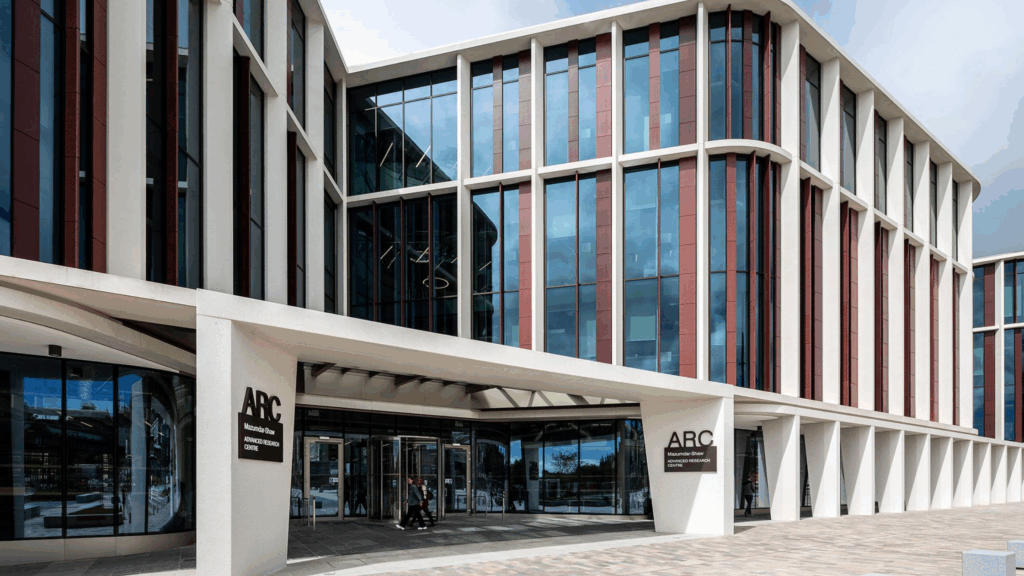
The ARC is the centerpiece of the university’s new campus and breaks down academic and physical barriers. Bringing together more than 500 researchers from multiple disciplines, HOK designed the building to encourage collaboration that wouldn’t typically happen in siloed environments.
One of the project’s standout features is the public walkway running through the building’s ground floor, making the research process transparent to students and the local community. Rather than separating science and the city, this design breaks down those walls, making them more visible and accessible.
8. The Francis Crick Institute
- Location: London, UK
- Year built: 2016
- Typology: Science + technology/healthcare
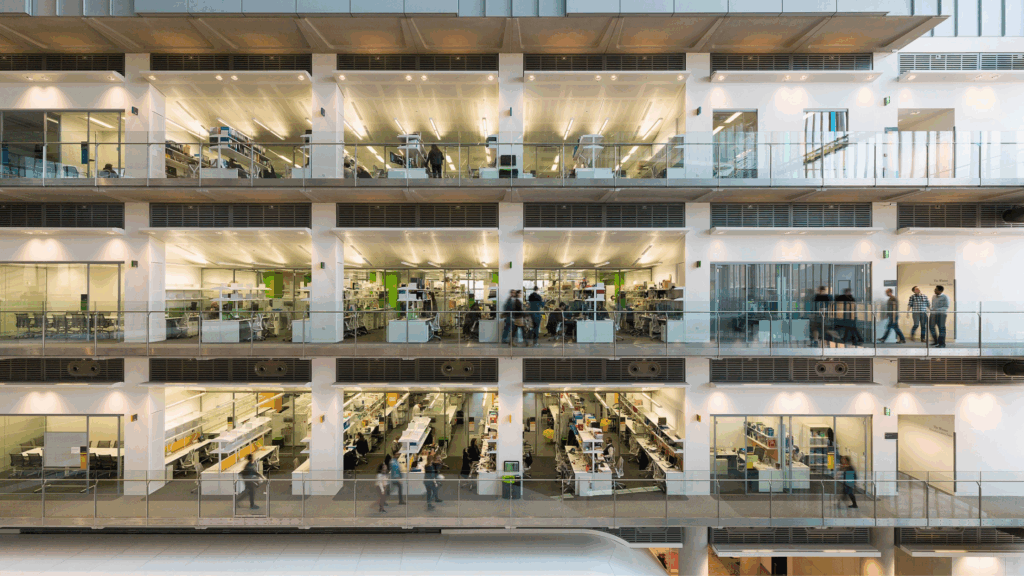
The Francis Crick Institute tackles the challenge of ‘siloed science’ by bringing together 1,500 researchers from six different organizations into a single, collaborative hub. To encourage spontaneous interaction, HOK designed the building with a “neighborhood” layout—four blocks of glass-walled laboratories are arranged around a central, light-filled atrium. This layout encourages visibility and interaction, making cross-disciplinary collaboration part of the daily workflow.
The building’s design also addresses massive technical and environmental hurdles. Because laboratory equipment is highly sensitive, a third of the nearly 1 million-square-foot structure is located below ground to reduce vibration from the adjacent railway lines. On the roof, a striking vaulted steel “skin” conceals the massive heating and cooling units while housing over 18,000 square feet of solar panels. These features, combined with high-performance insulation and wild roof gardens, allow the facility to save approximately 35,000 tonnes of carbon dioxide every year compared to a standard laboratory design.
9. DFW Airport Terminal C Pier Expansion
- Location: Dallas, Texas
- Year built: 2030 (Scheduled)
- Typology: Aviation
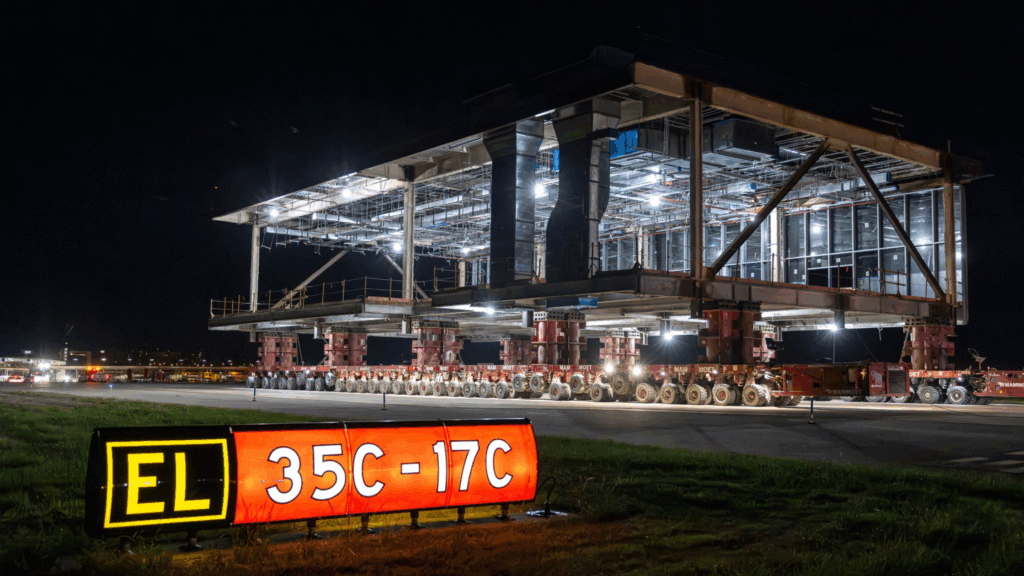
The DFW Airport Terminal C Pier Expansion is a perfect example of how modern technology can speed up construction without disrupting operations in high-traffic environments. Rather than building on-site, HOK used an innovative modular approach—fabricating six massive megastructures offsite and wheeling them into place in the middle of the night.
This approach allowed the airport to stay fully operational uder construction, minimizing travel disruptions for passengers and airlines. This project reflects a broader shift in the industry where efficiency isn’t just about speed—it’s about reducing risk and keeping critical infrastructure operating.
10. UCLA Health Neuropsychiatric Hospital
- Location: Los Angeles, California
- Year built: 2026
- Typology: Healthcare
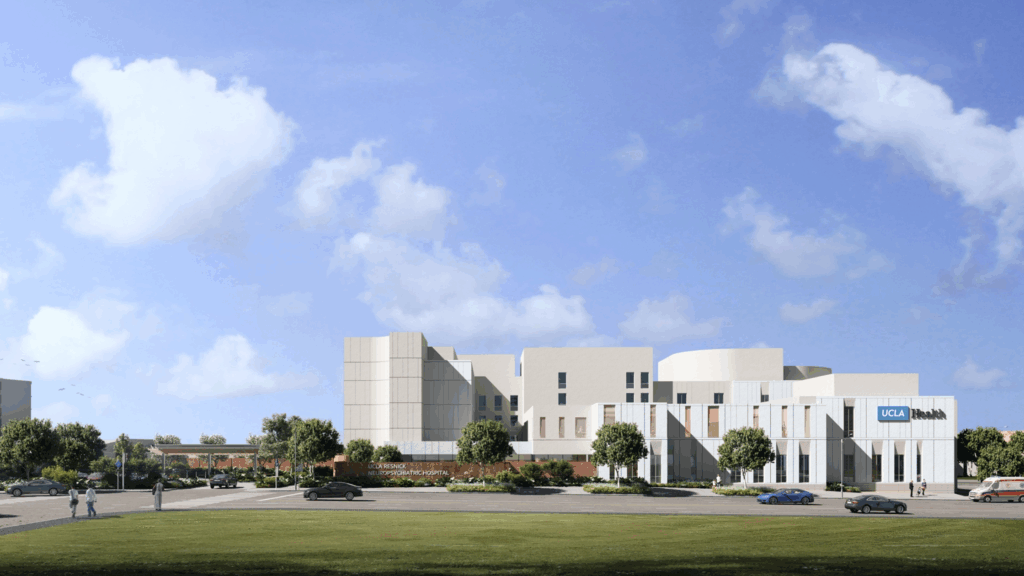
HOK’s transformation of a former medical center into a world-class mental health facility for UCLA reflects a growing shift in how mental health faciltires are designed. The project uses a concept called trauma-informed design, which focuses on creating a space that feels safe, comfortable, and supportive for everyone inside—elements that traditional medical facilities overlook.
The building features rooftop terraces and private gardens that immerse patients in nature and play a key role in healing, offering patients a quiet escape from the clinical environment. These features aren’t there for just aesthetics—they are an integral part of treatment, helping to reduce stress and support overall well-being.
Further reading:
- Major geothermal energy projects currently under construction in Canada
- Inside HMC projects: Standout architecture across North America
- Large modular housing projects currently underway in North America
- Transportation construction projects currently underway in the U.S.
Want to see more innovative projects from the world’s top architects? Subscribe to our newsletter to get the latest project spotlights delivered straight to your inbox!