
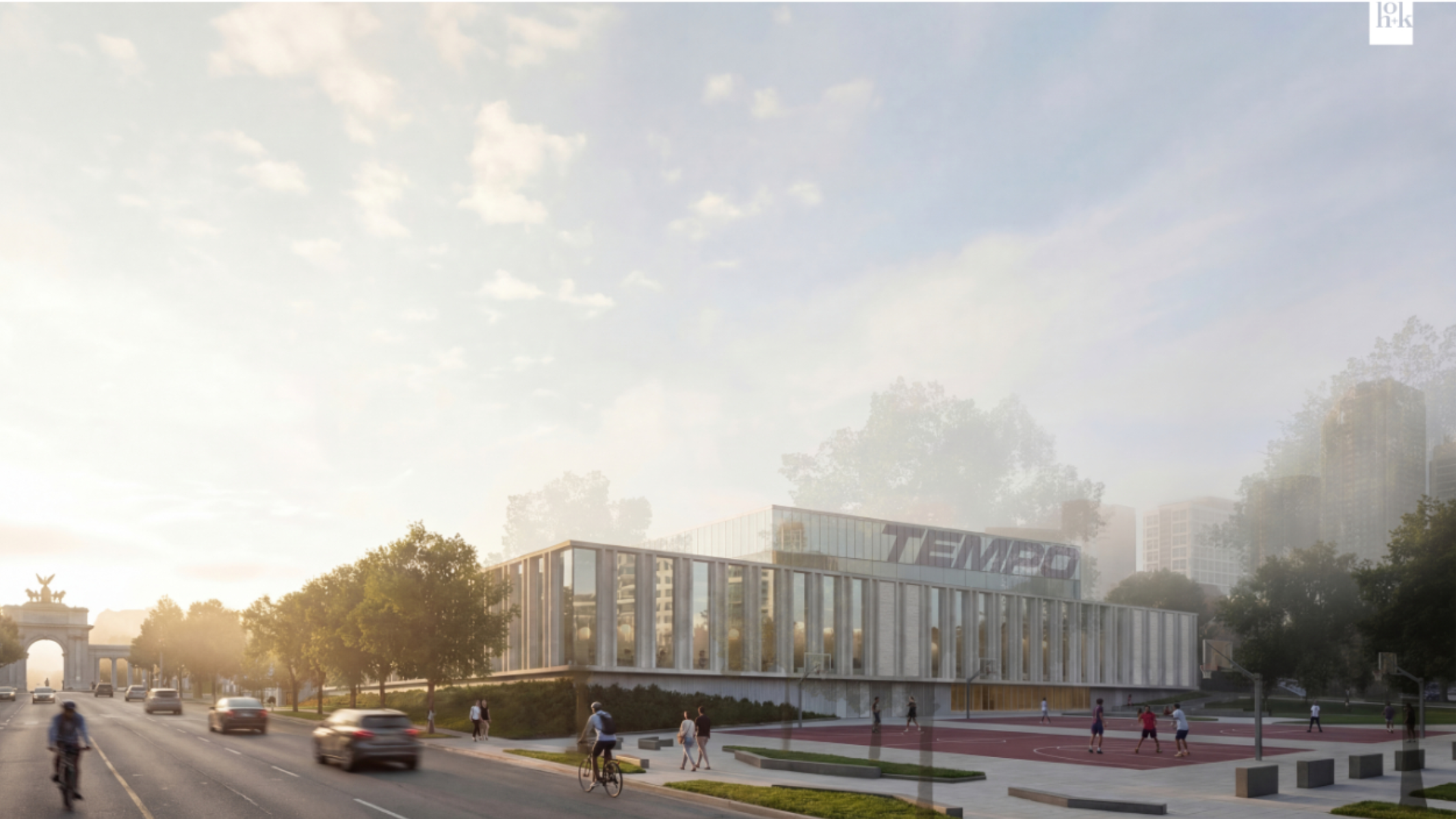
The Toronto Tempo’s new training facility is more than a place to practice—it’s being built from the ground up specifically for women’s professional basketball. The performance center will include two WNBA regulation courts, along with recovery spaces and team operations designed around how female athletes actually train and compete. It’s planned for 2028 at Exhibition Place, close to Coca-Cola Coliseum. What makes it stand out is that it won’t be limited to the team. The space is expected to open up to the public year-round, bringing together elite training and community use in the same building.
The timing of this project is also worth noting. The Toronto Tempo is the 14th WNBA franchise and the first Canadian team, and the fact that they’re building a dedicated facility for them from day one shows just how quickly the investment case for women’s professional sports has shifted.
A facility built for performance and real use
At its core, the Toronto Tempo Performance Center is designed for female athletes. It includes two WNBA regulation courts, along with training, recovery, and support spaces that reflect how players actually train and recover day to day. This isn’t a retrofitted building or shared facility. It’s built from the ground up with performance in mind.
One of the key factors is how the space is laid out specifically for women’s professional sports. Locker rooms, recovery areas, and team spaces have been thought through with a focus on creating a real sense of privacy, comfort, and a long-term fit—things which all too often get put on the back burner in multi-use arenas or older facilities that weren’t designed with female athletes in mind.
The way team operations mesh with the building itself is also key. Offices, meeting rooms, and support spaces are all right alongside the courts, keeping everything feeling connected. That helps keep day-to-day tensions between training, coaching, and operations to a minimum. It’s a more efficient way of doing things, and one that makes sense given how teams work.
More than a private training center
What sets this project apart is that it goes beyond the capabilities of your average professional team’s facility. The plan is for year-round public access, plus loads of programming to support local youth sports and community activities.
That changes the way you would normally view this building. It is no longer just a closed-off gym for professionals to train in. It’s now a part of the city’s recreational fabric. Local kids, youth sports teams, and community groups all get to use the same space, which goes a long way in bridging the gap between professional sports and the general public.
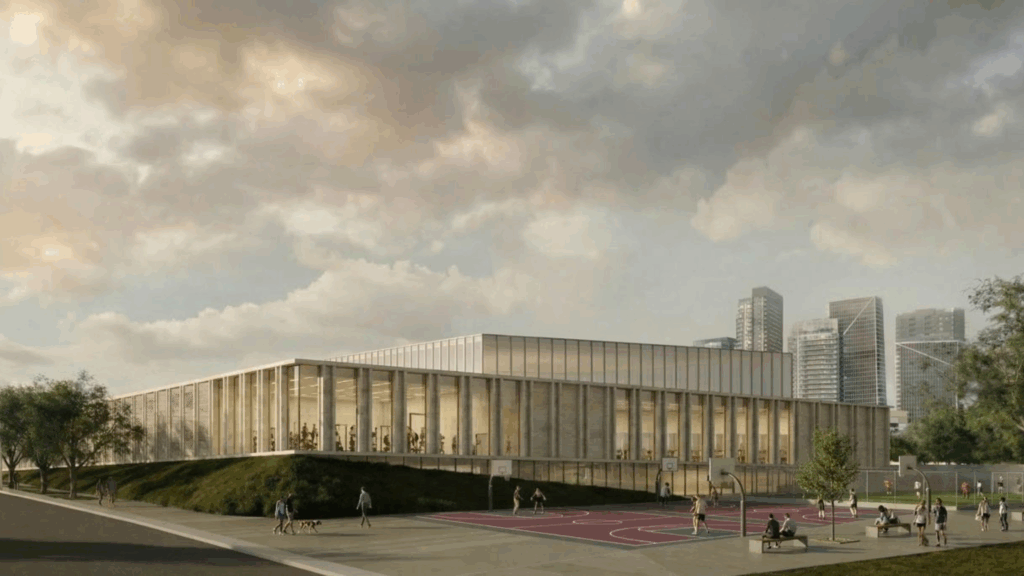
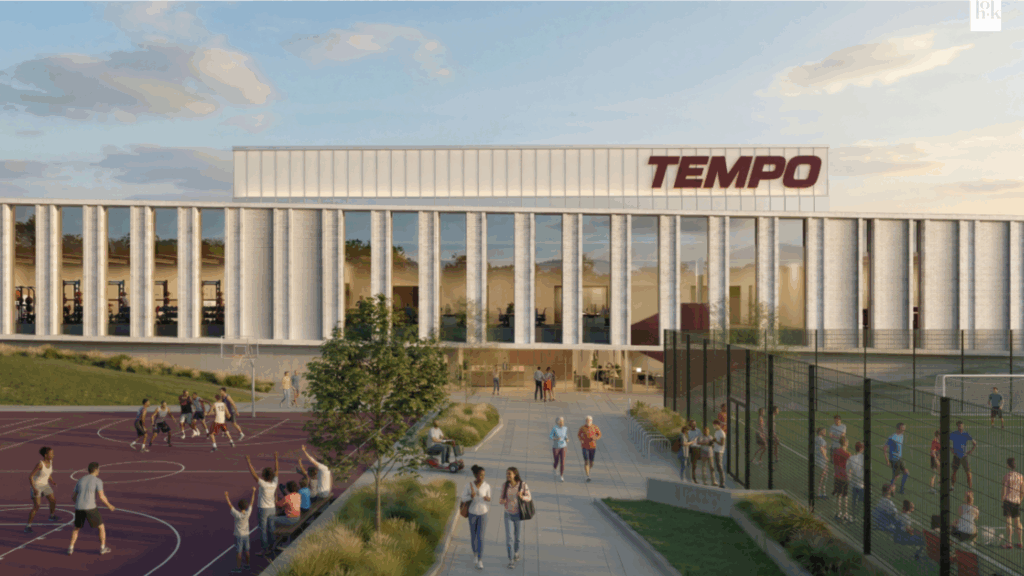
This approach also makes better use of the building. Instead of sitting idle outside of team hours, the facility stays active throughout the year. That kind of shared use is becoming more common, especially in cities where land is limited and demand for recreational space is high.
Building on underused land
The location is another part of the story. The facility will be built on land at Exhibition Place that’s currently used as a parking lot. That shift—from low-use space to a high-impact facility—reflects how cities are rethinking land use.
The project is being developed in partnership with the City of Toronto and aligns with the city’s public access and community programming strategy. It’s about more than just a team facility; it’s building something that is going to fit in for the long term in the city.
From a construction standpoint, this kind of redevelopment brings its own challenges. Working within an existing urban site means dealing with access, surrounding infrastructure, and coordination with nearby venues. At the same time, it offers a chance to rethink how underused areas can support more active, multi-purpose development.
Exhibition Place is already a dense events-and-venues area, adding more coordination complexity than a normal greenfield site would. Scheduling, access, and staging all need to be coordinated around events running at nearby venues.
Design choices that reflect long-term use
The facility is being designed by HOK, with a focus on how it will actually be used day to day—not only by the team, but by the public as well. That starts with accessibility. The layout needs to work for different users moving through the space, from athletes heading into training to community groups coming in for programs. Circulation, entrances, and shared areas must all be clear and easy to use.
There’s also a push to build it in a way that holds up over time. That means paying attention to energy use, material durability, and the building’s performance once it’s in operation. It’s not only about opening day—it’s about how the space functions years from now.
The bigger shift is about flexibility, not just churning out single-use facilities locked into a single purpose. This facility needs to accommodate team training, public programs, and any future additions, which will change how it is designed and built. This means spaces have to be adaptable without requiring a complete overhaul, putting pressure on ensuring that planning gets done right the first time.
What this project says about where things are heading
The Toronto Tempo Performance Center is a sign of things to come in sports construction. Women’s professional sports are on the rise, and that’s reflected in the kinds of facilities we’re seeing built. Teams aren’t making do with hand-me-down spaces or adapting old buildings to suit their needs anymore. They’re demanding dedicated facilities that cater to their specific needs, rather than trying to fit in somewhere that doesn’t offer them that.
At the same time, cities are increasingly expecting these projects to deliver. Public access, community programming, and real long-term value need to be part of the picture. A training facility is no longer just about the team; it’s part of a bigger system that includes recreation, development, and planning for the city as a whole.
There’s a financial angle to all of this, too. Purpose-built facilities help teams operate much more efficiently, which in turn helps them stay stable over the long term. And when you pair that with public access, you get a really steady usage pattern, which in turn helps justify the investment.
Final thoughts
The Toronto Tempo training facility is doing more than giving a WNBA team a place to train. It’s showing how sports buildings are starting to serve multiple purposes. Performance, community access, and long-term use are being built into the same space. That shift matters for how these projects are planned, funded, and built. It also changes what contractors and designers are expected to deliver. These aren’t single-use buildings anymore—they have to work for multiple groups over time.
Sports infrastructure is one of the fastest-growing sectors in construction right now. For more coverage of the facilities, trends, and industry shifts shaping how these projects are designed and built, subscribe to the Under the Hard Hat newsletter and follow us on LinkedIn.