
Construction has begun on one of Toronto’s largest open-space redevelopments — and the constraints contractors face on this job are becoming the new normal
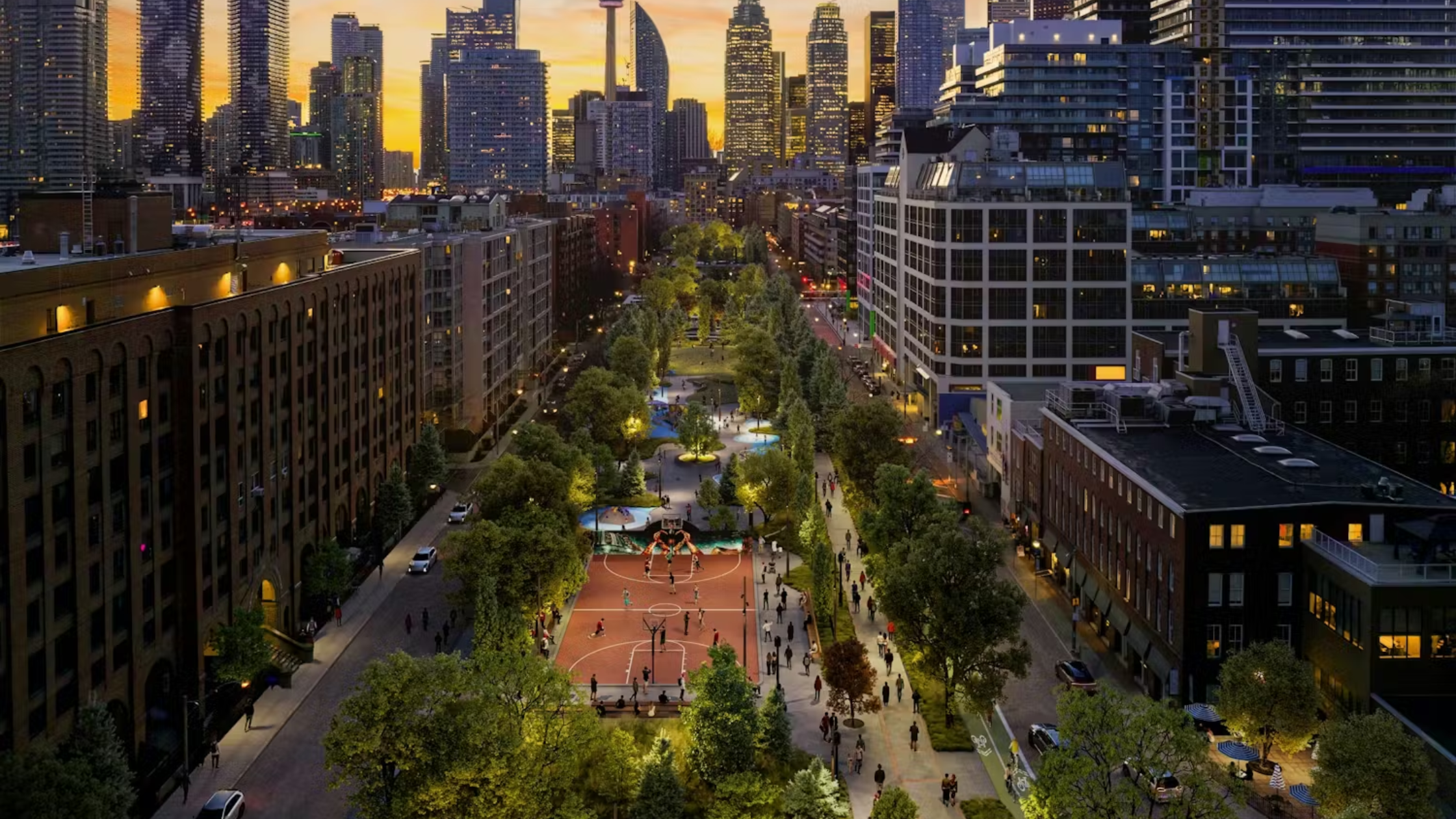
Construction has officially begun on one of Toronto’s largest open-space redevelopments, David Crombie Park, in the dense St. Lawrence neighborhood. The revitalization project focuses on rebuilding public space in a fully built-out urban environment, presenting unique challenges and demands for contractors.
Led by architecture and urban design firms Arcadis and SLA, this initiative aims to restore the park’s public spaces while preserving its structure and heritage.
“Taking cues from the original masterplan of the park, we opted for a quite humble and considerate approach,” said Rasmus Astrup, senior partner and design principal, SLA. “By studying the park’s history, usage, values, and importance to the local community, we proposed a three-stringed design strategy: To preserve, revitalize, and unite.”
Estimates for the project came in around $15 million—a significant investment that reflects how cities are shifting to treat park infrastructure with the same urgency as roads and transit. For contractors in the GTA, it’s also a sign of the type of work coming down the pipeline as urban areas begin long-overdue revitalization of public spaces.
David Crombie Park project scope
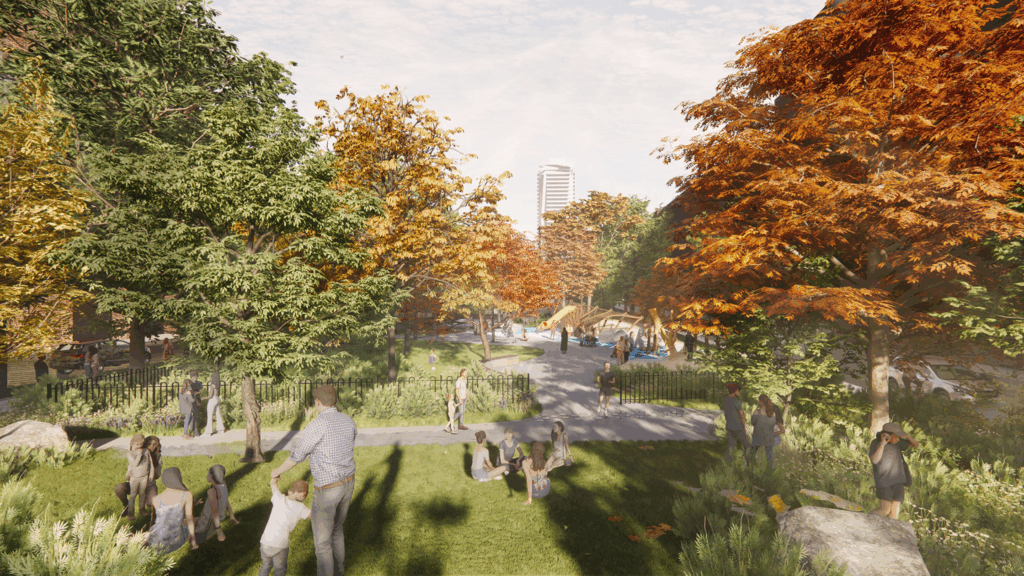
The scope of the project includes revitalizing nearly two hectares (five acres) of park space. It will also include upgrades to pathways, landscaping, lighting, and community spaces.
The project will also involve changes along the Esplanade and cycle track. This will include streetscape upgrades, improved pedestrian connections, and support for long-term sustainability through coordination with underground infrastructure.
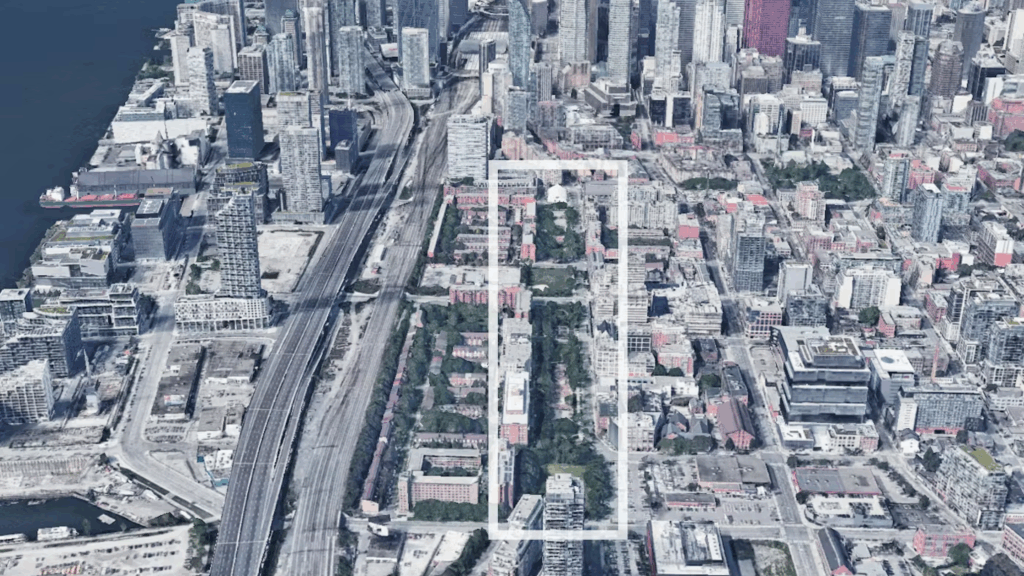
For contractors, it’s important to note this is a multi-scope project that will require tight coordination across different trades and timelines. But that coordination extends beyond the park boundary. The Esplanade streetscape and cycle track integration means crews will also be working in active traffic corridors in downtown Toronto alongside city infrastructure teams. This is a layer of complexity you don’t often see on typical park revitalization projects.
Why this project matters
The David Crombie Park revitalization project stands out because it’s a popular, high-use urban community space. This park has been bearing the brunt of aging infrastructure and is in urgent need of modernization.
Public spaces such as this hugely popular park require the same level of reinvestment and attention as roads and buildings. Additionally, this is a broader trend—there is a growing pipeline of revitalization projects that involve greater complexity and more constraints than greenfield builds.
The City of Toronto is not the only city facing this. The Federation of Canadian Municipalities (FCM) estimates that the national municipal infrastructure deficit—which covers roads, parks, public realms, and community centers—has grown to over $30 billion. Public realm projects like David Crombie Park are among the first to move from backlog to active construction, and many others are likely to follow as cities begin prioritizing aging community infrastructure.
What the construction approach to David Crombie Park looks like
The David Crombie Park revitalization project is following a systematic, phased approach that will include block-by-block construction. The multi-year project is expected to finish in 2028, and the goal remains to ensure the park is usable during construction.
This does raise the stakes for contractors—phasing can directly impact cost, productivity, and risk. They’ll face multiple mobilizations, complex sequencing and scheduling, and the ongoing challenge of working around active public use. Each phase will essentially become its own project, increasing costs and complexity compared to sites that can undergo full closure.
Site challenges
In addition to working in a dense urban area, contractors will be required to coordinate with underground infrastructure during the revitalization project. They will also have to work around limited staging and access while ensuring they’re managing pedestrian access and safety at all times.
The St. Lawrence area is Toronto’s oldest neighborhood, so underground conditions are largely unknown and unlikely to be consistent throughout. This uncertainty can make it harder to price and schedule projects.
Contractors will have to prioritize logistics planning to avoid mishaps and account for the higher risk posed by unknown factors, such as subsurface conditions. They will also have to be prepared for the risk of budget overruns if subsurface investigations before construction prove insufficient.
Sustainability focus
One of the priorities of the David Crombie Park revitalization project is to retain the original infrastructure where possible, while also prioritizing sustainable construction and achieving its carbon neutrality target around 13 years after completion.
This reflects a broader shift towards embracing reusing over rebuilding. Contractors can expect to see more projects like this in the future that prioritize integrating new components into existing systems, requiring more complex sequencing and execution. These kinds of projects also tend to prefer selective demolition versus a full tear-out approach.
For contractors, selective demolition adds challenges that don’t come with full demolitions. Because the St. Lawrence area is a designated Heritage Conservation District (HCD), planning demos is significantly more difficult. It requires careful sequencing, experienced crews, and detailed documentation of existing site conditions before work can begin.
Demos of this kind tend to be a lot slower and more labor-intensive than shutting down an area and doing a complete tear-out.
Broader urban integration at work
This revitalization project isn’t a standalone effort—it aims to enhance connectivity through streetscape improvements and cycle-track integration.
Projects are no longer isolated, and more often than not, they tie into larger urban systems. For contractors, this means working alongside multiple timelines and more coordination with stakeholders, adjacent projects, and city systems.
The David Crombie Park revitalization project is more than a park upgrade—it’s a model for rebuilding infrastructure in dense cities. Future work will increasingly include a combination of phased delivery, tight sites, and active public use, with success depending on planning, adaptability, and coordination.
The pipeline for work like the David Crombie Park revitalization is growing. Cities across Canada are boosting their investments in public realm and community infrastructure, and projects like this are an example of what that work looks like in practice. Contractors who build experience with phased project delivery now will be in the strongest position when backlogged work moves into active construction.
Urban infrastructure investment is accelerating across Canada—and the projects in the pipeline are getting more complex. For ongoing coverage of the projects, trends, and contractor insights shaping the industry, subscribe to the Under the Hard Hat newsletter and follow us on LinkedIn.