Traditionally, installing remote control systems for lifting equipment is a slow, difficult process that often requires custom engineering or additional hardware. The result is a bottleneck that keeps equipment offline and drains productivity. This article explains how the Cattron Tyro 2×2 eliminates complex installation and the need for extra hardware, reducing setup time and getting your equipment running in minutes.
For context on why this matters: equipment downtime can cost companies anywhere from thousands to tens of thousands of dollars per hour of lost productivity, depending on the industry. On a fast-paced jobsite, losing multiple hours or days to a commissioning process isn’t just inconvenient—it can be a huge financial loss.
The friction of traditional control systems
Traditional control systems often require customization and take a long time to commission, which creates unnecessary friction for your business. This setup friction is a significant problem in the industry. Put simply, when the technology is too complex, it hinders your productivity and keeps your team from finishing projects.
The difficulties with standard systems usually come down to three main issues:
- Complex installs: Most remote systems require custom wiring and additional interface hardware, which slows the entire process.
- Lengthy setup times: Commissioning a new system often requires significant technical resources that smaller operations may not have.
- The productivity wall: When an installation is difficult, it creates equipment downtime that directly hits your bottom line.
The Cattron Tyro 2×2 package
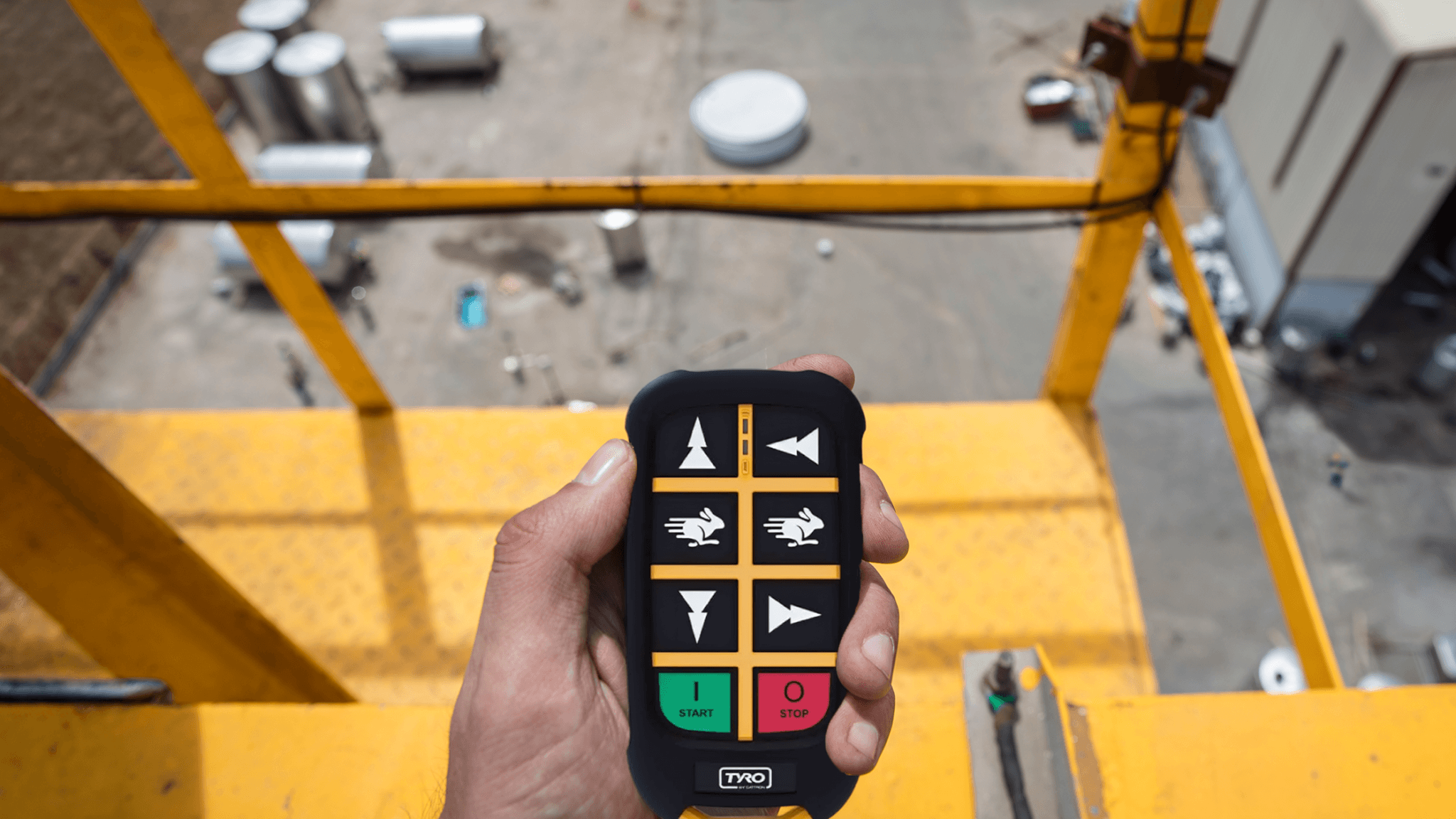
Cattron is addressing these setup hurdles with the launch of the Tyro 2×2 package. This is a pre-configured, plug-and-play solution designed specifically for hoists, jib cranes, and monorail systems. By focusing on these specific types of equipment, Cattron has created a system that is ready to work almost immediately.
The main goal of this package is to save you time during installation. Cattron designed the Tyro 2×2 to move from the box to full operation in about 15 minutes, which means you can upgrade your controls and get back to work without losing a full day to technical setup.
Another advantage is that the system doesn’t require extra interface hardware. Because it’s a complete, standardized package, you don’t have to buy or install additional components to make it talk to machinery. This keeps the footprint of the installation small and simplifies the process significantly.
Technical features that solve real-world problems
The hardware inside the Tyro 2×2 is a direct answer to the technical headaches that usually plague a busy jobsite. Every component was selected to bridge the gap between a fast initial setup and the rugged reliability needed for consistent industrial performance.
- Signal reliability: The hardware is built with high-performance wireless technology that prioritizes precision over a simple connection. It utilizes Adaptive Frequency Protocols to maintain a secure link even in environments where RF interference is a constant threat. This protocol lets the system navigate crowded frequencies to keep commands responsive when competing signals would typically create interference.
- This is an important consideration in environments like manufacturing plants and construction sites where multiple wireless systems are running simultaneously. A remote control that drops signals in busy conditions can quickly become a major safety issue.
- Simplified receiver architecture: The receiver design is what really sets the Tyro 2×2 apart from the pack. While Cattron has spent over 20 years perfecting DC-powered Tyro products for heavy-duty global use, the 2×2 pivots to an AC-driven receiver with potential-free dry-contact relays. This is a game-changer for crane and hoist setups where AC power and dry contact connections are the industry standard. By building these requirements directly into the unit, the design eliminates the need for additional interface hardware, making installation much easier for both OEMs and end users.
Why faster installs matter
Trimming the installation window creates a ripple effect that improves the entire project lifecycle. For contractors and OEMs, every hour saved from a tedious setup is an hour that can be redirected toward high-value tasks that move the needle on a looming deadline.
The speed of the Tyro 2×2 provides several advantages:
- Reduced downtime: Getting a hoist or crane back in service in minutes rather than hours is vital for staying on schedule and avoiding project delays.
- OEM efficiency: For original equipment manufacturers, a standardized preconfigured kit enables much faster assembly and delivery of new machinery.
- Reliability in the field: Beyond the quick setup, the hardware is designed to stay durable and responsive even in tough industrial environments.
What this means for the industry
The Tyro 2×2 marks a significant shift in how equipment controls are being developed. The industry is moving away from high-friction, overly complex custom systems and prioritizing straightforward tools designed with the user experience in mind.
This change is especially important for scaling smaller operations. By removing the need for specialized engineering resources, smaller shops can now use the same high-quality remote control technology that was previously available only to larger firms with bigger budgets. It allows businesses of all sizes to operate faster and more safely.
Equipment controls are becoming smarter and easier to deploy across fleets—and the gap between companies that adopt these tools and those that don’t is widening. Stay ahead of the curve by subscribing to our newsletter for more coverage on the technology and equipment shaking how contractors and OEMs work.