
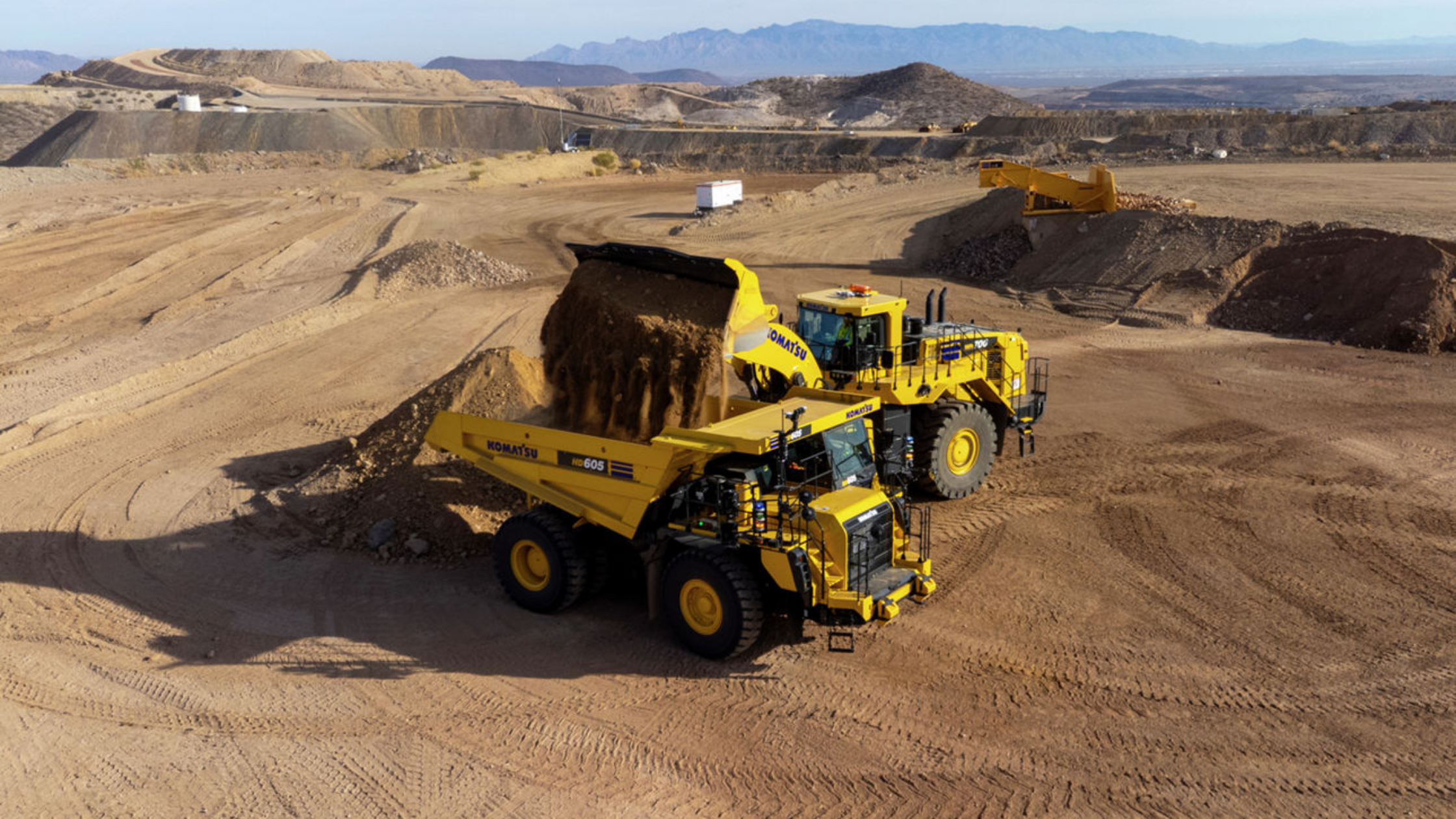
Running a quarry or a large construction site used to involve a lot of guesswork, but Komatsu Smart Quarry is changing that by putting real, actionable data into the hands of every operator. This technology combines smart hardware with powerful software to track every move a machine makes, helping teams work faster and smarter. In this article, we look at how this fleet management system works to eliminate site bottlenecks, slash fuel costs, and solve labor gaps with total visibility.
What is Smart Quarry?
In the construction and mining world, Smart Quarry is an autonomous hauling solution designed to keep sites moving even when there aren’t enough drivers to fill the seats. It is a Level 4 autonomous system, which means the trucks can handle their entire journey, from loading to dumping, without a human behind the wheel.
Unlike some systems that require a massive command center with dozens of screens, Smart Quarry is decentralized. A single supervisor can manage the whole fleet from a laptop. If a truck encounters an obstacle it doesn’t recognize, such as a pile of rocks in the road, the supervisor can remotely tweak the route on their screen until the path is cleared.
“Smart Quarry Site gives our quarry and large construction customers an ongoing real-time overview of every machine’s movement and condition and allows them to visualize opportunities and achieve targets for each,” said Daniel Heussen, General Manager Business Transformation at Komatsu Europe.
Key features of the Smart Quarry system
- Retrofit capability: One of the most unique parts of this tech is that it is a retrofit kit. You do not need a brand-new machine to use it. It can be installed on older Komatsu models, like the HD 605-7, going back as far as 20 years.
- OEM-agnostic: Because the kit was developed in partnership with Pronto, it is designed to work on mixed fleets. This means you can potentially add autonomy to different brands of trucks across your site.
- Smart sensing: The system primarily uses a vision-only solution (cameras) to see the road. However, depending on the dust or weather at your specific quarry, you can also add lidar and radar to give the truck an extra set of eyes.
- Solving the labor gap: Smart Quarry’s main goal is to address the massive operator shortage. As fewer people choose a career in heavy equipment operation, these autonomous kits help owners keep their machines running every single day.
How Smart Quarry works on a jobsite
The system starts by collecting critical data directly from the equipment. It tracks specific metrics like payload weight, fuel consumption, machine location, and idle time. This gives you a complete picture of how much material is moving and how much it costs to move it.
All of this information is sent to an easy-to-read dashboard that provides a birds-eye view of the entire site. Managers can access these real-time visualizations on a tablet or a computer to make quick decisions. It also provides instant feedback to the operators in the cab. This helps them load trucks more accurately, avoiding overfilling, and choose the best travel paths to save time on every haul.
What problems it solves
In a busy quarry or large civil construction site, keeping track of every machine is a massive challenge. Komatsu developed Smart Quarry Site to solve three specific problems that eat away at a contractor’s profit:
1. The massive operator shortage
The industry is facing a critical lack of skilled operators. By using autonomous retrofit kits on machines like the HD 605, owners can keep their trucks moving 24/7 without needing to find and train dozens of new drivers. This keeps production going, even when seats are empty.
2. High fuel costs and CO2 emissions
Fuel is often the biggest expense on a jobsite. According to Komatsu, this system monitors fuel consumption and machine idling in real time. By identifying bottlenecks, like trucks waiting too long at a loader, site managers can optimize the fleet’s movement. This reduces unnecessary idling, lowers fuel bills, and cuts down on the site’s overall carbon footprint.
3. Safety and “blind” site management
Without real data, site managers often make decisions based on old information. Smart Quarry Site uses a peer-to-peer mesh network that allows machines to communicate with one another even in areas with no cell service.
- Payload optimization: The loader and truck connect so the loader operator knows exactly when the truck is at its ideal weight, preventing dangerous overloads.
- Real-time warnings: The system sends safety alerts and messages directly to ruggedized tablets in every cab, ensuring everyone on site is aware of hazards as they occur.
Real-world implications for contractors
For a contractor, the biggest benefit of this technology is a lower operating cost. Small changes in how a machine is driven can lead to massive fuel savings and less wear and tear on expensive tires and engines. When you move more tons of material per hour with better planning, you achieve a much higher output with the same fleet.
Smart Quarry also helps companies meet new environmental standards through improved sustainability. Optimized routes and less idling time directly lead to lower carbon emissions. While the system was recognized as a finalist for a major innovation award at CONEXPO 2026, its true value is found in the daily data that helps contractors stay competitive and profitable.
Bottom line
Komatsu Smart Quarry is part of a much bigger shift toward the connected jobsite. In this new era of construction, the data coming off a machine is just as important as the iron itself. For contractors looking to improve their margins and run a more organized site, this technology offers a clear path forward.
Keep up with the latest in construction technology and machine innovation. Subscribe to our newsletter to get the newest stories delivered straight to your inbox.