
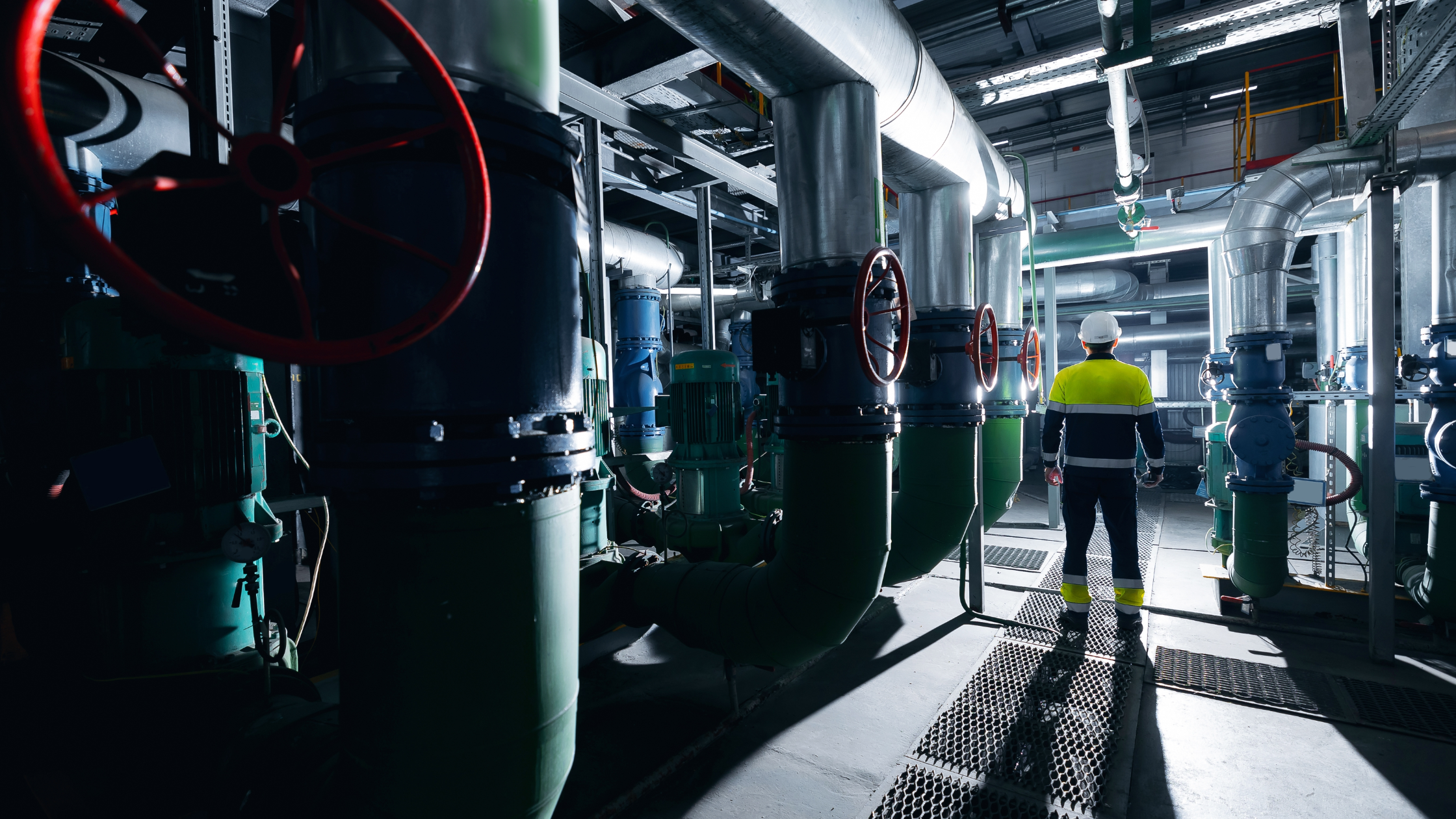
Detecting hazardous substances early is one of the biggest challenges on construction and industrial jobsites. Gas leaks, harmful emissions, and environmental contaminants can crop up between inspections, often going unnoticed until they’ve already posed a serious risk. To combat this risk, researchers have developed a new miniaturized photonic sensor capable of detecting multiple substances simultaneously, with sensitivity comparable to laboratory instruments.
A new approach to continuous monitoring
Developed by researchers from the Polytechnic University of Bari in collaboration with Shanxi University and Jinan University, the sensor is as small as a microchip and is designed for large-scale deployment rather than for use as a standalone device.
That scalability is key. Rather than relying on isolated monitoring points, job sites can be equipped with distributed sensor networks for continuous, real-time monitoring across the entire site. Instead of relying on periodic inspections or bulky, expensive equipment, this type of mini sensor could enable real-time, always-on monitoring across entire job sites. This shift is important for high-risk environments, such as refineries, energy projects, underground construction, and large-scale infrastructure, where blind spots can be especially dangerous if overlooked.
These sensors are designed to detect issues before they escalate into more serious problems. Whether it’s gas leaks, emissions, or environmental risks, this device can help industries identify issues in real time, not after they’ve already taken place.
The researchers highlighted how integrated photonics could offer compact, scalable, high-performance sensing for continuous, distributed monitoring across industrial, environmental, and biomedical safety applications.
The rise of connected, sensor-driven jobsites
The development also reflects a bigger shift already underway across construction and industrial operations. Jobsites are becoming increasingly connected through the integration of AI and smart tools into workflows and the rise of IoT-based monitoring. The results are safer job sites, better project outcomes, and improved efficiency.
In this landscape, the ability to integrate highly sensitive sensors can be a game-changer, making data-driven continuous monitoring a reality rather than a periodic task.
The future of job sites and infrastructure is clear: jobsite monitoring is moving away from periodic checks towards self-sufficient continuous monitoring systems that are built to actively detect risks. For contractors and operators, that shift could mean better safety outcomes, stronger environmental performance, and improved operational control across construction and industrial operations.
To stay connected with the latest stories on construction trends, subscribe to our weekly newsletter and follow us on LinkedIn.