

Unexpected breakdowns on a busy jobsite can stop a project in its tracks and drive up operating costs. So, what is predictive maintenance? It helps you avoid these disasters by using real-time data to tell you exactly when a machine needs a fix before it actually fails. This guide explains how to move away from stressful repairs and fixed schedules so your fleet stays running and your budget stays on track.
What is predictive maintenance?
Predictive maintenance (PdM) is a smart, innovative way to look after your equipment by using data rather than a calendar. PdM uses IoT sensors, data analytics, BIM, and AI to predict when equipment or building systems are likely to fail, allowing you to track the health of your machines while they are working on site. Instead of guessing when a part might break, predictive maintenance software forecasts the best time to perform service so you can prevent a total failure.
How predictive maintenance compares to traditional methods
To understand predictive maintenance, it helps to look at what it’s replacing. Most maintenance strategies in construction fall into two categories:
- Reactive maintenance, where crews wait for a machine to stop working before calling in repairs, often leading to costly delays.
- Preventive maintenance, where parts are repaired or replaced on a fixed schedule, even if the machine doesn’t need it yet.
Predictive maintenance takes a different approach. Instead of relying on historical data to make a guess, it uses real-time data to assess the machine’s current state and determine exactly when maintenance is needed.
How predictive maintenance works
Turning raw data into a planned repair involves four simple, automatic steps. This process ensures that your mechanics spend their time fixing the right problems at the right time.
Step 1: Sensors collect data
Heavy machines are fitted with sensors that monitor the equipment’s vitals. These sensors track things like engine heat, hydraulic pressure, and even the tiny vibrations of moving parts.
Step 2: Data moves to the cloud
The information is sent through a wireless system to a central fleet management platform. This allows you to see the health of every machine on the jobsite from a single laptop or tablet.
Step 3: Software looks for patterns
Advanced software scans the data to find small changes that a human ear or a quick inspection might miss. It can calculate exactly how much life is left in a part before it is likely to break.
Step 4: Proactive alerts
Before a major failure happens, the system sends an alert to your team. This allows you to schedule a just-in-time repair during a shift change or a lunch break, rather than losing half a day of work.
Where predictive maintenance fits in
This technology is most valuable for the heavy equipment that keeps your project moving. If these machines stop, the whole site usually stops with them.
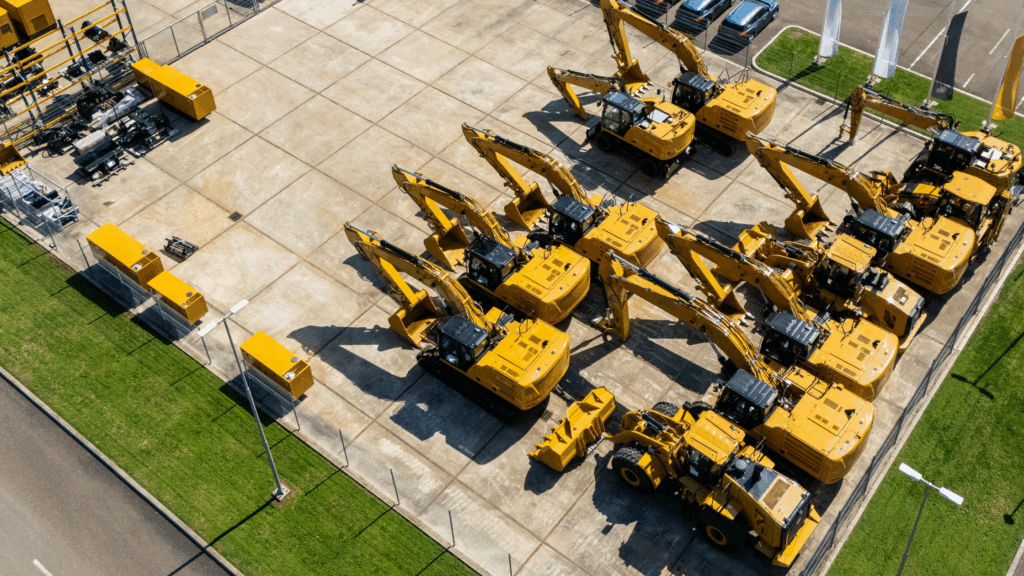
- Heavy earthmovers: For dozers and excavators, a hydraulic failure can stop an entire grading operation and leave your crew standing around.
- Tower cranes: These are difficult and expensive to repair once in place. Finding a mechanical issue early reduces safety risks and saves you from a logistical nightmare.
- Critical infrastructure: In smart buildings, this system monitors systems such as boilers and HVAC fans. It prevents mid-week breakdowns that could leave people without heat or air conditioning.
Benefits and limitations
While using data to plan your repairs can be a lifesaver, it’s important to understand both the wins and the challenges that come with this technology.
Benefits
- Less downtime: You can see a 5-15% reduction in the total time equipment sits idle.
- Lower costs: You save 18 to 30% on maintenance costs by avoiding work that does not actually need to be done.
- Better reliability: The overall durability of your fleet can increase by about 25%.
Limitations
- Upfront costs: Buying the sensors and the software systems requires a significant initial investment.
- The training gap: Your team will need time and training to learn how to read and act on complex data reports.
- Data needs: To make accurate predictions, the software requires extensive historical data to understand what a healthy machine looks like.
Maintenance strategies compared
| Feature | Reactive | Preventive | Predictive |
| Goal | Fix it when it breaks | Service it on a schedule | Service based on real data |
| Cost | Highest (emergency fees) | Medium (unnecessary work) | Lowest (optimized labor) |
| Downtime | Unplanned and costly | Planned but frequent | Minimized and just in time |
| Efficiency | Very Low | Moderate | Very high |
Is predictive maintenance becoming standard?
Predictive maintenance is moving from a high-tech option to a requirement in many contracts. People who own major infrastructure projects now expect contractors to provide clear data and a certain schedule.
Market growth and the cost of doing nothing
According to Research and Market’s Predictive Maintenance Market Report 2026, the global market for predictive maintenance is expected to reach $15.29 billion in 2026 and grow at a staggering 29.4% annually. This explosion is happening because the price of a breakdown has never been higher:
- The cost of a stop: Unplanned downtime now costs the world’s largest companies $1.4 trillion annually, which is roughly 11% of their total revenue.
- Hourly rates: In heavy industry, a single hour of unplanned downtime can cost a median of $125,000, while specialized sectors like automotive manufacturing can see losses up to $2.3 million per hour.
The 2026 tipping point
This year is being called the tipping point for AI in the field. While only about 32% of teams had fully implemented AI solutions at the start of 2025, 65% of maintenance teams now expect to fully adopt AI-driven systems by the end of 2026.
Verified return on investment (ROI)
Moving to a data-driven model has a massive financial upside. Most organizations see a 10:1 return on their investment, with some reports showing even higher gains depending on the fleet’s scale.
- Cost reduction: You can expect a 18% to 25% reduction in total maintenance spending compared to old-school scheduled servicing.
- Asset longevity: Using these tools correctly can extend the life of your heavy machinery by 20% to 40%, deferring millions in replacement costs.
- Breakdown prevention: Teams using predictive tools see a 70-75% decrease in total equipment breakdowns.
Comparison of maintenance value
| Benefit | Impact of predictive maintenance |
| Maintenance expenditures | 18% to 25% savings |
| Unplanned downtime | 35% to 50% reduction |
| Asset useful life | 20% to 40% increase |
| Spare parts inventory | 20% to 30% lower carrying costs |
What is predictive maintenance in generative AI?
Generative AI is changing how many of these systems work. Instead of just sending a simple alert, the software can now provide conversational recommendations. It can guide a technician on exactly how to fix a failing part before the person operating the machine even knows there is a problem.
Predictive maintenance is helping the AEC industry build a more professional and reliable business. When you can prove to your clients that your equipment will not fail and your timeline will not shift, you gain a massive edge over the competition. Moving toward a data-driven fleet takes time and investment, but the result is a smoother operation where you are always in control of your machinery.
Subscribe to our newsletter to learn how to turn your fleet’s data into a competitive advantage and stay updated on the latest industry trends.