
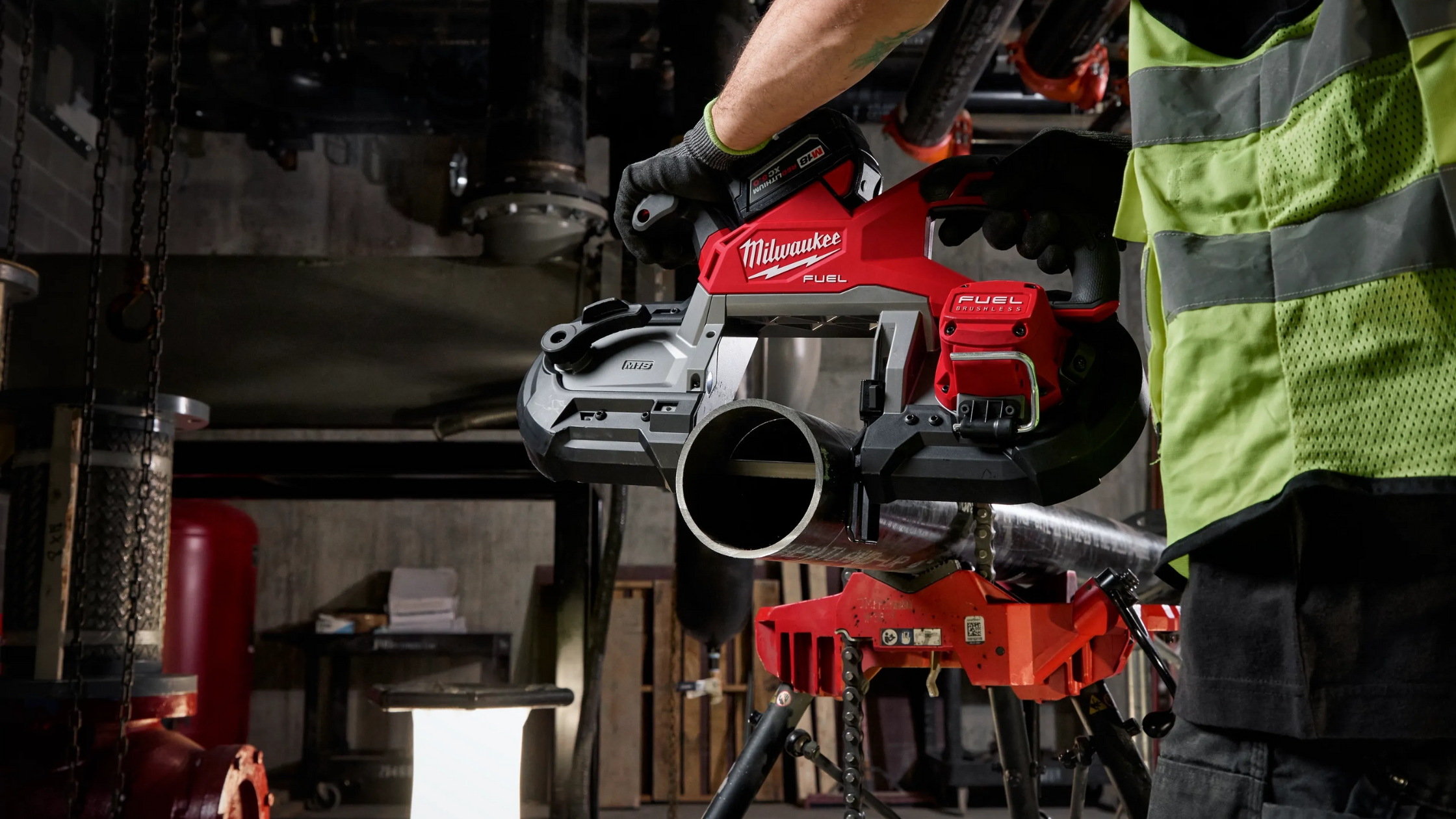
If you’re an electrician, plumber, HVAC tech, ironworker, or metal fabricator cutting pipe, conduit, strut, or threaded rod on the job, the best portable band saw makes your workday easier. Fast, clean cuts make fewer sparks, which is safer (and usually less messy) than using a grinder in tight spaces. For most pros, the best overall pick is the Milwaukee M18 FUEL Deep Cut Band Saw, while the Milwaukee M12 FUEL Compact Band Saw is a top choice for tight spots and overhead work.
Top portable band saws for plumbers, electricians, HVAC techs, and metalworking pros
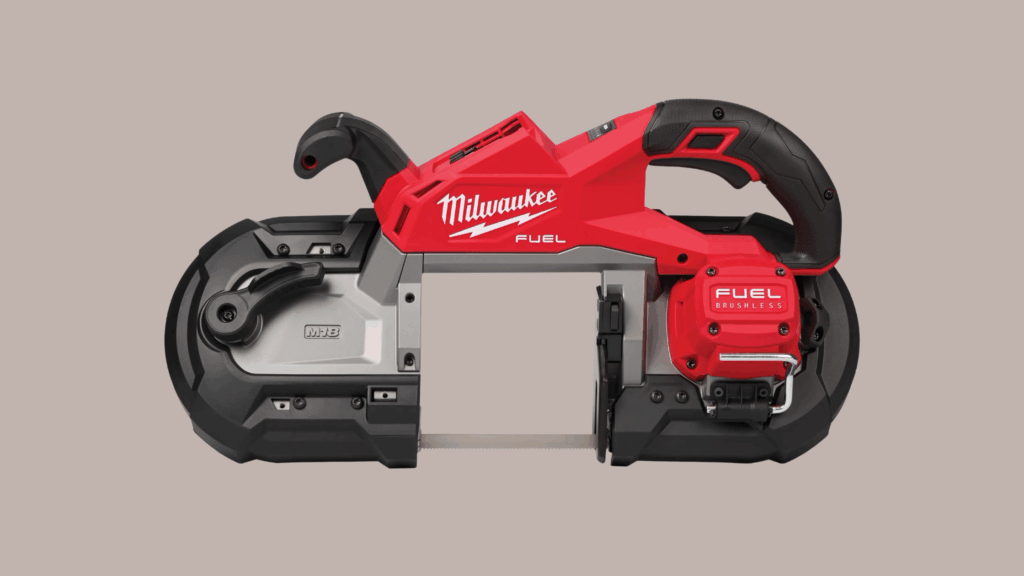
1. Milwaukee M18 FUEL Deep Cut Band Saw — best overall for heavy-duty cutting
| Pros | Cons |
| – Deep cut capacity for true “pipe + strut” work – Built for job site durability and daily trade use – Cordless for convenience | – Bigger/heavier than compact models – Overkill for small conduit and light-duty tasks |
Key features
- Deep-cut design for larger material capacity
- Brushless motor platform (M18 FUEL) for longer tool life and better efficiency
- Job site protection features, which Milwaukee calls “Job site Armor”
If you do a lot of cutting every week, this is the kind of saw that can become your go-to. The Milwaukee M18 FUEL Deep Cut is built like a “main rig” for high-volume cutting, especially when working with larger pipe, thick metal, or stacks of unistrut. Milwaukee also claims it cuts faster than competitors on common pipe sizes and can deliver a high number of cuts per charge, depending on the battery and application.
The big downside is size. This saw is heavier and bulkier than compact band saws, so it can feel awkward if you’re mainly doing overhead work, working in tight finished spaces, or cutting material while on a ladder.
Best for: Plumbing and HVAC pipework, unistrut-heavy electrical installs, and mechanical contractors who need a tough band saw they can rely on every day.
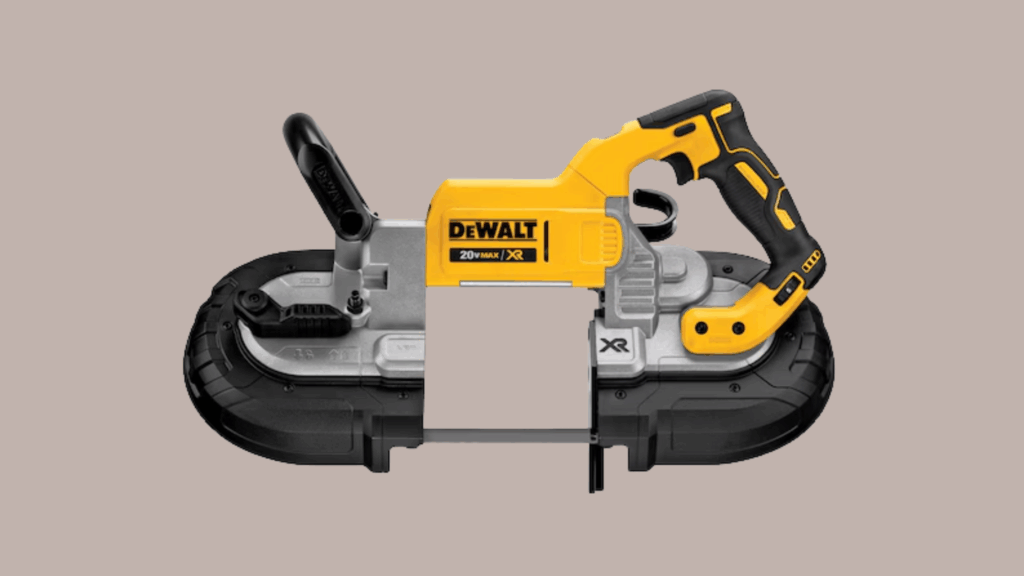
2. DEWALT 20V MAX* XR Deep Cut Band Saw (DCS374B) — best alternative to Milwaukee deep cut
| Pros | Cons |
| – Deep cut capacity handles common trade materials – Variable speed control for better cut tuning – DEWALT battery ecosystem compatibility | – Still bulky compared to compact saws – Premium price tier (tool-only) |
Key features
- Deep cut capacity class for larger materials
- Variable speed dial to match the tool to the material
- Integrated hang hook + LED work light
If you’re already on DEWALT batteries and want a serious, deep-cut band saw, the DCS374B is one of the strongest alternatives to the Milwaukee deep-cut. It’s built for the same kind of job site work, like cutting pipe, strut, threaded rod, and metal stock. DEWALT calls out a 5-inch cutting capacity (with the right blade) and includes variable speed control, which helps you slow things down for cleaner cuts or speed up when you need to power through repeated cuts.
Like any deep-cut model, it’s not small. It’s still bulky for tight corners and can be annoying for overhead cutting, especially if you’re working in a cramped mechanical room or on a ladder.
Best for: DEWALT users who want a strong, deep-cut portable band saw for pipe, strut, and metal stock, especially for regular job site cutting.
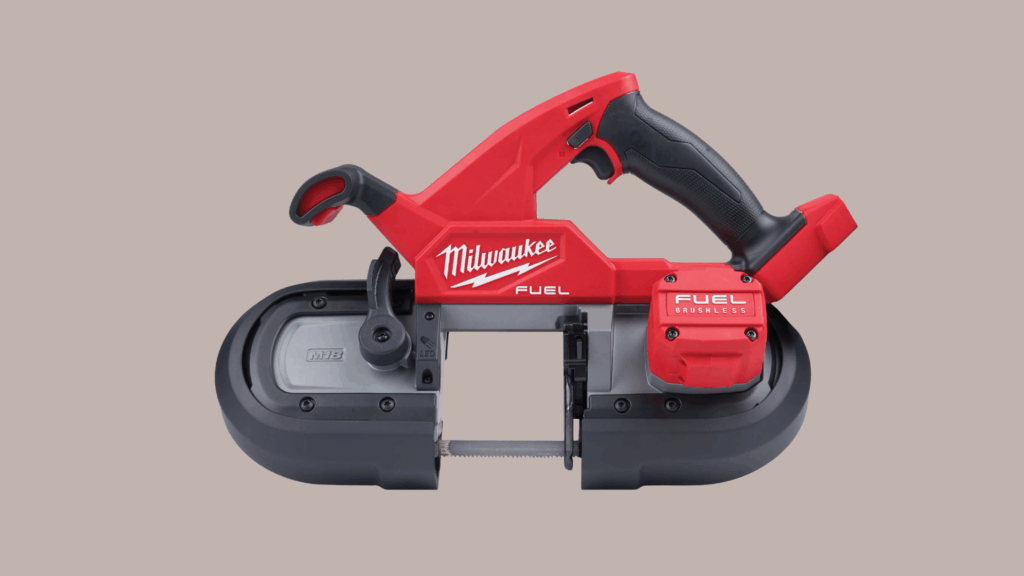
3. Milwaukee M18 FUEL Compact Band Saw (2829S-20) — best compact cordless for job site versatility
| Pros | Cons |
| – Big capacity for a compact saw – Lighter and more balanced than deep cut models – Strong “one-tool-for-most-cuts” option for everyday job site work | – Not as capable as deep-cut units for the largest material – Still larger than true one-handed models |
Key features
- 3-1/4″ x 3-1/4″ cutting capacity
- POWERSTATE brushless motor + Constant Power Technology
- Dual-trigger design for safer two-hand operation
The Milwaukee M18 FUEL Compact Band Saw still feels like a “real job site saw.” It’s made for pros who want a lighter alternative to a deep-cut saw, without giving up too much cutting capacity. Milwaukee says it offers the largest cutting capacity in its compact class (3-1/4″ x 3-1/4″), which makes it a great pick for common trade materials like strut, conduit, threaded rod, and medium pipe.
If you’re cutting large pipe every day, deep-cut models still win. And even though it’s called compact, it’s not a true one-handed saw, so it can still feel bulky in super-tight installations.
Best for: Electricians, HVAC techs, plumbers, and mechanical professionals who want one cordless band saw for most daily cuts without stepping up to a deep-cut tool.
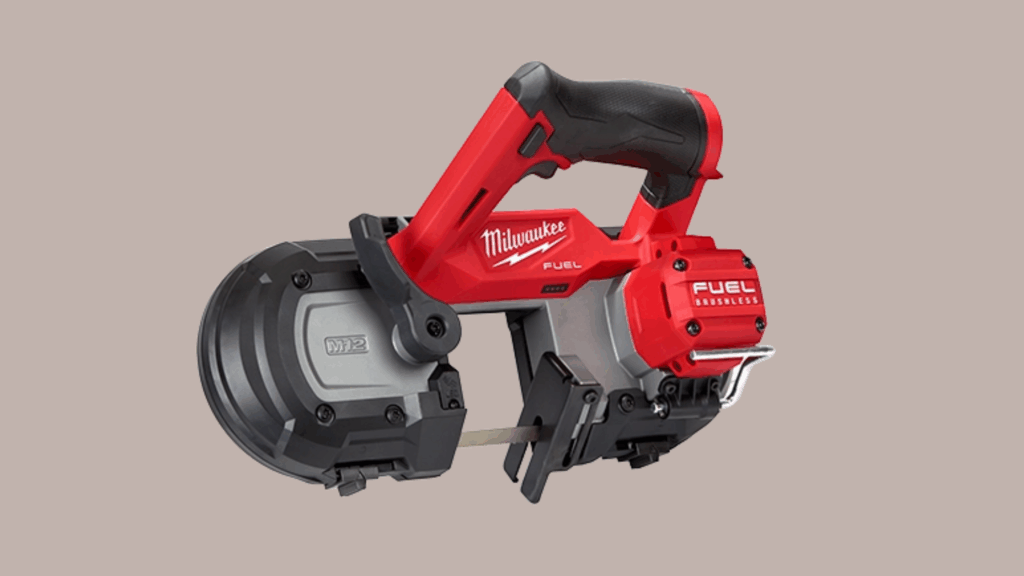
4. Milwaukee M12 FUEL Compact Band Saw (2529-20) — best for tight spaces + one-handed control
| Pros | Cons |
| – Effective for overhead work and cramped installs – Very light compared to 18V compact and deep-cut saws – Excellent for conduit, strut, threaded rod, and smaller pipe | – Lower capacity than M18 compact models – Not ideal for larger or thicker stock |
Key features
- 2-1/2″ x 2-1/2″ cut capacity
- Weighs about 6 lbs
- POWERSTATE brushless motor + Constant Power Technology
The M12 Fuel Compact Band Saw version is the “tight-space hero”; built for pros who cut in mechanical rooms, basements, crawlspaces, ladders, and overhead installs. Milwaukee has branded it as the lightest compact band saw, and it’s designed to cut fast in Unistrut, a big reason electricians and HVAC installers love it.
With a 2-1/2″ x 2-1/2″ cut limit, it’s not meant for bigger pipe or heavy metal stock. If your job involves working with thick material or requires greater power and capacity, you’ll want the M18 compact or a deep-cut saw instead.
Best for: Service electricians, HVAC installers, and service plumbers who need a light, compact band saw for overhead and tight-space cuts. This model is especially good for conduit, strut, and smaller pipes.
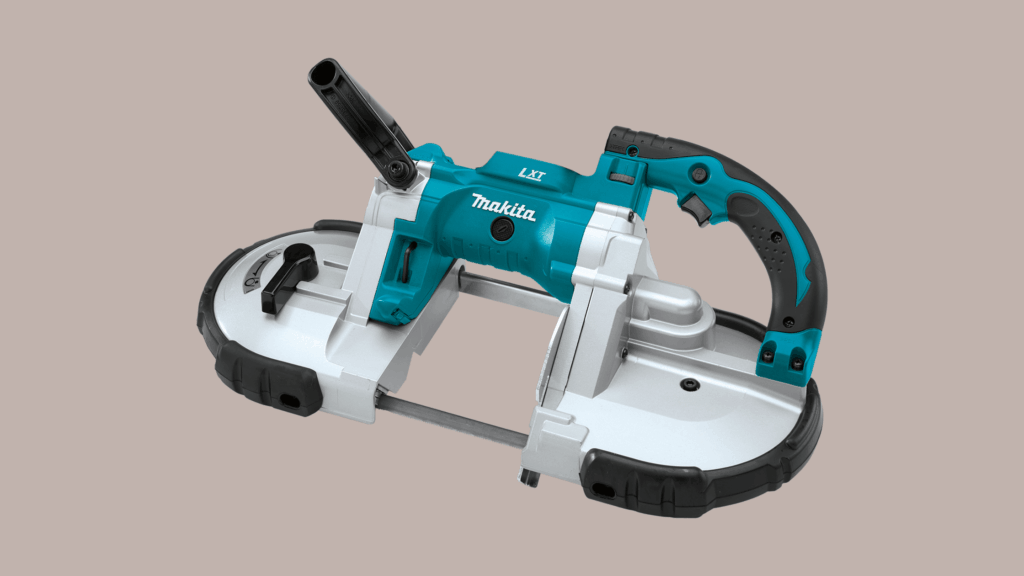
5. Makita 18V LXT Portable Band Saw (XBP02Z) — best for Makita users
| Pros | Cons |
| – Strong cutting capacity for a portable cordless model – Variable speed and trade-friendly features – Great if you’re already on Makita LXT batteries | – Not the lightest in class – Makita lineup may be less common on some job sites (varies by region) |
Key features
- 4-3/4″ cutting capacity
- Variable speed control for better cutting control across materials
- Designed for multi-metal cutting use cases
If your crew already uses Makita batteries, the Makita XBP02Z is an easy choice. A portable band saw with serious cutting capacity and variable speed, it’s good at cutting different metal materials, which is important because not all metals behave the same. Being able to slow down or speed up helps you get cleaner cuts and better control, especially when trying to avoid grabbing or rough edges.
This is not a small one-handed saw, so it’s better for planned cutting than awkward overhead installs. If you do a lot of tight-space service work, a smaller, compact saw will feel more comfortable.
Best for: Makita-heavy crews, mechanical trades, and pros who do regular metal cutting and want an 18V LXT saw with strong capacity.
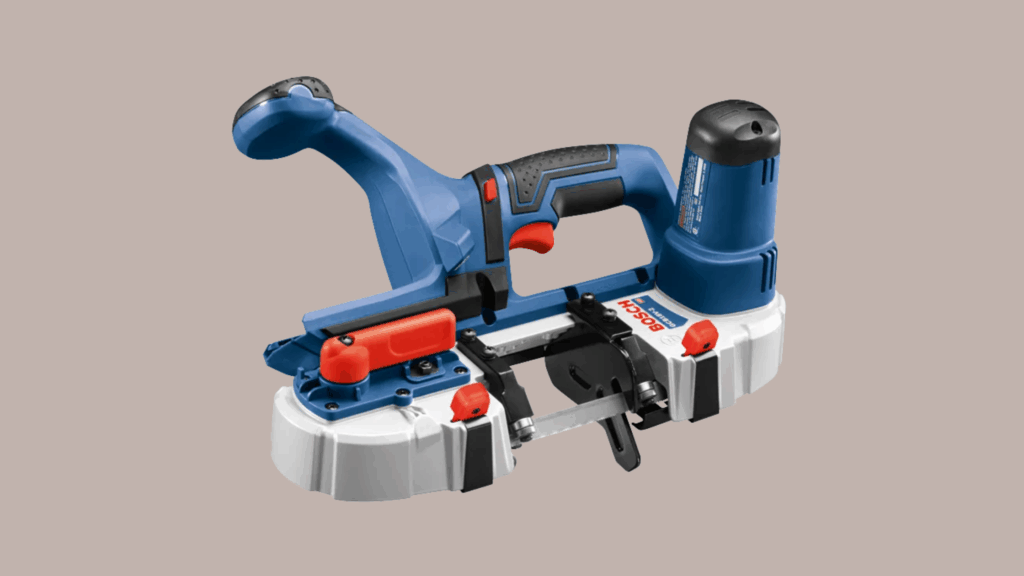
6. Bosch 18V Compact Band Saw (GCB18V-2N) — best lightweight compact (tight corners + overhead)
| Pros | Cons |
| – Very lightweight for overhead and ladder work – Compact footprint for corners and tight spaces – Fast blade speed class for clean cuts | – Smaller cut capacity than bigger compact/deep-cut saws – May require slower feed rate on heavier stock |
Key features
- ~7.3 lb tool-only weight
- Compact design for tight work areas
- 2-1/2″ cut capacity class (compact band saw capacity)
If you do a lot of work overhead or in cramped corners, the Bosch GCB18V-2N saw is a great pick. Bosch explicitly targets pros who cut in tight spaces, corners, and overhead, and its lightweight design helps reduce arm strain on ladders and lifts. The compact body also makes it easier to line up cuts without fighting the tool, which is exactly what you want during service calls or overhead strut work.
The trade-off is cutting capacity. It’s not built for deep-cut applications or oversized pipe. If you regularly cut larger material, you’ll want a deep-cut model instead.
Best for: Service techs, electricians, and HVAC installers who want a lightweight, compact saw for overhead work and tight-space cutting.
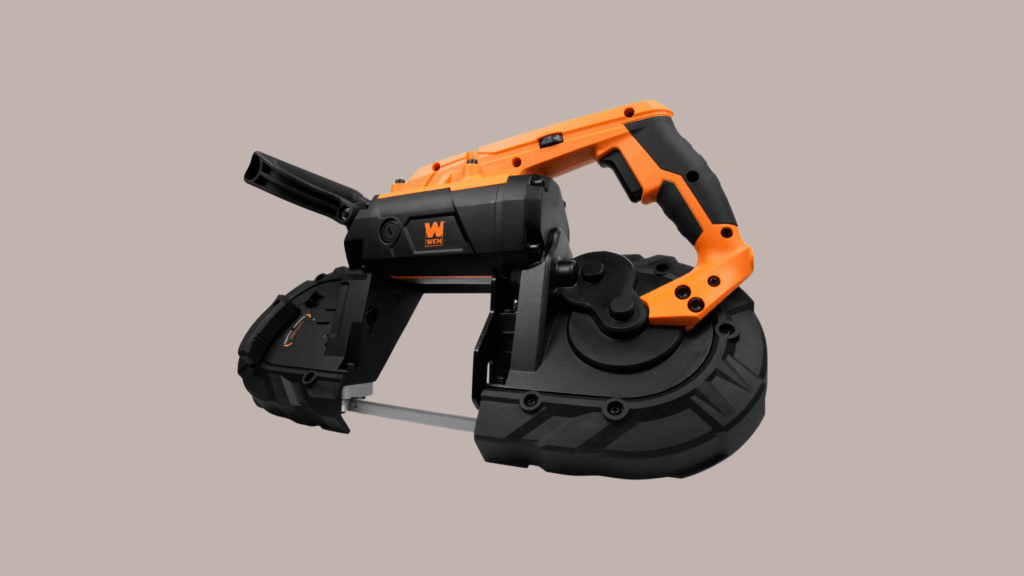
7. WEN 94396 10-Amp Handheld Portable Band Saw — best budget corded option
| Pros | Cons |
| – Very affordable compared to cordless pro brands – Corded power for steady cutting – Big capacity and adjustable speed | – Cord management is a pain on-site – Heavier and less refined ergonomics vs premium models – Not as durable long-term as pro platforms (generally) |
Key features
- 10-amp motor
- Variable speed range for more control
- Up to 5″ x 5″ cutting capacity
If you want a cheap band saw that cuts, the WEN 94396 does the job. It’s corded, so it runs (as long as it’s plugged in). No batteries, no waiting, no swapping packs. It also has a big cut capacity and variable speed, which is rare at this price.
On job sites, cords slow you down. They tangle, drag, and can be a tripping hazard. Cordless tools move better with you throughout the day, and since this is a budget brand, it may not match the long-term durability or refined feel of Milwaukee or Bosch.
Best for: Shop use, DIY projects, occasional metal cutting, and light trade work when price matters.
What to consider before buying a portable band saw
Before you buy a portable band saw, think about how and where you’ll use it. For example, some saws are built for nonstop cutting on big pipe, while others are better for small cuts in tight spaces. Here are the main things to look at before you spend the money.
Primary use case
- Deep-cut (big pipe/strut)—best for high-volume work: If you’re cutting larger pipe, thick metal, or piles of unistrut every day, a deep-cut saw is the best fit. These are larger tools, but they’re made to handle heavier-duty cutting without slowing down.
- Compact (service calls + overhead)—best for tight spaces and lighter material: If your job includes lots of ladder work, service calls, or cramped installs, compact saws are easier to handle. They usually work great for conduit, strut, and smaller pipes.
- Corded budget—best for shop work and occasional cutting: A corded saw is a smart pick if you mostly work in a shop, garage, or fixed work area. You’ll get steady power without high cordless prices, but you do lose mobility.
Power and performance requirements
Blade speed changes how the cut looks. Too fast on the wrong metal and the blade “chatters” or grabs. Too slow, and the saw feels like it’s crawling. Either way, you waste time, and the cut comes out rough.
Variable speed is worth paying for if you cut more than one type of material. It lets you slow down for tougher stuff and speed up when you just need to rip through strut or rod without fighting the tool.
Choose a cordless platform that fits your tools. If you already own batteries, it makes sense to match the saw to your system to keep costs down.
Cutting capacity
A saw can be “portable,” but still not cut the material you need. Check both rectangular and round-cut capacities. Some saws list different capacities depending on the shape of the material, so make sure it matches what you cut most often.
Some models use more common blade lengths, while others use more specific ones. If the blade size is hard to find, it can be annoying to replace, especially if you need one fast.
Weight, ergonomics, and overhead work
Portable band saws can get heavy fast, especially when you’re using them above shoulder height. If you cut on ladders or overhead, prioritize weight. A lighter saw is easier to hold steady and can make the job safer.
Compact models are often easier to control with one hand and can reduce fatigue during lengthy installs or repeated cuts.
Safety and job site-friendly features
The best saw is the one you can use comfortably (and safely) all day. Look for things like:
- Trigger safety to help prevent accidental starts
- Blade guard coverage so you’re not exposed while cutting
- Rafter/hanging hook so you can hang it on lifts, ladders, or scaffolding
- LED light, which is essential in basements, mechanical rooms, and dark corners
Warranty and support
These saws aren’t cheap. Check the warranty before you buy, and where it gets serviced. If there’s no local repair shop or parts are hard to get, you’re stuck when it breaks.
Found this gear review helpful? Check out these guides for more must-have gear picks:
- Best cold weather gear
- 12 best gifts for plumbers
- The best DeWalt gear to keep in your car for emergencies
Want more straight-to-the-point gear advice? Subscribe to our newsletter for more no-fluff gear reviews, trade-tested buying guides, and tool deals.