

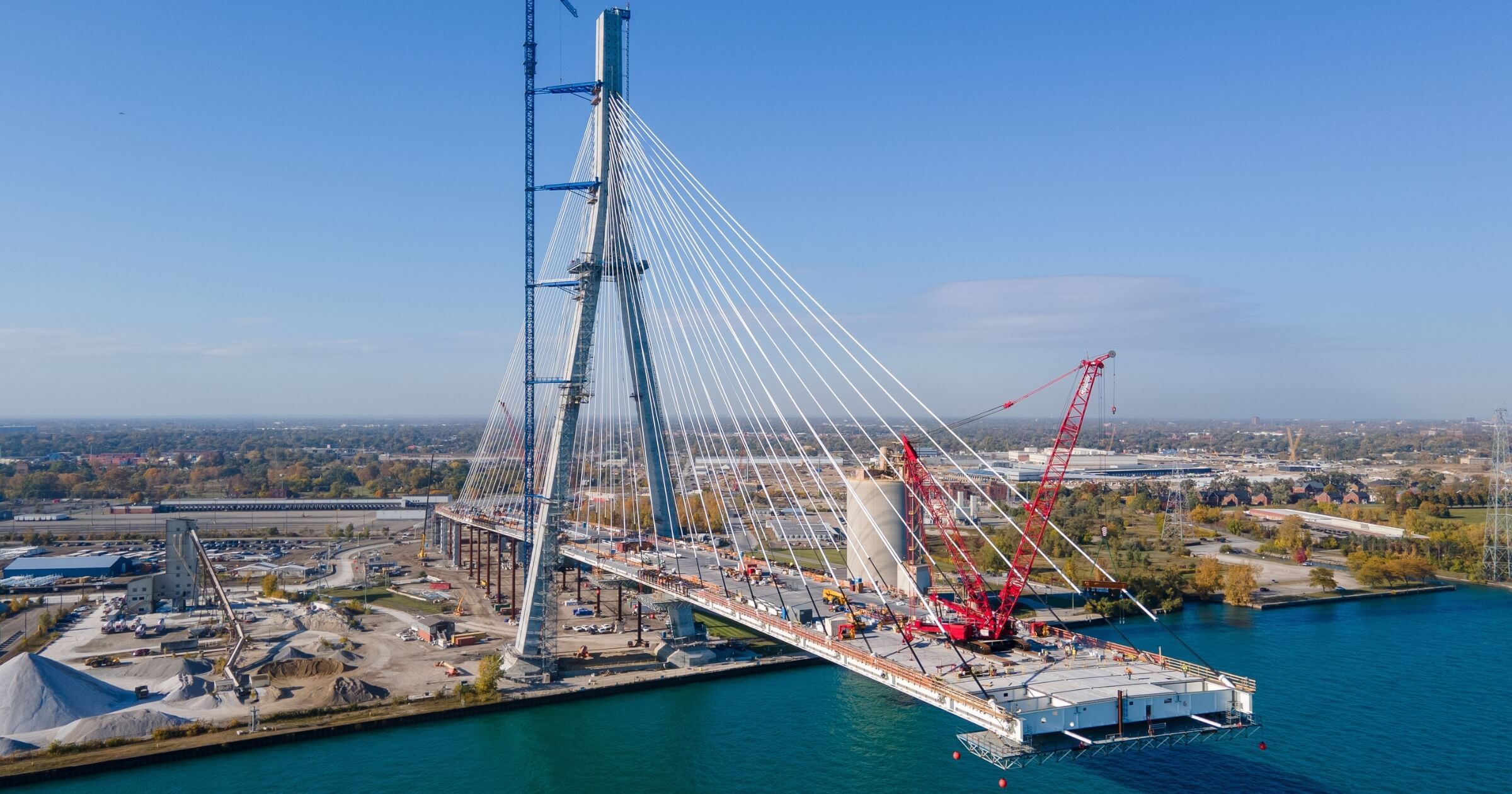
All across the U.S., crews are building and rebuilding bridges to make travel safer and easier. Thanks to new federal funding, bridge construction projects like the I‑10 Calcasieu River Bridge Replacement in Louisiana and the Gordie Howe International Bridge in Detroit are helping connect communities and strengthen local economies.
Bridge construction projects aiming to reshape travel for U.S. locals
Project 1: Gordie Howe International Bridge: Detroit, Michigan / Windsor, Ontario
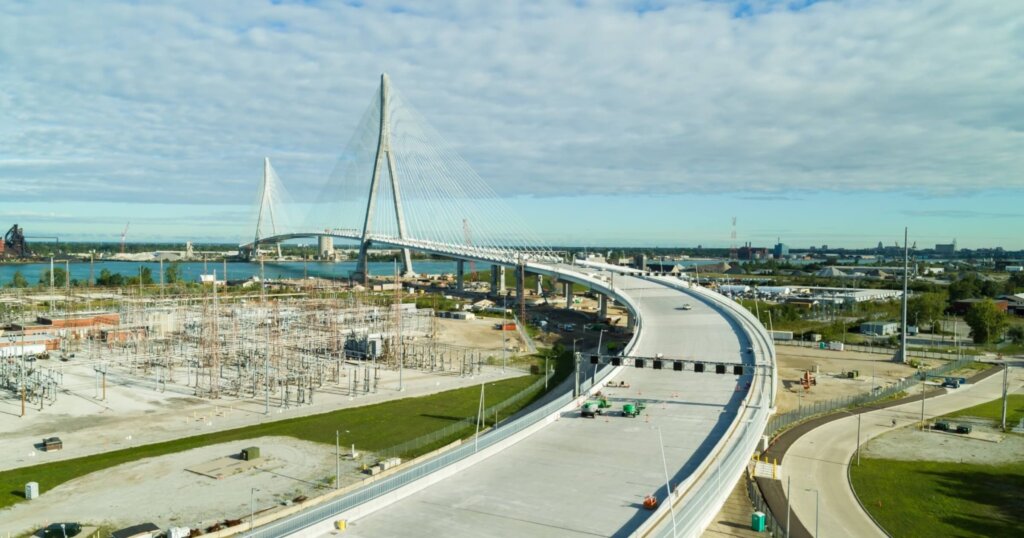
- Location: Detroit River, between Michigan (U.S.) and Ontario (Canada)
- Specs: Six lanes; 1.5 miles long; main span 853 meters.
- Expected timeline: Completion expected in 2025.
The Gordie Howe International Bridge is one of the largest and most ambitious bridge projects in North America. Spanning the Detroit River, it will connect Detroit, Michigan, to Windsor, Ontario, creating a vital new trade route between the United States and Canada. Once complete, it will help reduce traffic congestion and make cross-border travel faster and safer for both commuters and commercial trucks.
The project is being delivered by Bridging North America under the leadership of the Windsor–Detroit Bridge Authority. When finished, the Gordie Howe Bridge will have the longest main span of any cable-stayed bridge on the continent. Sustainability is also a key focus, with plans for energy-efficient LED lighting, stormwater management systems, and landscaping to support local biodiversity.
Beyond its impressive design, the bridge represents international teamwork and long-term investment in infrastructure that supports trade, tourism, and stronger regional economies.
Project 2: Chesapeake Bay Bridge‑Tunnel Expansion: Virginia
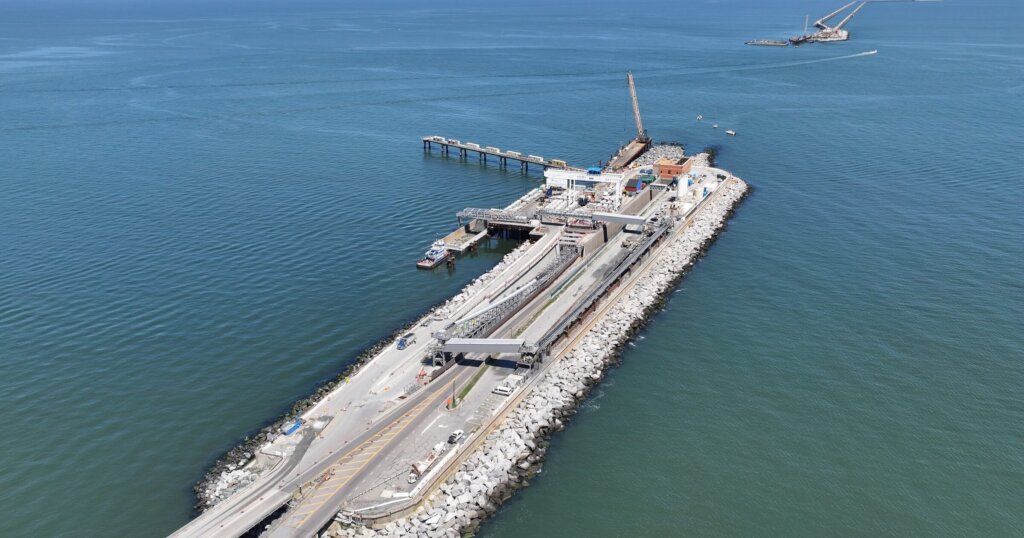
- Location: Across the Chesapeake Bay between Virginia Beach and the Eastern Shore, Virginia
- Specs: A new two-lane tunnel, about 5,700 feet long, is being built under the Thimble Shoal Channel alongside the existing bridge-tunnel system.
- Expected timeline: Tunnel boring machine “Chessie” broke through in early 2025; opening expected in 2027.
The Chesapeake Bay Bridge-Tunnel expansion is helping improve safety and traffic flow across one of Virginia’s busiest water crossings. The new tunnel will handle southbound traffic, while the existing tunnel will carry northbound vehicles, giving drivers two full lanes each way for smoother travel.
What makes this project stand out is its massive tunnel boring machine, “Chessie,” which digs under the bay floor without interrupting ships and marine traffic above. This modern approach helps protect the region’s shipping routes while strengthening a vital connection between Hampton Roads and the Eastern Shore.
In simple terms, the project boosts safety, supports local economies, and uses innovative technology to make one of Virginia’s most important crossings more reliable for decades to come.
Project 3: I‑10 Calcasieu River Bridge Replacement: Lake Charles, Louisiana
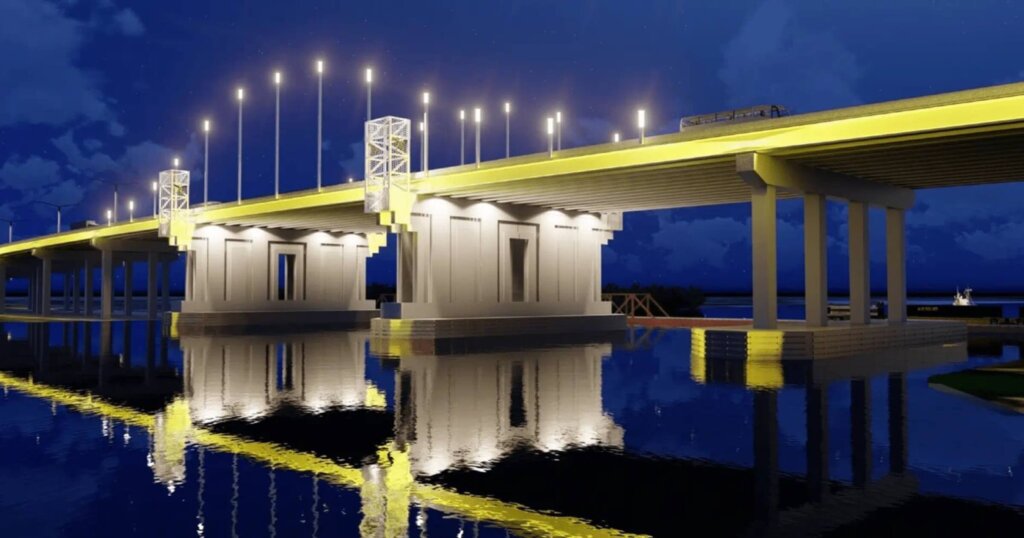
- Location: Interstate 10, Lake Charles/Westlake, Louisiana
- Specs: Corridor includes six travel lanes (three in each direction), plus auxiliary lanes; budget around $2.1 billion to $2.3 billion USD.
- Expected timeline: Design phase underway in 2024; procurement and construction phases currently scheduled to begin 2025-26, with completion expected by 2031.
This major project replaces the aging bridge over the Calcasieu River, a key freight and travel corridor in southwest Louisiana. The current structure, built in the early 1950s for far less traffic, now carries more than 90,000 vehicles daily, well beyond its original design. The new bridge design features full shoulders, improved lighting, modern steel-arched elements, and better safety features to serve the region’s industrial growth and evacuation routes.
The project is structured as a public-private partnership between the Louisiana Department of Transportation and Development and a private team led by Calcasieu Bridge Partners (including firms such as ACCIONA and Sacyr). This model is helping control costs, speed delivery, and ensure long-term standards for operations and maintenance. The project also covers adjacent interstate ramps and service roads, so the impact goes beyond the span itself.
Project 4: Brent Spence Bridge Corridor Project: Cincinnati, Ohio / Covington, Kentucky
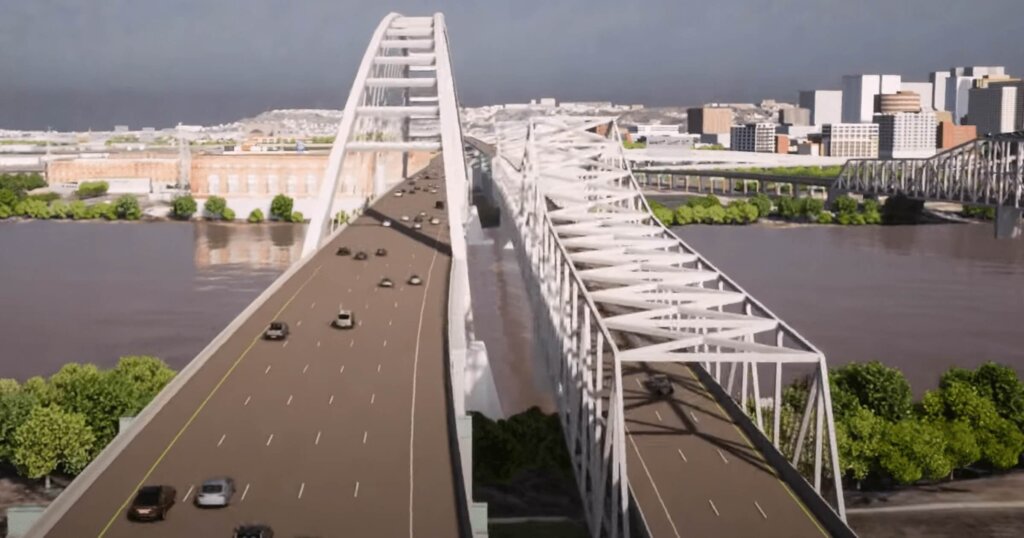
- Location: I-71/I-75 corridor between downtown Cincinnati and Northern Kentucky
- Specs: Double bridge configuration; approximately $3.6 billion USD investment.
- Expected timeline: Construction kickoff around 2024 and completion aimed for 2029.
This major corridor project aims to fix one of America’s busiest freeway bottlenecks by separating local and interstate traffic. The existing Brent Spence Bridge, carrying both I-71 and I-75, serves too many vehicles for its size and design. The plan adds a new companion bridge to carry through traffic, while the older structure will shift to handle local trips.
Managed jointly by the Ohio Department of Transportation and the Kentucky Transportation Cabinet, the corridor improvements include rebuilt approach ramps, better pedestrian and bike paths, and aesthetic upgrades along the riverfront. Funding from the Bipartisan Infrastructure Law helped unlock the project and bring it into full motion.
Is bridge construction growing in 2025?
Bridge construction in the U.S. is growing, and there’s strong momentum behind it. The American Road & Transportation Builders Association (ARTBA) estimates that more than 222,000 bridge spans, about 36% of all bridges, require major repair or replacement.
At the same time, the Bipartisan Infrastructure Law (also known as the Infrastructure Investment and Jobs Act) has allocated $40 billion over five years specifically for bridge rehabilitation and replacement through its Bridge Investment Program.
So what’s driving this growth?
- Many bridges are aging and were built for much lighter traffic loads, so the demand for replacements and upgrades is high.
- The federal funding provides a major push, making it easier for states and local governments to launch large-scale bridge projects.
- There’s also greater focus on sustainability, freight mobility, and design innovations, meaning that many new bridge projects aren’t just replacements but modernized versions built for future traffic and trade.
All in all, the combination of huge needs, lots of funding, and supportive policy means that 2025 is a strong moment for “bridge construction projects” in the U.S., and we’re likely to see many more major builds start or continue in the coming years.
What to expect next in bridge construction
Bridge construction isn’t slowing down anytime soon. Several large-scale projects are already in the planning stages, including the replacement of New York’s BQE Cantilever and the I-5 Columbia River Bridge connecting Oregon and Washington. These upcoming builds aim to improve safety, reduce congestion, and support the growing demand for freight and commuter travel across state lines.
The next wave of bridge construction will also look different from what we’ve seen before. Builders are turning to modular construction for faster assembly, corrosion-resistant materials to extend service life, and digital twin technology to help monitor bridges in real time for maintenance and safety. Together, these advancements promise to make future bridges smarter, stronger, and more sustainable.
Want more updates on U.S. infrastructure and megaprojects? Subscribe to our newsletter for the latest industry news and project spotlights.

