
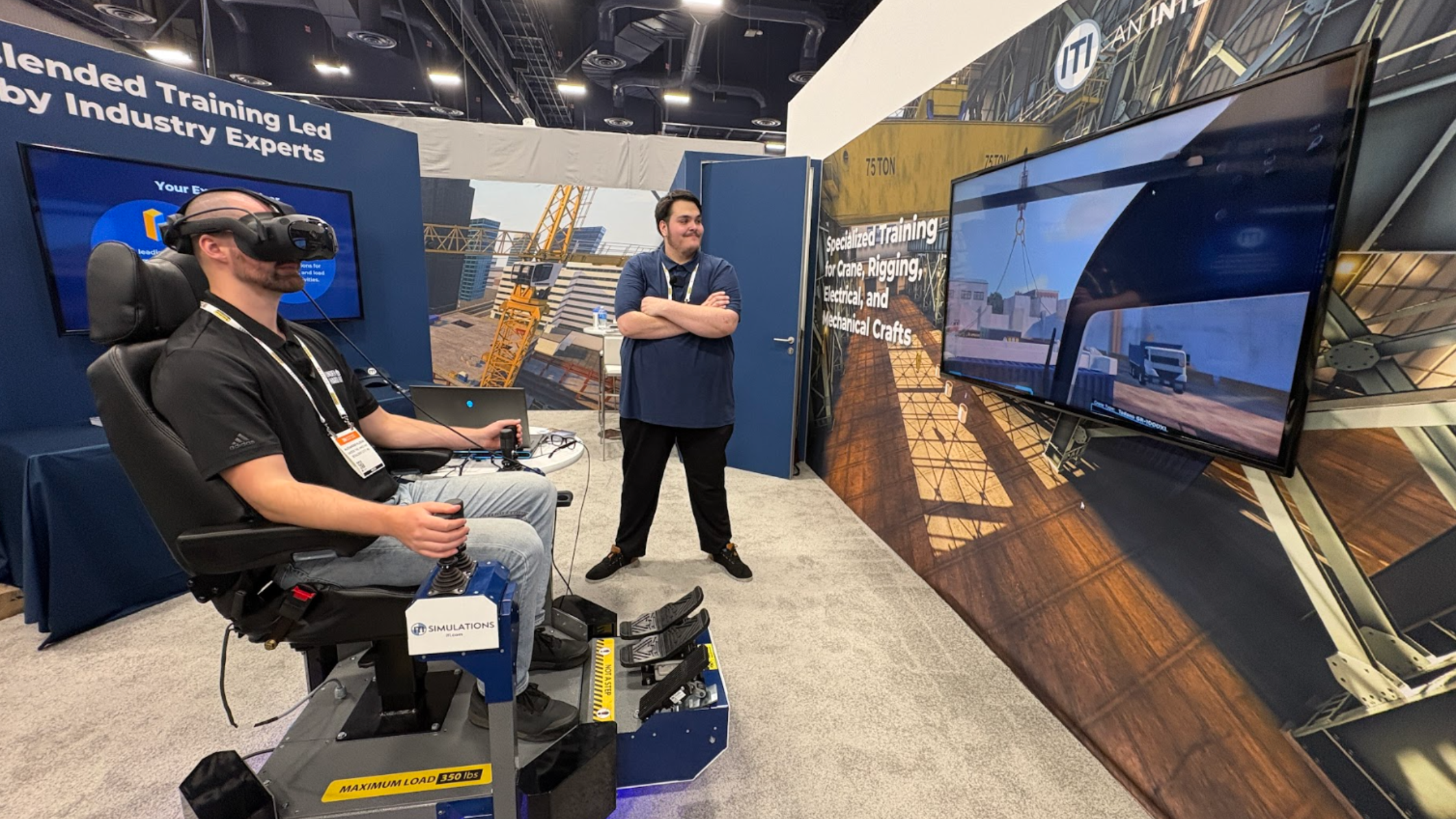
Building skills on a live job site used to be the only way to learn, but virtual training is changing the learning game for heavy equipment operators. Platforms from companies like CM Labs and ITI now allow operators to master complex controls and safety protocols in a digital environment before ever stepping into a real cab. We are exploring how these simulators work, why the industry is adopting them so quickly, and how they are making the AEC world safer and more efficient.
Why traditional operator training is under pressure
For decades, the standard way to learn was to get in the machine and start digging under the watchful eye of a veteran. While this hands-on approach is valuable, it is becoming harder to sustain in today’s fast-paced construction world.
Several big challenges are making live-only training difficult:
- Equipment downtime costs: Every hour a machine is used for training is an hour it is not making money on a project. In a busy market, contractors cannot afford to have a primary excavator sitting idle in a dirt lot for practice while deadlines loom.
- Fuel and maintenance: Training is hard on machines. Inexperienced operators often use more fuel by running at unnecessarily high RPMs, causing more wear and tear on hydraulic systems and tracks. These extra costs add up quickly over a multi-week training program.
- Risk exposure: Putting a beginner behind the controls of a multimillion-dollar crane or excavator poses a massive safety risk to everyone on site. One wrong move can lead to a tipped machine or a struck utility line, resulting in expensive insurance claims and project delays.
- Labor shortages: With an aging workforce and fewer young people entering the trades, companies need to onboard new talent faster than ever before. Traditional one-on-one mentoring is slow, and there are not enough veteran operators available to train the next generation at the speed the industry requires.
- Cost and risk exposure in live training: The financial stakes are incredibly high when training on live equipment. Beyond fuel and insurance liability, even a small mistake can lead to a tip-over or a trench wall collapse that halts a project for days. Common beginner errors, like over-swinging a crane load or improper load handling, are dangerous to practice in the real world. Virtual training removes that danger entirely, allowing students to fail safely while they find the machine’s limits.
- Skill gaps: Traditional apprenticeship models are great, but they often do not scale fast enough to meet current demand. With a massive push for infrastructure projects across North America, there is a desperate need to certify operators quickly. Simulation provides a way to get people seat-ready in a fraction of the time. Some companies have reported cutting on-site crane training from 6 months to just 7 weeks by using virtual tools first.
How virtual simulation training works
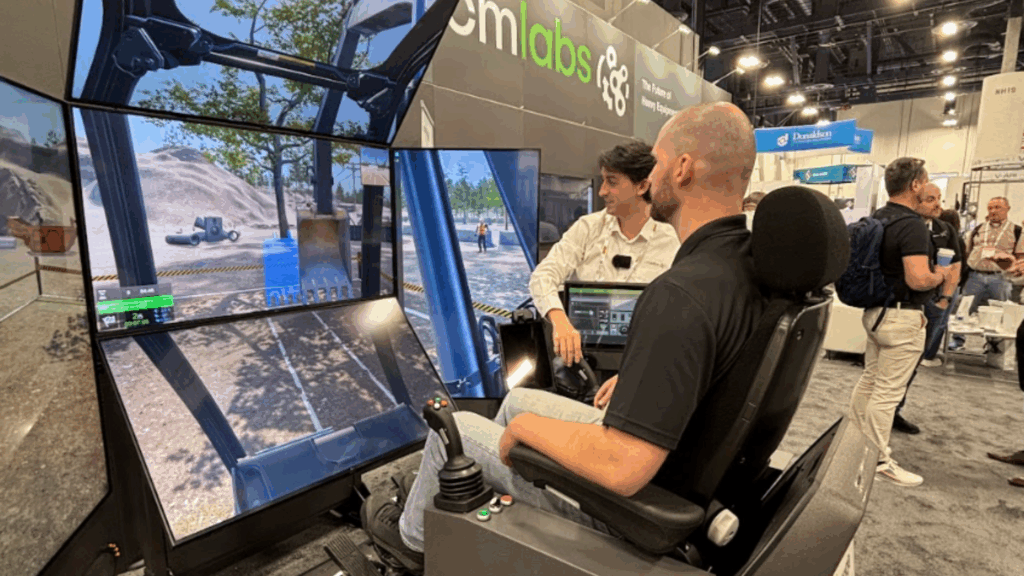
Modern training simulators are a far cry from playing video games in your basement. They use high-fidelity physics engines that replicate the exact weight, tension, and movement of real machinery.
Companies like CM Labs use their Vortex platform to ensure the feel of the soil or the swing of the boom is 100% accurate. This engineering-grade software simulates everything from cable dynamics to how a bucket interacts with different soil types. This level of detail helps operators build genuine muscle memory that transfers directly to the job site.
Most immersive rigs use the same joysticks, pedals, and seats as OEM equipment. High-end simulators also feature motion platforms that provide haptic feedback. This means if an operator starts to tip an excavator or hits a buried utility line, they will actually feel the vibration and tilt in their seat, just like they would in a real cab.
Another company seeing success in virtual training for trades is ITI. They specialize in VR crane simulators that put the operator on a virtual high-rise or inside a nuclear containment area. These headsets allow them to practice in high-risk environments, such as high winds, proximity to power lines, or complex blind lifts, that you could never safely recreate for a student in real life. With over 1,200 different scenarios available, operators can encounter more challenges in a week of simulation than they might see in a year on a live site.
Measurable benefits of virtual training for machine operators
Contractors are seeing a real return on investment when they switch to a simulator-first model. Some of the biggest wins include:
- Reduced damage: Operators who train on a heavy equipment simulator first are far less likely to damage real machines later. Because they have already made their rookie mistakes in a virtual world, they enter the real cab with a much better understanding of machine limits and boom clearance.
- Data-driven tracking: Simulators track every move an operator makes. Instructors can see a digital scorecard that highlights exactly where a student is struggling, whether it is wasting fuel with high RPMs or skipping critical safety checks. This allows for personalized coaching that focuses on a student’s specific weaknesses.
- Faster competency: Students often reach a job-ready state much faster because they can hit a reset button. In a simulator, an operator can practice a difficult move 50 times in an hour. On a live site, repositioning the machine and resetting the pile of dirt would make that impossible.
Where simulation fits in modern training programs
Virtual training isn’t meant to replace the practice on a real machine. Instead, most companies use a blended model to get the best results and reduce safety complications from training. The goal is to learn how to use the basics of the machine in the simulator in order to train faster and without any real world consequences. Once the operator is comfortable with the controls and has experienced several scenarios, they are prepared to try the live operation of the machine. Often times, they are far more comfortable stepping inside a cab since they already understand the controls and are far less likely to make mistakes.
Some companies are even using the simulators as a digital tryout. Before they sign a contract, a new hire can spend 15 minutes on a simulator to demonstrate they have the skills listed on their resume, helping prevent costly hiring mistakes.
Even experienced operators can benefit from simulation. If an operator has a near-miss on site, they can return to the simulator to work out the issue in a safe environment. This allows them to correct bad habits without the stress of a live project hanging over them.
Bottom line
The rise of virtual simulation training is showing where the construction industry is headed. In a time where labor shortages are more pronounced than ever before, virtual training provides a faster and more practical way of training new hires on mass. It also allows trade schools to offer virtual training to students who would otherwise not be able to access it. The next generation of machine operators is likely going to make fewer mistakes and build competence without the high stakes of a live job site. By the time they finally climb into a real cab, they’re ready to work. This presents the potential for a major productivity boost to contractors working with heavy machines and cranes as they won’t have to spend as much time training new hires on the field, ultimately helping their bottom line.
Further reading
- ITI brings next-level training to CONEXPO 2026
- PhysicsX creates AI-powered design simulator for engineering
- Safety trends in construction to watch in 2026
For more on the latest professional development tools and AEC tech, make sure you stay connected with our community. Subscribe to our newsletter today to stay in the loop!