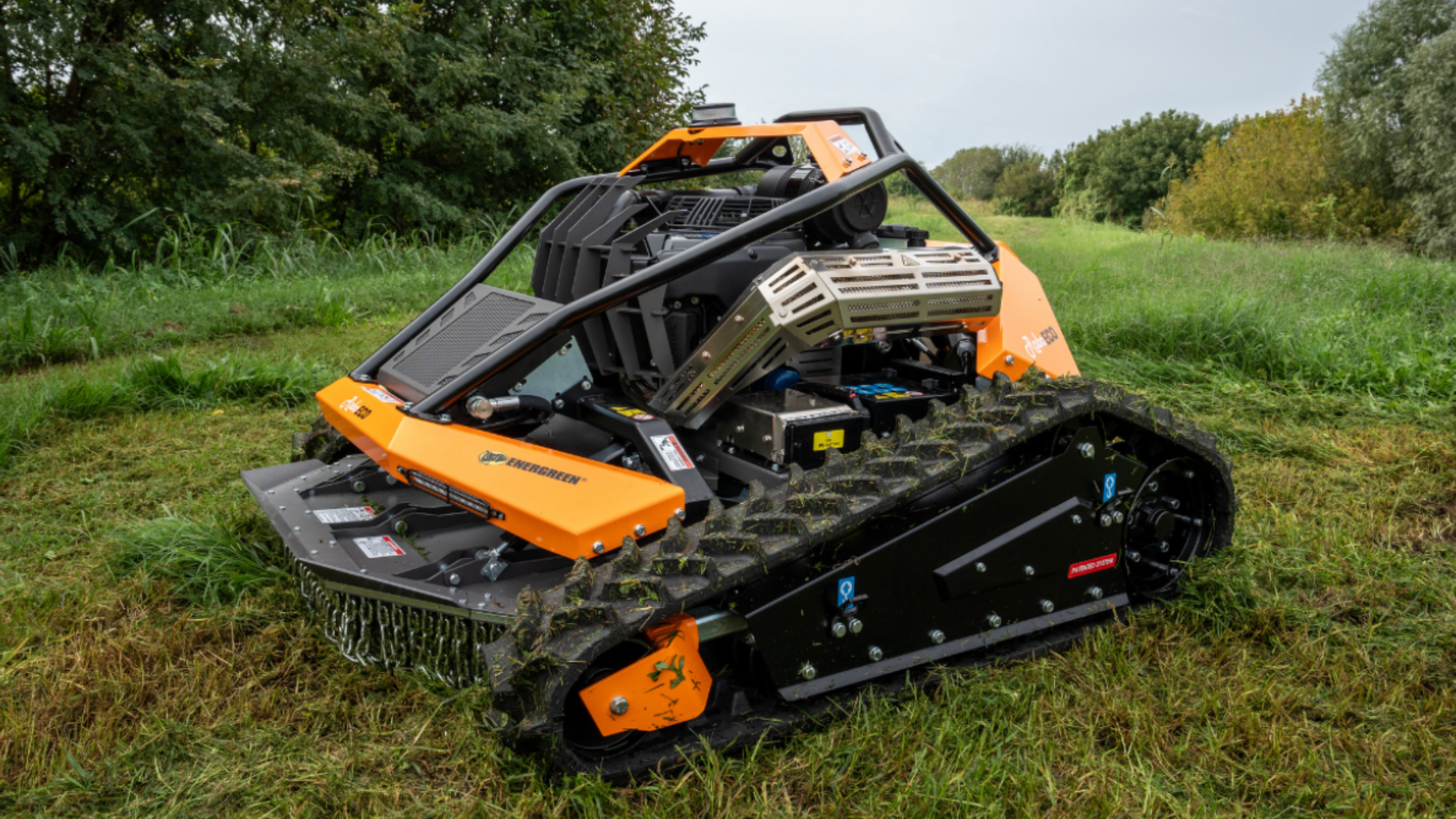
Energreen is bringing a new machine to CONEXPO-CON/AGG 2026 that’s built for one job: mowing steep slopes without putting an operator in harm’s way. The company has finally unveiled the ROBO ECO, its latest remote-controlled slope mower, promising a much-needed safer alternative to the traditional ride-on machines we all know are high-risk when tackling embankments, rights-of-way, and tricky, uneven terrain. It solves a problem every crew knows about: sidehill mowing, where a single wet patch or soft shoulder can quickly turn into a rollover.
The ROBO ECO is also part of Energreen’s wider plans. As anyone familiar with the company will know, it already makes an impressive range of remote-controlled machines, from 25-horsepower compact models up to heavy-duty behemoths that can muster a whopping 100 horsepower. ROBO ECO slots neatly into that lineup as a lighter, more user-friendly option, designed specifically for grass mowing rather than the heavy-duty brush-clearing for which some other models are used. Energreen describes it as a compact solution specifically for steep slope maintenance, a niche that’s been growing as municipalities and contractors seek safer ways to handle roadside and infrastructure mowing.
What ROBO ECO is designed to solve
The biggest difference between ROBO ECO and a traditional mower is simple: nobody rides on it. Energreen says the machine can be operated from up to 500 feet away, allowing the operator to stay out of the danger zone while still keeping the mower working. That matters on steep slopes, near traffic, around water, or in any area where the ground is unpredictable. Remote operation also gives crews a visibility advantage. Instead of being seated low on a machine and fighting the angle, the operator can stand in a safer position where they can see the cutting path and the terrain ahead.
Energreen built the ROBO ECO around a patented tracked undercarriage, designed to maintain traction and reduce the sudden sliding that makes slope mowing so stressful. Anyone who has watched a wheeled mower lose grip on a wet incline knows how quickly things can go sideways. Tracks don’t remove risk entirely, but they give the machine a much better chance of staying planted when conditions aren’t perfect.
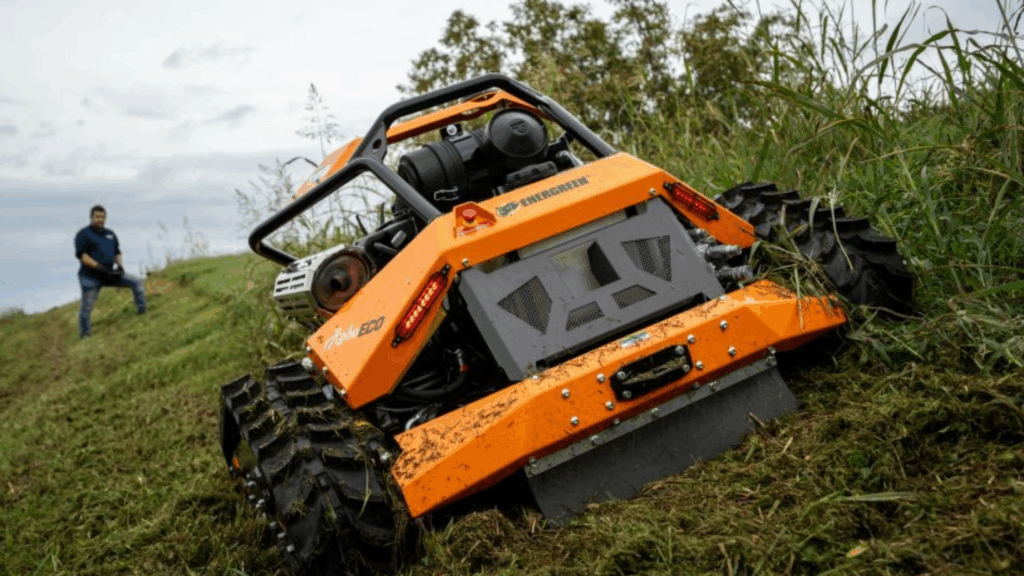
On the mowing side, the ROBO ECO comes with a 40-inch bi-directional cutting deck. Energreen also notes that cutting height can be adjusted remotely. Energreen says the ROBO ECO mower can be controlled from a safe distance of up to 500 feet away, which is a big deal when you’re working on steep slopes, near traffic, or around water—anywhere the terrain’s unpredictable. You’re not stuck in the danger zone, but you can still keep a close eye on things as the mower gets the job done.
On steep slopes, stopping to manually adjust the deck is a real pain, and in some cases it’s downright dangerous. With remote height adjustment, you stay safe while still having the flexibility to tweak settings on the fly, when you hit a patch of long grass or the ground dips unexpectedly, for instance.
Specs that make the job a little easier
Instead of over-engineering the power train, Energreen opted for a 26-horsepower Honda engine with electronic fuel injection—a great call for the kind of users who will be running this machine. Honda engines are tried and true, with a reputation for reliability and durability. Plus, service technicians are used to working on them, which keeps maintenance costs down. EFI also helps ensure consistent performance during long mowing runs, especially in conditions where machines are operating for hours at a time.
Energreen is clearly aiming this machine at contractors, municipalities, and infrastructure operators who mow steep terrain as part of routine maintenance. These are crews who don’t want gimmicks. They want stability, predictable control, and a machine that can do the job without forcing someone to sit on a slope all day.
ROBO ECO isn’t being marketed as a futuristic novelty. It’s being marketed as a practical tool that removes one of the most dangerous parts of slope mowing: the operator’s seat. And in a world where crews are stretched thin and safety standards keep tightening, that’s the kind of change that actually matters.
If you want more coverage on construction equipment, jobsite technology, and the machines shaping modern field work, subscribe to the Under the Hard Hat newsletter.