
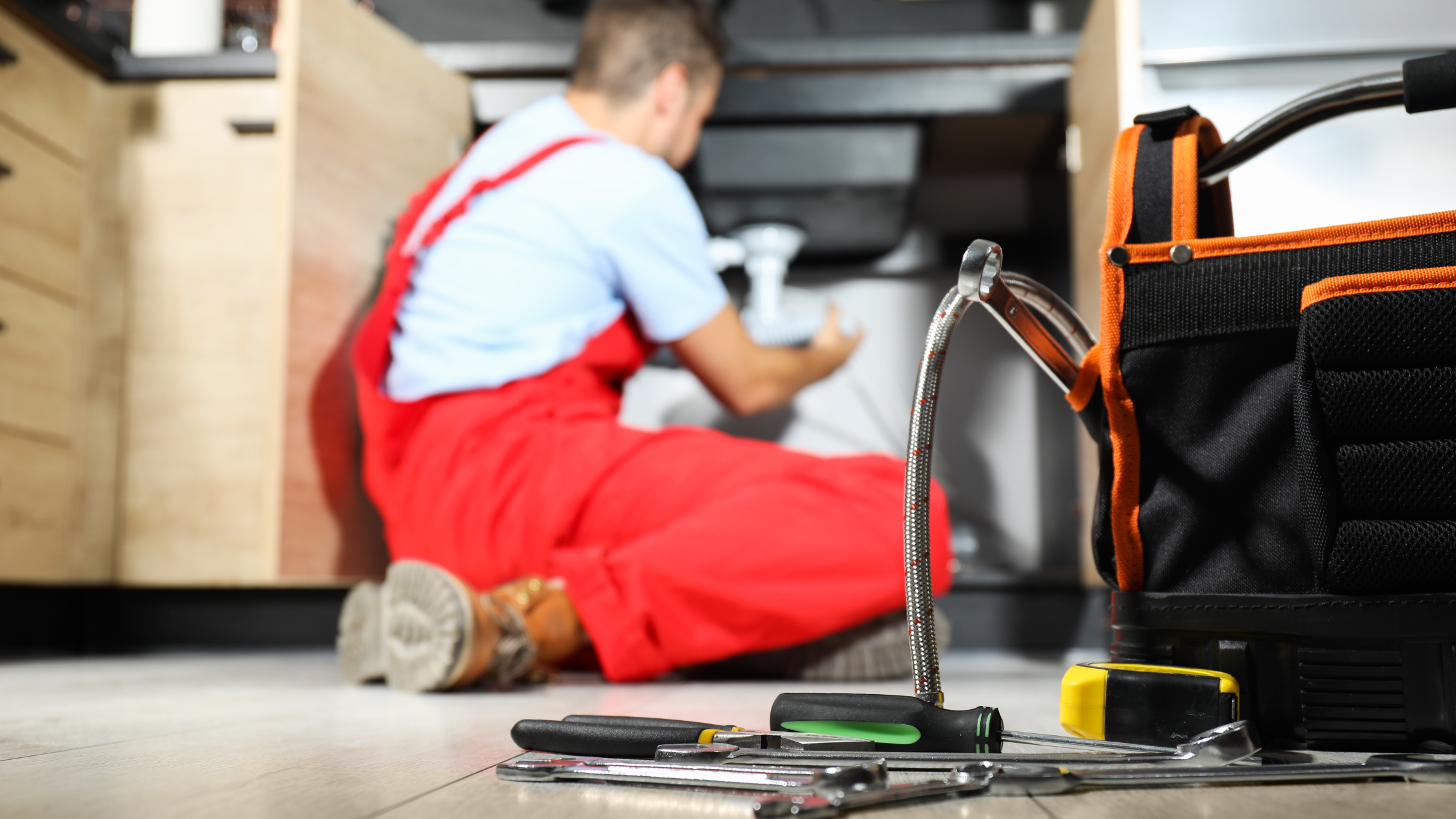
Your tool bag says a lot about how seriously you take your trade. The right tool kit makes you faster, more reliable, and easier to work with on a crew. The wrong one slows you down and costs you time and money. This guide highlights the essential, field-tested tools that every plumber needs to handle repairs and new installs with speed and accuracy. Whether you’re just starting your apprenticeship or looking to upgrade your current bag, we’ll give you the top must-have tools for plumbers and tips for building a smarter kit as your career grows.
As an Amazon Associate, we earn from qualifying purchases. Some of the links below are affiliate links, meaning that at no extra cost to you, if you click through and make a purchase, we may earn a commission.
What makes a tool must-have in this trade?
A tool becomes a true must-have when it proves its value through daily performance and reliability. In the plumbing world, you can’t afford to have a kit filled with items that only get used once a year. Professionals look for gear that meets a specific set of standards before it earns a permanent spot in their truck.
Frequent use on the job
The most important tools in your bag are the ones you reach for on nearly every service call or at a construction site. Whether you’re fixing a simple faucet leak or installing a new water line, these items are always by your side. If a tool spends more time at the bottom of your bag than in your hand, it is likely a specialized item rather than a foundational one.
Role in core plumbing tasks
A must-have tool is directly connected to the trade’s primary functions. Plumbing is largely about four things: measuring, gripping, cutting, and joining pipes. Any tool that makes one of these core tasks faster or more accurate is essential. For example, a tool that helps you get a perfect grip on a slick metal pipe in a dark crawlspace is much more valuable than a generic multi-tool that does several jobs poorly.
Durability and reliability
The real pros invest in better gear because they know that a tool snapping halfway through a job costs them time and money. Cheaper options might look like the real thing, but they rarely have the features required for daily field work, such as hardened steel or heavy-duty joints. A pro-grade wrench or cutter will survive a hard drop onto a concrete floor, a soak in a flooded basement, or thick grease without failing.
Versatility across environments
The best gear works just as well in a home bathroom as it does in a massive commercial kitchen or a factory. Being versatile is key because it lets you carry a lighter bag while still being ready for any situation. A must-have tool needs to handle all kinds of pipe materials, like copper, PVC, or galvanized steel, without making you reach for a different attachment for every single task.
8 must-have tools for plumbers
1. Pipe wrenches (10” and 14”)
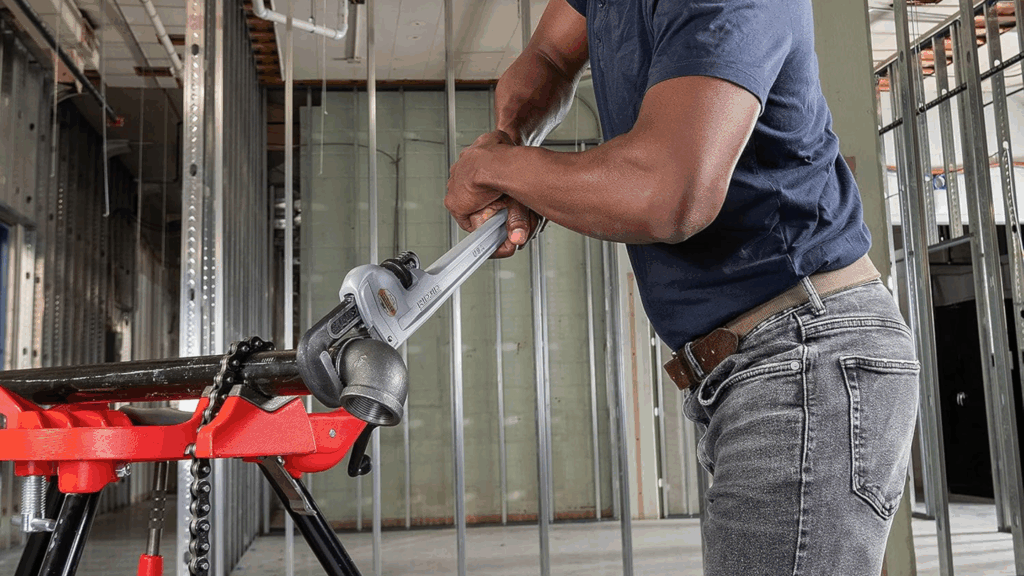
The pipe wrench is the iconic symbol of the trade for a reason. Its main role is to grip and turn threaded pipes and heavy-duty fittings. Because the jaws have sharp teeth that bite into metal, they provide the massive leverage needed to loosen old, rusted connections or tighten new ones. You can’t handle steel or iron pipework without a heavy-duty wrench. Most pros carry both a 10” and a 14” version to handle different pipe diameters and tight spaces.
One thing worth knowing earlier: keep the wrench jaws clean and grease-free. A slick jaw on an old fitting leads to stripped connections.
Try these: RIDGID 31100 Model 818 Aluminum Straight Pipe Wrench | DURATECH 3-Piece Heavy Duty Aluminum Straight Pipe Wrench Set
2. Tongue-and-groove pliers
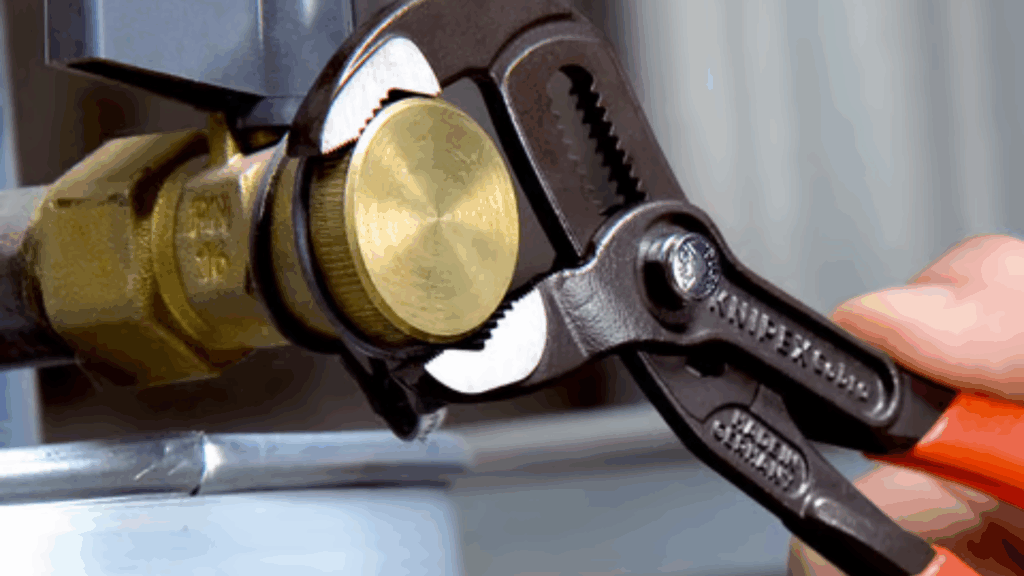
These versatile gripping tools are used for everything from tightening nuts and bolts to holding plastic fittings. Unlike a standard pair of pliers, you can adjust the jaw size to fit a wide range of objects. Most plumbers carry two pairs at all times. This allows you to use one pair to hold a pipe steady while the second pair turns the fitting, preventing the entire system from twisting.
If you’re deciding between brands for pliers, the KNIPEX Cobras are some of the best for their locking stability—they’re worth the extra cost.
Try these: Channellock Tongue and Groove Plier 420-1.5-Inch Jaw Capacity | KNIPEX Cobra® High-Tech Water Pump Pliers
3. Tubing cutter
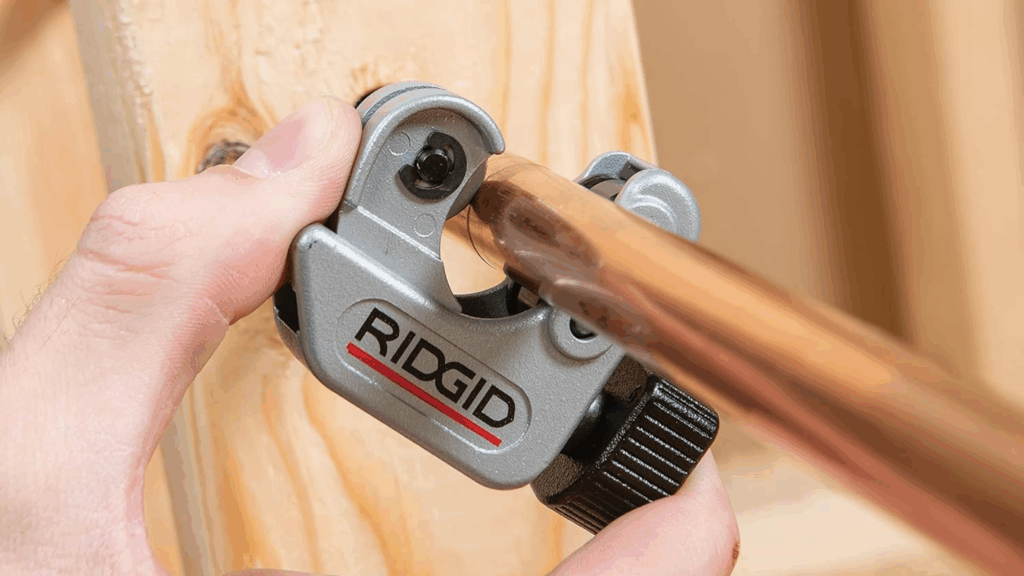
A tubing cutter is used to make clean, square cuts in copper and plastic tubing. While you could technically use a saw, a dedicated cutter is a must-have because it keeps the end of the pipe perfectly straight and smooth. Hacksaws often leave behind jagged burrs and uneven edges that can cause leaks. A professional cutter gives you a clean surface, ready for a perfect solder or press connection every time.
If you’re regularly working in tight spaces, consider adding a mini tubing cutter alongside the standard size. They’re inexpensive and can save you time in cramped conditions.
Try these: RIDGID 23493 PC-1375ML Single Stroke Plastic Pipe and Tubing Cutter for 1/8″ to 1-3/8″ PVC | RIDGID 40617 Model 101 Close Quarters Tubing Cutter
4. Basin wrench
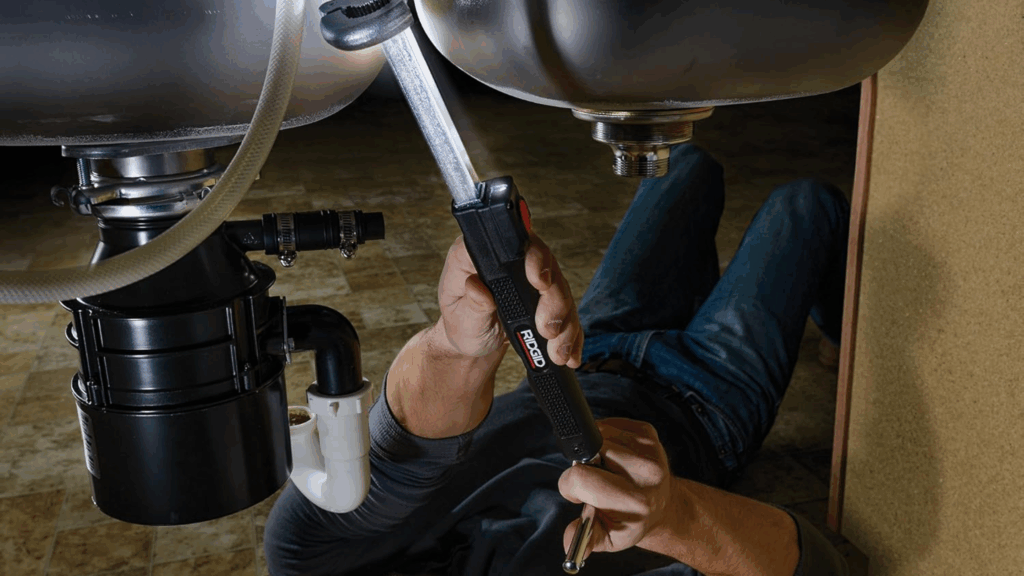
The basin wrench is a specialized tool designed to reach the nuts tucked away behind sinks and faucets. It has a long, skinny handle and a pivoting jaw that can reach deep into the dark corners of a cabinet where your hands cannot fit. This tool solves a common field problem because standard wrenches are almost always too wide or too short to squeeze into those cramped under-sink spaces. Without one, a simple job like swapping out a kitchen faucet can quickly turn into an impossible struggle.
Try this: RIDGID Telescoping Basin Wrench
5. Torpedo level
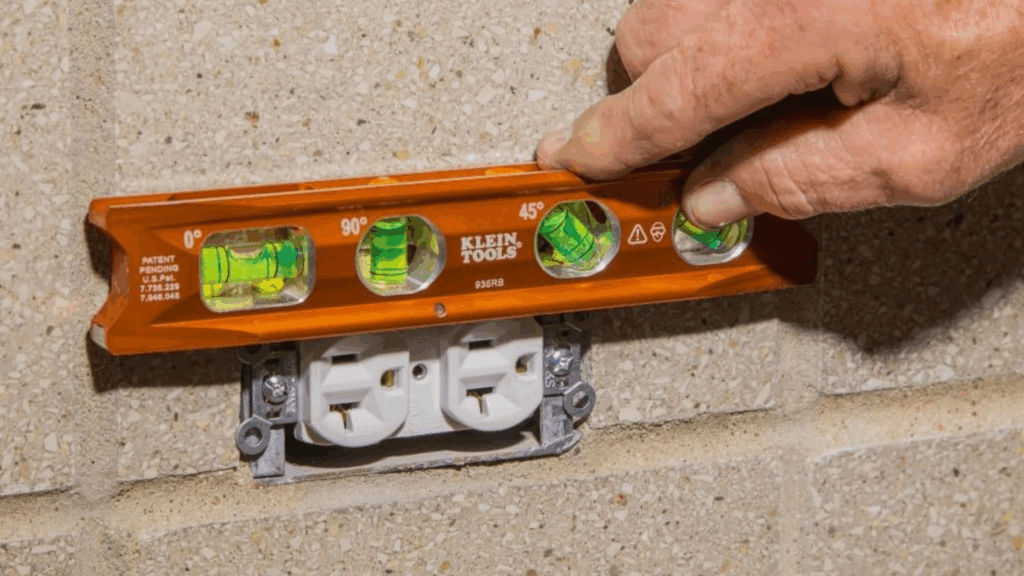
Accuracy is non-negotiable because water needs gravity to flow correctly. A torpedo level is used to ensure that drainage pipes have the right pitch or slope. Most plumbing professionals use a magnetic version that can stick to metal pipes while they work. This tool prevents major drainage failures and ensures your work always meets local building codes.
Try these: Milwaukee Compact Billet Torpedo Level │ Klein Tools 935RB Torpedo Level
6. PEX crimp tool
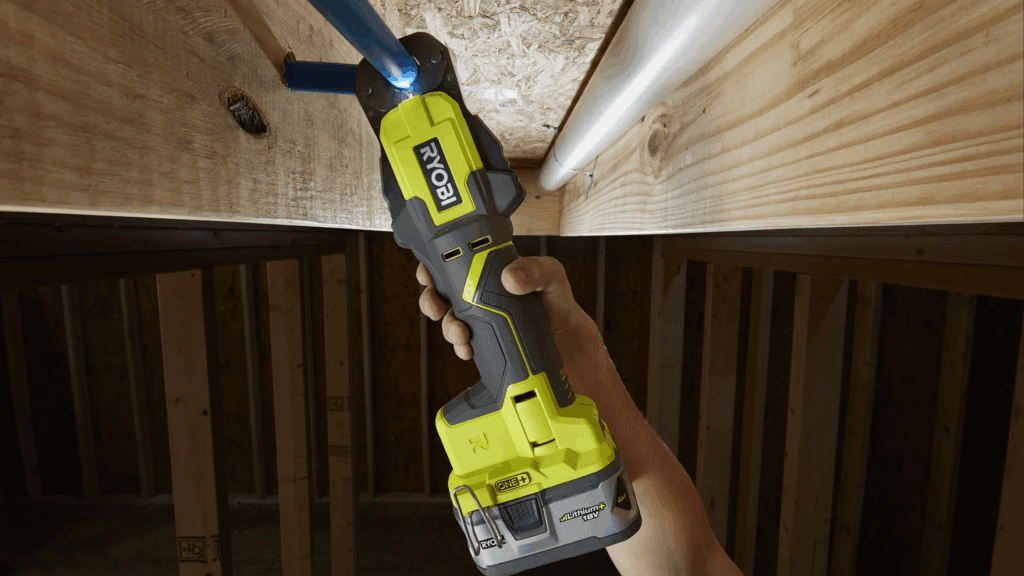
PEX (cross-linked polyethylene) has become the standard material for modern residential plumbing. A PEX crimp tool is used to secure metal rings and fittings onto these flexible plastic pipes. Since PEX is used in almost all new home installations and renovations today, you cannot call yourself a professional without this tool in your bag for reliable, leak-proof joints.
One thing to check before you start: if you’re working across various regions, confirm whether local codes prefer crimp- or clamp-style connections. Both are widely used, but they’re not always interchangeable on the same job.
Try these: RYOBI 18V ONE+ PEX Crimp Ring Press Tool │ iCrimp PEX Clamp Tool Kit
7. Hacksaw
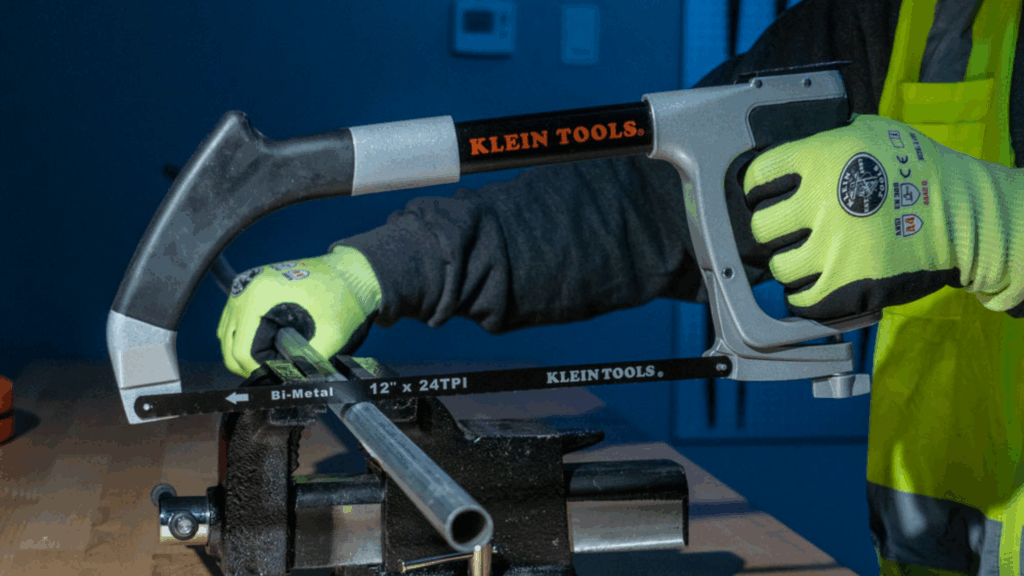
Even with all the high-tech cutters available, a trusty hacksaw is still a vital part of the kit. It is the fail-safe tool used for cutting through metal pipes, rusted bolts, or thick plastic when a tubing cutter simply cannot fit. It is especially useful during demolition work, where speed and the ability to cut through multiple materials at once take precedence over a perfectly smooth finish.
Try these: Klein Tools 31430 High Tension Hacksaw │ Lenox 12-in High Tension Hacksaw │ DEWALT 5-in-1 Hack Saw
8. Plunger (professional bellows style)
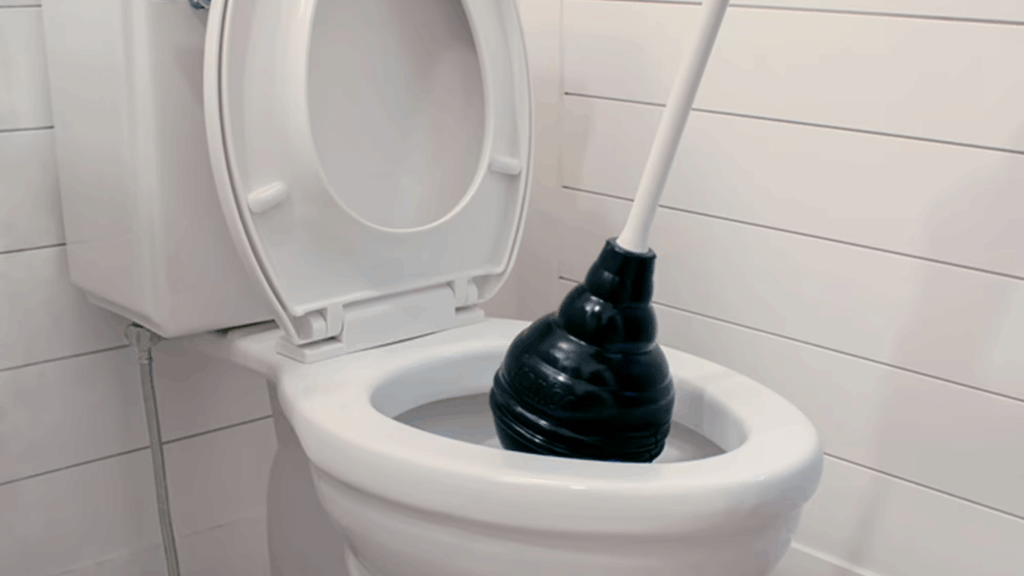
A professional-grade bellows plunger is the first line of defense in service work. Unlike the flat rubber plungers found in most homes, the bellows style uses a large air chamber to push a high-volume blast of water through a clog. It is often the fastest way to solve a customer’s problem without having to pull out a heavy drain snake or specialized machinery.
Try these: Jackson Supplies Professional Bellows Accordion Toilet Plunger │ Korky BeehiveMAX Heavy Duty Toilet Plunger
Which tools should apprentices buy first?
You don’t need to buy every tool on the shelf before your first day. Most master plumbers expect you to show up with a basic set of hand tools, while the shop usually provides the more expensive equipment.
The first day kit
Your goal is to be helpful and ready to work. You should focus on basic hand tools that help you with measuring and layout. A high-quality tape measure, a torpedo level, and a pair of tongue-and-groove pliers are the best places to start. These items are relatively affordable and show your lead plumber that you are ready to handle the foundational tasks of the trade.
Employer-supplied gear
One of the benefits of being an apprentice is that you don’t have to shoulder the cost of heavy machinery right away. Many companies provide expensive power tools, such as cordless drills, reciprocating saws, and large electric drain snakes. Before you spend hundreds of dollars on a power tool kit, wait to see what your employer provides and which brands they prefer to use on their job sites.
The wait-and-see strategy
It’s a good idea to hold off on buying specialized kits until you know exactly what kind of plumbing you’ll be doing most of the time. For example, medical gas tools or high-end hydronic testing gear are very expensive and only useful in specific niches. Spend your first year or two mastering the basics and seeing which part of the industry interests you. Once you find your niche, invest in the specialized tools that will actually help you earn more money.
How to build the right tool kit for the work you actually do
As you move through your career, your toolkit will naturally change based on the environment you work in. A plumber working on a skyscraper has very different needs than one responding to a residential backup.
Service vs. new construction
If you decide to go into service work, your tool bag will mostly be full of diagnostic gear and various repair parts. You will need a bigger mix of wrenches and small hand tools so you can fix faucets and valves from different brands. On the other hand, if you choose new construction or rough-in work, your kit will focus more on speed and moving bulk material. You will likely prioritize larger saws, heavy-duty drills, and specialized tools made for joining long runs of pipe as quickly as possible.
The weight factor
Plumbing gear is incredibly heavy, and lugging a massive bag around all day can eventually lead to serious back and shoulder pain. When you are picking out a tool bag or bucket, look for one that helps you stay organized while spreading the weight out evenly. Many modern pros have switched to backpack-style tool bags to keep their hands free and their spines properly aligned. The secret is to carry only the tools you need for the current task, rather than hauling every piece of gear you own.
Quality over quantity
High-end professional tools are a smarter long-term investment—better warranties, better ergonomics, and you won’t need to replace them every few years. The plumbers who have been in the trade for decades often use the same tools they bought when they started. It’s not nostalgia—it’s proof that investing in quality tools pays off. Add one or two professional-grade tools to your bag every few months rather than buying everything at once, and you’ll build a collection of reliable gear that will last for your entire career.
Learn more about starting your career in the trades:
- How to become a plumber in 5 simple steps
- Plumbing apprenticeship: how to get one and become certified
- The top 7 plumbing apprenticeship programs in North America
Your tool bag evolves as your career does. For more breakdowns on gear, skills, and career paths shaping the trades, subscribe to the Under the Hard Hat newsletter.