Industrial cleaning inside a kiln, furnace, boiler, or tank remains one of the most dangerous jobs in construction. The work is labor-intensive, high-risk, and often performed manually, leaving workers exposed to extreme heat, confined spaces, and high-pressure systems. While this work is essential, the descaling process hasn’t evolved enough over the years to fully protect workers. As a result, safety risks, delays, and inefficiencies continue to impact both timelines and profitability.
The problem with traditional descaling
Traditional descaling methods pose several challenges for workers, making the work unpredictable and physically draining.
- High exposure to risk: Manual cleaning often puts workers in direct contact with falling debris, silica dust, and extreme heat—sometimes reaching 32°F (80°C). Working with high-pressure systems adds another layer of danger in an already hazardous environment.
- Expensive downtime: Industrial cleaning generally requires long shutdowns. Workers need to prepare for entry and set up scaffolding before work can start, which slows progress and increases downtime. For contractors, these factors can cause massive delays and directly impact client timelines and profit margins.
- Inconsistent results: Going down the manual route means that results are usually difficult to predict. They’re affected by various factors, such as crew skill and endurance, which often lead to missed areas and rework.
- Physical strain: Workers often bear the brunt of the physically demanding descaling process. They risk sustaining vibration injuries and experiencing fatigue from working with handheld tools for long periods.
Despite access to modern equipment and techniques, the core process of descaling hasn’t changed much, making industrial cleaning a high-risk job. What’s evident is that workers need a better alternative; something that can simplify the process and make it safer.
What makes the Brokk Descaler different
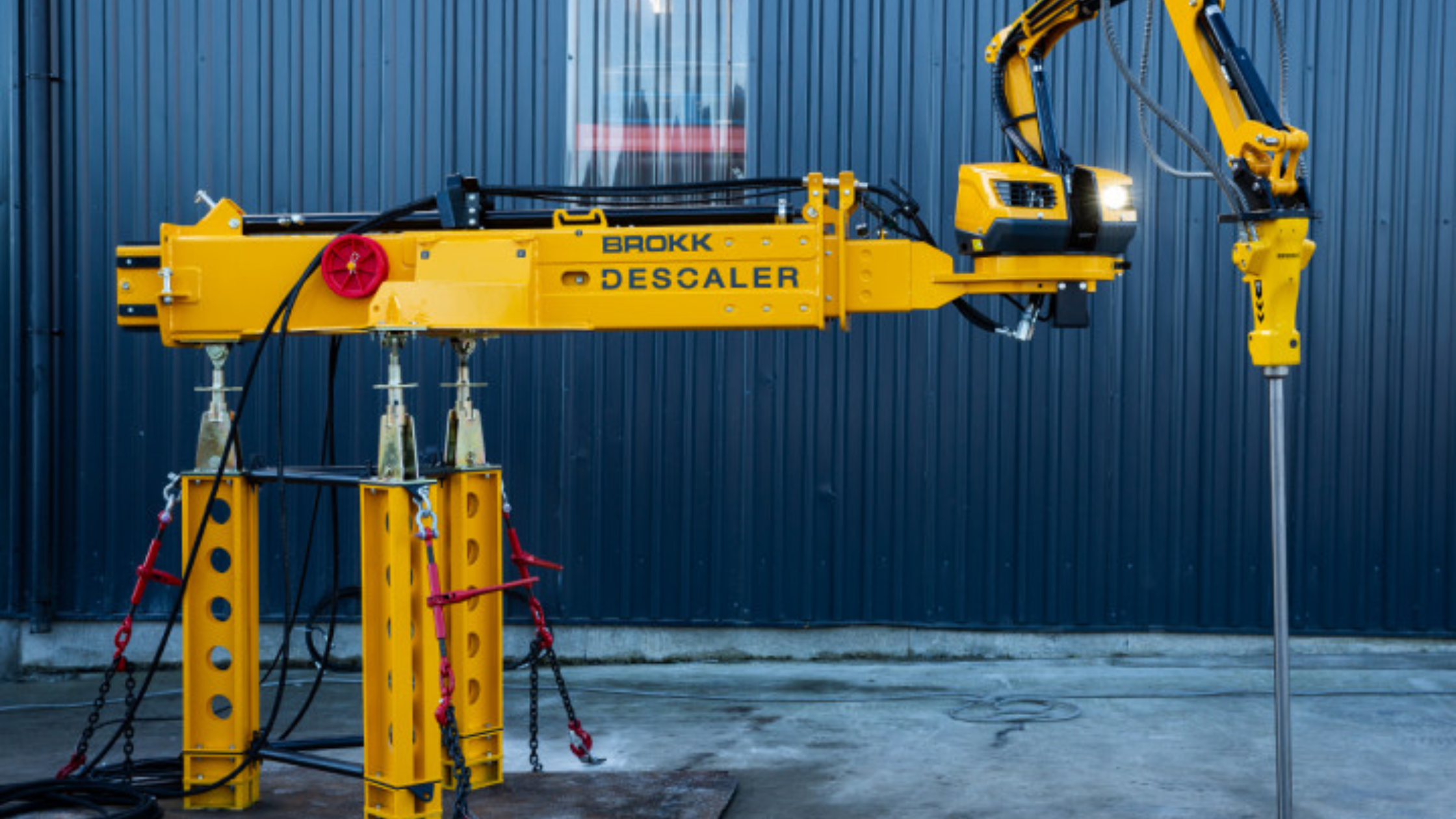
New remote-controlled robotic systems, such as the Brokk Descaler, are designed to handle descaling in high-risk environments using high-pressure water jets. The machine is equipped with a telescopic boom for overhead reach and is designed to operate in confined, hazardous environments such as preheater towers, kilns, and industrial plants.
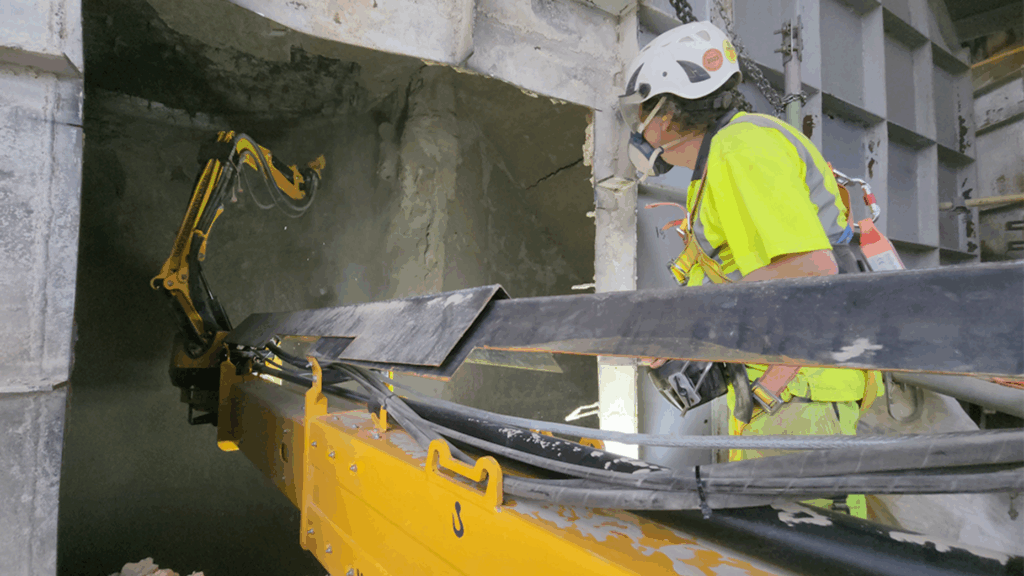
Rather than sending workers into danger zones, the Brokk Descaler allows them to remain at a safe distance while the machine does the work, offering a noticeable safety upgrade for those previously at risk.
Improving safety in high-risk areas
By taking workers out of the danger zone, tools like the Brokk Descaler reduce direct exposure to heat, falling debris, dust, and high-pressure systems. This, in turn, creates safer working conditions and complies with increasingly strict safety regulations.
Safer environments also offer contractors a major advantage in addressing labor challenges. High-risk jobs are becoming harder to staff, and reducing exposure makes it easier for contractors to hire operators while reducing insurance and liability costs.
“Brokk robots have been removing people from overhead coating and refractory in cement kilns around the world for ages. With this solution, we can also protect the workers in the preheater tower, where the risk of falling debris is as obvious as in a kiln,” said Joakim Furtenback, international sales director at Brokk AB, Sweden.
Faster, more controlled cleaning
Beyond safety, the Brokk Descaler offers greater efficiency and consistency.
It allows for more precise, targeted removal of buildup and better access to hard-to-reach areas. Its telescopic boom can extend by one or two sections, enabling it to work in vessels up to 9.5 m in diameter, while it can be set up in less than three hours.
Without the need for scaffolding or extensive manual prep, contractors can minimize downtime and complete projects faster. Results also become more predictable and easier to control, as performance is no longer affected by operator fatigue or access.
What this means for contractors
For contractors, the impact of robotic descaling machines goes beyond just safety.
Fewer injuries and safer working conditions can lower insurance costs and minimize project delays. At the same time, greater consistency and less rework reduce downtime and improve overall efficiency, keeping projects on time and enabling teams to get more work done in less time.
Faster turnaround times and more predictable outcomes mean contractors can take on high-risk jobs with more confidence and without exposing workers to danger.
A broader shift toward remote operations
The Brokk Descaler reflects a growing industry trend towards the adoption of robotics and remote-controlled equipment. Contractors are adopting tools that automate high-risk tasks and remove workers from hazardous environments.
Applications now extend beyond industrial cleaning into mining, cement plants, maintenance, and demolition. As these technologies evolve, remote-first operations are becoming a practical and needed approach.
In industries where manual, high-risk operations were once the norm, solutions like the Brokk Descaler offer more predictable outcomes, faster turnaround times, and safer work conditions.
Stay connected with the latest updates on innovations like the Brokk Descaler by subscribing to our weekly newsletter.