
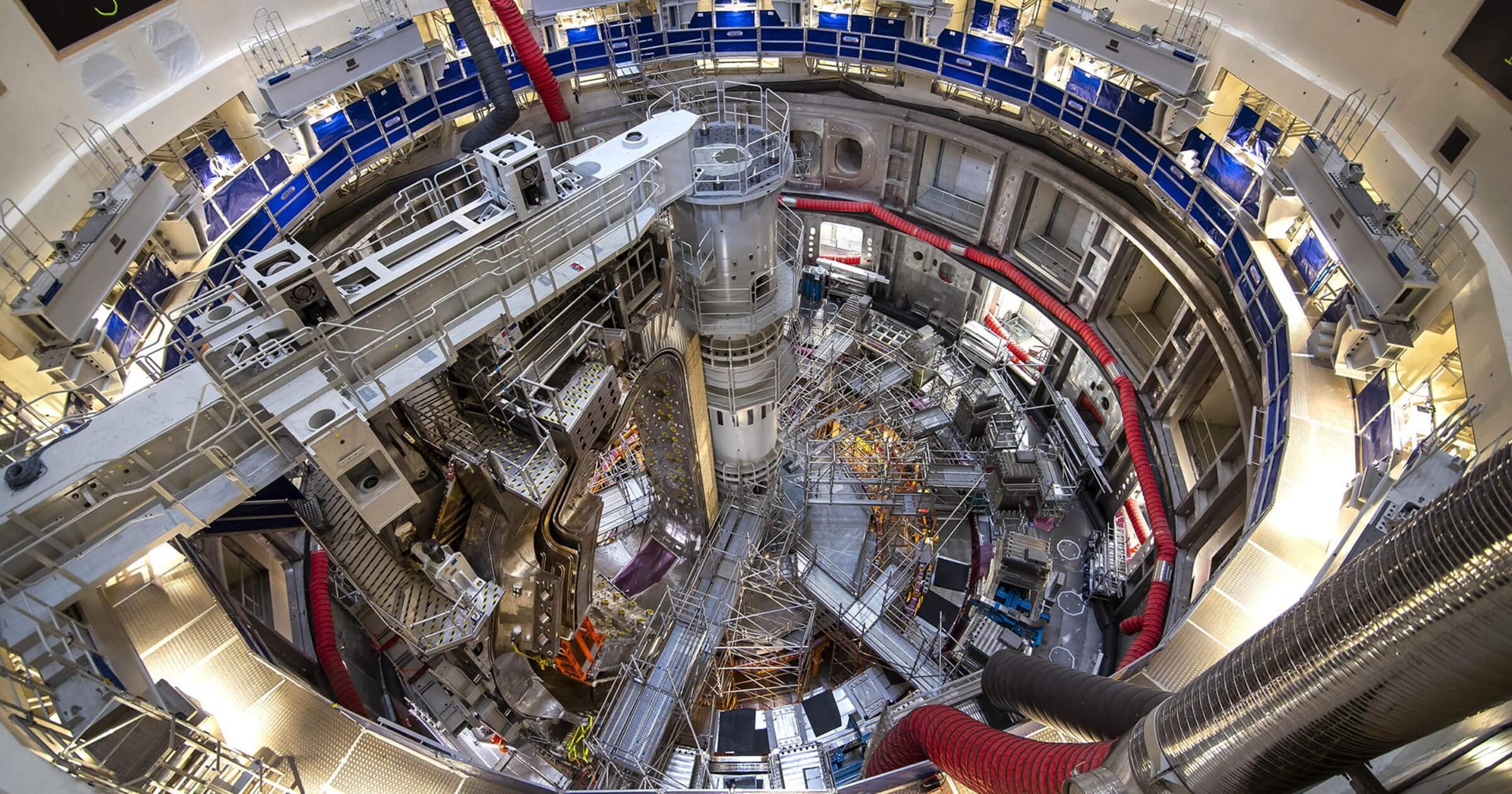
From a record-breaking tunnel between Denmark and Germany to a city in Saudi Arabia built in a straight line, 2026 is shaping up to be a big year for construction. Engineers and architects are tackling major challenges worldwide through new materials, smarter designs, and greener technologies. From France’s fusion reactor to Vietnam’s new mega-airport, these 10 innovative construction projects show how creativity and construction are coming together to build the future.
10 must see innovative construction projects under construction
Project 1: Fehmarnbelt Tunnel, Denmark/Germany
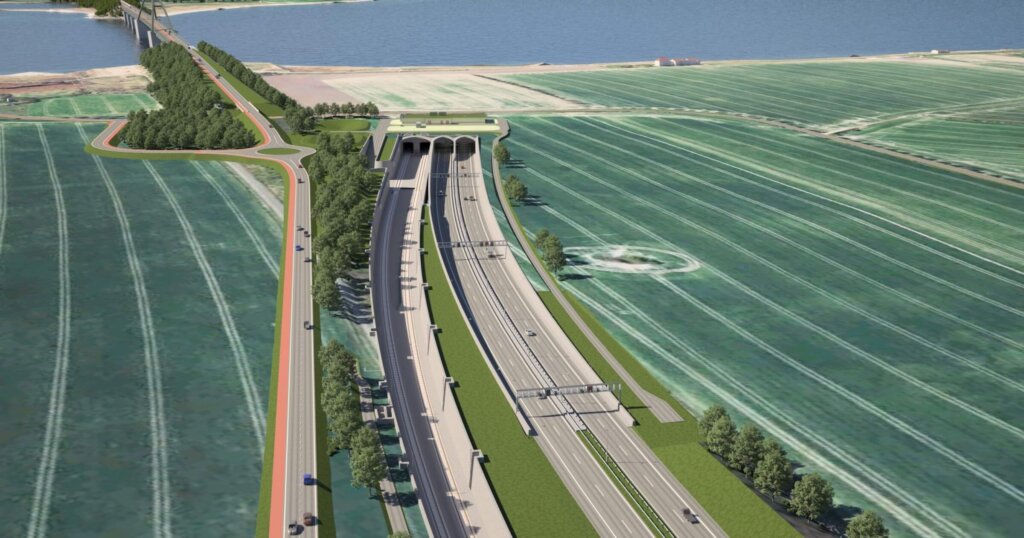
- Location: Between Rødbyhavn (Denmark) and Puttgarden (Germany)
- Specs: 18 km (11 mi) immersed road and rail tunnel, world’s longest of its kind
- Expected timeline: Completion expected by 2029
The Fehmarnbelt Tunnel is one of Europe’s most innovative construction projects, linking Scandinavia to mainland Europe through an underwater connection between Denmark and Germany. Once complete, it will cut travel time between Copenhagen and Hamburg from nearly 5 hours to just 2.5 hours.
Led by Femern A/S, the project uses a state-of-the-art immersed tube design, built from massive precast concrete elements constructed on land and lowered into a trench on the seabed. The project’s innovation lies in the incredible precision needed to place each tunnel segment while protecting the delicate Baltic Sea environment.
Engineers are focusing on sustainability by using recycled materials and energy-saving methods to keep the project’s carbon output low. Once complete, the tunnel will carry both cars and trains, setting a new standard for cross-border travel that’s faster, greener, and better connected.
Project 2: THE LINE (NEOM), Saudi Arabia
- Location: Tabuk Province, Saudi Arabia
- Specs: 170 km long linear city, 500 m tall, 200 m wide
- Expected timeline: Ongoing through 2030
In Saudi Arabia’s NEOM region, THE LINE is rewriting the rulebook for urban design. This bold project envisions a 170-kilometer-long linear city with no roads, cars, or traditional infrastructure. Instead, residents will live in vertical communities stacked within two parallel mirrored towers that blend seamlessly into the desert landscape.
Every aspect of life in THE LINE is powered by 100% renewable energy, with AI-managed transit systems, smart climate control, and walkable neighborhoods that keep all daily needs within a five-minute reach. Developed as part of Saudi Arabia’s larger push toward sustainable mega-developments, the project reflects the country’s growing reputation for construction projects that merge technology, sustainability, and innovation.
When complete, THE LINE will house up to 9 million people and serve as a living model of what zero-carbon urban living could look like in the decades ahead.
Project 3: ITER Fusion Reactor, Cadarache, France
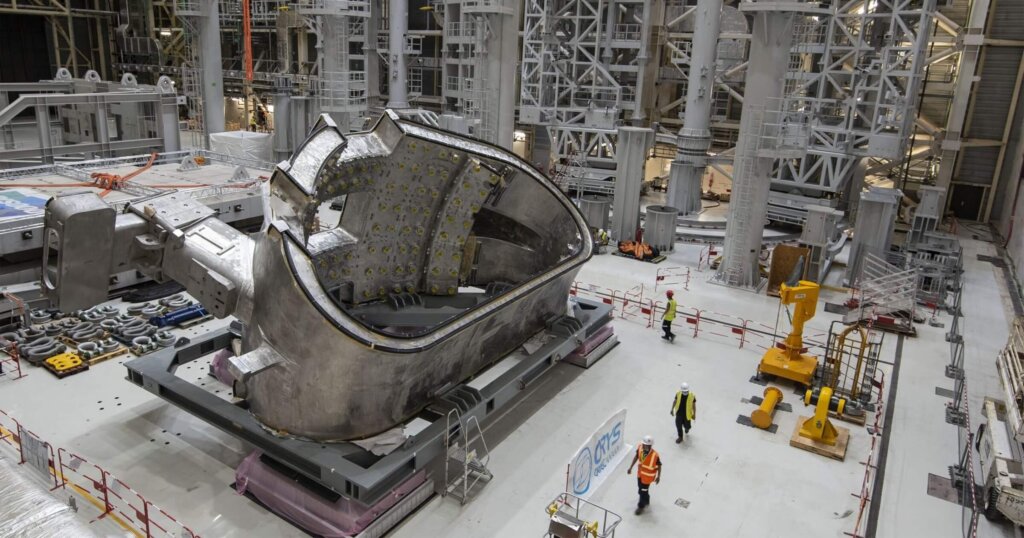
- Location: Provence, France
- Specs: 23,000-ton tokamak reactor
- Expected timeline: First plasma planned for 2026
Deep in southern France, scientists and engineers from around the world are working together on ITER, one of the most ambitious energy projects in history. The goal is to recreate the same process that powers the sun—nuclear fusion—to generate clean, nearly limitless energy here on Earth.
The heart of the facility is a massive tokamak reactor, a doughnut-shaped chamber designed to heat hydrogen atoms to over 150M degrees Celsius. At that temperature, atoms fuse to release energy without producing greenhouse gases or long-lived radioactive waste.
With contributions from 35 countries, including the U.S., China, Japan, and the European Union, ITER is an example of global cooperation in the fight against climate change. If successful, it could prove that fusion is a practical, carbon-free power source for the future, changing how the world thinks about energy production.
Project 4: Sagrada Família, Barcelona, Spain
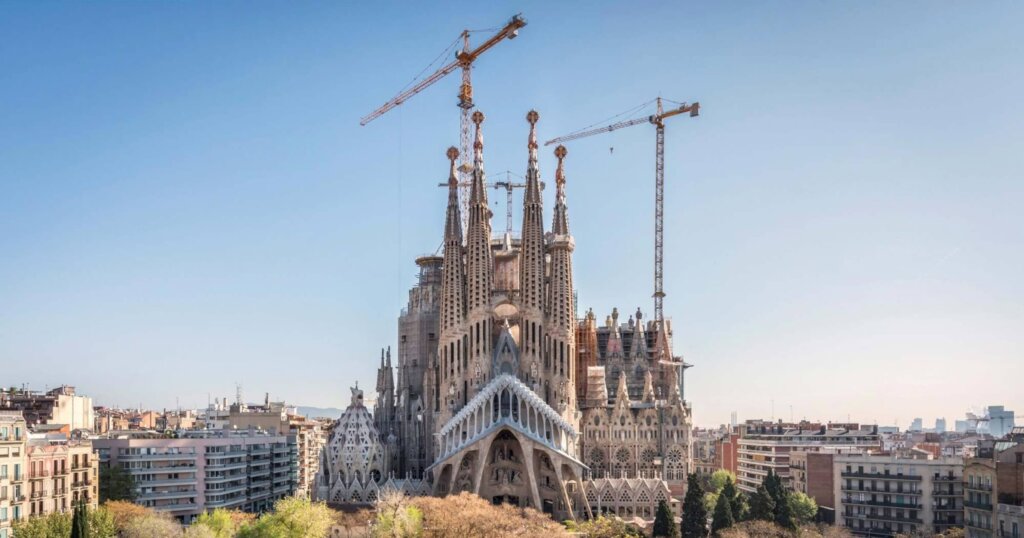
- Location: Barcelona, Catalonia, Spain
- Specs: 18 towers reaching up to 172.5 m
- Expected timeline: Completion projected for 2026
After more than 140 years of construction, Barcelona’s Sagrada Família is finally nearing completion. Designed by the legendary architect Antoni Gaudí, the basilica has become one of the world’s most recognizable landmarks, blending Gothic, Art Nouveau, and natural forms into a breathtaking display of craftsmanship and faith.
Modern technology is helping today’s builders carry out the work Gaudí started more than 140 years ago. Digital tools like 3D modeling and laser scanning let artisans recreate details that once existed only in his drawings. Though the methods are new, the dedication to his natural shapes and play of light hasn’t changed.
When the final towers are complete, including the central Tower of Jesus Christ, the Sagrada Família will stand as the tallest church in the world. It’s not just a celebration of architecture, but a powerful reminder of how art, innovation, and perseverance can span centuries.
Project 5: Cross River Rail, Brisbane, Australia
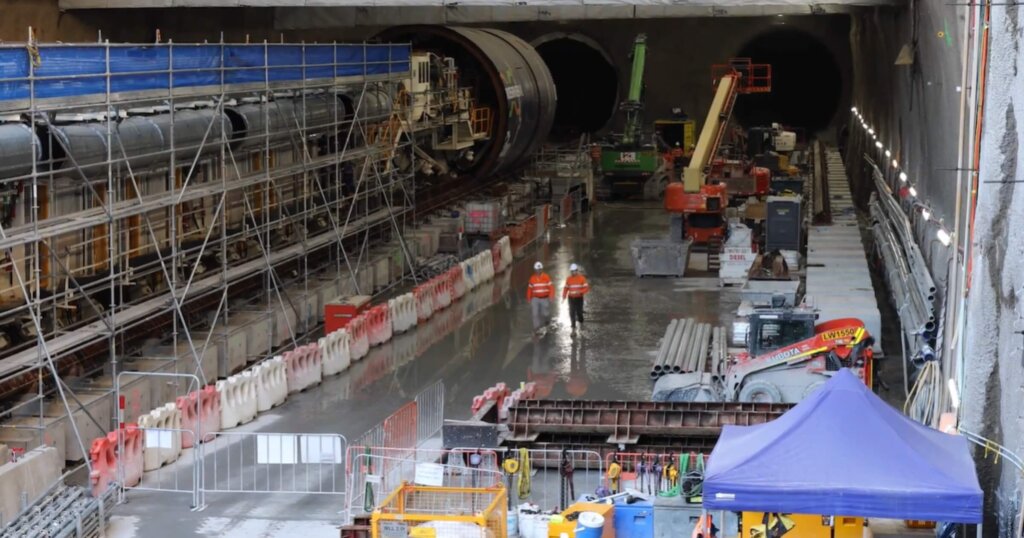
- Location: Brisbane, Queensland, Australia
- Specs: 10.2 km rail line with 5.9 km twin tunnels
- Expected timeline: Completion in 2026
Brisbane’s Cross River Rail is one of Australia’s largest transport upgrades, set to change how people move around Brisbane. Worth about $6.3B AUD, the project will build a 10.2-kilometer line under the Brisbane River to ease traffic and connect fast-growing parts of the city.
It includes nearly 6 kilometers of twin tunnels and four new underground stations with energy-saving lighting, smart ventilation, and up-to-the-minute passenger information. With new signaling systems, trains will run more smoothly and more frequently, creating a quicker, more dependable commute.
Engineered to handle Brisbane’s rapid population growth and future-proof the city’s transport network, Cross River Rail represents a major step toward sustainable urban mobility. Once complete, it will give residents a cleaner, more efficient way to move through one of Australia’s fastest-growing cities.
Project 6: Grand Paris Express, Paris, France
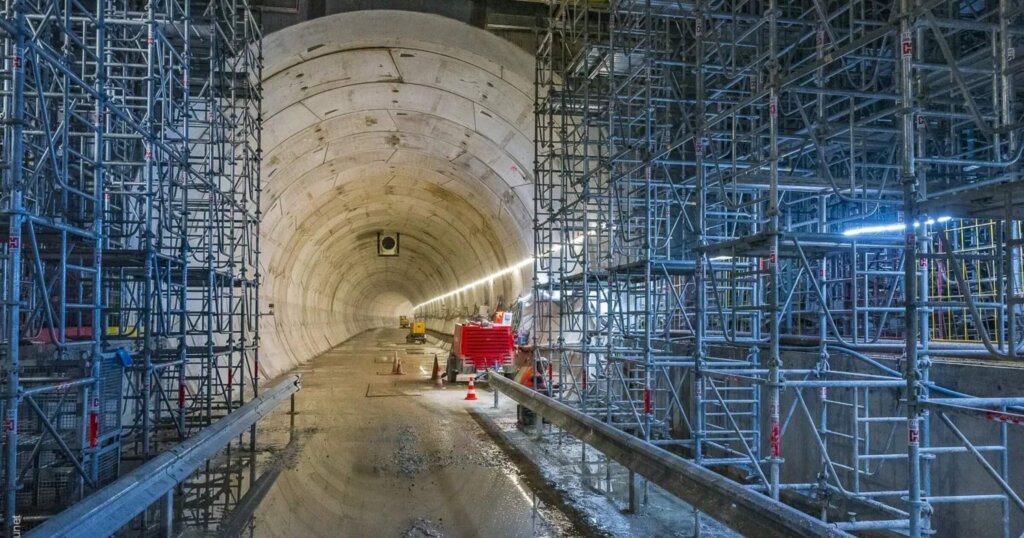
- Location: Île-de-France region
- Specs: 200 km of new automated metro lines, 68 stations
- Expected timeline: Phased completion through 2030
The Grand Paris Express is transforming how millions of people move through France’s capital and its suburbs. As Europe’s largest transport project, it will add 200 km of new, fully automated metro lines and 68 next-generation stations, connecting communities that previously relied on long, indirect commutes.
Each station’s design prioritizes sustainability and accessibility, with natural light, solar energy systems, and environmentally friendly materials. The driverless trains will operate with precision timing, improving efficiency while lowering energy use and emissions.
Beyond cutting travel times, the Grand Paris Express is helping reshape how people live and work in the region. New lines will connect business districts, universities, and suburbs that were once hard to reach, making daily life more convenient while supporting Paris’s shift toward a cleaner, more sustainable future.
Project 7: Chuo Shinkansen Maglev, Japan
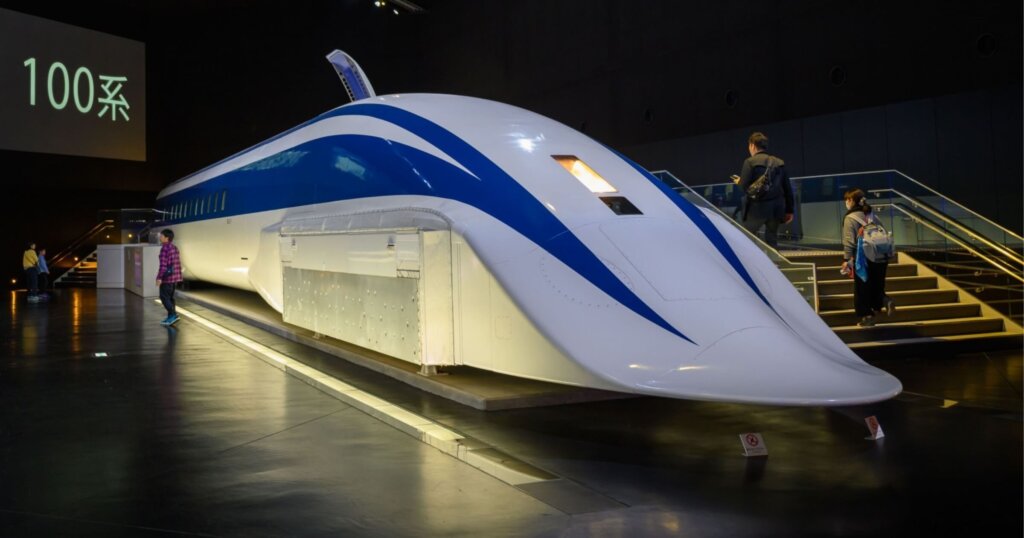
- Location: Tokyo to Nagoya (and later Osaka)
- Specs: 286 km high-speed maglev railway
- Expected timeline: Tokyo–Nagoya section by 2027
Japan’s Chuo Shinkansen Maglev is setting a new global standard for high-speed rail travel. Designed by the Central Japan Railway Company (JR Central), the system uses superconducting magnetic levitation to lift the train above its tracks, eliminating friction and allowing it to reach speeds of up to 500 km/h (311 mph).
The line is one of the most innovative construction projects in transportation and will connect travelers from Tokyo and Nagoya in just 40 minutes, cutting travel time by more than half compared to today’s bullet trains. With plans to eventually extend to Osaka, it will link three of Japan’s largest economic centers through one of the fastest and most advanced rail systems ever built.
The project’s innovation goes far beyond speed. Nearly 90 percent of the route will run underground, requiring precise tunnel engineering through mountains and urban areas. Combined with energy-efficient systems and low noise levels, the Chuo Shinkansen Maglev represents a leap forward in sustainable, high-capacity intercity transport.
Project 8: Jeddah Tower, Jeddah, Saudi Arabia
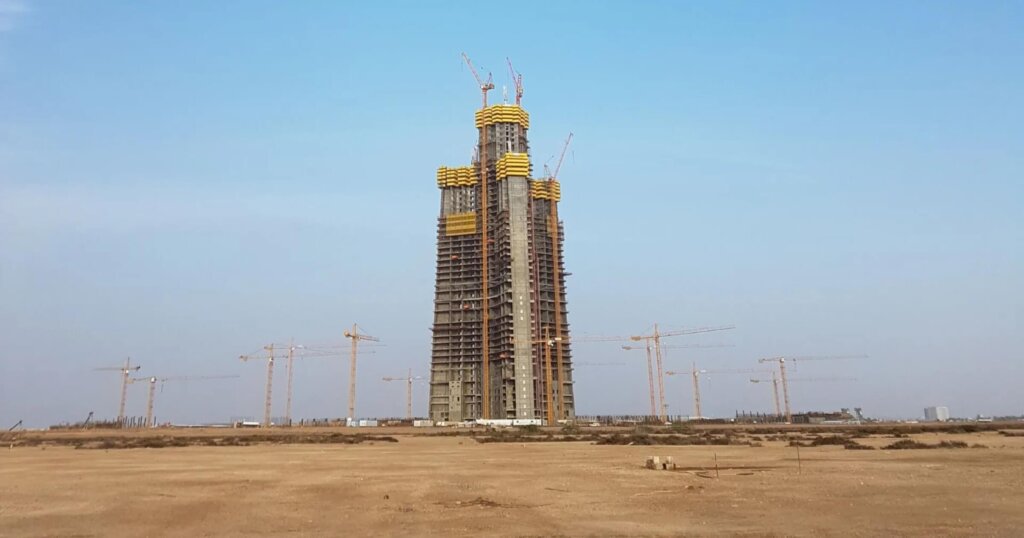
- Location: Jeddah, Saudi Arabia
- Specs: 1,000+ meters tall, world’s first kilometer-high skyscraper
- Expected timeline: Resumed 2023, completion TBD (estimated 2027)
Soaring above the skyline of Jeddah, the Jeddah Tower is poised to become the world’s first kilometer-high skyscraper. Designed by Adrian Smith + Gordon Gill Architecture, the same firm behind Dubai’s Burj Khalifa, this record-breaking structure is a bold symbol of Saudi Arabia’s growing architectural and economic ambitions.
The tower’s design features an aerodynamic shape to withstand desert winds, a high-strength concrete core, and an innovative structural support system. Inside, it will house offices, luxury residences, a hotel, and an observation deck higher than any other in the world.
Beyond its staggering height, the project reflects the country’s broader investment in next-generation supertall skyscraper construction projects. Jeddah Tower stands as both a feat of engineering and a glimpse into the future of sustainable urban design.
Project 9: Long Thanh International Airport, Vietnam
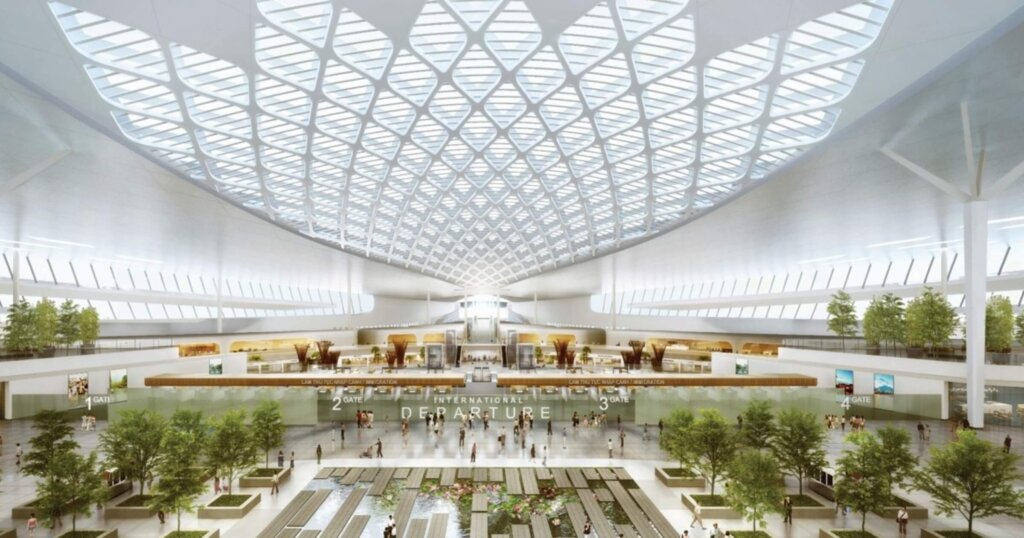
- Location: Dong Nai Province, Vietnam
- Specs: 5,000-hectare site; 100 million passengers annually (phased)
- Expected timeline: Phase 1 completion by 2026
Located about 40 km east of Ho Chi Minh City, Long Thanh International Airport is set to become Vietnam’s largest and most advanced aviation hub. The project is being built to ease congestion at Tan Son Nhat International Airport and strengthen the country’s role as a key travel and trade gateway in Southeast Asia.
Covering more than 5,000 hectares, the airport is being built in stages, with the first phase designed to handle around 25 million passengers each year. The layout focuses on sustainability, featuring open natural light, energy-saving systems, and plenty of greenery to create a calm, welcoming space for travelers.
Construction also incorporates modular building methods and advanced airfield logistics to speed up development and streamline future expansions. Once complete, Long Thanh will serve as a major regional hub, boosting Vietnam’s tourism industry, supporting international business, and connecting millions of passengers more efficiently than ever before.
Project 10: Oracle / “Stargate” Data Center Projects, U.S.
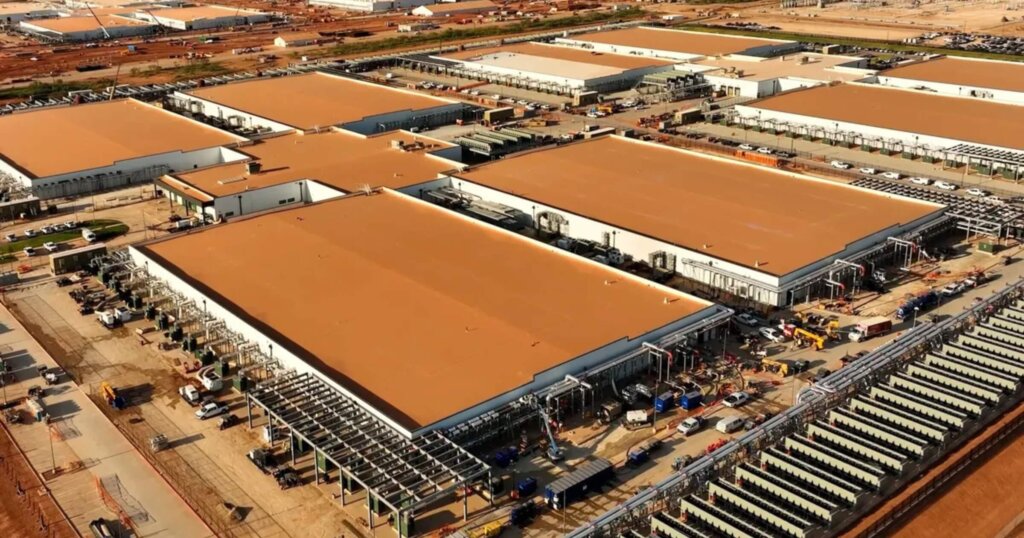
- Location: Various sites across the U.S. (Texas, Utah, Northern Virginia)
- Specs: Multi-billion-dollar hyperscale data centers
- Expected timeline: 2025–2027
With cloud computing growing faster than ever, Oracle is investing heavily in its next wave of “Stargate” data centers—large, high-speed facilities built to handle the world’s expanding data and AI needs.
These sites stand out for how well they combine digital technology with physical construction. Each facility uses AI to manage energy, relies on renewable-powered cooling, and is built with modular systems that enable faster, easier expansion. Altogether, they show that data centers can be powerful without being heavy polluters.
Part of a broader wave of data center construction projects underway in 2025, Oracle’s “Stargate” network showcases how the tech industry is rethinking infrastructure, building smarter, greener, and more resilient digital foundations for the future.
Curious how technology is reshaping the industry? Check out our feature on AI and 3D tools for construction and explore more groundbreaking construction projects in Saudi Arabia.
Subscribe to our newsletter for more updates on global infrastructure, innovation, and the future of building.