
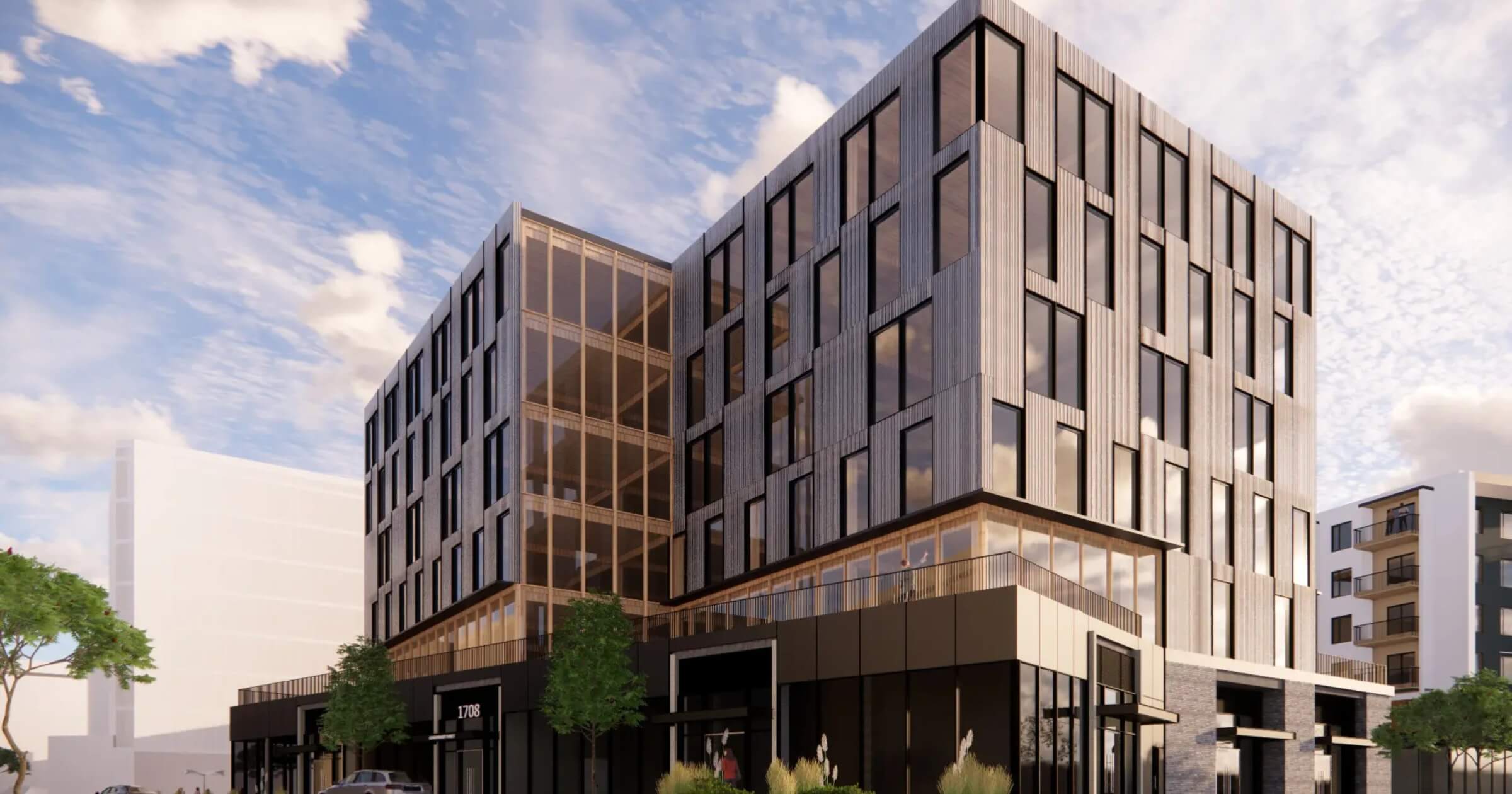
Penticton, B.C., is moving ahead with one of its largest commercial builds to date: a six-storey mass timber office valued at $60 million. Planned for the city’s innovation district, the building is intended to anchor a wider 10-acre mixed-use site that brings office, light industrial, and future commercial uses together in one location. For construction and design teams following mass timber adoption in B.C., this project is worth watching closely. It reflects a shift toward wood-based systems in private-sector commercial work. It also shows how provincial funding and local development goals are starting to align around mass timber.
A six-storey anchor for a growing employment hub
The proposed building will deliver modern office space aimed at technology firms, professional services, and innovation-driven tenants. The six-storey structure is planned as the centerpiece of a larger employment area, rather than a standalone office tower. The surrounding 10-acre site is laid out to support phased growth, allowing additional buildings and uses to follow as demand increases.
For Penticton, this approach supports job growth while keeping development concentrated. For builders and developers, it offers flexibility. The initial office building sets the tone for the site, while later phases can adapt to market conditions without requiring a redesign of the entire district.
Why mass timber and what it signals for B.C.
Mass timber was selected for its construction speed, material sourcing, and climate goals. Prefabricated timber components enable more work to be done off-site, reducing on-site labor demands and compressing schedules. That matters in regions where skilled labor remains in short supply. Faster enclosure also limits exposure to weather delays, which can affect both cost and sequencing.
The environmental case also factored into the decision. Mass timber stores carbon within the structure and relies on wood products sourced from within British Columbia. That aligns with provincial priorities tied to emissions reduction and value-added forestry. This project received provincial grant funding to help offset early design and construction costs, easing some of the financial risk associated with larger mass timber builds. The funding reflects a broader strategy: use public support to help private developments prove that wood construction can compete at a commercial scale.
For trade contractors, engineers, and architects, a six-storey mass timber office offers lessons that differ from those of civic or institutional projects. Structural design, fire-protection strategies, and coordination among trades become more complex at this height. Delivering this building successfully will add practical experience that can be carried into future offices, labs, and mixed-use developments across the province.
Projects like Penticton’s office building show that mass timber is moving beyond one-off showcases and into everyday commercial construction. They give the industry real cost, schedule, and performance data to work from.
If you want to follow developments like this and see how they affect construction, engineering, and design work across Canada, you can sign up for the Under the Hard Hat newsletter.