

Mass-timber projects are reshaping skylines worldwide. Builders are turning to wood because it is strong, fast to work with, and far more sustainable than concrete or steel. From record-breakers like the Ascent Tower in Milwaukee to cultural landmarks such as Sweden’s Sara Kulturhus Centre, and even massive infrastructure projects like the Portland International Airport expansion, these builds are proving what timber can really do. Add in Toronto’s plans for its tallest residential timber tower, and it’s clear why wood is quickly becoming the material of choice for modern construction.
Biggest mass timber projects leading the way in sustainable construction
Project 1: Ascent Tower
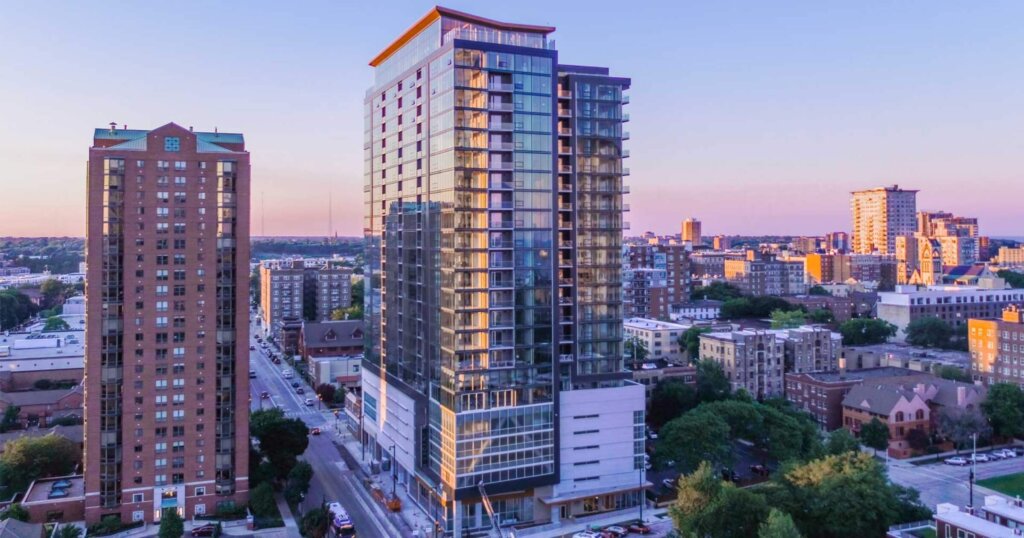
- Location: Milwaukee, Wisconsin, USA
- Size: 25 stories, 284 feet tall, world’s tallest completed mass-timber building
- Expected timeline: Completed 2022
Ascent Tower in Milwaukee holds the title of the world’s tallest completed mass-timber building. Standing 25 stories and 284 feet tall, the tower seamlessly blends laminated timber with a concrete core to create a structure that combines strength and safety with the natural warmth of wood. The project was developed by New Land Enterprises and designed by Korb + Associates Architects, who wanted to prove that timber could rise as high as traditional concrete towers without sacrificing design or comfort.
Inside, the tower features luxury apartments, a pool, fitness facilities, and a rooftop sky deck. What makes it truly special is how it set a new benchmark for mass-timber projects around the world. By showing that tall timber towers can meet modern building codes and deliver a high-end living experience, Ascent opened the door for more urban high-rises to be built from sustainable wood in cities everywhere.
Project 2: T3 Bayside
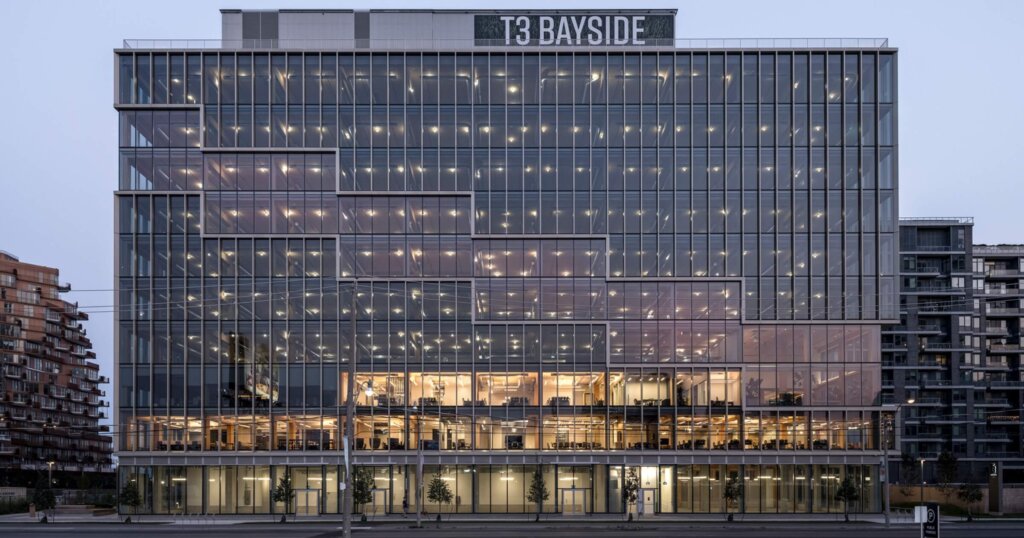
- Location: Toronto, Ontario, Canada
- Size: 10 stories, ~251,000 sq ft. (Phase 1)
- Expected timeline: Phase 1 completed 2023; next phase in planning
T3 Bayside is part of Hines’ Timber, Transit, Technology series on Toronto’s waterfront. Phase 1 delivers about 251,000 square feet of modern timber office space with warm, open interiors that support healthy, flexible work.
The project blends biophilic design with smart building systems and anchors a growing mixed-use district by the lake. With another phase planned, T3 Bayside shows how the biggest mass timber project strategies can scale across a neighborhood while cutting carbon emissions.
Project 3: Sara Kulturhus Centre
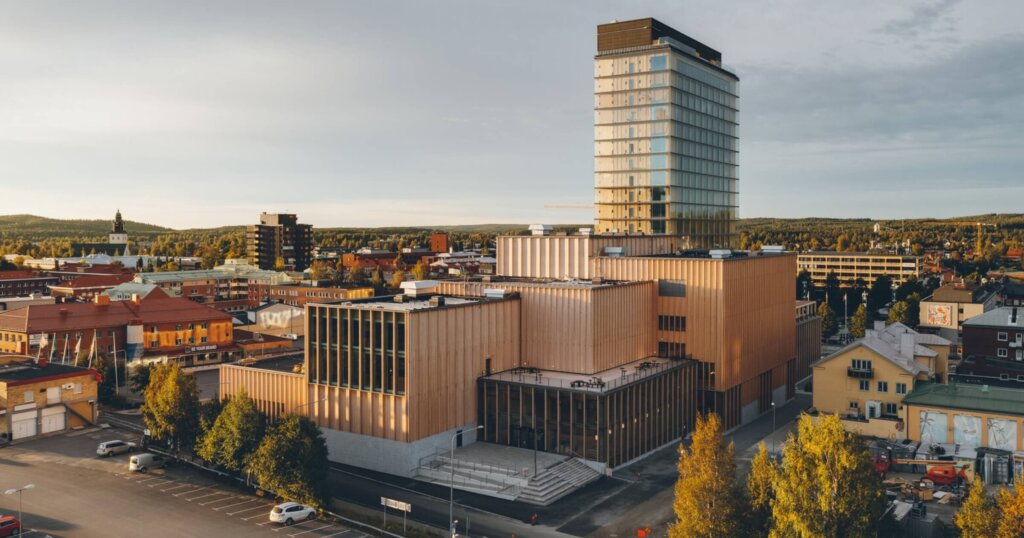
- Location: Skellefteå, Sweden
- Size: 20 stories, 75 meters tall
- Expected timeline: Completed 2021
The Sara Kulturhus Centre rises 20 stories above the town of Skellefteå in northern Sweden. At about 75 meters tall, it is one of the world’s tallest timber buildings. White Arkitekter designed the project, using wood harvested from nearby forests to highlight the region’s long tradition of working with timber.
The project shows the region’s long tradition of forestry while demonstrating how timber can be used in modern, large-scale construction. The building includes a hotel, cultural center, library, and performance halls, making it a true hub for the community.
One of the biggest goals for the Sara Kulturhus Centre is to cut its carbon footprint. The building was designed with net-zero ambitions, so the energy it uses should be balanced by the energy it can produce. Along with its focus on sustainability, the project shows that timber can work for more than homes or offices. It brings together a hotel, cultural spaces, and performance halls, making it both a community hub and a sign of how Skellefteå is looking toward a greener future.
Project 4: Atlassian Headquarters
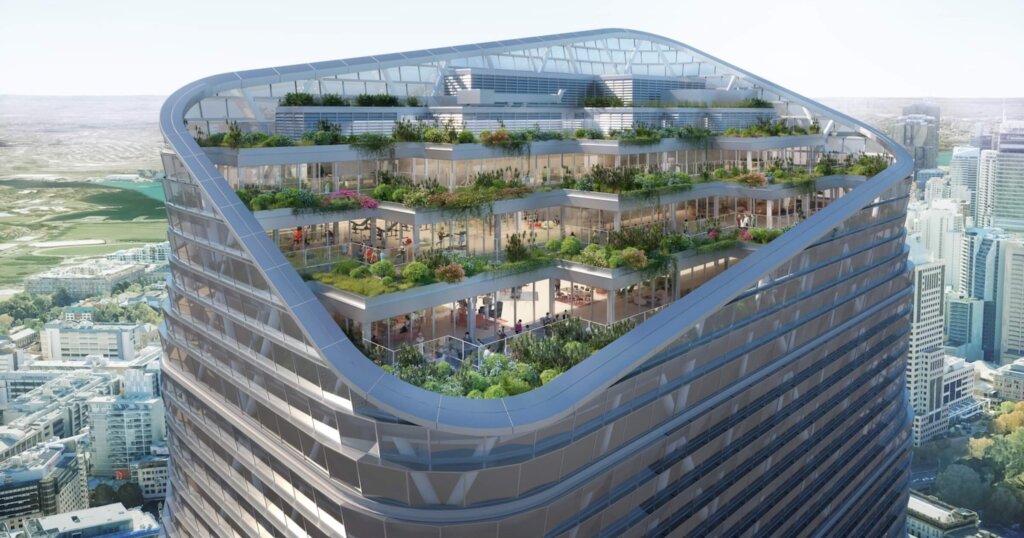
- Location: Sydney, Australia
- Size: 42 storeys, ~183 m, world’s tallest hybrid timber tower under construction
- Expected timeline: Target completion 2026–2027
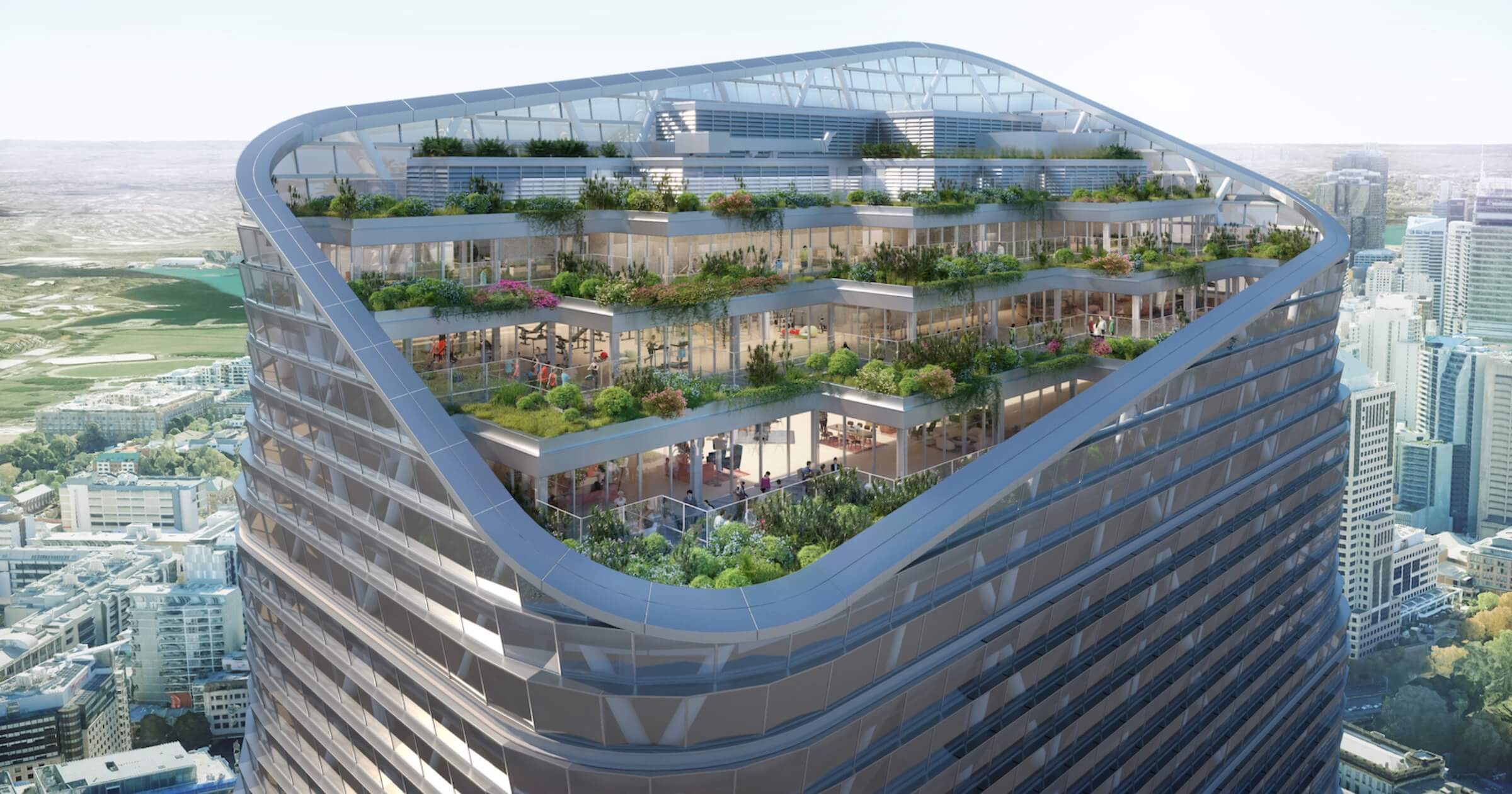
Atlassian is building a new headquarters in Sydney that will be the world’s tallest hybrid timber tower. Designed by SHoP Architects and BVN, the 42-story, 183-meter building will serve as the tech giant’s global base while showcasing how timber and steel can work together on a massive scale. The tower pairs a steel exoskeleton with mass-timber floors and advanced climate systems to reduce embodied carbon and enhance comfort.
This project represents a major leap forward for mass-timber design. Beyond serving as a workplace for thousands of employees, the headquarters will feature advanced energy systems, natural ventilation, and a design that reduces its embodied carbon footprint compared to traditional skyscrapers. Once complete, it will stand as a flagship for future tech campuses worldwide, showing how hybrid timber towers can meet the needs of both business and the environment.
Project 5: Portland International Airport Expansion (PDX)
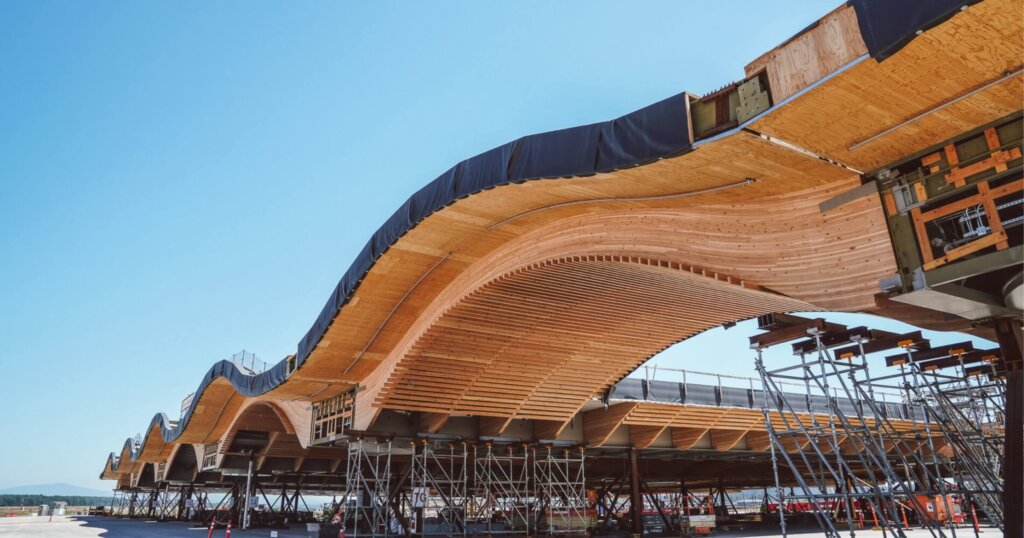
- Location: Portland, Oregon, USA
- Size: 400,000 square feet of mass-timber roof
- Expected timeline: Main terminal opened Aug 14, 2024; phased work continues into 2025–2026.
The expansion of Portland International Airport is giving travelers a view of one of the most ambitious mass-timber projects in the world. Designed by ZGF Architects, the project features a sweeping 400,000-square-foot timber roof that will cover the new main terminal. The 9-acre roof uses regionally sourced wood and showcases one of the world’s largest continuous mass-timber airport roofs. The structure utilizes giant Douglas fir beams sourced from regional forests, demonstrating how local materials can be scaled up for major public infrastructure projects.
Beyond its size, the project reflects Portland’s values of sustainability and community. Built with an incredible timber roof from Timberlab, one of the top six mass-timber companies leading the sustainable construction revolution, the airport supports the regional timber economy by choosing renewable materials, cutting carbon, and creating a warm, natural space for millions of passengers. When complete, the new terminal will be both a gateway to the Pacific Northwest and a showcase of how mass timber can transform even the busiest transportation hubs.
Project 6: Mjøstårnet
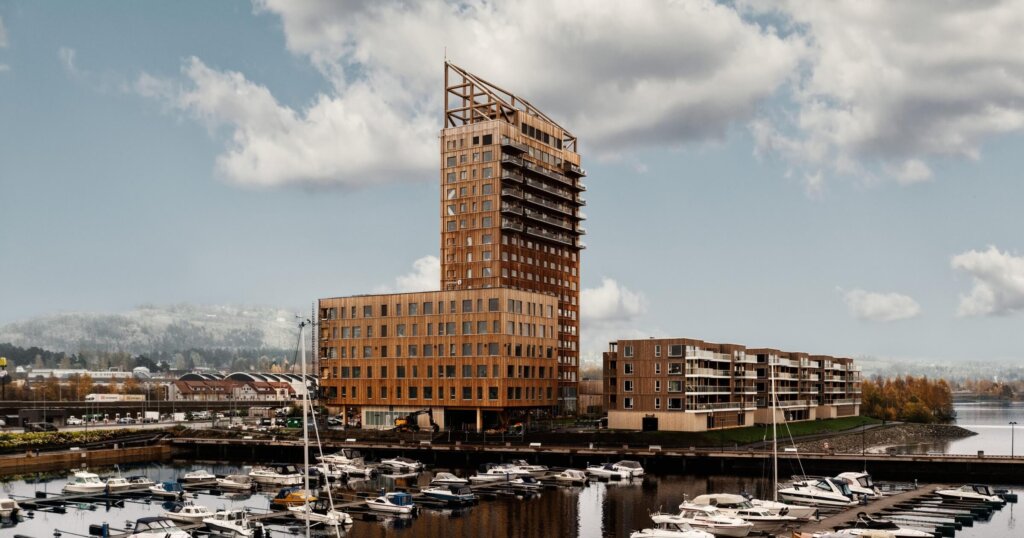
- Location: Brumunddal, Norway
- Size: 18 stories, 85.4 meters tall
- Expected timeline: Completed 2019
Mjøstårnet, located in the small town of Brumunddal, was the world’s tallest timber building when it opened in 2019. Standing 18 stories and 85.4 meters tall, it was designed by Voll Arkitekter and built almost entirely from locally grown spruce. The tower includes offices, apartments, a hotel, and even a swimming hall, proving that mass timber can deliver mixed-use spaces on a large scale.
The project marked a milestone in timber construction, demonstrating that tall wood buildings could compete with concrete and steel in both height and functionality. By using regional materials and innovative design techniques, Mjøstårnet remains a landmark for Norway and a global inspiration for architects and developers exploring the possibilities of wood in modern construction.
Project 7: Meta Mass Timber Data Center

- Location: South Carolina, USA
- Size: First large-scale timber data center of its kind
- Expected timeline: Announced 2024, construction timeline TBD
Meta began piloting mass timber buildings at its Aiken, South Carolina data center campus in 2025, starting with an administrative building and planning additional timber buildings at other sites. This sets a precedent for tech campuses to reduce their embodied carbon footprint with timber.
The design aims to reduce embodied carbon, accelerate construction, and support a more sustainable supply chain. If successful, the data center could inspire a wave of similar builds, showing that even the digital world can have a greener physical footprint.
Project 8: Haut Residential Tower
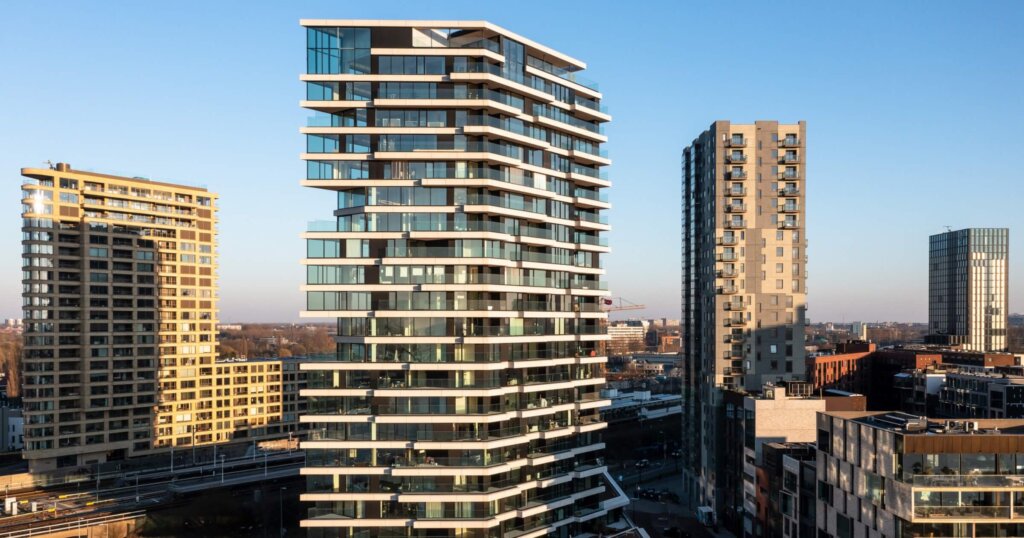
- Location: Amsterdam, Netherlands
- Size: 21 stories, 73 meters tall
- Expected timeline: Completed 2022
Haut Residential Tower is one of the tallest timber high-rises in Europe and a striking addition to Amsterdam’s skyline. Completed in 2022, the 21-story, 73-meter tower, designed by Team V Architectuur, showcases how mass timber can be utilized in dense urban housing. With its modern glass-and-wood exterior, Haut blends sustainability with sleek city design.
Haut was designed with big environmental goals in mind. The tower earned a BREEAM Outstanding rating, which is one of the highest marks for sustainable buildings in Europe. By choosing renewable timber and incorporating energy-saving features, the project shows that tall housing can be both modern and climate-friendly. It has become an example for other European cities interested in building more with mass timber.
Project 9: 230 Royal York Drive
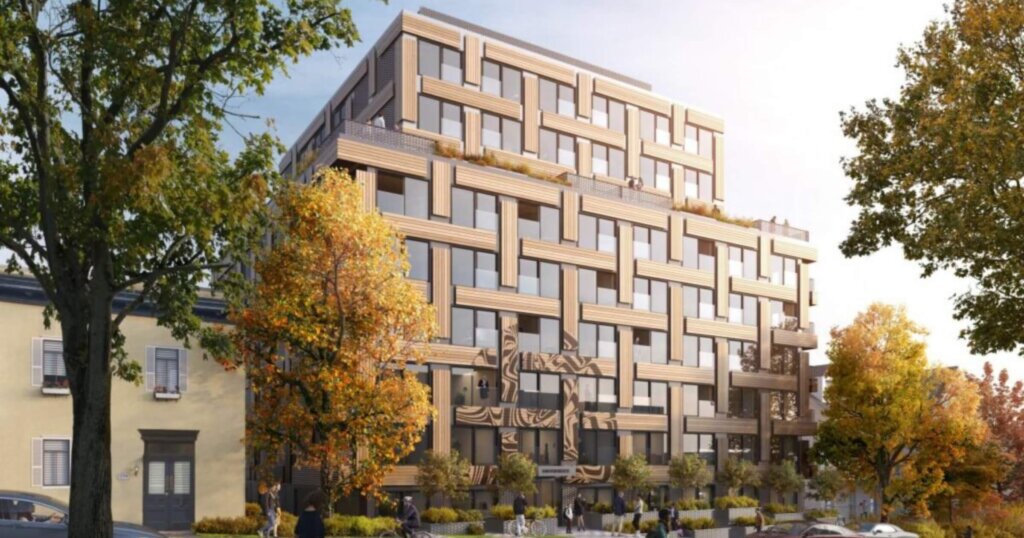
- Location: Toronto, Ontario, Canada
- Size: 9 stories, tallest residential mass-timber building in Toronto
- Expected timeline: Completion expected 2025
Toronto is home to a major milestone in Canadian timber construction with the 9-story residential project at 230 Royal York Road. Developed by Windmill Developments and Leader Lane Developments, with prefab systems from Intelligent City, it will be the tallest residential mass-timber building in the city. Designed by LWPAC, the project includes 58 market-rate rental units along with two replacement rental dwellings, adding much-needed housing in a growing neighborhood.
What makes this build stand out is its fully prefabricated system. Mass-timber panels are produced in Intelligent City’s factory in Delta, British Columbia, then shipped to Toronto for assembly. This approach shortens construction time, reduces carbon emissions, and minimizes material waste, making it one of North America’s most impressive mass timber marvels.
Project 10: Kalesnikoff Mass Timber Plant
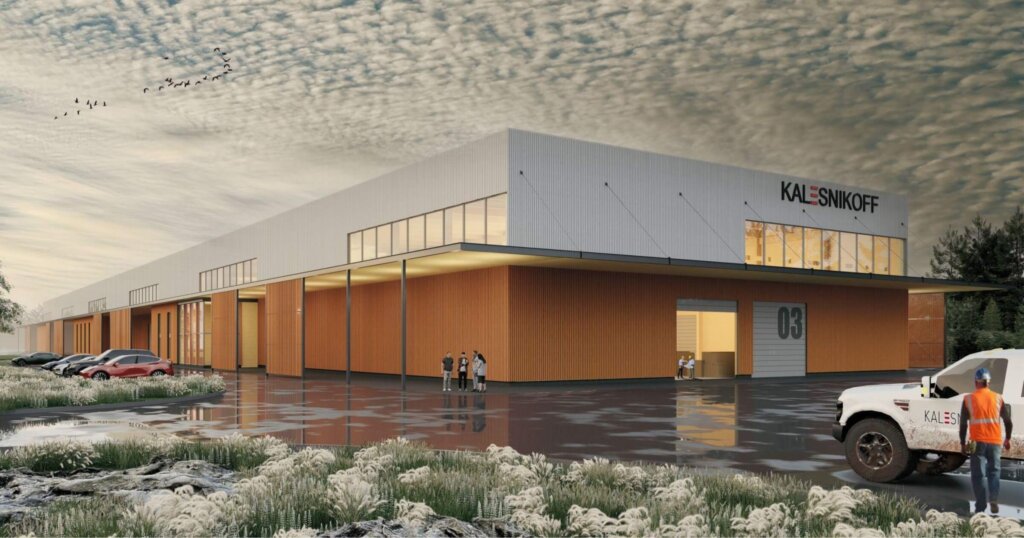
- Location: British Columbia, Canada
- Size: Industrial-scale production facility
- Expected timeline: Expected completion 2027-2028
Plans are underway for what would become Canada’s first truly large-scale mass-timber manufacturing plant in British Columbia, with a target for full operation around 2027-2028. The facility is intended to serve the growing demand for engineered wood in Canada, supplying beams, panels, and other mass-timber products for housing, high-rise, and institutional projects.
This plant is part of a broader strategy to strengthen the domestic supply chain for sustainable building materials. Keeping manufacturing local will help reduce transportation emissions, create jobs in rural and forested regions, and reinforce Canada’s leadership in climate-friendly construction.
Is mass-timber construction growing in 2025?
Mass-timber construction is on the rise, though growth rates vary depending on region and product type. Reports show that the global mass timber market was valued at about $4.5B (USD) in 2024 and could reach $10.2B by 2033, which equals a growth rate of around 9.5% CAGR over that period. Another analysis looking at mass-timber construction specifically valued the market at $990.4M in 2024 and projects it will grow to $1.3B by 2030, or about 4.8% CAGR.
This steady growth is being driven by new investments, stronger policy support, and higher demand across the residential, commercial, and industrial sectors. Developers are drawn to timber because it helps reduce carbon emissions, shorten construction timelines, and create healthier, more natural building environments.
- Government and policy support: Countries are putting money behind timber adoption. In Australia, the Clean Energy Finance Corporation launched a $300M (AUD) Timber Building Program to speed up mass-timber projects and cut embodied carbon. In North America and Europe, new regulations tied to embodied carbon reporting are also encouraging builders to choose bio-based materials like timber.
- Sector demand and investment: From high-rise housing to data centers, demand is growing. In North America, the cross-laminated timber (CLT) market is projected to rise from $447.98M (USD) in 2024 to nearly $5.99B by 2034, which is an impressive CAGR of about 29.6%.
Even with these gains, adoption can still be slowed by permitting challenges, fire code restrictions, or limited supply chains. Still, the trend line is clear: more governments, investors, and builders are betting on timber as a practical, scalable path to low-carbon construction.
What to expect next in mass-timber construction
The next wave of mass-timber construction is already taking shape, and the projects ahead are even bigger and bolder. Developers are moving beyond mid-rise housing and offices into airports, tech campuses, and high-rise housing that push wood to new limits. These projects prove that timber is no longer niche; it is becoming central to how cities plan their growth.
- Next-generation mega-projects: Large public spaces, such as airports and transit hubs, are starting to feature mass-timber roofs and terminals. Tech companies are also exploring the use of timber for their campuses, following the lead of Meta’s recent data center announcement.
- Hybrid design innovations: Combining timber with concrete or steel is unlocking new possibilities for height and scale. Hybrid towers like Atlassian’s Sydney headquarters show how mixing materials can deliver both strength and sustainability at record-setting levels.
- Prefabrication and modular housing: Factories that produce timber panels and modules are making construction faster, cheaper, and easier to scale. This trend is especially important for housing shortages where speed and affordability matter most.
- Future mega-towers: Expect more landmark projects across Europe, Asia, and North America. From North America’s mass-timber marvel to ambitious towers overseas, timber is positioned to take on larger and more complex builds than ever before.
Like this and want more like it? Stay up to date with the latest projects and trends by subscribing to our newsletter. You’ll get fresh stories on construction, design, and innovation delivered straight to your inbox.


1 comment