
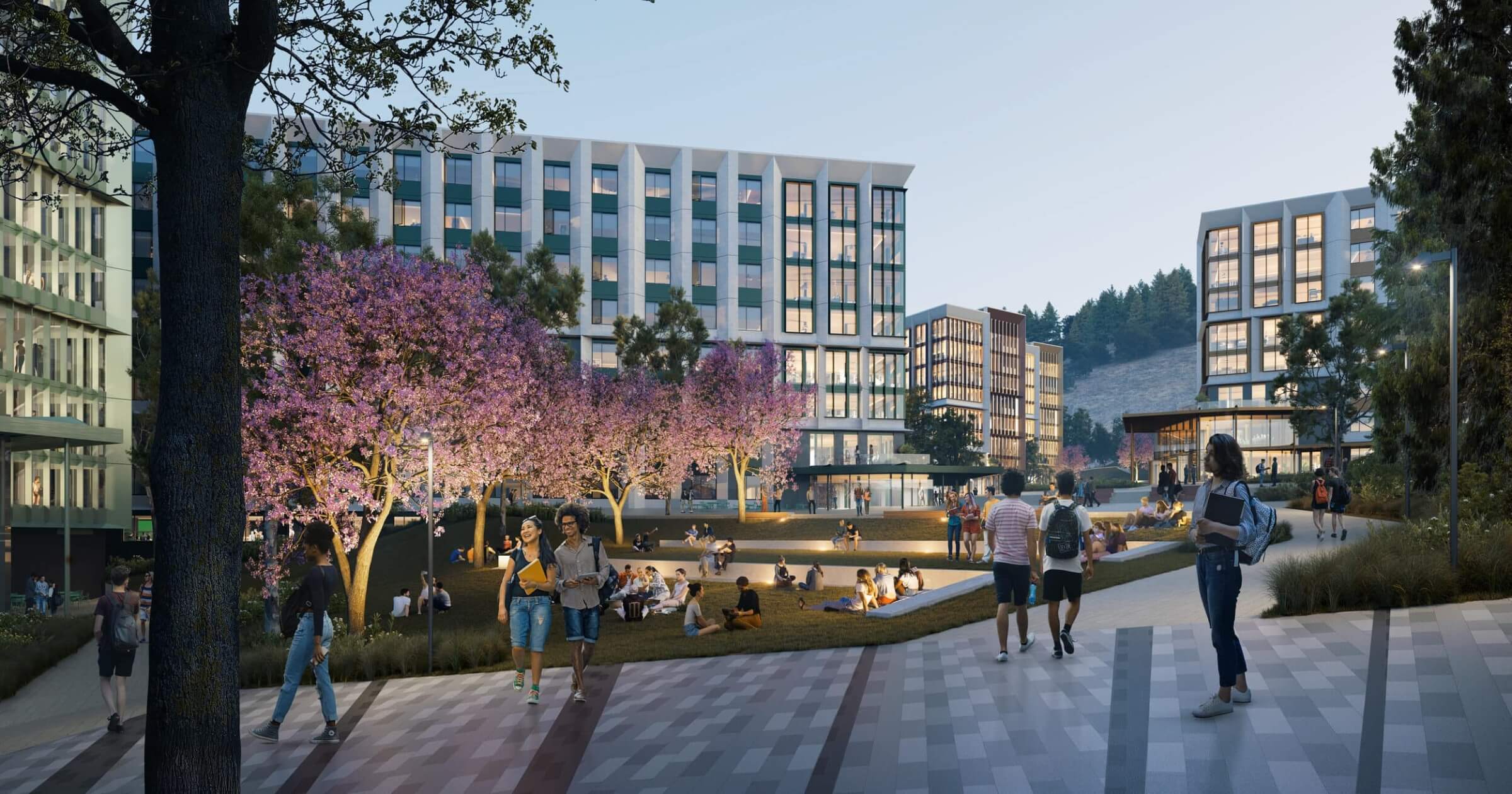
North America is pushing to build more homes in less time, and this article looks at who is leading that effort, what they are building, where these projects are underway, and why modular housing is becoming essential in 2026. Cities are dealing with rapid population growth, severe housing shortages, affordability pressures, labor constraints, and the need for faster, more sustainable construction. This is why large projects like Harbinger Homes developments in California, Veev’s growing modular communities in Texas and California, and new Canadian mid-rise builds tied to federal housing targets are getting so much attention. This article highlights key modular housing projects currently under construction across the United States and Canada and their implications for the future of rapid housing delivery.
Major modular housing projects currently under construction
Project 1 – Prescott Station
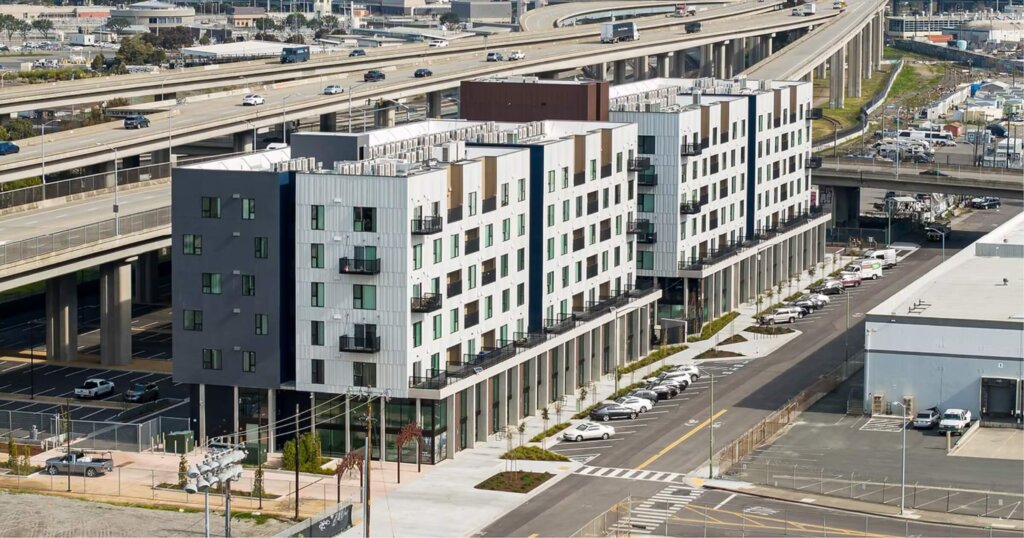
Photo courtesy of MBH architects.
- Location: West Oakland, California
- Specs: 235 affordable units in a six-story modular building with ground floor space
- Expected timeline: Opened in late 2025 with leasing and community rollout continuing through 2026
Prescott Station is one of the most talked-about modular housing builds in California, partly because of its scale and partly because of what it represents for future affordable housing. The project sits on Wood Street in West Oakland and brings 235 new homes to an area that has been under intense housing pressure for years. Completed by MBH Architects in collaboration with Harbinger Homes and Holliday Development, the units range from studios to two bedrooms, and the building includes a rooftop deck, coworking areas, parking, and ground-floor commercial space.
One reason Prescott Station stayed on track was timing. Crews were getting the site ready at the same time the housing modules were being built off site. When those modules arrived in Oakland, installation moved quickly, with units stacked and connected far faster than a traditional build would allow. That overlap helped keep the project moving, even with tight labor conditions across the region.
Prescott Station also fills a big gap in Oakland’s housing market. All units are rent-restricted and aimed at households earning around the area median income, bringing much-needed stability to a neighborhood that has seen rising rents and long waitlists for affordable homes. It is a strong example of how modular construction can deliver urban infill housing more efficiently.
Project 2 – East King Edward Avenue Modular Housing (BC Housing)
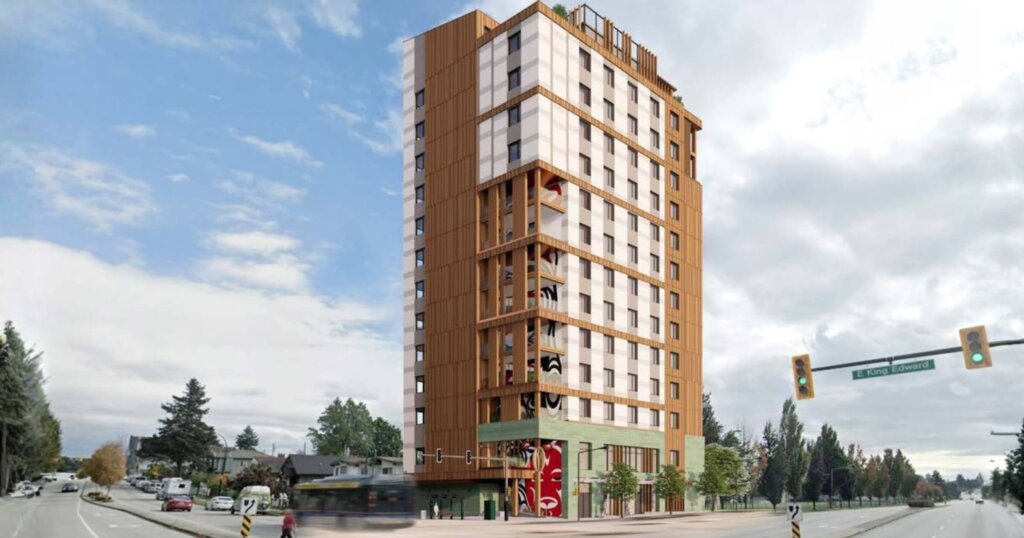
Rendering courtesy of City of Vancouver.
- Location: Vancouver, British Columbia
- Specs: 14 storeys, 109 permanent supportive housing units built using volumetric steel modular construction
- Expected timeline: Construction awarded in 2023 with completion targeted for 2026
The East King Edward Avenue project stands out mainly because of how far it pushes modular construction in a dense urban setting. The 14-storey building will deliver 109 permanent supportive homes using volumetric steel modules built off-site, showing that modular is no longer limited to low-rise or temporary housing. BC Housing is leading the project, with Bird Construction awarded the contract and Stack Modular supplying the modular system.
The building does not follow the usual concrete tower playbook. Its steel modules are built off site, indoors, and brought to Vancouver largely complete. Once on site, they are stacked and connected rather than built up piece by piece. That matters in a city where construction sites are tight, schedules are compressed, and finding enough workers on any given week can be a challenge. The building is also designed to meet Passive House performance standards, supporting lower energy use over the long term.
Beyond construction methods, the project fills an important role in Vancouver’s housing system. It adds permanent supportive homes in a city where affordability remains a major issue, using a delivery model that prioritizes speed, consistency, and long-term performance.
Project 3 – Cal Poly’s modular student housing expansion (FullStack Modular)
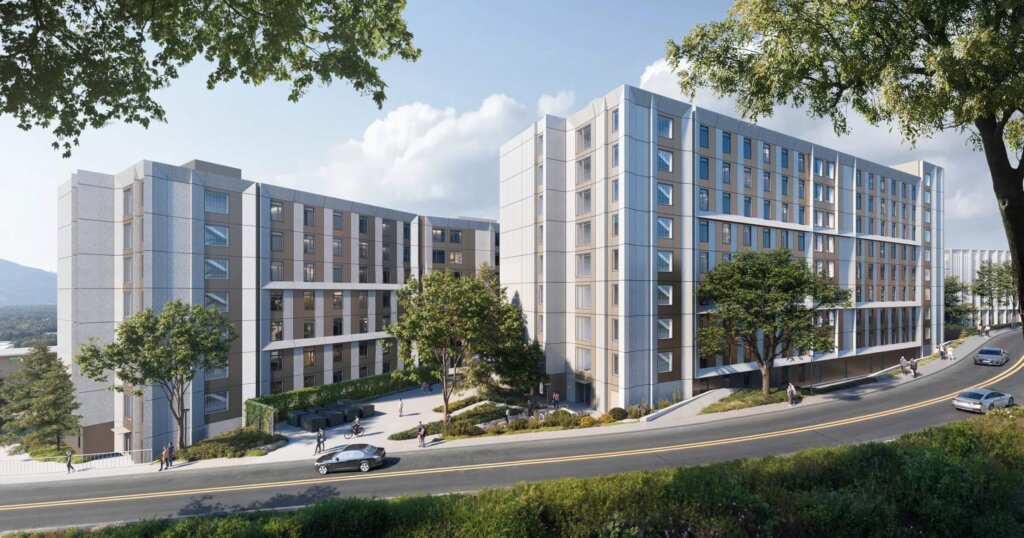
- Location: San Luis Obispo, California (Cal Poly campus)
- Specs: A long-term program to deliver 4,200 student housing beds across nine modular buildings
- Expected timeline: Multi-year rollout through 2030, with near-term buildings coming online earlier (including 2026 milestones reported locally)
Cal Poly’s modular housing program offers a clear example of what large-scale modular construction can look like when it is applied over several years rather than as a single pilot project. Working with FullStack Modular, the university is rolling out a long-term plan to deliver up to 4,200 new student housing beds across nine modular buildings. It’s a practical response to a familiar problem: demand is rising, off-campus vacancies are tight, and building quickly matters just as much as building at all.
Instead of building each residence hall from the ground up, the housing is assembled using prefabricated modules that are manufactured off-site and then stacked and connected on campus. This approach allows construction and site preparation to happen at the same time, which helps keep schedules predictable and reduces the impact of weather delays and labor constraints.
While the project is focused on student housing, it reflects a broader shift toward modular construction at scale. It shows how modular systems can support large, phased developments where speed, repeatability, and long-term planning matter just as much as cost.
Is modular housing construction growing in 2026?
Modular housing is gaining real traction in 2026. Industry forecasts show the modular and prefabricated construction market continuing to grow as more builders look for faster, more predictable ways to deliver homes. Current reports indicate steady year-over-year growth in the modular sector as companies ramp up factory production and expand capacity.
Federal policy is starting to show up more clearly in how modular housing is being used. In Canada, the launch of Build Canada Homes is a shift toward faster delivery models, with modular and prefabricated construction built directly into the agency’s mandate. The focus is less on experimenting with new building types and more on getting affordable homes built on shorter timelines, which helps explain why modular systems are being specified more often.
Canada is also investing directly in modular housing through the Highly Prefabricated Multi-Housing Initiative, which funds housing projects that rely heavily on prefabrication. It is part of a broader push to build more units quickly for low- and middle-income households.
A big reason modular is becoming so appealing is the ongoing skilled labor shortage. Builders across North America are struggling to find enough workers, and factory-built systems help reduce on-site labor needs. Modular can also cut construction timelines by 30 to 50%, which is a huge advantage when cities are trying to add housing quickly.
Private investment is rising too. Startups and established modular manufacturers are expanding their factories, and companies like Boxabl are drawing major attention as they move toward public listings, signalling broader confidence in the sector.
All of these forces together point in the same direction. Modular construction is growing, capacity is increasing, and more cities and developers see it as a practical way to build housing faster with less waste.
What to expect next in modular construction
As we look ahead, it’s clear that modular housing is gearing up for a much bigger role across North America. The pipeline is getting stronger, more coordinated, and more focused on real community needs.
One of the biggest examples is happening in Toronto, where the new federal agency Build Canada Homes is planning its first major development at Downsview. The project could include up to 540 modular homes, with at least 40% set aside as affordable housing, and it comes with support from the city and other public partners.
Around the same time, the province, the city, and Habitat for Humanity GTA are teaming up on a six-storey, 33-unit modular condo at 355 Coxwell Avenue, making it clear that modular is becoming a go-to option for lower and moderate-income households. Together, projects like these show how large workforce housing campuses and community-scale modular neighborhoods are rapidly moving from “pilot” status to standard practice.
We are also seeing momentum in mid-rise and hybrid mass timber modular construction. Toronto’s 11 Brock Avenue project is a great example. It is being delivered using prefabricated mass timber components and will bring 42 supportive and affordable homes to the city by 2026.
Companies like Intelligent City are taking this even further with their nine-storey modular mass timber building at 230 Royal York Road, which uses robotic assembly lines that shave months off construction timelines and reduce carbon emissions. Assembly Corp is advancing similar mid-rise projects across the Greater Toronto Area, suggesting that taller modular buildings are becoming a mainstream part of the urban housing toolkit.
Modular construction is also gaining importance in emergency and climate response planning. BC Housing recently released an Emergency Lodging Toolkit that works directly with modular and manufactured housing designers. The goal is to help communities plan for temporary accommodations after wildfires, floods, and other disasters. Relocatable modular homes help communities recover faster, since the units can be repurposed and moved as rebuilding progresses. With extreme weather events on the rise, wildfire and flood-prone regions will likely lean even more heavily on modular housing for both short-term and long-term needs.
Behind the scenes, the way modular housing is designed and built is also changing quickly. AI and digital tools are becoming part of everyday workflows, from generating building layouts to streamlining logistics. Canadian company Promise Robotics is one of the leaders in this space, offering an AI-powered off-site construction platform aimed at producing homes more efficiently at scale. We explore this shift more deeply in our guide on AI-powered modular housing, but the takeaway is simple: software and automation are starting to drive major gains in speed, precision, and cost control.
Robotics inside modular factories are strengthening this momentum. For example, Intelligent City uses industrial robots and AI to fabricate mass timber components, and firms like KUKA help reduce on-site labor needs, cut time, and improve sustainability with automated modular production.
In the United States, factories like Autovol blend human trades and robotics to produce multiple modular units per day, which can then be assembled into full apartment buildings in just weeks. This combination of technology and prefabrication is reshaping the way housing production looks.
Sustainability is becoming a bigger part of the modular story. One modular project in the United Kingdom lowered embodied carbon by roughly 35% compared to traditional builds, largely because materials were used more efficiently with less on-site work. Other reports found that factory-built construction can reduce waste by up to 90% across materials like timber and plastics. Canadian researchers are also contributing new tools and guidance, including the CiBEC index, which helps teams measure and reduce embodied carbon in modular projects. These developments point toward a future where modular is not just faster, but also significantly cleaner.
Modular housing is gaining traction in 2026 largely because it solves several problems at once. Builders are under pressure to deliver housing faster, cities are facing persistent labor shortages, and governments are looking for construction models that offer more predictability. Factory-built systems address all three by shifting much of the work off-site and into controlled production environments.
Government involvement has helped accelerate this shift, particularly in Canada. Federal programs like Build Canada Homes and the Highly Prefabricated Multi-Housing Initiative support faster housing delivery by encouraging modern construction methods. These programs are not focused on modular alone, but modular construction fits naturally with their goals of speed, efficiency, and scale.
Private investment in modular housing is starting to look more grounded than it did a few years ago. Instead of broad announcements or pilot programs, manufacturers are expanding factories because they already have projects lined up and need the capacity. Developers, in turn, are getting more comfortable using off-site construction for permanent buildings, particularly for student housing, supportive housing, and mid-rise apartments where timelines are tight and delays are costly.
That does not mean modular works everywhere or solves every problem. Financing can still be uneven, zoning rules often lag behind construction methods, and factory schedules can fill up quickly when demand spikes. Some cities have figured out how to plan for modular delivery, while others are still adjusting approvals and site logistics. Even so, in markets where traditional construction keeps falling behind demand, modular is being used less as a test case and more as a practical way to get homes built.
For more project spotlights, construction trends, and deep dives into the technologies reshaping the industry, subscribe to our newsletter and stay connected with everything happening across North America’s built environment.