
A long-overdue fix to one of Ontario’s worst bottlenecks is moving ahead—and the way it’s being built reflects a broader shift contractors should be paying attention to.
Construction work for an interchange project at Highway 5 & 6 in Flamborough, Ontario, is slated to begin in the next few months. This is a long-awaited solution to a known bottleneck—the area is known for long delays, unsafe conditions, and heavy congestion.
The project is now moving ahead and will help address safety, growth, and future traffic demand in the rapidly expanding region. This is an important update for contractors, as it hints at a shift in workflows toward more complex staging and greater coordination.
The project is being delivered by a contract awarded by the Region of Halton in partnership with the Ministry of Transportation of Ontario (MTO). The total investment is estimated to sit between $40 and $100 million—a cost that reflects the complexity of the build.
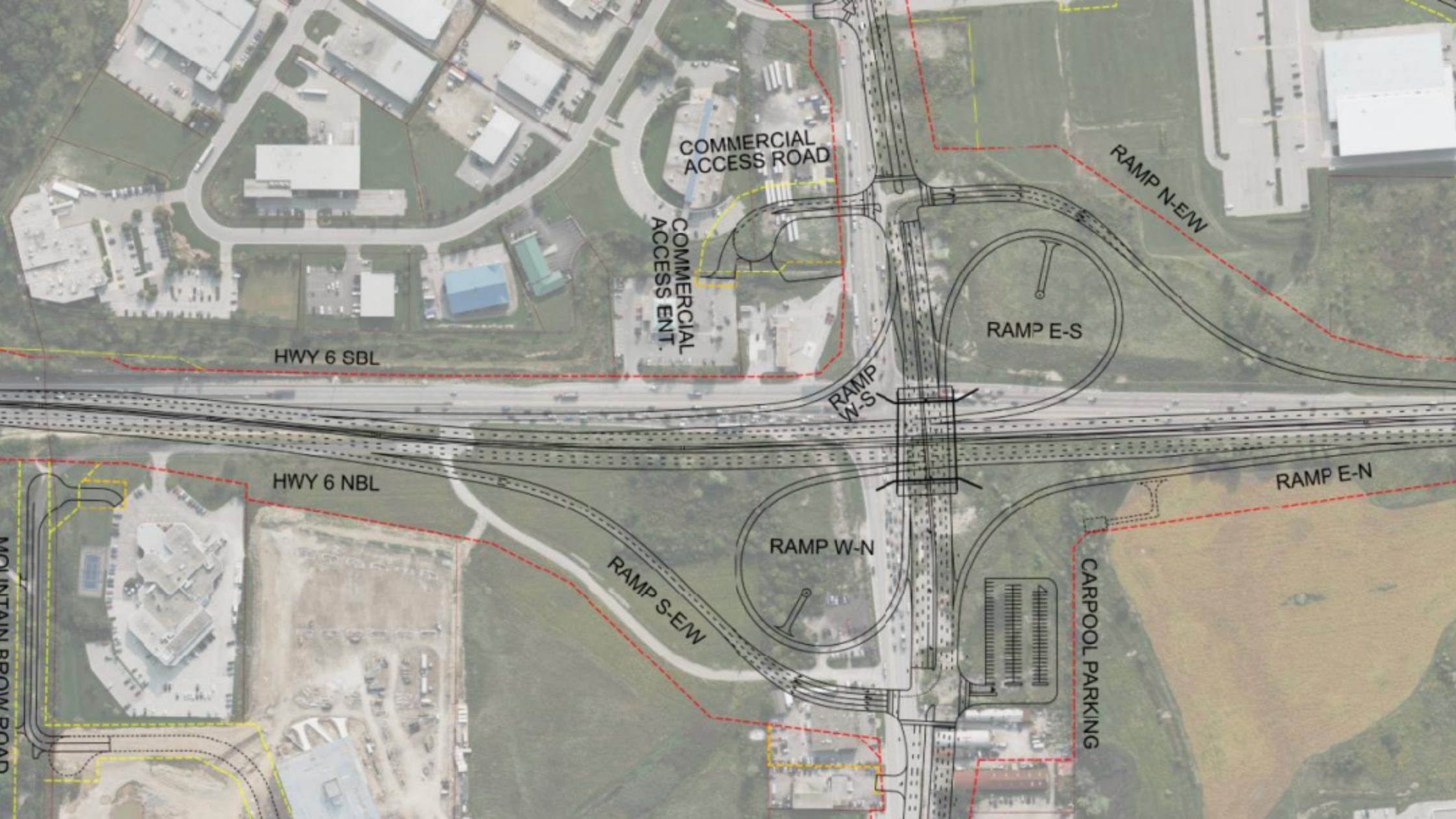
The project will involve building a new interchange, an overpass, and partial cloverleaf ramps. Contractors will also focus on building associated municipal roads, multi-use paths, and a new commuter parking lot in the area. This is more than just a solution to heavy traffic—it’s a multi-modal, future-ready corridor.
Why this matters
This intersection has been considered unsafe for years, leading to road accidents and collisions, and raising questions about driver safety. As the surrounding areas continue to grow with the expansion of bedroom communities, large-scale infrastructure upgrades are becoming crucial.
Flamborough sits within one of Ontario’s fastest-growing regions, with an estimated population growth of 36.8% by 2051. Infrastructure built in the last few decades can no longer keep up with rapid population growth, making projects like this necessary to keep pace.
This is a trend that has been playing out across Ontario and other provinces in Canada, as infrastructure development is increasingly deemed essential to keep up with growth. For contractors, this signals more infrastructure builds in the near future.
What construction will involve
This build will be phased over two years and will require contractors to rebuild while everything remains active. From utility relocations to demolition of existing structures and road reconstruction, contractors will be required to balance careful sequencing and execution.
Contractors will also be expected to coordinate across teams and handle the complexity of staging throughout the process.
Night work will also be a big part of this build. Maintaining active traffic flow through a high-volume intersection while simultaneously performing demolition and reconstruction means a large portion of the project will need to be completed outside peak travel hours. This adds another layer to crew scheduling and logistics that isn’t part of standard builds.
Jobsite and regional challenges for contractors
With multiple construction projects happening nearby at the same time, contractors can expect increased scheduling pressure and may even find themselves competing for resources with other teams. They will have to maintain heavy traffic flow, work around staging constraints, and take on night work as needed.
Tight coordination among stakeholders is necessary for this project, as it involves multiple parties, including municipal and provincial agencies, utility teams, and transit planning stakeholders. Delays from coordination breakdowns and cost escalation are expected—for contractors, this isn’t just a construction job; it’s a logistical and sequencing challenge.
Designed for the future
The project has been designed with the local community’s needs in mind. For instance, it can support a future GO Transit hub in the area and will offer integrated commuter parking and multi-use pathways. It’s being built to support long-term demand rather than just current needs.
Projects like this demonstrate how infrastructure upgrades are becoming more complex, expensive, and critical in high-growth areas. For contractors, success will increasingly depend on managing complexity.
Complex projects like these aren’t going away—Ontario has invested billions in infrastructure over the next decade that involves high-growth areas, live environments, multi-stakeholder coordination, and phased delivery. Contractors who build that experience now are the ones best positioned for the next round of projects when they go to bid.
Ontario’s infrastructure pipeline isn’t slowing down. For ongoing coverage of the projects, trends, and contractor insights shaping the industry, follow us on LinkedIn and subscribe to our weekly newsletter.