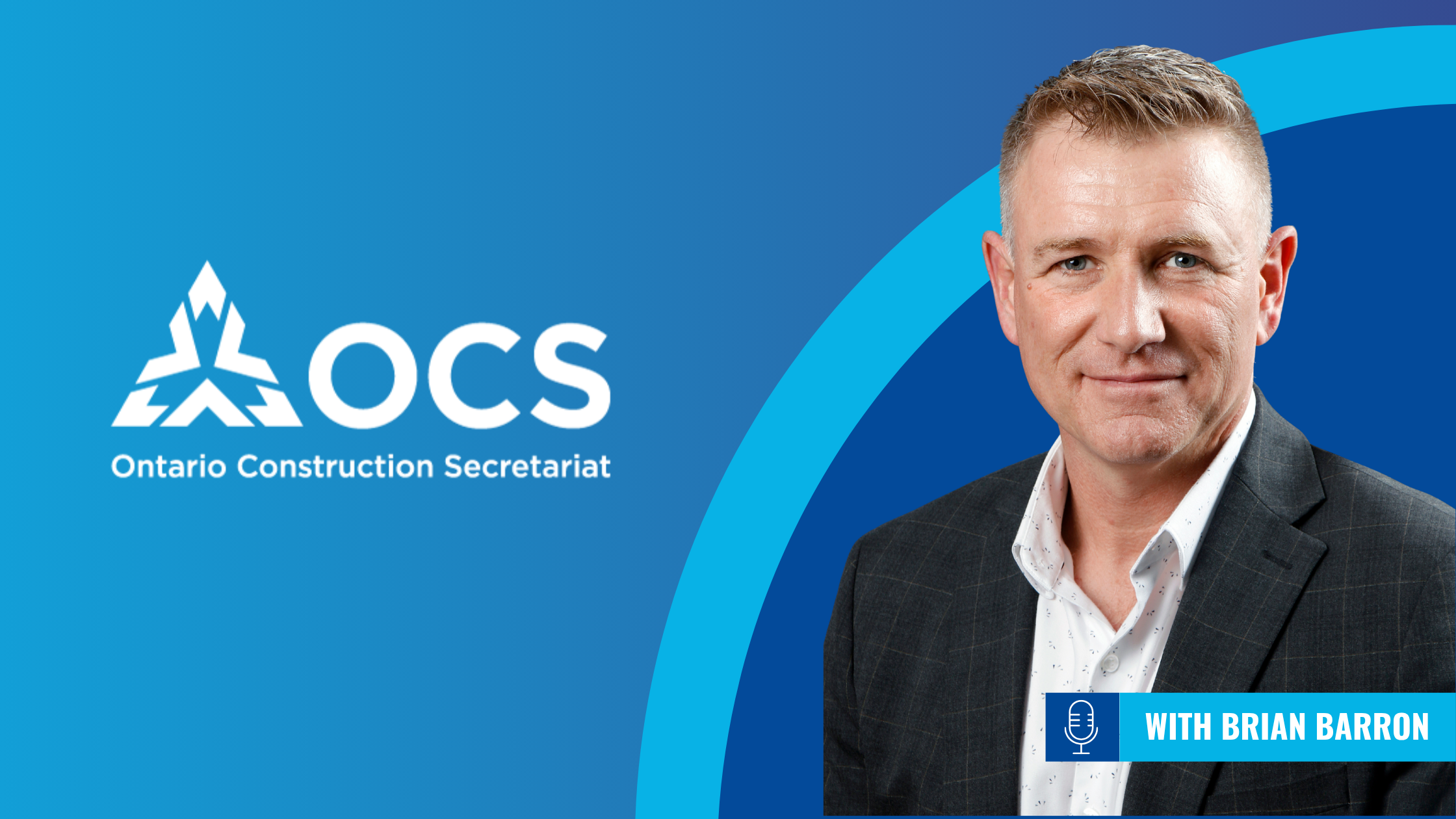
After hearing Brian Barron speak at Build a Dream’s Power and Purpose Summit, it was clear that his 20-year history at the Ministry of Labour, Immigration, Training and Skills Development provides him with a unique perspective on the guts of the construction industry. As the CEO of the Ontario Construction Secretariat (OCS), Barron sits at the center of labor relations, representing the interests of 26 building trade unions and their contractor partners. We sat down with Brian to discuss the union safety effect, the dangers of predatory bidding, and why the ICI (Industrial, Commercial, and Institutional) sector remains an anchor of stability in an uncertain economy.
This interview has been edited for length and clarity. To see the full interview, check it out on our YouTube channel: https://youtu.be/BXkqp_dqxKg
Under The Hard Hat: For our readers who only know the OCS by name, how would you explain your role as the middleman where all these different unions and their contractors sit down to solve industry problems?
Brian Barron: We’re a bit of an interesting animal, and really the only group in Canada that does this. Created in 1993, we sit between the building trade unions and their contractor partners. Our mandate has three parts. First, we facilitate collective bargaining through data and research. Second, we host events for networking; we firmly believe that the first time a contractor and a union meet should not be at the bargaining table. They need an ongoing relationship to truly understand each other’s perspectives. Finally, we advance the unionized ICI sector by promoting the value it brings to the industry.
UTHH: You spent two decades as a health and safety inspector. What is the one recurring headache you saw on sites back then that you are now trying to fix through the OCS?
BB: Without question, it’s culture. When a company embraces health and safety and builds it into their day-to-day function, you will find a well-run project every time. Where companies treat it as an add-on or something to think about afterward, it leads to complacency and excuses. If a company hasn’t adopted safety as part of its overarching culture, that is the biggest issue.
UTHH: Which of the OCS pillars, research, relationships, or strengthening the sector, is facing the most pressure in this current economy?
BB: Right now, the biggest push is around procurement. We are working hard to educate municipalities and public agencies to stop picking the lowest bid as a default. That is not the actual market value of construction; it is predatory bidding, which is a race to the bottom. You get an unrealistic number that eventually gets inflated through extras, or worse, leads to safety incidents. We’re trying to show buyers what they should actually be looking for in a responsible bid.
UTHH: You’ve said that safety must be intentional. Does that same philosophy drive your focus on responsible procurement?
BB: Absolutely. Regardless of your approach, you have to be intentional as a buyer of construction. You want to make sure a contractor fits your culture and isn’t exposing you to risk, whether that is through shoddy workmanship or a poor safety record. Studies do not bear out the claim that unionized contractors are too expensive. In reality, they protect you from the hidden costs of risk.
UTHH: OCS data shows that unionized sites have 31% fewer injury claims. Is that due to better training, or is it a different mindset on the site?
BB: It’s both. It starts with a massive investment, about $70 million a year, in over 100 unionized training centers across Ontario. This provides a proper apprenticeship with multiple training points that are complemented by on-the-job experience on the way to becoming a journey person.
The second part is advocacy. The Occupational Health and Safety Act is built on the Internal Responsibility System, where everyone has a role. In a union environment, workers have a third-party advocate, like a health and safety representative or a trade committee, they can go to if they feel unsafe. That impartial check-and-balance often does not exist in non-union environments.
UTHH: You’ve spoken recently about the quiet struggle with addiction in the trades. How can union-management partnerships provide real help for a worker on the ground beyond just having a policy?
BB: Construction can be a very rewarding career for someone who loves a sense of accomplishment and working with their hands, but we have to prepare workers for the reality of the job. Construction can be physically challenging and stressful. You’re working long hours, moving from site to site, often far from home, which leads to exhaustion. We’ve been successful at recruiting people to the trades, but retention is the next big challenge. We need to prepare workers both mentally and physically for the demands of the job so they can show up fit for duty and able to effectively manage everything that comes with the job.
UTHH: Regarding retention, a recent survey showed that 35% of participants still believe women don’t belong in construction. What needs to change to make sure inclusion isn’t just a buzzword?
BB: I recently spoke with women from the IBEW and the Boilermakers about this. The difference between a job where they felt out of place and a rewarding experience was mentorship. It comes down to being paired with a crew or a foreperson who accepts them and refuses to tolerate sexist behavior. Everyone brings a different skill set to the site. We have to recognize those individual strengths and drop the old-school macho mentality.
UTHH: Your recent survey showed a bit of a split in outlook, with some contractors bracing for a dip while others remain optimistic. What’s driving that uncertainty?
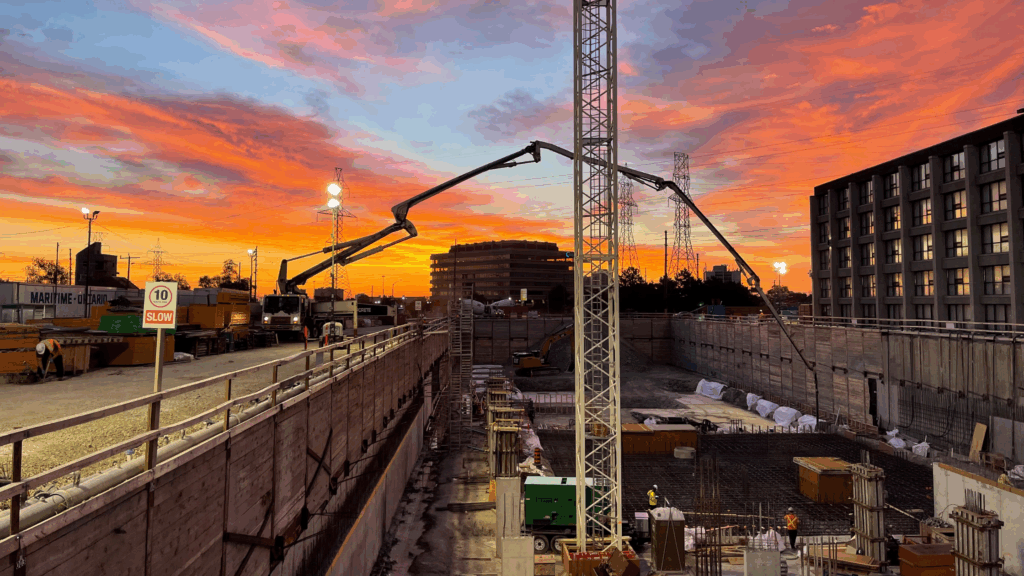
BB: It comes down to uncertainty around projects and investment as a result of the recent trade tensions and tariffs. We’re seeing that most dramatically in the manufacturing side, like new automotive facilities, which has taken a significant hit. However, we have a very strong pipeline of infrastructure work. Hospitals and transit are keeping the ICI industry alive. The government understands that even if residential is slow right now, the infrastructure is still required. They’re building in advance so that when the houses follow, we’re ready to go.
UTHH: The OCS is developing a system to monitor regional competitiveness. How does this help contractors spot opportunities?
BB: We’re trying to balance labor forecasting. Major infrastructure projects act like a vacuum, sucking all the trades to one spot and leaving other projects underserved. A good example was when the Eglinton Crosstown and the Darlington Refurbishment project started at the same time. We work with owners like Infrastructure Ontario to understand labor needs so we can scale up appropriately and not flood the market with people who may not be able to finish their apprenticeships.
UTHH: How does the unionized sector’s ability to share labor pools protect major projects from delays?
BB: That’s a huge union advantage. Nobody else has a labor pool like the unionized sector. If a project is short-handed, we can provide travel cards to bring workers from other areas. This flexibility ensures on-time project delivery. Interestingly, some of the more recent strain has also alleviated because of the slowdown in residential; some of those workers have the ability to come over to the ICI side, providing a bit of relief to the silver tsunami of retirements.
For more info on the Ontario Construction Secretariat:
- Research and reports: Access the latest ICI market data and labor studies at iciconstruction.com.
- OCS Talks Podcast: Listen to Brian Barron discuss industry trends and mental health on all major streaming platforms.
- Events: Stay updated on the next Annual State of the Industry Outlook conference for networking opportunities.
Want more insights from the leaders building Ontario? Subscribe to our newsletter for the latest interviews and AEC market analysis.