From cozy homes to grand libraries, Perkins & Will projects are shaping communities all over the world. In this spotlight, we’ll explore real examples like the Shanghai Library East, SoLo House in British Columbia, and the Northtown Library and Apartments in Chicago. Each one shows how the firm blends beauty, innovation, and sustainability in everything it creates.
Perkins & Will background and history
Perkins & Will was founded in 1935 by Lawrence Perkins and Philip Will Jr. in Chicago, Illinois. What started as a small architecture studio has grown into one of the world’s leading design firms, known for shaping spaces that are creative, sustainable, and people-centered.
From its Chicago headquarters, the firm has expanded to cities around the world, designing everything from schools and hospitals to cultural centers and commercial towers. It’s widely recognized as one of the best architecture firms in the U.S., with a reputation for forward-thinking design and long-term environmental responsibility.
Research is at the heart of how Perkins & Will works. Its dedicated research team explores new ways to use technology, materials, and design thinking to create spaces that improve health and reduce carbon footprints. The firm also plays an active role in the broader design community, sharing knowledge through open research, industry partnerships, and public initiatives that help advance sustainable and innovative design.
With hundreds of LEED-accredited professionals and dozens of award-winning projects each year, Perkins & Will continues to push the boundaries of what modern, sustainable design can look like.
Sustainable and Iconic projects by Perkins & Will
1. Beijing Performing Arts Centre
- Location: Beijing, China
- Year built: 2023
- Typology: Cultural/Performing arts center
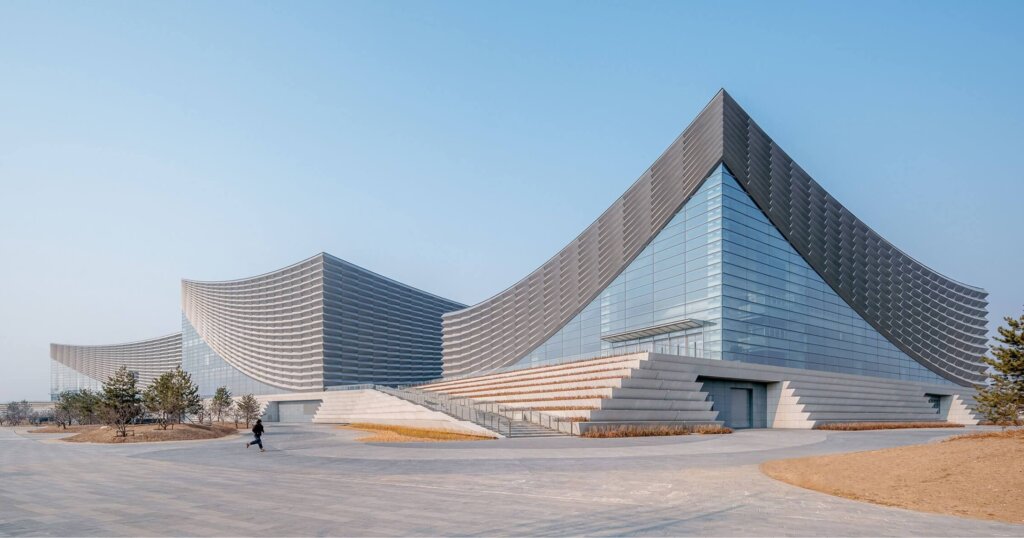
The Beijing Performing Arts Centre is one of Perkins & Will’s most impressive cultural landmarks. The building opened in 2023 and covers more than 1.3 million sq ft. Inside, there are several performance halls and open areas where people can come for big productions or smaller community shows.
The center’s design feels both modern and rooted in place. Its smooth, curved shape was inspired by traditional Chinese art and craftsmanship, giving it a sense of movement even from a distance. Inside, natural light fills the performance halls and open spaces, where visitors can gather, explore, or simply enjoy the view.
Engineers and designers worked closely to refine the building’s structure and acoustics, ensuring that every seat in the house has clear sightlines and sound. As a whole, the project captures Perkins & Will’s ability to combine beauty, culture, and innovation in one unforgettable space.
2. Shanghai Library East
- Location: Shanghai, China
- Year built: 2022
- Typology: Library / Civic
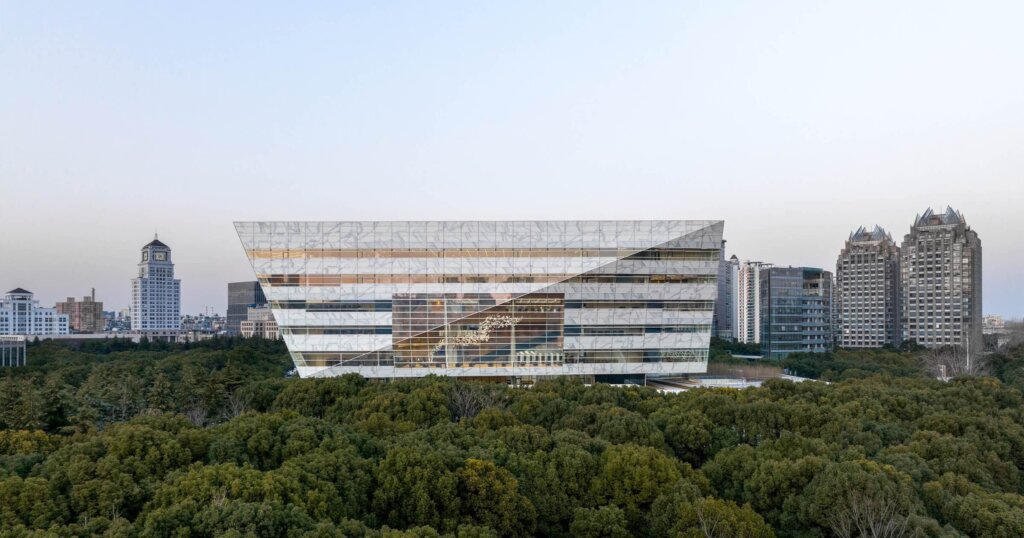
The Shanghai Library East is one of the largest new cultural projects in Asia and a striking example of how Perkins & Will reimagines traditional civic spaces. Completed in 2022, this massive building covers nearly 1.24 million square feet and serves as both a research library and a vibrant community hub.
The design turns the idea of a quiet reading space into something more open and social. Inside, you’ll find sunlit reading rooms, flexible study areas, and gathering spaces that welcome collaboration and creativity. The building’s layout encourages visitors to explore vertically, with light-filled atriums and clear wayfinding that connect every level to the public realm.
Sunlight filters through large glass panels, filling the reading rooms with a soft glow. The design keeps glare to a minimum and helps the building use less energy. Around the library, open lawns and tree-lined walkways give people space to sit, read, or talk with friends. It feels calm and welcoming—a place where the city slows down for a moment.
3. Western University, Weldon Library Revitalization
- Location: London, Ontario, Canada
- Year built: 2022 (revitalization)
- Typology: Academic/Library renovation
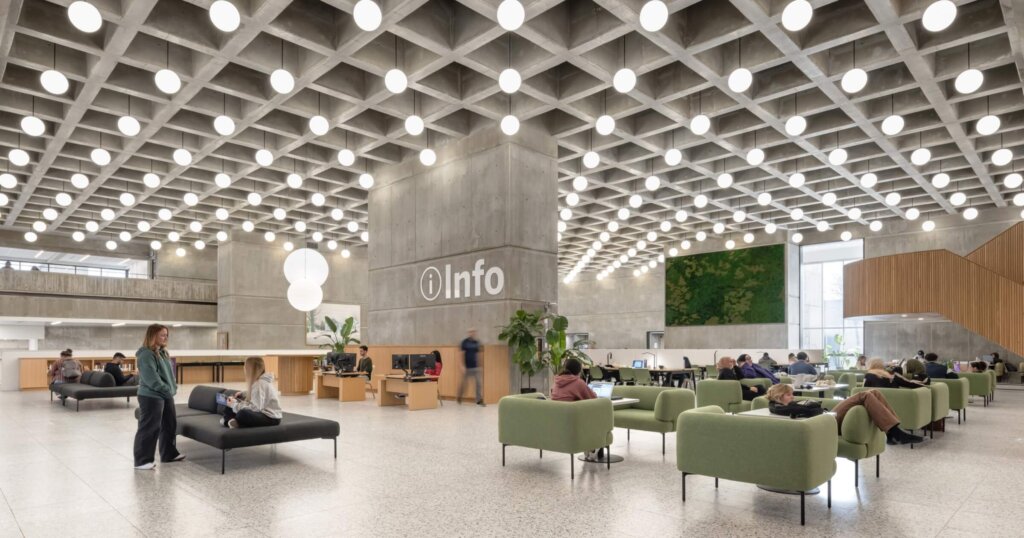
At Western University, the D.B. Weldon Library has long been a central hub for students and researchers. Perkins & Will led a major revitalization in 2022, reimagining the nearly 90,000-square-foot space to meet the needs of today’s learners while preserving its mid-century character.
The renovation gave the library a fresh start. It feels brighter now and easier to move through. Walls that once made the space feel closed off were opened up to let in natural light. Students have new spots to study, with quiet corners for solo work and larger tables for group projects. The team also added energy-saving systems and eco-friendly materials to support Western’s green campus goals.
The result is a space that feels alive again. What was once a quiet, traditional library now buzzes with activity. It keeps the charm of the old building while giving students something new—a place that grows and changes as they learn.
4. The Modern (Seattle)
- Location: Seattle, Washington, USA
- Year built: 2022
- Typology: Corporate/Commercial/Workplace
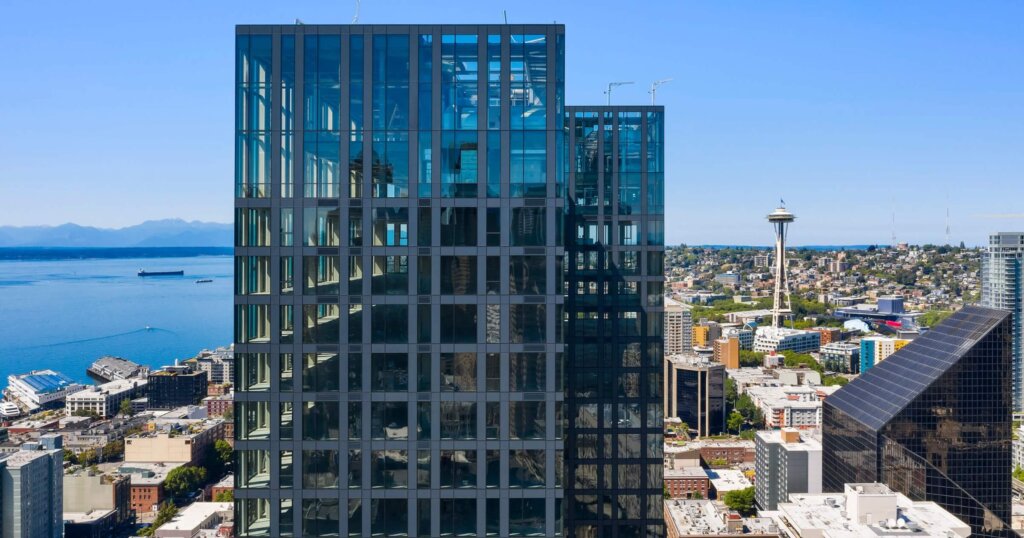
The Modern in Seattle shows how Perkins & Will thinks about the future of work. Completed in 2022, the tower covers nearly 600,000 square feet and feels open and bright from the moment you walk in (Perkins & Will).
Inside, there are open work areas, smaller quiet rooms, and shared lounges that make it easy for people to meet, move, and collaborate. Large windows bring in daylight, while plants and natural materials help the space feel calm. The design focuses on comfort and wellness while also addressing energy use with efficient systems and sustainable finishes.
Digital tools played a big role in the process, too. Modeling and visualization software, like the programs featured in the best 3D modeling architecture software, helped the team plan every detail and bring their ideas to life. The Modern is proof that office buildings can be both functional and uplifting.
In every detail, The Modern captures the firm’s belief that work environments should inspire people to think boldly, collaborate openly, and thrive together.
5. SoLo (house)
- Location: Soo Valley, British Columbia, Canada
- Year built: 2020
- Typology: Residential/Prototype/Sustainable Home
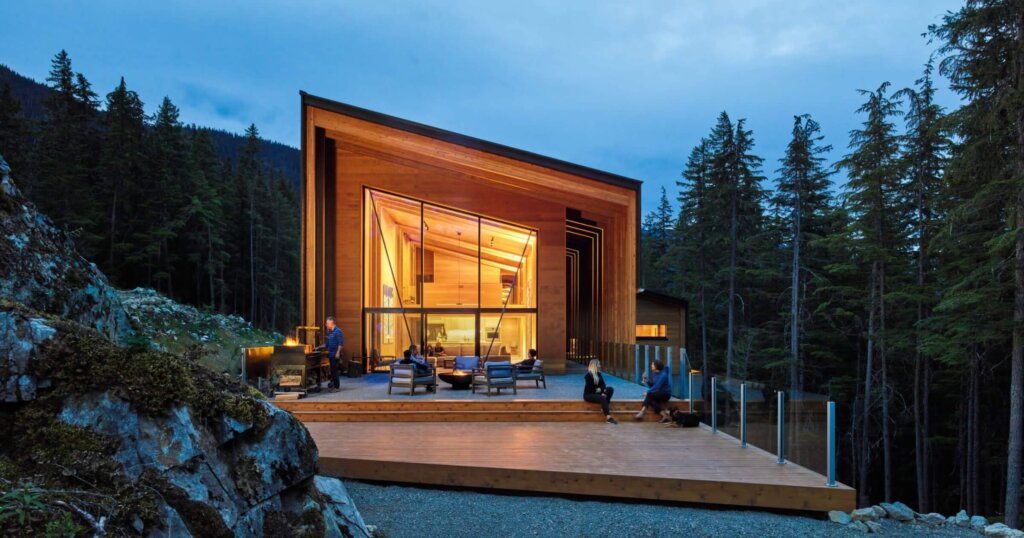
Tucked into the forests of British Columbia’s Soo Valley, SoLo is one of Perkins & Will’s most inspiring sustainability projects. Completed in 2020, this 4,090 sq ft home serves as a prototype for self-sufficient living in remote environments.
The house runs completely off-grid, powered by a mix of solar panels and a hydrogen fuel cell. A geothermal system keeps the inside warm, even in winter, while thick insulation and sturdy cross-laminated timber help hold in the heat. The design makes the home tough enough for the mountain climate but still light on the planet. Every component was prefabricated and assembled on-site to help minimize waste and environmental impact.
SoLo uses a simple mix of wood, glass, and metal to blend with its natural surroundings. Beyond being a beautiful retreat, it stands as a case study in performance-driven design and carbon-conscious construction, reflecting the shift toward sustainable building practices that are redefining the future of architecture.
6. Bioprocess Center, Cambridge
- Location: Cambridge, Massachusetts, USA
- Year built: 2022
- Typology: Science/Research Labs/Technology Facility
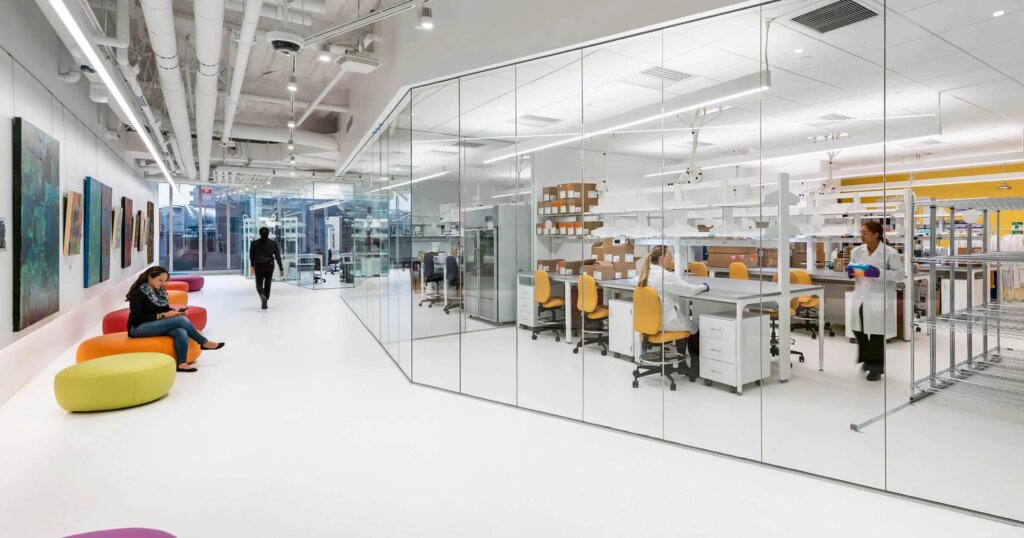
The Bioprocess Center in Cambridge shows how design and science can work together. The building opened in 2022 and spans about 100,000 sq ft. It was created for teams working in biotechnology and research, providing them with space to experiment and grow as their work evolves.
Inside, the layout can be easily changed when new equipment or research needs arise. The labs are built to run efficiently while meeting the high standards that scientists rely on every day. Engineers used sustainable materials and smart systems to save energy and maintain steady temperature and airflow. Natural light reaches deep into the rooms, and the spaces remain quiet and calm, helping people stay focused for long hours of work.
The space proves that even highly technical buildings can still feel inviting. Perkins & Will’s design balances the science with the human side, creating a place where research can move forward and sustainability stays a priority.
7. Shenzhen Energy Ring
- Location: Shenzhen, Guangdong, China
- Year built: 2024
- Typology: Civic/Infrastructure/Energy/Precinct Design
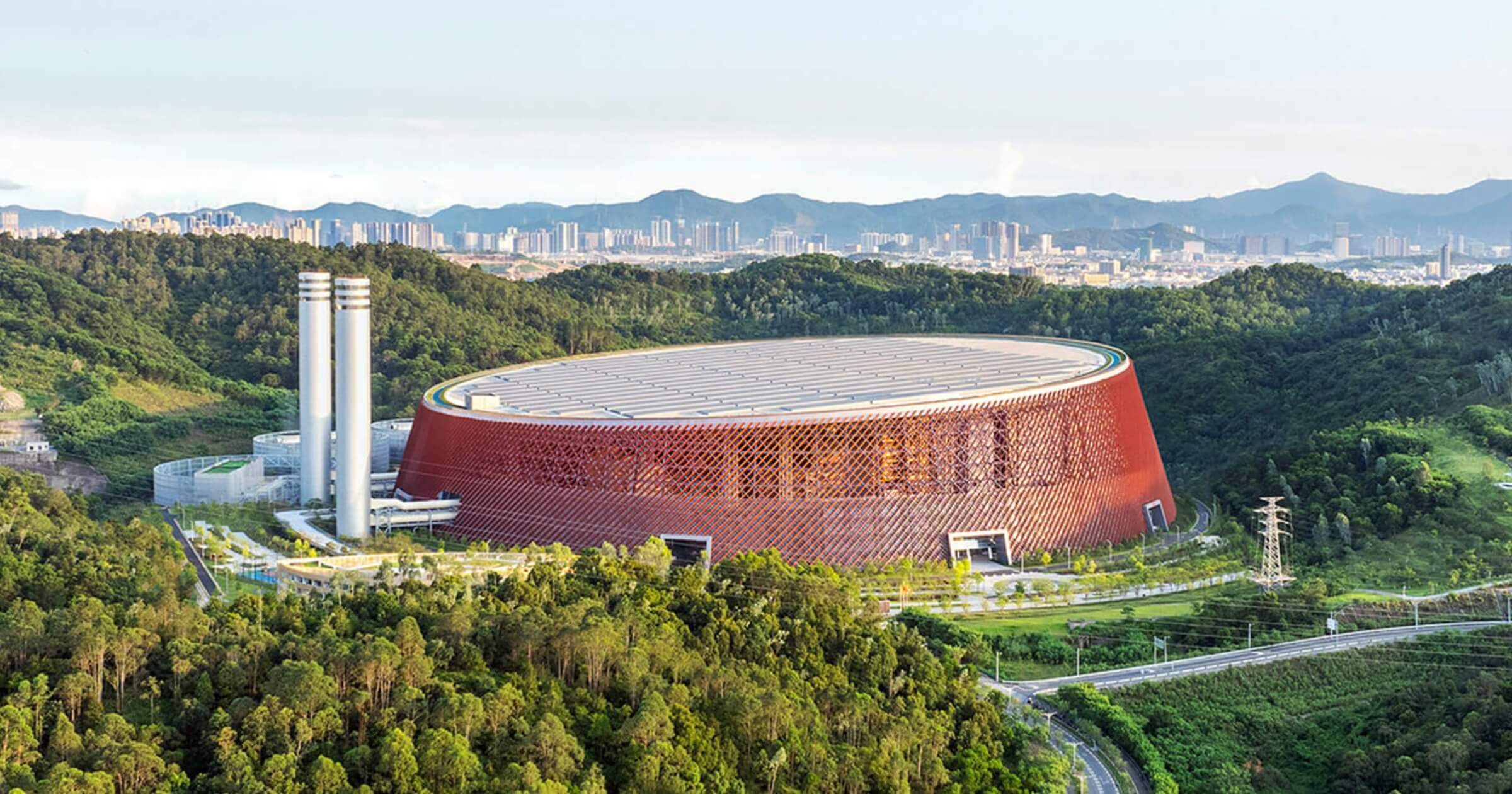
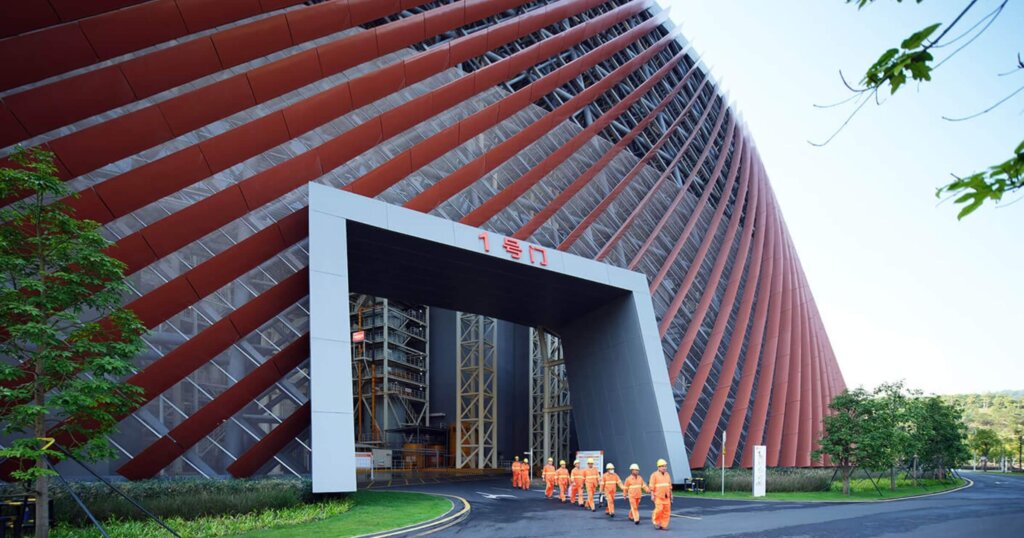
The Shenzhen Energy Ring is one of Perkins & Will’s most ambitious urban-scale projects. Designed to unite architecture, infrastructure, and sustainability, the project spans roughly 2 million square feet and serves as a central hub for Shenzhen’s growing energy innovation district.
The Energy Ring is more than a building. It acts as a master plan that connects public plazas, transportation networks, and energy systems within a single, cohesive space. Its circular design represents renewal and connection, creating a lively area for civic life and environmental awareness.
Public spaces, gardens, and pedestrian walkways encourage people to explore while staying connected to nature. The project shows how architecture and infrastructure can work together to build cleaner, more resilient cities and reflects Perkins & Will’s commitment to sustainability at every scale.
8. Northtown Library & Apartments, Chicago
Location: Chicago, Illinois, USA
Year built: 2019
Typology: Mixed-Use/Community (Library + Senior Housing)
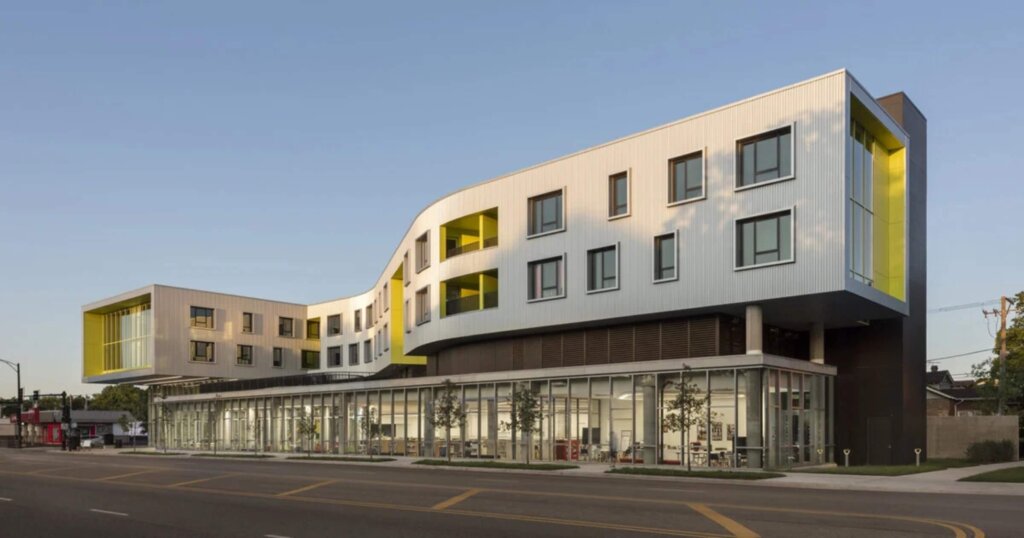
The Northtown Library & Apartments in Chicago is a creative example of how Perkins & Will combines design and social purpose. Completed in 2019, this 65,000 sq ft development brings together a full-service public library and affordable senior housing under one roof.
The building was planned with community in mind. On the ground floor, the library feels open and welcoming. There are reading spaces, computer labs, and community rooms that serve residents and the surrounding neighborhood. Above the library, the apartments offer seniors a mix of privacy and company. Each floor has shared lounges and outdoor terraces where residents can chat, enjoy the view, or simply sit in the sun.
Northtown Library & Apartments stands as an example of how architecture can build stronger, more inclusive neighborhoods where people of all ages feel welcome and supported.
9. Gateway Project, UBC
- Location: University of British Columbia, Vancouver, Canada-
- Year built: Underway
- Typology: Campus Entry Hub/Mixed Academic Use
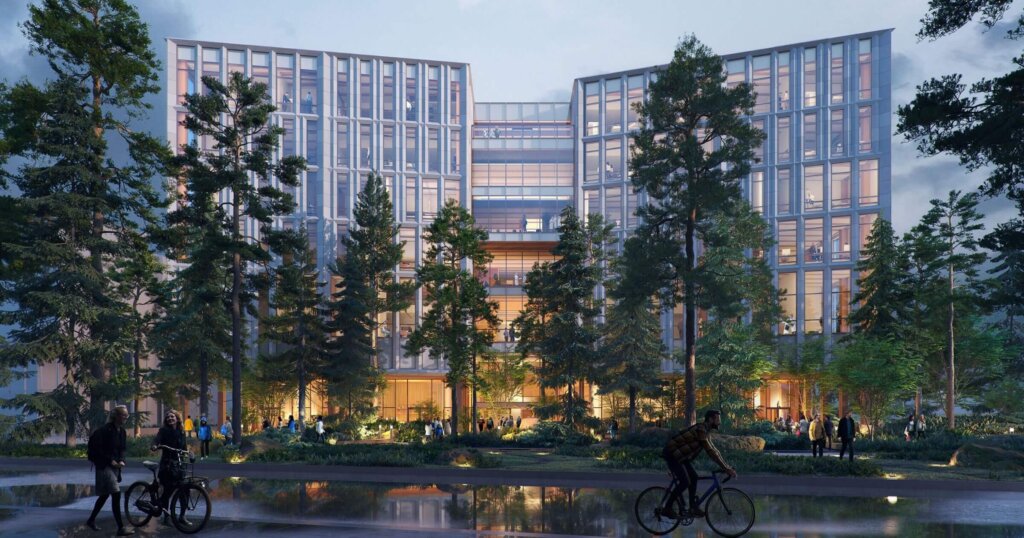
The Gateway Project at the University of British Columbia is a bold new addition to one of Canada’s top universities. Currently underway, this mixed-use academic complex will mark the main entrance to UBC’s Vancouver campus and bring together programs in Nursing, Kinesiology, and Language Sciences, along with community health clinics and shared learning spaces.
More than just a new building, the Gateway Project is designed as a meeting point between the campus and the wider community. The plan draws on the local ecology and the cultural traditions of the Musqueam people, whose traditional territory the university is located on. This connection to place is reflected in the building’s materials, landscaping, and gathering spaces, intended to promote openness and belonging.
When completed, the Gateway Project will serve as a central hub for learning, collaboration, and cultural exchange. The addition reflects Perkins & Will’s ongoing focus on inclusive, sustainable design that strengthens both education and community life.
Bottom line
Perkins & Will continues to lead the global design conversation with projects that prioritize people, sustainability, and innovation. From the Shanghai Library East to the Gateway Project at UBC, the work shows how architecture can shape stronger, more connected communities.
The firm’s legacy also inspires a new generation of designers to think beyond buildings and focus on impact. For those following a similar path, learning how to become an architect is a meaningful first step toward creating spaces that matter.
Want more inspiring stories about design, construction, and sustainability? Subscribe to our newsletter and stay up to date on the latest projects shaping our world.