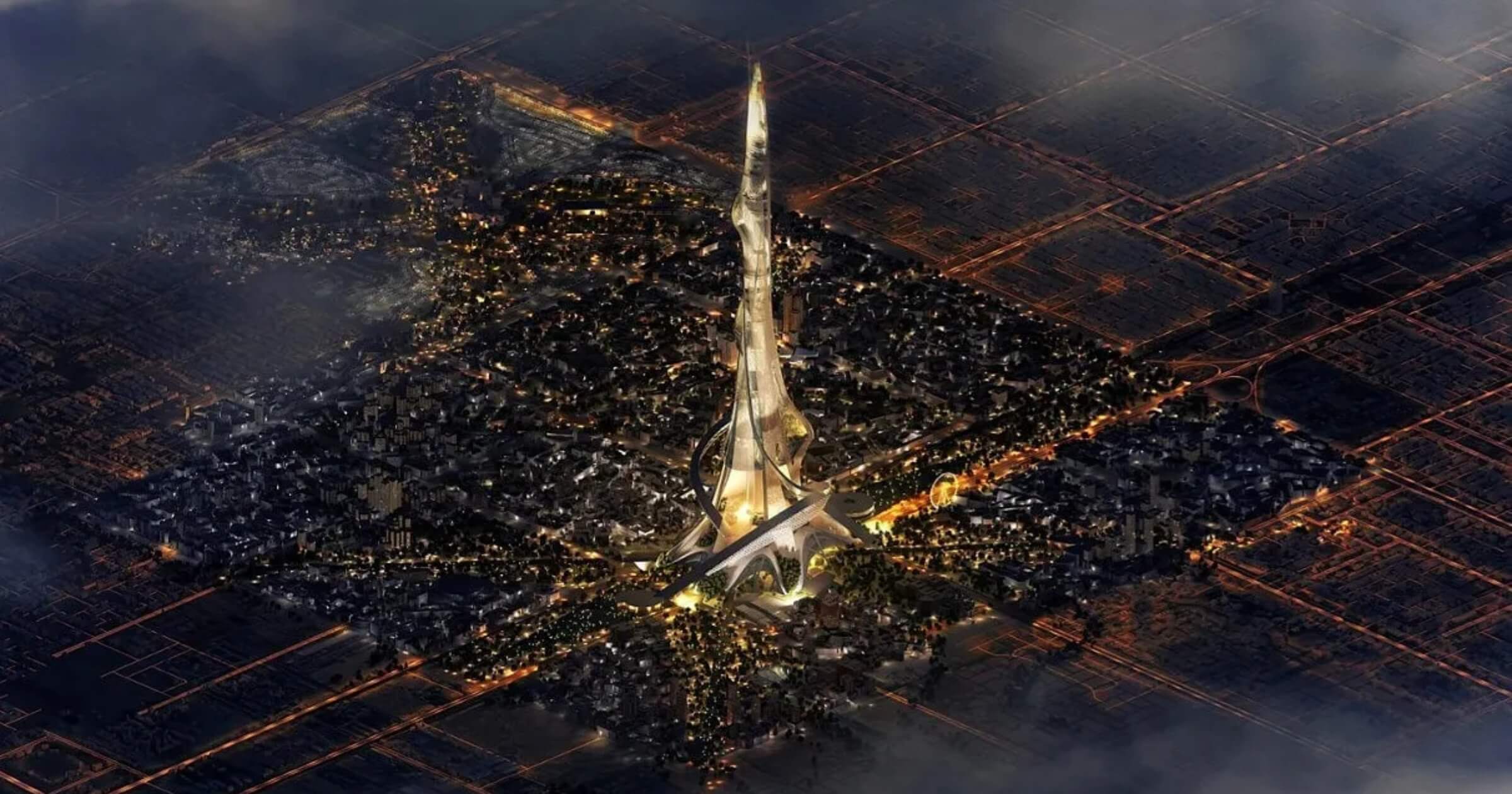
Rise Tower has quickly become one of the most talked-about proposals in Saudi Arabia’s building pipeline, with early concept material showing a skyscraper that aims to push past the limits of what Riyadh’s skyline looks like today. The tower is envisioned as a soaring, sculptural structure that could reach 2 kilometers (6,562 feet) in height, placing it in direct competition with some of the world’s tallest buildings. Its form draws from regional geology and desert landforms, giving it a distinctive identity rather than defaulting to a typical glass-and-steel silhouette. This article digs into what is known about the tower, why the project is being pursued, and what it could mean for the region if it moves ahead.
Who is behind it?
Rise Tower is connected to Saudi Arabia’s broader Vision 2030 redevelopment strategy—an umbrella program that funds major projects in Riyadh, Jeddah, and the country’s newer destinations, such as NEOM. These projects are commonly supported by the Public Investment Fund (PIF) or regional development authorities, which signals strong governmental interest in reshaping the capital into a global hub.
The conceptual design work associated with Rise Tower resembles the style of high-profile Gulf architects known for fluid, sculptural forms and heavy use of cultural symbolism. Concept images published across Middle Eastern design and travel outlets depict a building composed of stacked, twisting volumes carved to echo desert canyons and rock formations. Saudi Arabia has increasingly turned to international architects with experience in large-scale cultural and commercial buildings, and Rise Tower appears to follow that pattern, with HKS Inc. at the helm of the design team.
Why is this project being built?
Saudi Arabia is actively competing for global investment, tourism, and corporate interest, and landmark architecture plays a central role in that strategy. The proposal aligns with several Vision 2030 goals:
- Increasing tourism to 100 million visitors per year
- Strengthening Riyadh’s bid to become one of the top global business capitals
- Attracting international companies to relocate their regional headquarters to the city
- Building dense, mixed-use districts that support long-term economic growth
Megatall towers help anchor central districts, create high-value commercial and residential space, and establish recognizable icons that feed into national branding. Early reporting describes Rise Tower as a mixed-use project that may include housing, offices, hotels, and observation-level attractions—key ingredients for an internationally marketable destination.
Cost, size, and timeline
Rise Tower is still in the conceptual phase, so hard numbers remain limited. Several reports cite an intended height of 2 km, placing it alongside other megatall proposals worldwide. If that holds true, the structure would surpass the height of most built towers and enter a category shared by only a handful of global projects.
A definitive budget has not been released. Megatall towers of similar scale often exceed US$3–5 billion, depending on engineering requirements, site conditions, and program complexity. Without an official public statement, these figures remain speculative but consistent with global benchmarks.
No groundbreaking date has been announced. Major Saudi projects typically undergo lengthy planning cycles, feasibility reviews, and procurement stages before entering active construction. Given the engineering challenges, the project would require:
- A high-strength structural core
- Specialized wind-tunnel testing
- Custom curtainwall systems
- Advanced vertical transportation design
- Multi-contractor delivery and international engineering partnerships
This level of complexity means Rise Tower is likely years away from any confirmed schedule.
Behind the design of Rise Tower
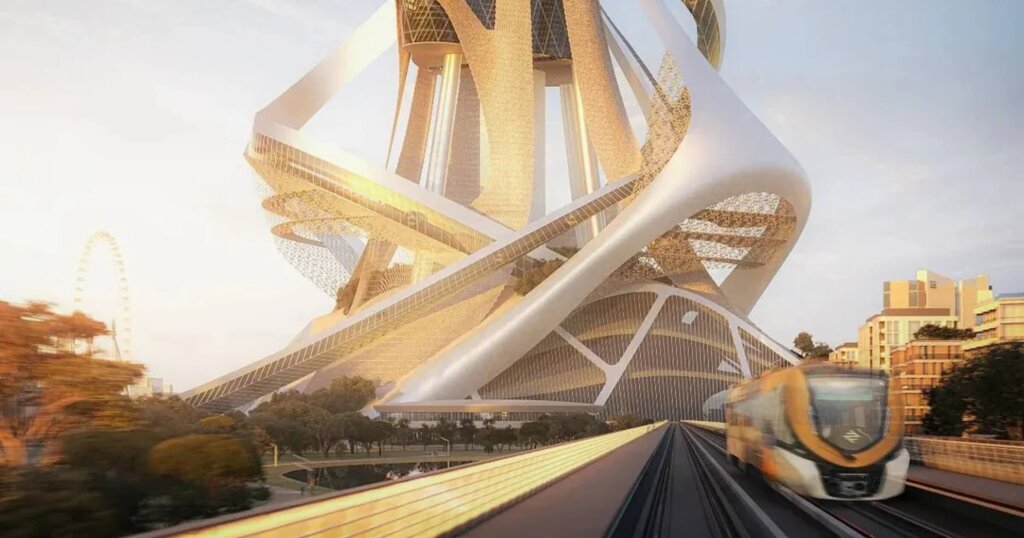
Rise Tower stands out for its visual presence, conceptual scale, and use of regionally inspired forms. Rather than a smooth, monolithic tower, the concept features carved recesses, stepped volumes, and layered masses that break up wind impact and create dramatic outdoor terraces. These cutaways could help reduce solar gain, increase shading, and make certain semi-exterior spaces usable in Riyadh’s intense climate.
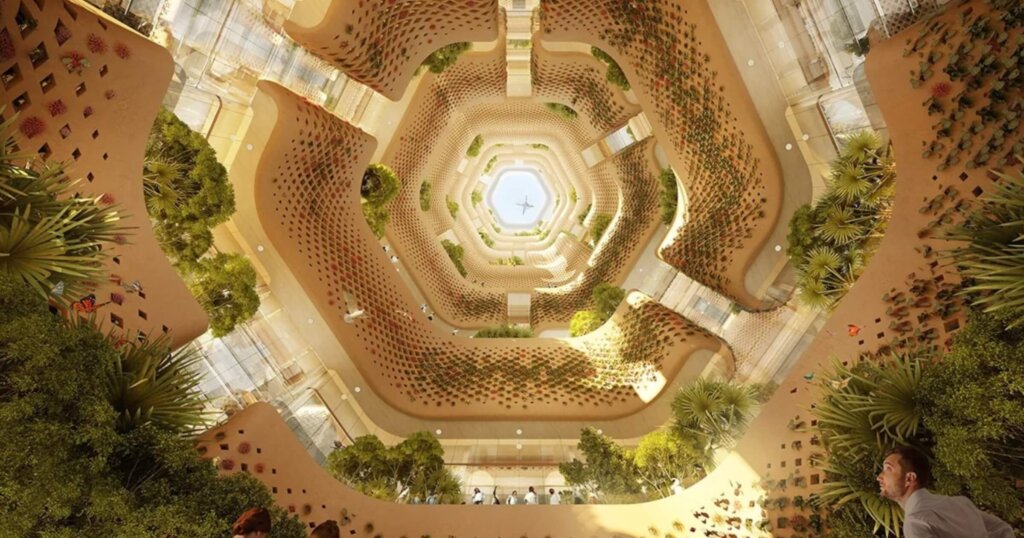
Architecturally, the tower aims to create a landmark that reflects the region’s identity—an important move as Saudi Arabia works to define its own architectural voice rather than replicate existing global styles. If built, it would require groundbreaking engineering on par with the world’s most advanced skyscrapers, including tuned mass dampers, high-performance materials, and sophisticated energy systems.
Its mixed-use ambition also makes it noteworthy. Early descriptions suggest a vertical “city” with hospitality, commercial, and residential wings stacked into one continuous urban environment. That type of program requires intricate mechanical planning, tiered structural zones, and advanced fire and life-safety strategies.
Is building another supertall skyscraper worth it?
Rise Tower aligns with Saudi Arabia’s push to elevate Riyadh as a global capital. A tower of this scale would create thousands of construction jobs over several years and many permanent roles once operational. It would help attract foreign businesses, boost convention and tourism activity, and expand high-end real estate options in the city’s core.
There are also legitimate debates. Megatall towers come with long construction timelines, substantial budgets, and ongoing operating costs. Critics question whether the demand projections for ultra-tall mixed-use buildings will remain strong enough to justify the investment. Supporters argue that these projects are catalysts—once built, they attract new business, anchor surrounding districts, and reinforce the city’s global identity.
At this stage, Rise Tower sits between vision and feasibility. What is clear is that projects of this scale are part of Saudi Arabia’s long-term strategy to reshape its urban centers and signal confidence in its economic future.
If you’d like more project spotlights and construction news from around the world, join our newsletter at Under the Hard Hat for weekly updates and deep dives tailored to the AEC community.