
Paris is about to add a new landmark to its skyline. The Tour Triangle, a 180-meter glass skyscraper designed by Herzog & de Meuron, is rising in the city’s 15th arrondissement. When it opens in 2026, it will be the first high-rise built in central Paris since the Tour Montparnasse in 1973. Its bold shape and mix of uses signal a fresh chapter in the city’s approach to tall buildings.
A building for work, leisure, and culture
The tower isn’t just office space. It brings together offices, a hotel, cultural venues, and public amenities under one roof. The 42-story building will offer around 70,000 square meters of office space, enough for roughly 5,000 workers. Part of the building will house a Radisson Blu hotel with 128 rooms, along with a panoramic restaurant offering sweeping city views. Visitors and residents will also find a cultural center, health facilities, a crèche, and 750 square meters of retail. Two terraces totaling 2,600 square meters will provide greenery and outdoor spaces above the busy streets.
Sustainability is a big part of the project. The tower is designed to produce only about a quarter of the CO₂ that a conventional building of its size would emit. Its large glass surfaces are oriented to maximize the use of natural light, reducing the need for artificial lighting. Energy-efficient systems and high-performance materials are also part of the plan. The Tour Triangle is on track to meet HQE and BREEAM environmental standards, showing a clear commitment to greener construction in a city that has long limited tall buildings.
Design, debate, and what it means for Paris
The building’s shape and layout also take its surroundings into account. The triangular silhouette narrows toward the top, reducing visual bulk and helping it blend in with nearby low-rise neighborhoods. Large terraces and stepped setbacks break up the façade, giving it a lighter appearance than many traditional towers. The glass is designed to reflect daylight differently throughout the day, sometimes almost disappearing against the sky.
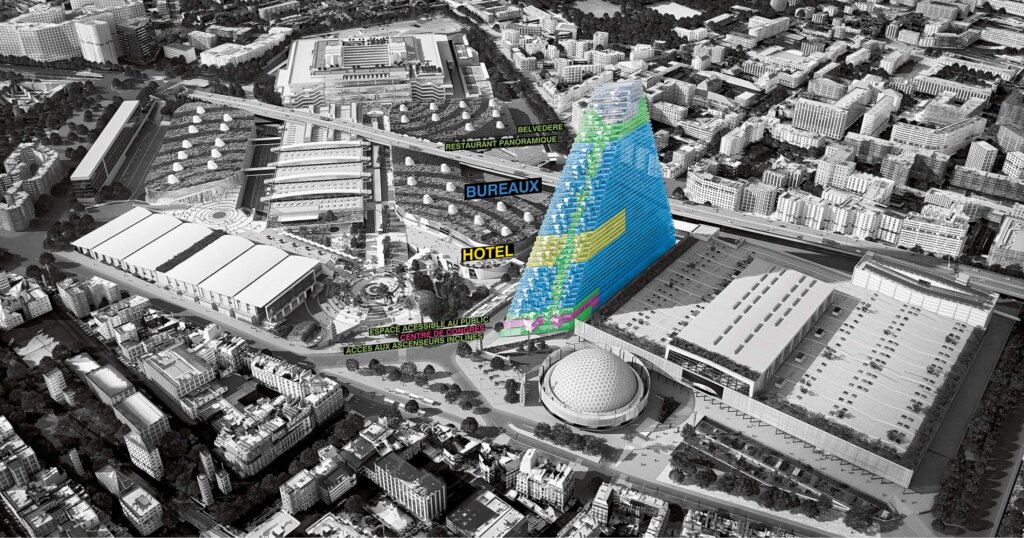
Image showing the interior floor plan of Tour Triangle. Courtesy of https://www.herzogdemeuron.com/
The project hasn’t been without controversy. Some critics worry that any high-rise could clash with Paris’s historic character. Others highlight its mix of uses and green design as a sign of careful, modern planning. Years of legal and political challenges delayed construction, reflecting the tension between preserving tradition and embracing innovation.
For individuals in the construction, architecture, or engineering fields, the Tour Triangle is worth watching. Its combination of offices, hotel, retail, and cultural spaces shows a new approach to high-rise design. The green terraces and energy-conscious systems offer a look at how tall buildings can shrink their environmental footprint. As Paris explores vertical growth after decades without new high-rises, this tower could shape how future projects are planned and built.
The Tour Triangle is more than just another tall building. It represents a meeting point of engineering, design, and environmental thinking. Combining functional spaces with sustainability measures suggests what high-rise construction might look like in cities with strict planning rules.
Stay updated on the Tour Triangle and other major construction projects by subscribing to our newsletter.