
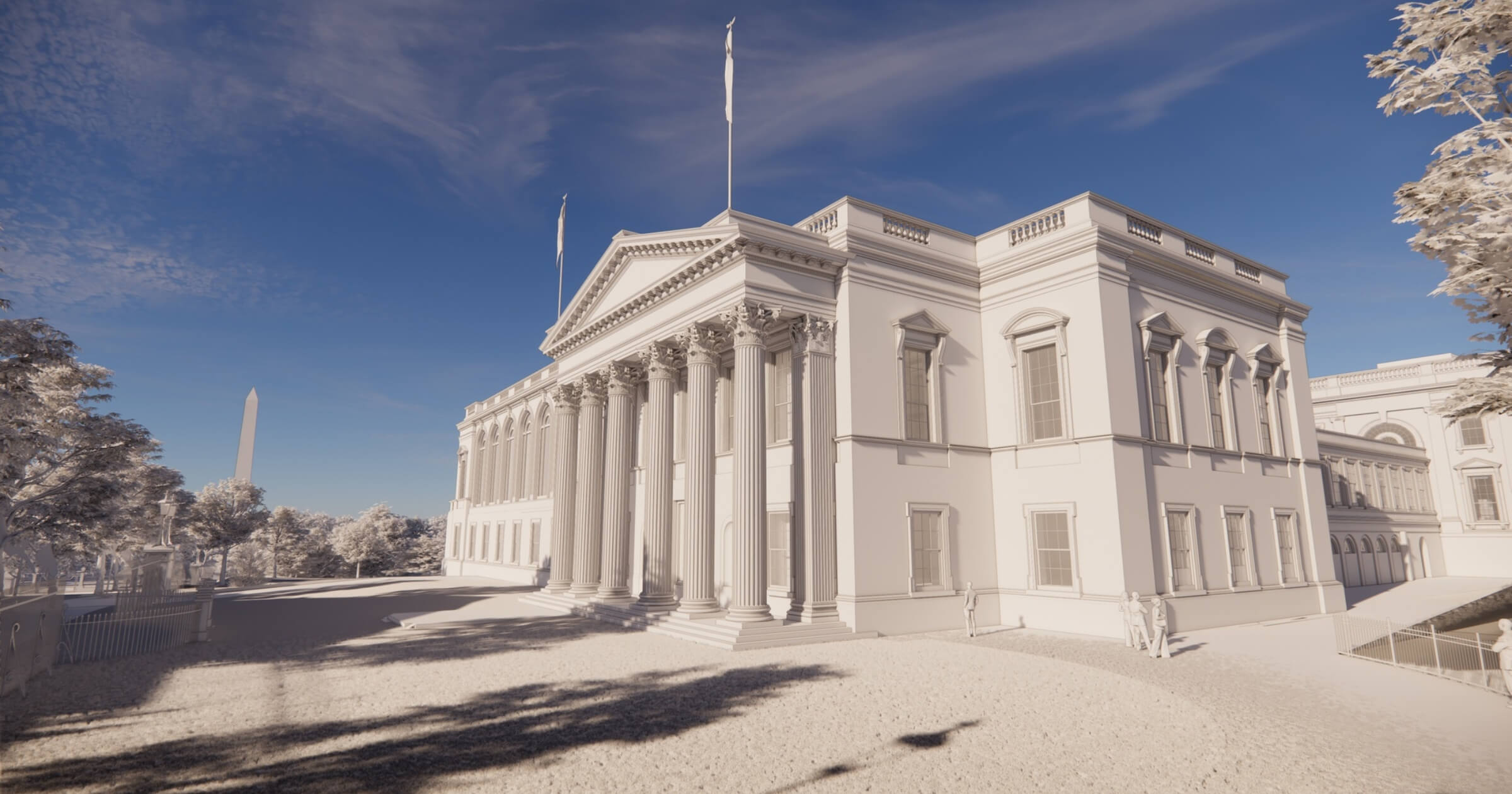
President Donald Trump is moving ahead with plans to add a $250 million ballroom to the White House. It will be one of the most expensive updates ever made to the building. The project has been discussed for years and is now finally starting, raising questions about its cost and timing during a tight budget period. Supporters say the new White House ballroom will make it easier to host large state events, while critics wonder whether it’s the right move given the country’s financial challenges.
Quick look
- Trump’s $250M White House ballroom is moving forward despite a government shutdown, sparking debate over its cost, timing, and purpose.
- Privately funded and led by major AEC firms, the 90,000-square-foot addition will be the largest event space ever built on the White House grounds.
- Critics question donor influence, oversight, and the demolition of historic spaces, while supporters hail the project as a symbol of legacy and leadership.
- Designed for state dinners and major gatherings, the ballroom shifts how presidents host, reflecting Trump’s signature blend of architecture, branding, and power.
Why is Trump building a ballroom at the White House?
President Donald Trump has wanted to add a ballroom to the White House for years. He believes the nation’s most famous home should have a grand space for state dinners, major celebrations, and visiting world leaders. The idea fits his long-standing interest in luxury, design, and leaving a visible mark on American history.
Trump has often said that events at the White House deserve more elegance and space. Large gatherings are usually held under outdoor tents on the South Lawn, something he has called “not a pretty sight.” The new White House ballroom is meant to give future presidents and guests a permanent venue worthy of major national events.
Despite a government shutdown and tight budgets, work on the ballroom is moving forward. The project is funded by private donations rather than taxpayer money, allowing construction to continue even as other government programs are paused. This approach has helped the project avoid some of the financial hurdles that other federal projects face.
The ballroom reflects Trump’s belief that architecture should show strength, beauty, and success. From his business background to his changes at the White House, such as updates to the Rose Garden and Oval Office, Trump has always seen design as a reflection of leadership. Supporters say the ballroom will stand as a legacy project, while critics see it as another example of his taste for grandeur.
Key facts about the ballroom project
Cost and funding
The new White House ballroom is expected to cost about $250 million (as of late October 2025, the estimated cost is $300 million), making it one of the most expensive upgrades to the building. Some reports say the price could climb even higher as plans move forward.
The President maintains that no taxpayer money will be used. Instead, the ballroom will be funded by private donations and by President Trump himself. According to reports, a nonprofit group called the Trust for the National Mall is helping collect donations for the project. Wealthy donors and large companies are said to be contributing, but the full list of names and amounts has not been made public.
“For more than 150 years, every President has dreamt about having a Ballroom at the White House to accommodate people for grand parties, State Visits, etc. I am honored to be the first President to finally get this much-needed project underway, with zero cost to the American Taxpayer!” the President said.
Because the project is privately funded, there are questions about the level of oversight. Some lawmakers and watchdog groups want more information about who is donating and whether those donors could benefit from their support. Others worry that even private gifts might reduce tax income if they are written off as charitable donations.
Building materials are more expensive now than in past years. One reason is the higher lumber prices caused by Trump’s tariffs on lumber imports. These trade policies have made wood and other construction materials more costly across the country, which could push the ballroom’s final price even higher.
Size and capacity
The new White House ballroom is planned to be about 90,000 square feet. It will be large enough to seat around 650 guests, making it more than three times the size of any other event room in the White House.
To compare:
- The East Room can hold about 200 guests for formal events.
- The State Dining Room is even smaller, seating about 140 people.
The new ballroom will make it easier to host big state dinners, award ceremonies, and celebrations all in one place. Guests will also be more comfortable. The ballroom will include built-in restrooms, a catering kitchen, and robust security features. It will also protect events from bad weather, which has been a problem for outdoor setups in the past.
Overall, the ballroom will change how the White House holds formal events. Instead of temporary tents or small rooms, there will be one large, elegant space designed for gatherings of every kind.
Location and what it replaces
The new ballroom at the White House will be built on the site of the former East Wing. According to official announcements, the project will replace the old structure with a modernized annex that houses the ballroom. This means the offices and event spaces currently in the East Wing, including the workspace of the First Lady and the White House Social Office, are being relocated during construction.
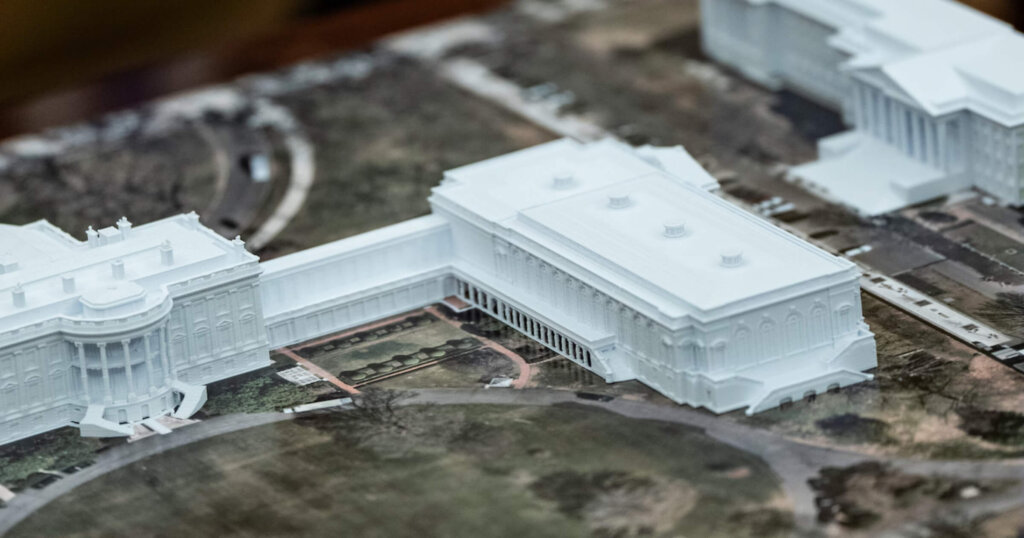
East wing of White House where the ballroom will be located.
Because this is a historic area of the White House grounds, there are concerns involving security and preservation. Some critics argue that the demolition of the East Wing and changes to the surrounding landscaped areas could weaken the estate’s historic character and introduce new security challenges, given the larger structure and expanded public event use.
Design and features
The new White House ballroom is designed to look grand and elegant, in keeping with the rest of the building. Early plans feature tall, arched windows, marble floors, gold accents, and sparkling chandeliers that can illuminate the entire room. The ballroom will also feature high ceilings and specialized soundproofing to ensure speeches and music sound clear during large events.
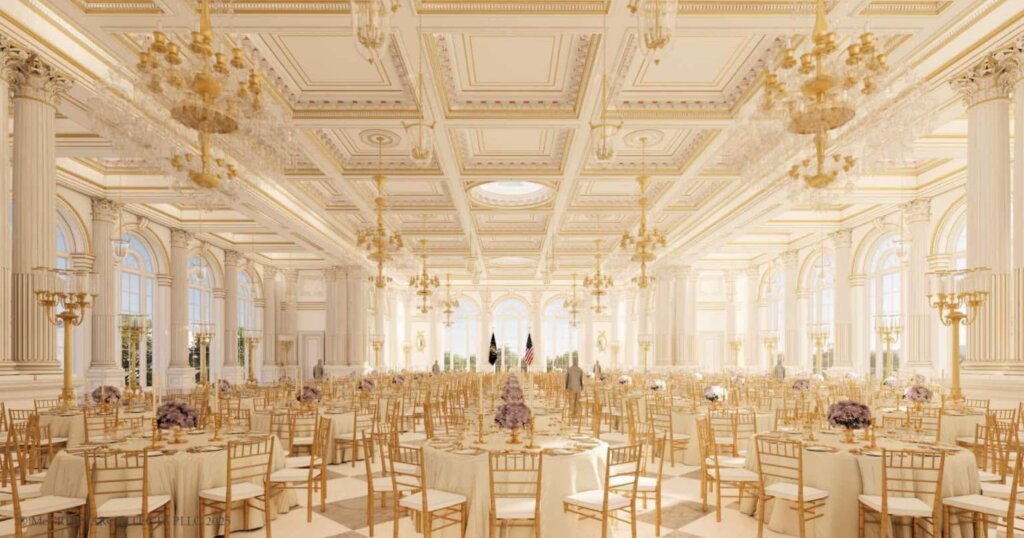
Rendering of the White House Ballroom interior design.
The project is being led by McCrery Architects, a Washington-based firm known for classical architecture. They are working with Clark Construction and AECOM, two major companies with long histories in government projects. The goal is to build something new while preserving the historic White House’s look and feel.
Although this will be one of the largest additions in decades, the design will blend with the existing building, rather than standing out. The architects say the exterior will include the same white stone and columns found throughout the main residence. Inside, the finishes and furniture will reflect the White House’s traditional style but with more space and light for big state events.
The ballroom also connects to a larger theme explored in Blueprints and Ballots: The Future of Construction in Trump’s America, which looks at how Trump’s projects often mix politics, design, and personal vision. Supporters view the ballroom as another example of this blend, a mix of luxury and legacy that leaves a lasting mark on one of America’s most famous buildings.
Timeline and approvals
The plan to build a new White House ballroom has been in the works for years, but it officially took shape in 2025. The White House announced the project on July 31, 2025, saying construction would begin in early fall. Work started soon after, with demolition of the old East Wing beginning in October. The ballroom is expected to be finished before the end of President Trump’s current term in January 2029.
Several federal groups are involved in the review process. The U.S. Secret Service helped design security plans for the new space. The National Capital Planning Commission is reviewing building plans to make sure the design fits the historic site, and the Committee for the Preservation of the White House is providing feedback on architectural details. Some lawmakers, including members of Congress from both parties, have asked for more information about how the project was cleared so quickly.
Trump White House concerns and controversies
The plan to build a new White House ballroom has sparked significant debate. Some people see it as a bold addition, while others think it raises serious questions about money and priorities.
Critics in both parties say the project could create conflicts of interest. They worry that big donors who help fund the ballroom might expect something in return, like more access to the president.
The ballroom is being built during a time when the federal government is cutting budgets and facing shutdowns. Even though private money is paying for the project, many people feel it sends the wrong message. They argue that now is not the right time for such a high-cost project when other national priorities need attention.
Preservation groups are also speaking out. The National Trust for Historic Preservation, a nonprofit created by Congress to help protect historic places in the United States, is asking the Trump administration to pause demolition of the East Wing. The group says work should not continue until a full review of the ballroom project is finished.
In a letter sent to the National Capital Planning Commission, the National Park Service, and the Commission of Fine Arts, the Trust shared its primary concern: the size of the new addition. The group warned that “the proposed new construction will overwhelm the White House itself.”
Significance and symbolism
The new White House ballroom is a symbol of how President Trump wants to shape his legacy and of his view of the power of design.
Supporters say the ballroom shows confidence and pride in American leadership. With its large size and elegant design, it sends a message of strength and success to guests from around the world. Critics, however, see it as a display of wealth and personal branding rather than national pride.
President Trump has always linked design to his personal style. Like his hotels and resorts, the ballroom focuses on size, luxury, and a bold look that draws attention. This approach mirrors how he uses branding in politics: clear, flashy, and easy to recognize.
Other presidents have changed the White House before. Theodore Roosevelt built the West Wing, and John F. Kennedy redesigned the Rose Garden. Each change reflected its time and the president’s vision. Trump’s ballroom follows that tradition, but it also stands out for its scale and personality. Instead of a simple update, it’s meant to leave a personal mark that will last long after his presidency ends.
Impact on usage and events
The new White House ballroom will change how future presidents host major events. It gives the White House more room and flexibility than ever before.
The ballroom is designed for big moments. It can host state dinners, award ceremonies, political galas, and visits from world leaders, all under one roof. In the past, many large events had to be held outdoors under tents. Now, everything from formal dinners to press events can take place inside, no matter the weather.
Having a space this large could change how presidents plan gatherings. They may invite more guests, hold larger state dinners, or bring together groups that once met separately. It could also make the White House a stronger symbol of U.S. pride and hospitality for visitors from around the world.
Many countries already have large halls for major events, like Buckingham Palace’s Ballroom in London or the Grand Kremlin Palace in Moscow. The new White House ballroom puts the U.S. on par with other countries when it comes to hosting large international gatherings.
This expansion also connects to broader questions about the U.S. construction industry. As Americans have seen, new policies around immigration can quickly affect how and where building gets done, and who does the work.
Final thoughts
The new White House ballroom will change how the nation’s most famous home looks, feels, and functions. For President Trump, the ballroom reflects his belief that architecture can tell a story about power, pride, and legacy.
Whether you’re a critic or a supporter of the ballroom, it’s a project that will influence how future presidents represent the country on the world stage, and what this grand addition ultimately says about the era it was built in.
Want to stay up to date on major projects shaping the construction industry? Subscribe to our newsletter for the latest news, insights, and updates.