
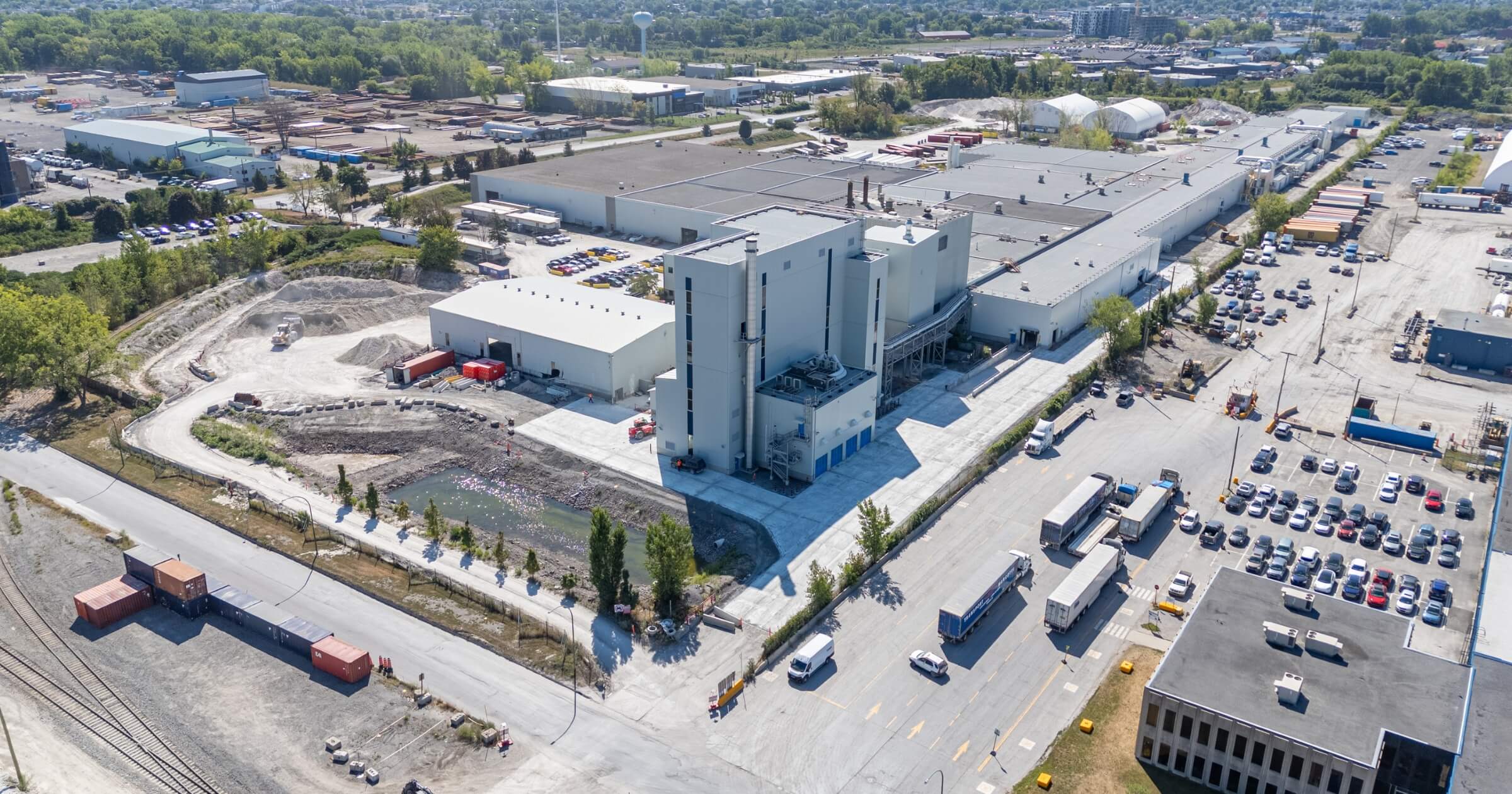
Quebec-based glass manufacturer Saint-Gobain recently completed the expansion of the CertainTeed Gypsum plant in Sainte-Catherine, a new zero-carbon wallboard plant. The facility is now the first zero-carbon gypsum wallboard plant in North America, and the largest of its kind in the world. The project was initially announced in 2022 and underwent major electrification revamps, allowing the plant to run on renewable electricity.
Upon completion, the expansion helped CertainTeed reduce CO2 emissions by 44,000 tons per year, roughly equivalent to 14,000 cars. The upgrade also marks the introduction of Infinaé’s CarbonLow, a new wallboard category in Canada said to produce up to 60% less embodied carbon cradle-to-gate. There will be upgraded electric heating elements replacing many of the natural gas burners, significantly contributing to the overall emissions impact. The smart technology upgrades include new energy meters and more robust management systems to monitor production performance and optimize continually.
The facility upgrades also allow CertainTeed to decrease energy use by up to 30% while boosting production capacity by 40%. CarbonLow is now Saint-Gobain’s lowest-impact and highest-performing range of gypsum solutions, and is said to lead the charge in sustainable gypsum products produced in Canada. It offers Canadian consumers the chance to surpass current green building standards and respond to rising housing demand simultaneously.
Another step toward sustainable building practices for Canadians
Around the world, businesses across all industries are making moves to reach new sustainability initiatives. For Canadians, sustainable housing and building practices have been growing in demand for quite some time. The housing crisis is driving an urgent need for millions of additional homes by 2030, and the country is turning to faster, more innovative building solutions, such as off-site construction (think prefabricated and modular homes) and eco-friendly materials like gypsum board.
These products and practices help Canadians collectively reach sustainability goals by producing less waste in the construction and design, especially at scale. A growing number of Canadian homebuyers and renovators are also prioritizing greener builds, leading to major developers looking to partner with more sustainable suppliers. Homeowners are also more inclined to opt for energy-efficient homes, partly because reduced utility bills save them money down the line.
Sustainable housing construction can also help lower overall housing costs, which is particularly important amid a cost-of-living crisis. They do so by reducing long-term operational expenses, lowering prices due to increased build efficiency, and offering more competitive upfront construction costs. The use of sustainable materials like gypsum board will likely have a lesser impact on reducing housing costs than initiatives like prefabricated construction, but at scale, every effort in sustainability counts.
CertainTeed was founded in 1904 and has long been a leader in sustainable residential building materials. They produce siding, roofing, and insulation outside of gypsum. Canadians can expect competitors to follow suit with sustainable efforts in their offerings, especially as companies strive to reach net-zero climate goals and produce more eco-conscious, ethically made materials.
Don’t forget to subscribe to the Under the Hart Hat newsletter and follow us on LinkedIn to stay in the loop about sustainable developments around the world.