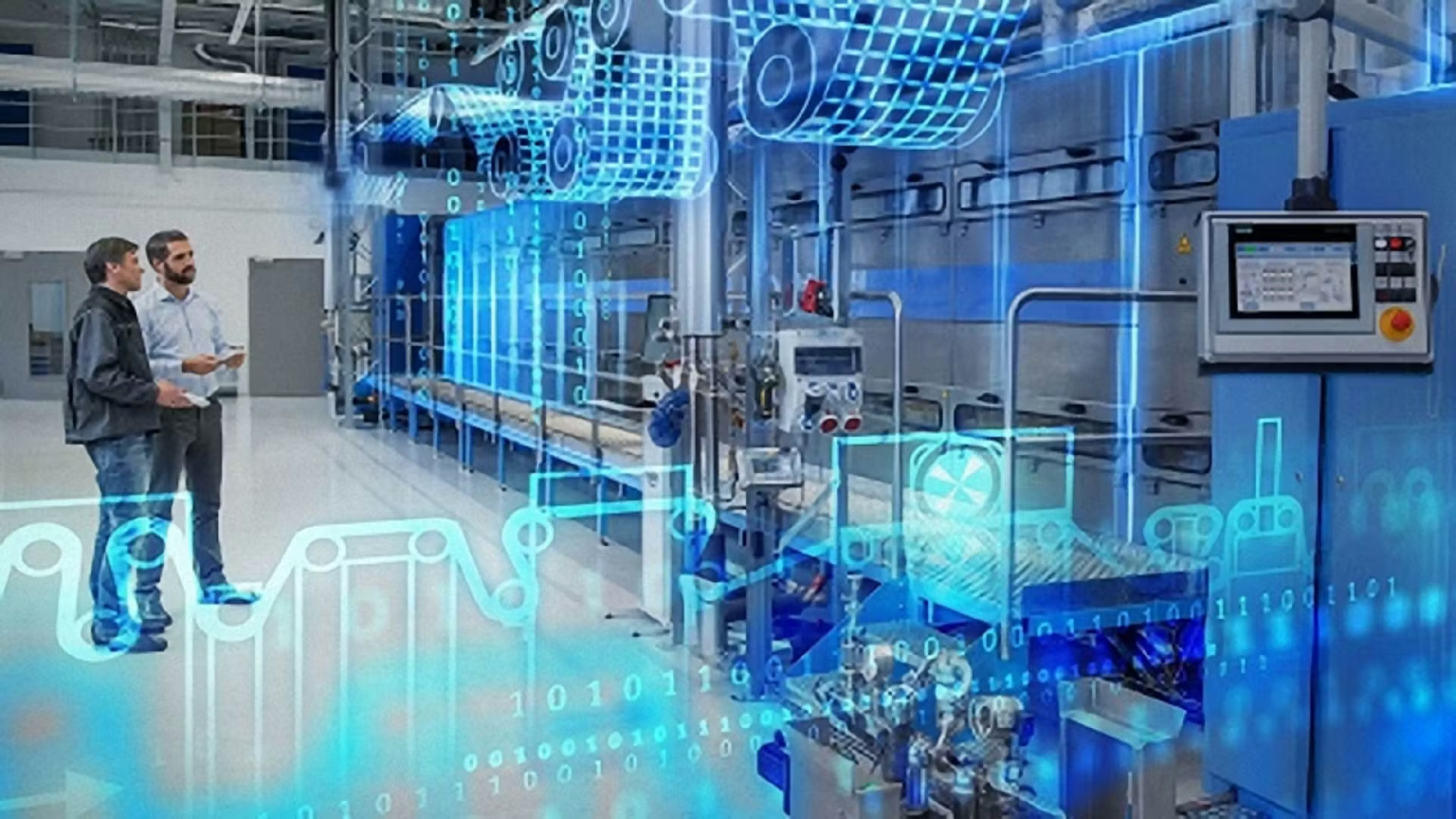
Factories are changing fast. AI is moving beyond simple automation into decision-making, learning, and adaptation. In a recent conversation with Rahul Garg, Global VP of Industrial Machinery, Siemens Digital Industries Software, one idea kept coming up: the line between digital and physical work is disappearing. Systems are no longer just tracking what’s happening on the floor or in the field—they’re actively influencing it, creating a continuous feedback loop between data and action. That shift is already reshaping manufacturing, and construction is starting to feel the pull as connected tools, real-time data, and smart systems increasingly play a larger role on job sites.
What’s happening in factories right now
Walk into a modern factory today, and it looks different from what it did even five years ago. Automation isn’t new. Assembly lines, welding robots, and various forms of packaging equipment have all been around for a while. What’s changed is the way those systems think. AI is now being layered onto existing automation technology, enabling machines to adapt and respond in real time.
Computer vision is a prime example of how this is playing out. You have cameras paired with AI models that can inspect parts as they roll off the production line and spot defects on the fly, improving quality without slowing production. Robots are also handling more complex tasks. Work that once required a highly trained operator—fine welding, delicate assembly, precision placement—is increasingly supported by systems that learn and improve over time.
Behind the scenes, data is doing a lot of the heavy lifting. Predictive analytics track performance across entire production lines. If something starts to drift—temperature, alignment, timing—the system can flag it or adjust before it becomes a problem.
Garg pointed out that this is a shift from structured automation to a more flexible approach. Factories used to rely on tightly controlled environments, but now, AI is allowing those systems to operate under less predictable conditions. “The easiest way to explain the power of AI is that in the industrial world, we have automated systems that work in a structured environment. AI helps you unleash that power in an unstructured environment,” Garg explained. That is an important step because once automation works outside of a perfectly controlled setting, it opens the door to entirely new applications.
Why it matters for construction
Construction has always been harder to automate than manufacturing. Every jobsite is different. Conditions change daily—weather, terrain, and coordination between trades add layers of complexity. That’s exactly why what’s happening in factories is worth paying attention to.
The construction industry is dealing with many of the same pressures. Labor shortages are a constant concern, productivity has struggled to keep pace with other industries, and projects are getting more complex, yet timelines are not getting any longer.
Automation and digital tools are slowly moving into that space. “AI helps you initially in getting things figured out right. As you are trying to build something, you may have a process and ways to assemble it. But maybe there’s a better way to do that, and AI can help you with that,” Garg shared.
Think about tasks like layout, material handling, or repetitive installation work. These are areas where consistency matters, and variation creates risk. Tools that can adapt in real time could reduce that variation.
Digital workflows are another piece of the puzzle. Construction has long struggled with disconnected systems—design, planning, execution, and reporting often live in separate tools. What Siemens is working toward is a more connected flow of information.
That’s where digital twins start to come into play.
Digital twins move from design to real-world use
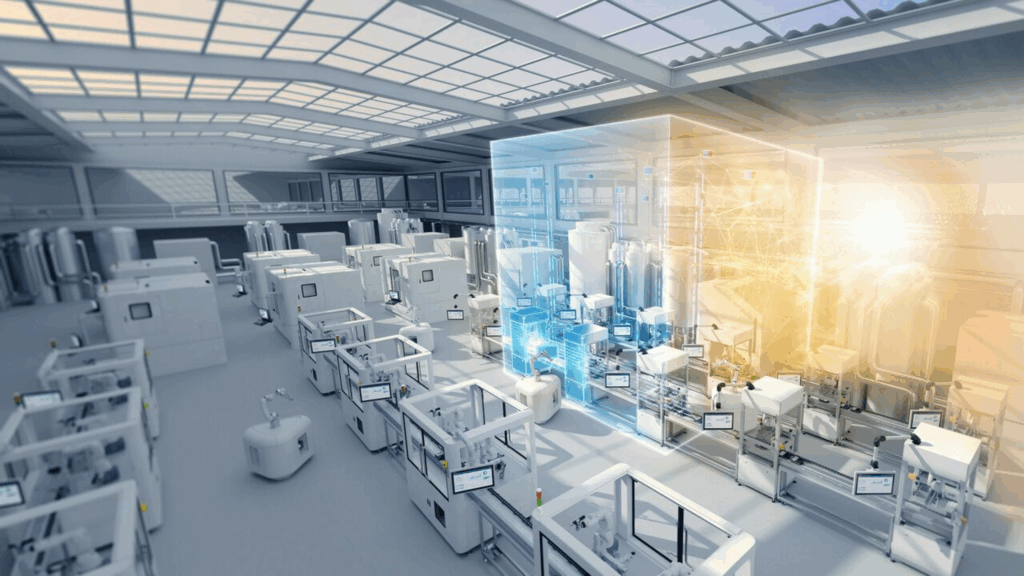
Digital twins aren’t new—they’ve been around in engineering and design for years. The idea is simple: create a virtual version of a physical asset and use it to test, simulate, and refine ideas before anything is built.
What’s changing is how far that concept is being pushed. Garg noted that digital twins have gotten much more detailed—and much more useful. They’ve moved beyond basic models and simulations to include real-world physics and performance data, allowing teams to test real-world conditions with much greater accuracy.
For manufacturing, that’s a huge advantage. Production processes can be tested before going live, allowing teams to see how robots interact with a part, how materials behave, and where potential issues might show up.
There’s also a safety angle. Digital environments allow companies to test how humans and machines interact before putting them together in the real world. That’s especially important as more advanced robotics enter the workplace.
For construction, the potential is clear. A digital twin of the jobsite allows teams to simulate workflows before crews even set foot on the site. They can then map out how equipment moves, where materials are staged, and when certain tasks need to be completed, helping to spot potential conflicts before they happen. It won’t eliminate every problem, but it certainly reduces the number of surprises.
Microfactories and a shift in how things are built
Another concept that came up in the conversation with Garg was microfactories. The idea shifts away from big, centralised production facilities and towards smaller, more flexible workplaces that can produce highly customised components exactly where they’re needed. Additive manufacturing plays a big part in making this happen, allowing complex shapes and designs that just wouldn’t be possible—or would be way too pricey—to achieve with older methods.
Garg shared an example tied to entertainment environments, where artificial landscapes—rocks, gardens, and detailed structures—are created with a high level of precision for Disney. These aren’t simple shapes. They involve complex surfaces, light reflection, and detailed geometry. AI helps manage that complexity, optimizing how those components are produced, improving both speed and quality.
In construction, this points toward a different way of thinking about materials and prefabrication. Instead of relying on standardized components shipped to the site, more custom elements could be produced near the project. That could reduce transport costs, simplify installation, and improve the overall workflow.
It also connects back to the concept of digital twins. If you can design and simulate a part digitally, and then build it to precision, the gap between what you drew and what gets built starts to close up quickly.
The role of humans in an AI-driven environment
One of the biggest concerns around automation is that it replaces people. That’s not how Siemens approaches it—and Garg was clear about that. Factories are not becoming fully autonomous. Humans are still central to how these systems operate. “I don’t believe we’ll ever reach the stage where factories are run completely without humans,” he said. “You still need humans to supervise production, and that’s not going to change.”
What is changing is the nature of the work. AI is reducing the time it takes to learn complex tasks. Instead of spending years building experience, workers can rely on systems that guide decisions and highlight issues. As Garg put it, “AI is empowering humans to become smarter, better, and more efficient. It’s empowering the new person to learn something that someone with 30 years of experience may have gained over a long period.”
That shift is already changing how work is done on the ground. Operators can keep an eye on multiple systems at once, jump on issues as they arise, and focus on big decisions rather than getting bogged down in repetitive tasks. That might look like a machine operator running multiple machines at once, or a supervisor having real-time visibility into how the entire site is running.
It also reduces barriers to entry into the workforce. If systems can support decision-making, it makes it a lot easier for new people to jump into the game—something that matters in an industry struggling to attract and retain skilled labor.
Benefits of automation and AI
The benefits being highlighted by Siemens are practical. Consistency is one of the biggest benefits. Machines don’t get tired or lose focus. When guided by accurate data, they can repeat tasks with high precision.
Speed is another factor. AI can identify more efficient ways to work, sometimes in ways that aren’t obvious to human operators. At the same time, quality improves. With real-time monitoring and adjustments, defects can be caught early, reducing rework.
There’s also a clear advantage in planning. When data flows through connected systems, decisions can be made earlier. Issues can be identified before they become problems. In construction, these benefits translate into fewer delays, less rework, and better control over project outcomes.
Barriers to adoption in construction
Construction doesn’t operate like a factory—that’s one of the biggest challenges. Jobsites are inherently unpredictable. Conditions change daily, and factors like weather, terrain, and coordination between trades create variables that are hard to control. That level of variability makes automation more difficult to implement.
There’s also a cultural component. Construction has been slower to adopt new technology compared to other industries. While that’s starting to change, there’s still some resistance. Cost can be another barrier. New systems require investment, and the return isn’t always immediate.
Integration adds another challenge. Many companies are already working across multiple platforms, and adding new technology without creating friction isn’t always easy. Garg touched on this directly, noting Siemens’ focus on simplifying data exchange. Making systems easier to connect and use is a big part of broadening adoption.
A future built on connected systems
Looking ahead, Siemens is focusing on three main areas.
The first is AI integration. The goal is to make tools easier to use by embedding intelligence directly into software, reducing the learning curve, and making adoption more practical. As Garg explained, they are “bringing AI into our applications, into our software, making it easier for our customers to start using it.”
The second is digital twins. As these tools become more accurate and reflect real-world conditions, they allow teams to rely on simulations with greater confidence.
The third area is connectivity. Systems need to work together without friction, with data moving between tools without manual input or translation. As that happens, design, planning, execution, and maintenance begin to link into a single, continuous process rather than individual phases.
There’s also a growing focus on sustainability. Garg notes that it’s being treated with the same level of importance as cost and time. That includes designing products that use less material and generate less waste through better planning and more precise execution—both in manufacturing and on job sites.
Conclusion
What Siemens is doing in manufacturing offers a glimpse of where construction could be heading. AI, digital twins, and connected systems are already changing how factories operate. The same ideas are starting to filter into construction, even if the path looks slightly different.
The goal isn’t to turn jobsites into factories—ot’s to bring some of that clarity, consistency, and control into an environment that has always been harder to predict. The opportunity is in understanding how these tools can fit into real-world workflows.
Want more insights into how technologies like AI and digital twins are shaping construction? Subscribe to the Under the Hard Hat newsletter and stay up to date on what’s changing across the industry.