

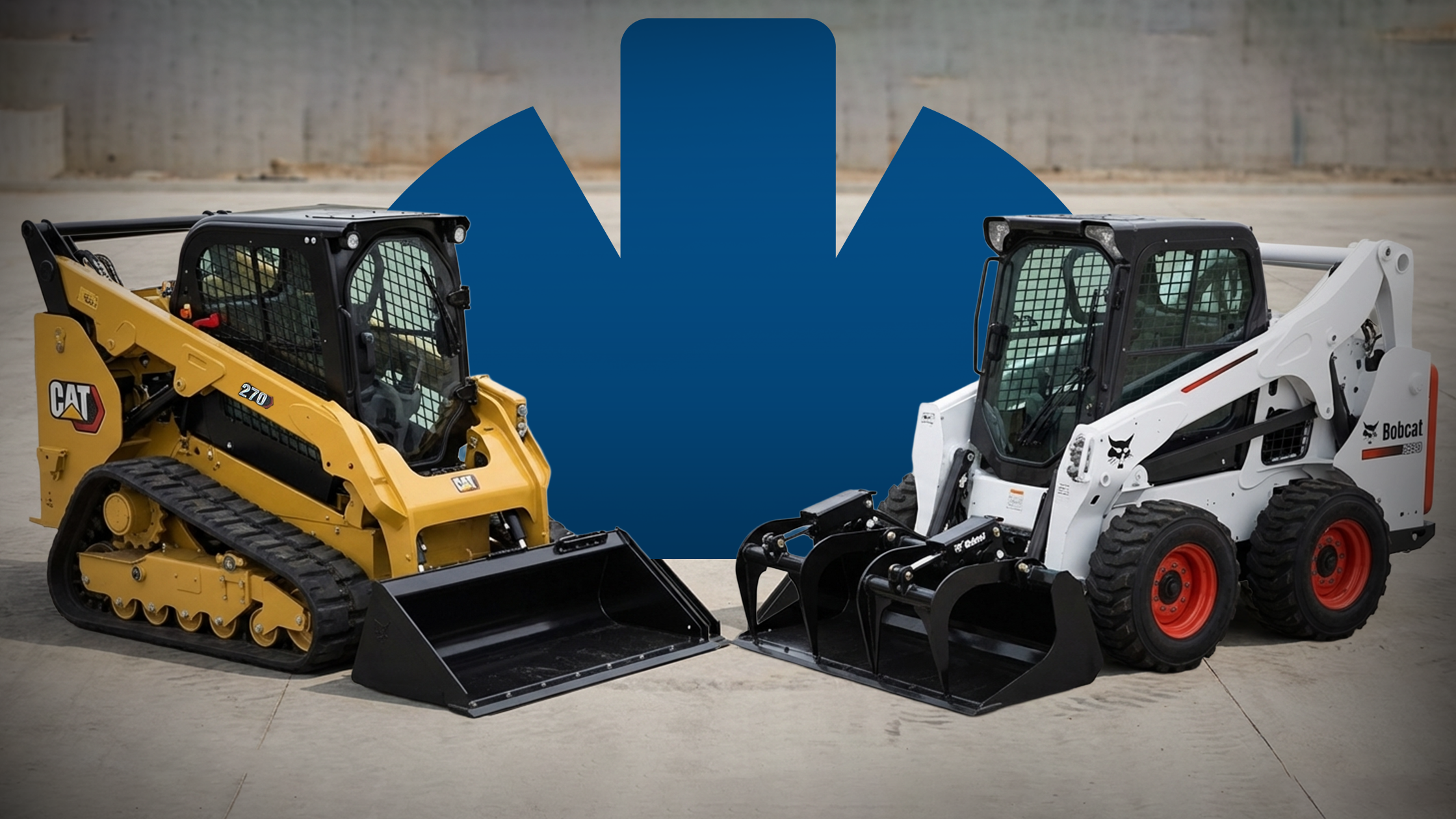
When you’re lining up skid steers for your contracting fleet, the question of “Bobcat vs Caterpillar skid steer” is going to come up. Both brands have models that deliver tough performance in construction, renovation, and earth-moving applications, and your choice could influence productivity, maintenance, and operator comfort. This review is written for contractors, site managers, and equipment purchasers who want a clear comparison of two top-brand machines. We’ll cover each brand’s background, compare a leading model from each, examine their performance in real use, discuss cost and value, highlight key features and accessories, and conclude with a recommendation.
Overview of Bobcat and Caterpillar
Bobcat in a nutshell
Bobcat built its reputation on compact equipment that can handle big jobs in tight spaces. The company’s story began in the late 1940s in North Dakota, when the Keller brothers designed a small loader to help farmers clean barns. That idea became the first true skid steer in 1958—and the rest is industry history.
Today, Bobcat machines are a staple on construction sites for their attachment options, maneuverability, and reliability. With more than 100 compatible attachments, their skid steers are built for contractors who want one machine that can handle grading, digging, loading, and cleanup. The company’s North American dealer network is also among the best for service and parts availability. In 2024, Bobcat announced a new $300 million manufacturing facility in Mexico to boost production for its growing customer base.
Caterpillar in a nutshell
Caterpillar—or “CAT”—has been a trusted name in heavy equipment since 1925. Known for durability and uptime, CAT applies the same build philosophy from its dozers and excavators to its compact skid steers. Their machines are designed for high hydraulic power, smooth control, and operator comfort inside enclosed cabs that minimize noise and vibration.
Many CAT models also integrate smart systems, such as VisionLink, which lets contractors track maintenance schedules, fuel use, and fleet productivity in real time. For contractors running larger fleets or high-demand sites, the CAT network of dealers and service centers provides quick turnaround on parts and repairs—one reason their machines hold such strong resale value.
Bobcat vs Caterpillar: Skid Steer specs
Here is a side-by-side spec table comparing a representative from each brand (for medium-frame skid steers) so you can see their key figures at a glance.
| Specification | Bobcat model S650* | Caterpillar model 250* |
| Horsepower | 74 hp for Bobcat S650 | 74 hp gross for CAT 250 |
| Rated operating capacity | 2,690 lbs (1,219 kg) for Bobcat S650 | 2,689 lbs (1,220 kg) for CAT 250 |
| Operating weight | 8,061 lbs (~3,658 kg) for Bobcat S650 | 7,829 lbs (~3,551 kg) for CAT 250 |
| Auxiliary hydraulic standard flow | 23 GPM (≈ 87 l/min) in standard configuration | Caterpillar 250: standard flow listed as 23 gal/min (≈ 86 l/min) |
| High flow option available? | Yes—Bobcat offers high-flow (30.5 gal/min in S650 spec) | Yes—Caterpillar offers High Flow XPS up to 30 gal/min (≈ 113 l/min) in standard spec and higher in XE |
| Lift path/frame design | Bobcat S650 is a vertical lift path model in a 600-frame size | Caterpillar 250 has a vertical lift design |
*Specs represent one model in each brand’s line-up for medium-sized skid steer loaders. Actual values will vary by configuration and attachments.
Performance and power: Which skid steer packs more punch?
For contracting work involving loading trucks, moving materials, breaking ground, or demolition, performance is crucial in terms of breakout force, lift height, hydraulic flow, and machine stability.
Bobcat Skid Steer S650
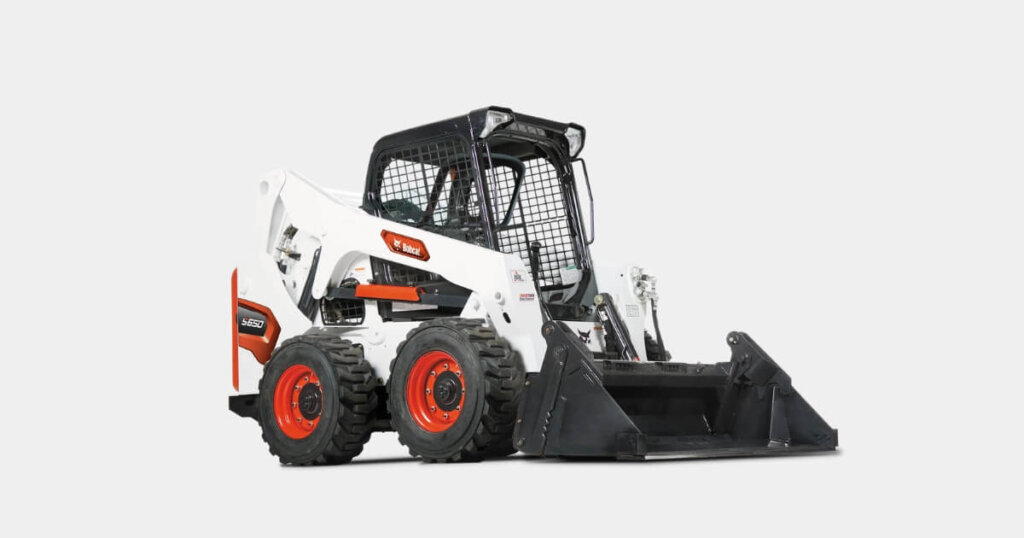
The S650 offers about 2,690 lbs rated operating capacity, 74 horsepower, and a high-flow hydraulic option (23 GPM standard, 30.5 GPM high flow), which gives it good muscle for attachments like mulchers, grapple buckets, or forks. The vertical lift path provides better reach at full height, which is particularly helpful when loading trucks or moving material over a side wall. In jobsite terms, that means fewer seconds lost per cycle when you dump into a truck bed or stockpile.
Caterpillar Skid Steer 250

The 250 model likewise provides 74 hp and an equivalent operating capacity of around 2,689 lbs. With High Flow XPS and vertical lift design, Caterpillar machines can handle heavy attachments and maintain stability when working with forks or grapples. For contractors doing heavy material handling, the CAT may give that little extra confidence in heavier-duty attachments or extended duty cycles.
In practical terms, if your workload involves heavy buckets, fast cycles, frequent truck loading, and chunky attachments, the CAT skid steer may edge slightly ahead on attachments and duty-cycle power. If your jobsite is mixed, includes tighter spaces, or you value strong support and attachment versatility, the Bobcat gives very competitive performance.
Ease of use & ergonomics comparison
When operators change, or you have semi-skilled users, the machine’s ergonomics, control layout, visibility, and comfort all contribute to a more effective user experience.
Handling and balance: Contractors often say Bobcat machines feel agile, with good balance and responsive controls—helpful on smaller sites or when moving between tight spaces. A Reddit user noted on r/Skidsteer: “Skid steers… especially wheeled ones, do not like slopes.” Although the comment is general, it reinforces the importance of machine balance. Bobcat’s narrower width in some models helps in tighter spots.
Grip and controls: Both brands offer joystick control, optional foot controls, two-speed travel, and pallet-fork mode. Caterpillar emphasizes their “Advanced Touchscreen Monitor” and joystick layout on the 250 model. The more intuitive the controls, the faster a new operator gets up to speed.
Vibration and noise: According to the spec sheet of the 250, Caterpillar lists the inside-cab sound at about 83 dB(A). Bobcat doesn’t always publish the noise spec with the same level of detail in the publicly accessible spec sheets, but they are known for their comfortable cabs and for the availability of air-ride seats and pressurized cabs on larger Bobcat models. One Reddit user on a Bobcat noted:
Verdict on ergonomics and seating: If your crews change often, or you’ll run long shifts, both machines are solid, but the Caterpillar may have a slight advantage in operator comfort (especially in higher-end configurations). The Bobcat holds up well to frequent crew changes and tight sites thanks to its compact design and intuitive controls.
Bobcat vs Caterpillar skid steer: Which one gives more bang for your buck?
Value for contractors isn’t just purchase price—it includes attachments, maintenance, resale value, dealer support, and downtime costs.
Bobcat value: Bobcat has historically had competitive pricing, a strong attachment ecosystem (Bob-Tach mounting, many third-party options), and a widespread dealer network. A new S70 (albeit much smaller) lists at about USD $28,160. For the S650 size machine, while the purchase price is higher, you get good capacity, standard features, and a brand that operators recognize and trust. If you’re working a mix of yards, sites, and tight-access zones, you already own many Bobcat attachments, which can reduce your tool-change time and costs.
Caterpillar value: The CAT brand often carries premium pricing, but in return, you get strong support, global parts access, resale value, and heavy-duty capability. For a fleet operator working in heavy-duty task zones (aggregate yards, demolition, heavy materials handling), the slightly higher cost may be justified by a longer lifespan, higher-spec attachments, and brand resale value. If the job demands are higher and downtime is expensive, the CAT may deliver better value per hour.
Which gives more bang for your buck? If your contracting business frequently moves material, utilizes heavy attachments, and operates multiple machines, Caterpillar may offer higher long-term value. If you’re more focused on flexibility, tighter sites, mixed tasks, and attachment versatility, Bobcat may be the smarter value choice.
Features & accessories: What extra features do they offer?
- Bobcat offers an extensive attachment portfolio (sweepers, trenchers, mulchers, plows) and compatibility across models makes upgrades easier. For example, the S70 is built for narrow access and supports 20+ attachments.
- Caterpillar offers advanced machine monitoring, optional touchscreen displays, ride control, and Smart Attachment controls on some models. These extras may tip the balance depending on your use case (for example, if you do a lot of truck loading or high-flow attachment work).
Pros and cons summary of each skid steer
To help you quickly recap, here are the main pros and cons of each brand skid steer:
Bobcat pros:
- Strong attachment ecosystem and versatility
- Competitive pricing in its class
- Good performance for mixed-use jobs (e.g., medium grades, tight spaces)
- Reliable dealer network and brand recognition among operators
- Wide model range so you can scale up or down
Bobcat cons:
- For the highest-end heavy-duty tasks, it may be slightly behind the top CAT models
- If you require the absolute highest hydraulic flow or lift height, you may need to move up model sizes (and cost)
- Operator comfort in base models may not match premium Cab setups on CAT models
Caterpillar pros:
- Premium build quality and durability geared for heavy-duty use
- High resale value and a strong parts/support network
- Advanced operator comfort and technology features available
- Good lift and torque specs on larger models for tough material-handling tasks
Caterpillar cons:
- Higher initial cost in many cases
- For smaller sites or tighter access zones, it may feel bulkier or over-spec’ed
- If you’re already invested in other brand attachments (e.g., Bobcat), switching may incur extra cost
Bobcat vs Caterpillar: Which skid steer should you buy?
If your contractor business involves frequent heavy material handling, daily trucking of loads, or the use of large attachments, or if you need machines designed for the highest duty cycles and longest service life, then choosing Caterpillar makes sense. On the other hand, if you work varied jobs (grading, landscaping, general construction), have tighter access zones, or already have Bobcat attachments and setups, then Bobcat may give you more flexibility and value. In many shops, a mix makes sense: a Bobcat for lighter access/versatility jobs, a CAT for heavy-duty tasks. Whichever you pick, factor in attachments, maintenance costs, operator comfort, and resale potential.
If you found this review helpful and want to read more about skid steers (including other brands and our picks), please subscribe to our newsletter to stay connected with equipment insights tailored for construction, architecture, and engineering professionals.


1 comment