AECOM has been involved in some of the most recognizable infrastructure and building projects across the globe. From megabridges and transit systems to stadiums and skyscrapers, the firm consistently shows up on projects that push the limits of scale, coordination, and engineering complexity. In this article, we’re looking at ten standout AECOM projects, including One World Trade Center, Crossrail, and the Gordie Howe International Bridge. Each one highlights a different side of what large-scale construction looks like today—from dense urban builds to multi-country infrastructure programs.
AECOM
AECOM is a global infrastructure consulting firm delivering architecture, engineering, construction management, and program delivery services across more than 150 countries. With roughly 50,000 employees worldwide, the company operates across transportation, water, energy, and buildings, often leading large, multi-year programs involving multiple stakeholders and contractors.
What sets AECOM apart is its role across the full project lifecycle—from early planning and environmental work through to construction management and long-term operations support. The firm is often brought in when projects involve high complexity, tight timelines, or coordination across multiple jurisdictions.
10 past, present, and future projects from AECOM
1. One World Trade Center
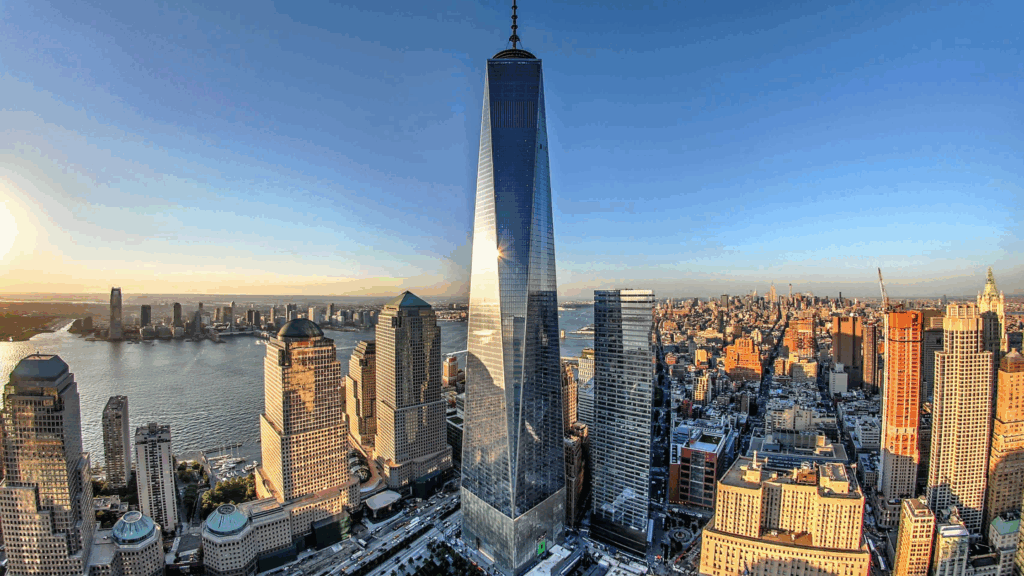
Location: New York, USA
Year built: 2014
Typology: Skyscraper/commercial
At 1,776 feet tall, One World Trade Center is the tallest building in the Western Hemisphere. AECOM’s Tishman Construction team handled the construction management job, overseeing one of the most confusing and challenging builds in recent American history. The tower features 3 million square feet of office space, walls in the concrete core up to 3 feet thick, and blast-resistant design features. What makes this project truly impressive is the level of coordination required—security, structural engineering, and logistics all had to be carefully managed on a constrained site in Lower Manhattan. The building also incorporates a 408-foot spire and a heavily reinforced podium designed to meet strict safety requirements, which influenced both sequencing and material handling during construction.
2. Crossrail (Elizabeth Line)
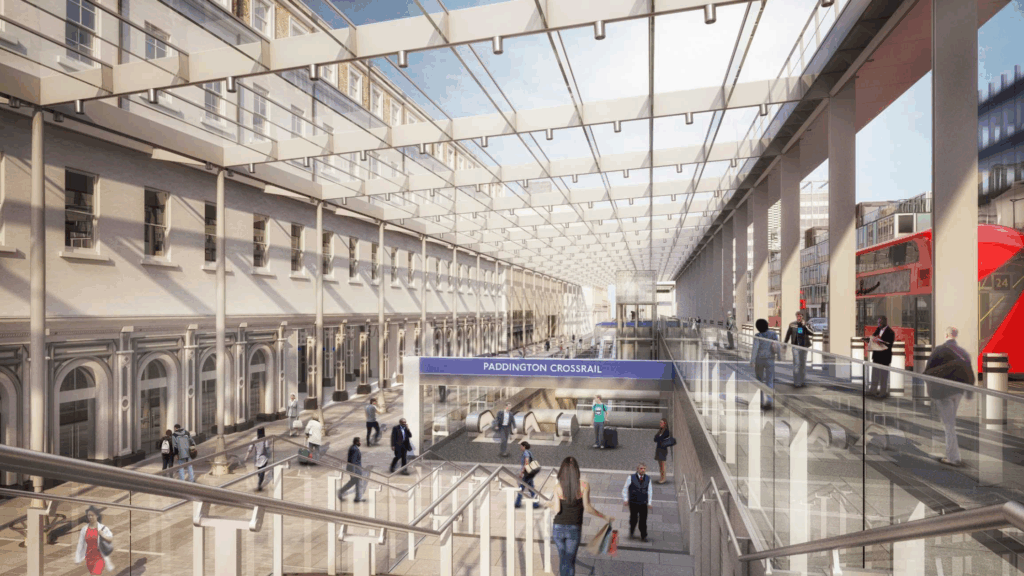
Location: London, UK
Year built: 2022
Typology: Rail/transit
Crossrail is the biggest infrastructure project in Europe, and it involves over 100km of rail track and a staggering 42km of tunnels that snake beneath London. AECOM was the brains behind the project in program management and engineering support. The finished system links East and West London together with trains that can carry up to 1500 passengers at a time.
What sets it apart is the underground construction—massive tunnel-boring operations beneath a dense city, alongside station construction in extremely tight urban conditions. At peak construction, more than 10,000 workers were active across multiple sites, requiring careful coordination of logistics, materials, and urban access. The growing push toward high-capacity transit systems in major cities is evident with projects like the Crossrail, where expanding underground is often the only way to increase capacity without disrupting life above ground.
3. Gordie Howe International Bridge
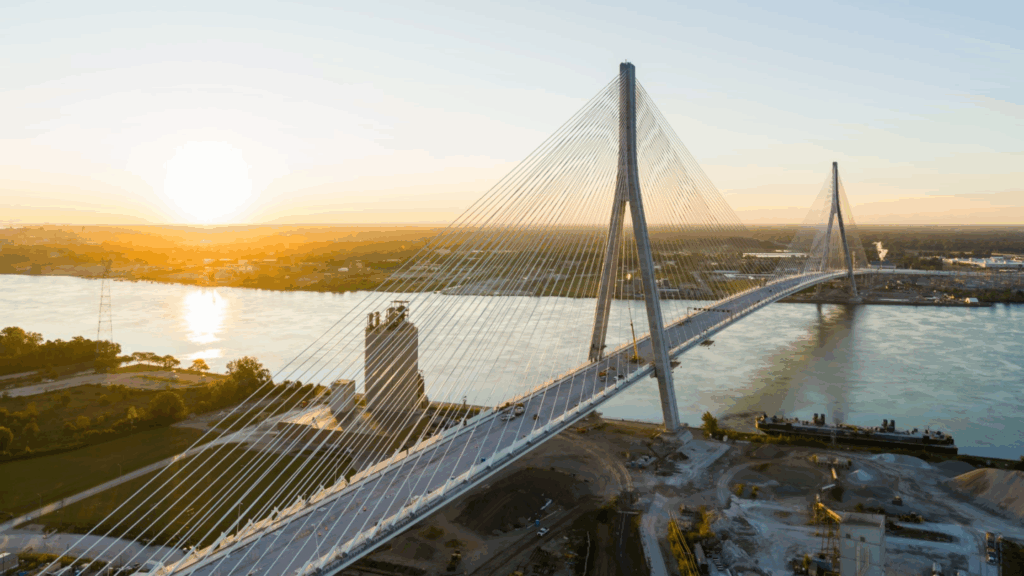
Location: Canada–USA border
Year built: Under construction (expected completion 2025)
Typology: Bridge/transportation
This six-lane bridge will span 2.5 km with a main span of 853 meters, making it one of the longest cable-stayed bridges in North America. AECOM is part of the design team delivering the structure and associated border facilities. The project features ports of entry on both sides and connecting highways. The binational coordination—across two countries, multiple agencies, and a highly complex customs infrastructure—needs to be integrated into a single coherent system, requiring careful collaboration.
As for the bridge towers, they’re a mighty 220 meters high, so they required specialized formwork and precise sequencing to manage their vertical construction alongside all the cable work. This bridge illustrates how modern infrastructure is increasingly tied to cross-border trade and logistics, where design decisions directly affect the efficiency with which goods and people move between countries.
4. 2016 Rio Olympic Park
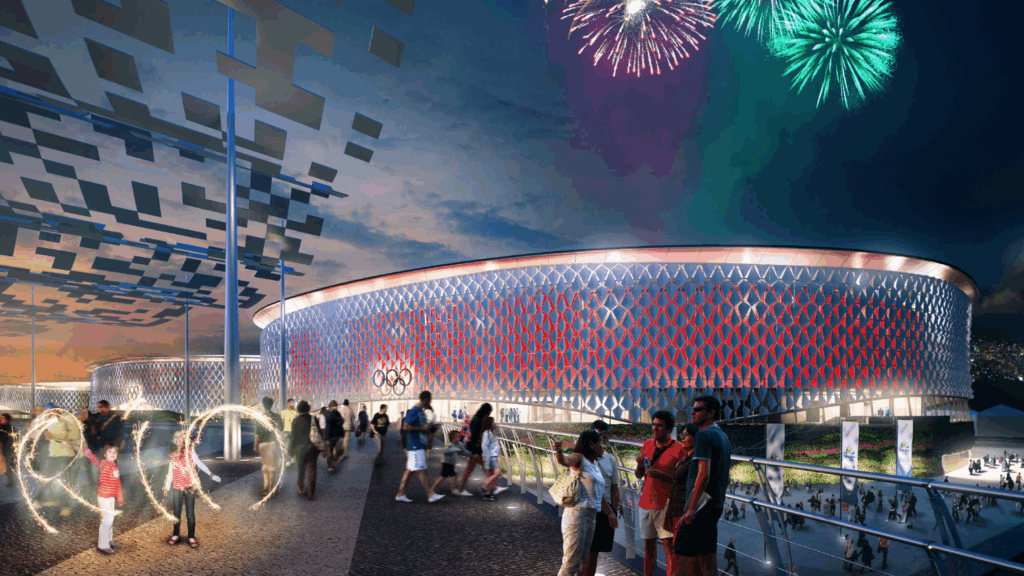
Location: Rio de Janeiro, Brazil
Year built: 2016
Typology: Sports/mixed-use
AECOM led the master planning and design of the 120-hectare Olympic Park, which hosted multiple venues for the 2016 Games. The site was designed for long-term reuse, to be converted into residential, commercial, and recreational spaces after the event. The project required fast-tracked delivery, temporary structures, and long-term legacy planning. What makes it noteworthy is its dual purpose—both a short-term global event and long-term urban development. Several venues were designed as modular or temporary structures, allowing materials to be reused or relocated after the Games. This consideration offers a glimpse into broader industry trends, in which reusing materials or even entire components demonstrates a commitment to environmental sustainability and waste reduction.
5. Padma Bridge
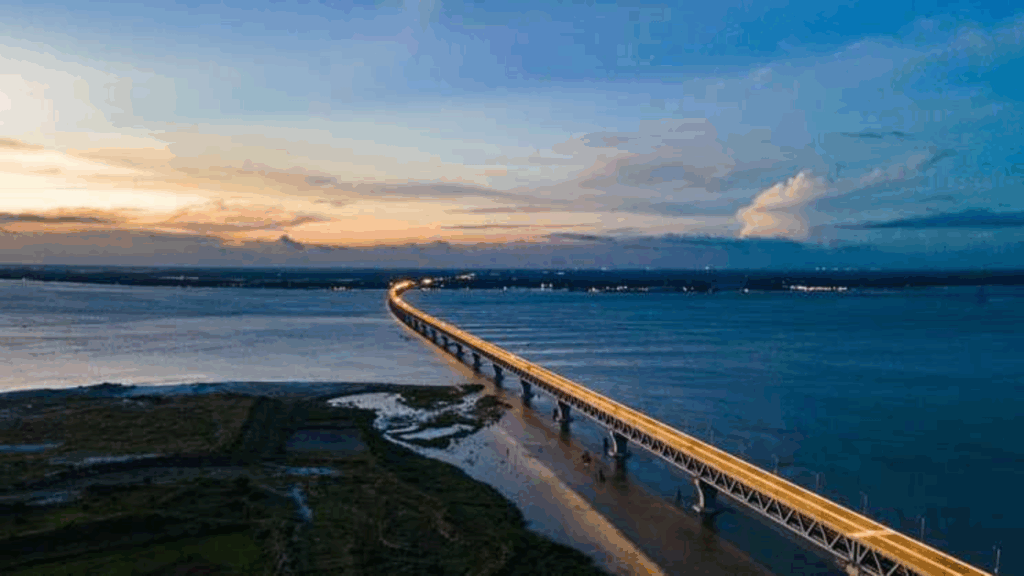
Location: Bangladesh
Year built: 2022
Typology: Bridge/infrastructure
The Padma Bridge is a 6.15 km multipurpose bridge carrying road and rail across one of Bangladesh’s most challenging river systems. AECOM led the detailed design, coordinating an international team of engineers. The structure had to withstand strong currents, deep riverbeds, and seismic conditions. The engineering had to be incredibly accurate—deep pile foundations and complex hydrological considerations make it one of the most technically demanding bridges in the region. Some foundation piles extend more than 120 meters below the riverbed, requiring specialized installation methods to accommodate shifting soil conditions. Projects like this show how infrastructure is expanding into more difficult environments, pushing design and construction teams to solve problems that standard methods can’t handle.
6. Al Wahda Arches
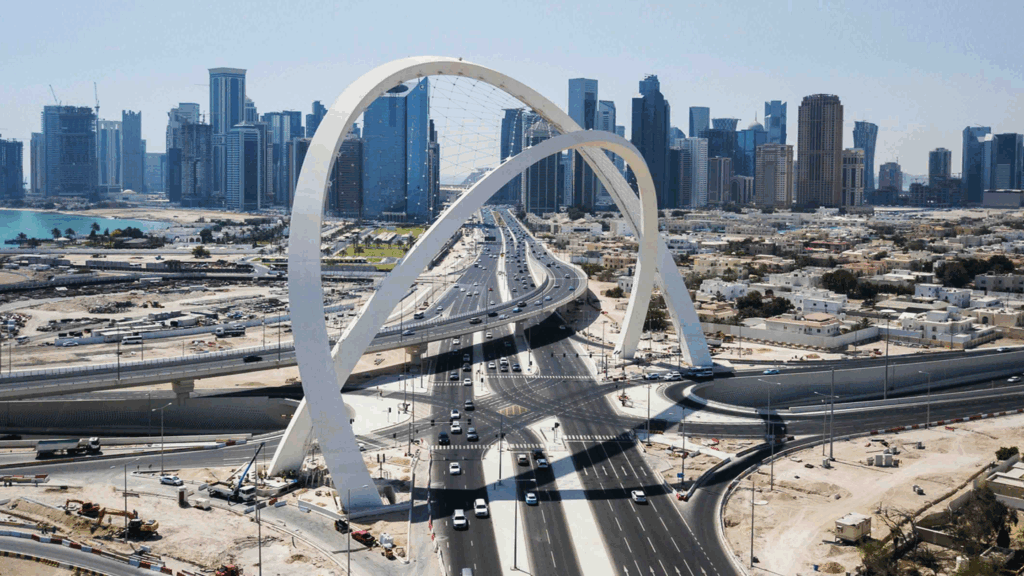
Location: Doha, Qatar
Year built: 2020
Typology: Landmark/infrastructure
These monumental arches rise 100 meters high and span one of Doha’s busiest highway sections—essentially acting as a gateway into the city. They’re built from over 9,000 tons of structural steel, and are set at a 20-degree angle to each other. They’re held together with a tensioned cable system that helps keep the whole structure stable even in windy conditions and when it’s loaded down.
AECOM led the design and engineering, creating a form that looks very different depending on how fast you’re approaching and at what angle. The installation required precision lifting and staged assembly, with tight tolerances to align the inclined steel ribs, while an integrated LED lighting system transforms the arches into a dynamic nighttime feature visible across the surrounding roadway network. This project reflects a growing shift in infrastructure design, where even highway elements are being treated as landmarks that shape how cities are experienced, not just how they function.
7. Singapore Sports Hub
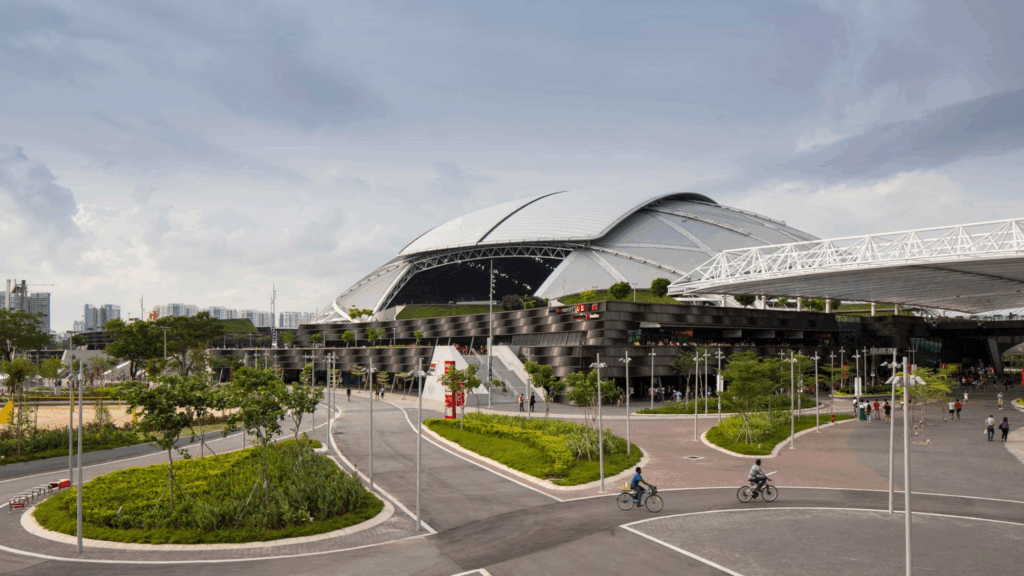
Location: Singapore
Year built: 2014
Typology: Sports/mixed-use
This 35-hectare sports and entertainment complex includes a 55,000-seat stadium, indoor arenas, and aquatic centers. AECOM contributed to design and engineering as part of a larger consortium. The stadium features a retractable roof and advanced cooling systems designed for tropical conditions. What’s notable here is the project’s integration—multiple venues, public spaces, and transportation systems combined into one continuous development. The dome spans more than 300 meters, making it one of the largest free-spanning domes in the world. It is clear to see that large venues are now being designed as multi-use destinations, where infrastructure, public space, and event programming are planned together from the start.
8. Los Angeles International Airport (LAX) modernization
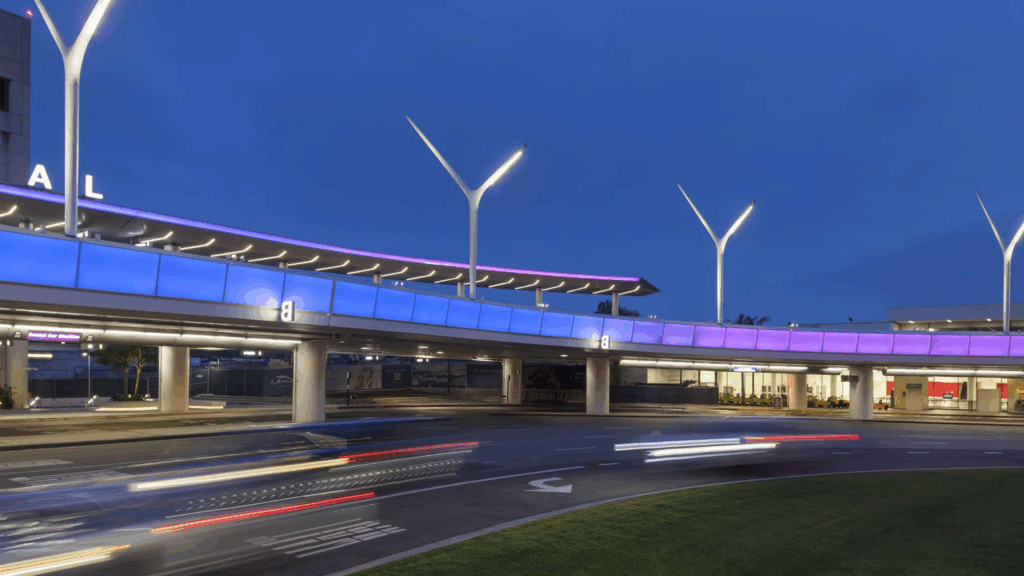
Location: Los Angeles, USA
Year built: Ongoing (2016 – 2028+)
Typology: Airport infrastructure
AECOM has played a major role in LAX’s modernization, including terminal upgrades, airfield improvements, and transit connections. The airport handles 70+ million passengers annually, so construction must happen in phases without disrupting operations. Work includes structural upgrades, new gates, and transportation systems, as well as major projects such as the Automated People Mover, a new consolidated rental car facility, and an intermodal transportation hub. The scale and sequencing make this one of the most complex airport programs in the U.S. The broader program is valued at over $14 billion, with multiple overlapping projects delivered on a constrained, active site.
9. Hong Kong–Zhuhai–Macau Bridge
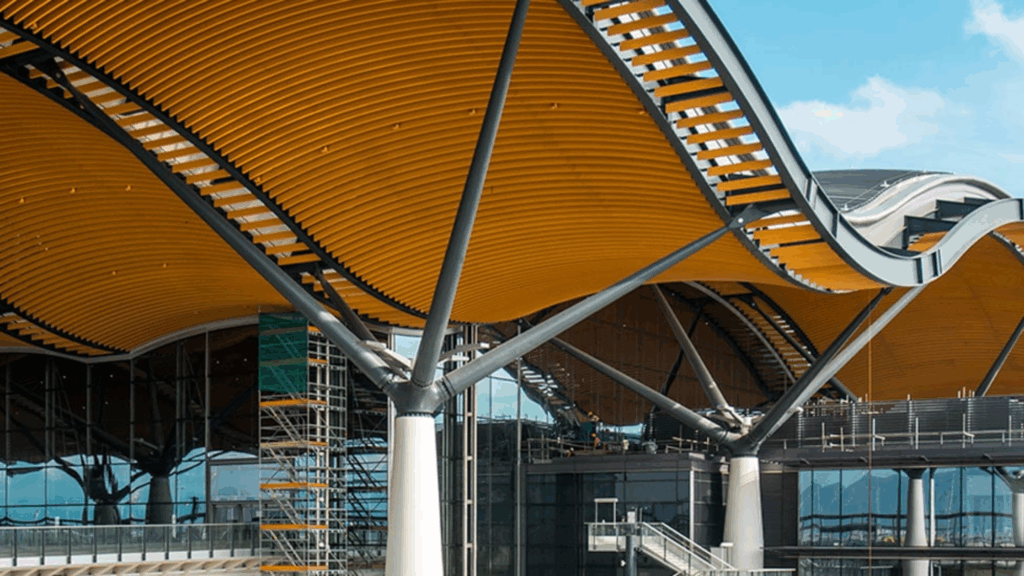
Location: Hong Kong / China
Year built: 2018
Typology: Bridge/transport infrastructure
AECOM contributed to the Hong Kong boundary facilities for this 55-km bridge–tunnel system, one of the world’s longest sea crossings. The project includes artificial islands, customs facilities, and major transport links. Construction involved marine works, land reclamation, and large-scale logistics, including an immersed tunnel section and multiple long-span bridge segments designed to withstand typhoon conditions. What is impressive is the combination of civil engineering and international coordination. The reclaimed island alone covers over 130 hectares, requiring extensive ground improvement and seawall construction. In today’s modern world, infrastructure is expanding across open waters and coastal regions, where engineering solutions must account for extreme weather, long-term durability, and the increasing demand for cross-border connectivity.
10. Mercedes-Benz Stadium
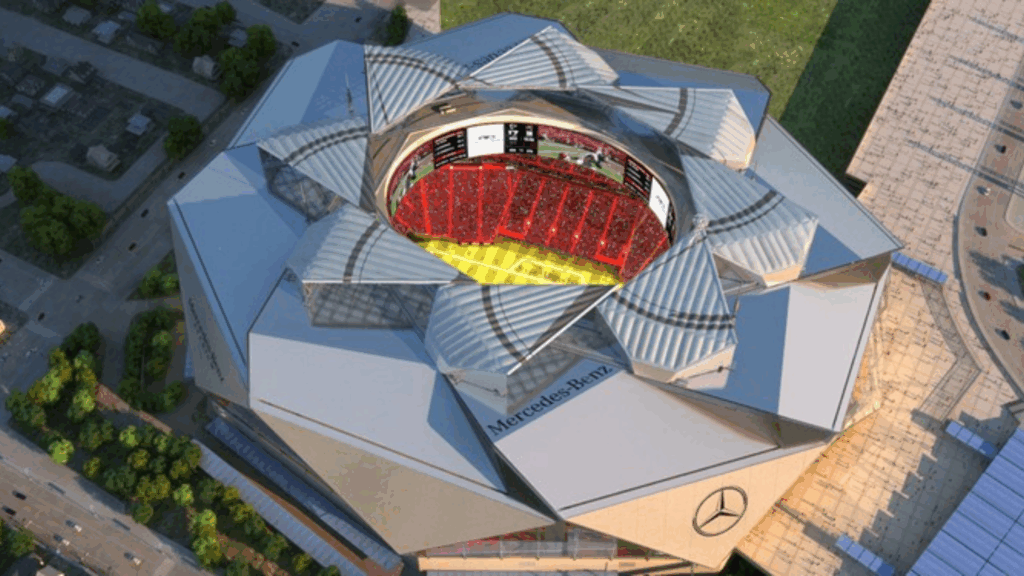
Location: Atlanta, USA
Year built: 2017
Typology: Sports stadium
This 71,000-seat stadium features a retractable roof made up of eight triangular panels that open like a camera aperture. AECOM’s construction management division played a major role in delivery. The project includes advanced structural steel systems and a 360-degree video board. What sets it apart is the roof mechanism—one of the most complex movable roof systems built for a stadium. The structure required over 27,000 tons of steel, with precise sequencing needed to assemble and align the retractable roof components. Projects like this show how stadium design is pushing the boundaries of advanced engineering, where structural systems are expected to move, adapt, and enhance the fan experience rather than remain static.
Joint venture projects with HDR
AECOM often takes the lead on its own projects, though it has occasionally teamed with HDR on a few major infrastructure deals through joint ventures. These partnerships usually occur on tough public projects—such as coastal protection systems and major water infrastructure—where having both teams on board helps distribute the workload, share the risk, and manage complexity more easily. HDR is a US-based company that has been around for years, specializing in areas like transportation, healthcare, and water management.
1. Sabine to Galveston Coastal Storm Risk Management Project
Location: Texas Gulf Coast, USA
Year built: Ongoing
Typology: Coastal infrastructure/flood protection
This is one of the clearest examples of a true AECOM–HDR joint venture, operating as a single engineering team under the U.S. Army Corps of Engineers. The project is part of a $3.9 billion coastal storm protection system designed to reduce flood risk across six counties along the Texas coast, protecting more than 5 million residents. The scope includes levee raises, new floodwalls, and a 74-foot-wide sector gate at the Dow Barge Canal, along with upgrades to more than 13 miles of levees and several miles of floodwall systems.
What makes this project stand out is the scale of protection infrastructure combined with the level of coordination required. This isn’t a single site—it’s a regional system spread across multiple jurisdictions, waterways, and existing flood control assets. AECOM and HDR are working together to deliver design packages that tie all of those elements into a functioning system. It’s a good example of how joint ventures are used when the scope is too large for a single firm to handle alone.
2. Victoria Wastewater Treatment Plant (McLoughlin Point)
Location: Victoria, British Columbia, Canada
Year built: 2020
Typology: Water/wastewater infrastructure
The McLoughlin Point Wastewater Treatment Plant is part of a multi-million-dollar regional wastewater program that came in at CAD $775 million, delivered by a team that included AECOM and HDR teaming with the construction partners. AECOM brought its environmental and wastewater design expertise to the table, while HDR spearheaded the architectural side—designing the facility itself and making it look like it belongs where it sits. The plant is situated on a rocky coastline, which posed tricky environmental challenges; site contamination was one of the issues they had to deal with, along with strict guidelines on what they could and couldn’t build.
A big part of what makes this project interesting is how it blends heavy infrastructure with architectural design. Wastewater plants are usually hidden or purely functional. Here, the team treated it as a civic asset, integrating sustainability, public access, and environmental performance into the design.
Final thoughts
AECOM’s portfolio is diverse, but the one thing that ties them all together is the sheer size and complexity of their projects. These aren’t your average, everyday construction projects. They involve a whole team of people, take a long time to finish, and require a lot of adjusting as you go along. You’ll find AECOM working on things like road bridges, rail systems, and sports stadiums—anywhere the project gets really complicated.
If you want to stay up to date on projects like these and how they’re built, subscribe to the Under the Hard Hat newsletter for more industry insights.